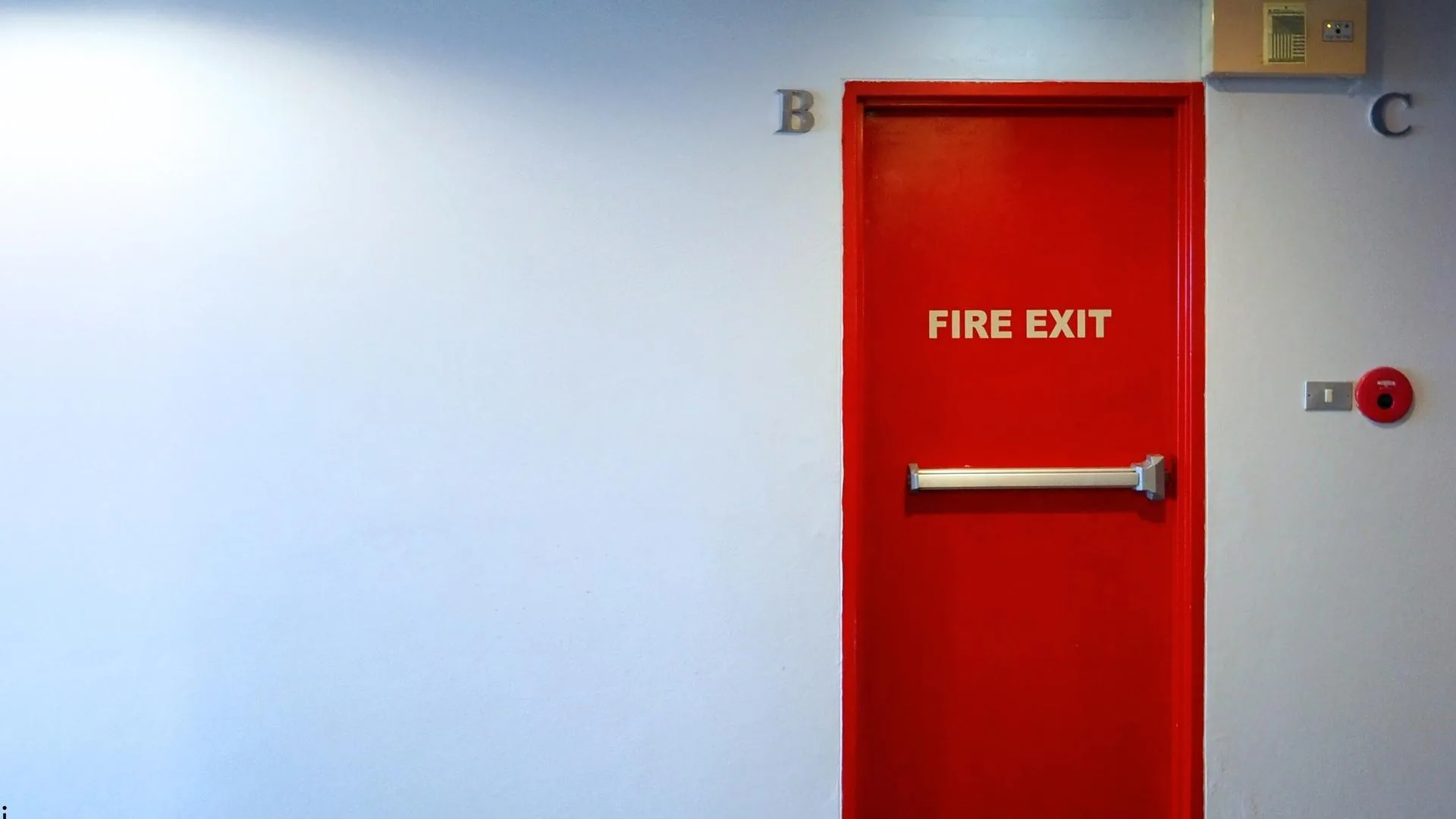
Most people only notice a fire door when it gets in the way. It may feel heavy, close too quickly or make it awkward to move furniture through a hallway. That is why fire doors are sometimes wedged open, blocked with storage or ignored when the closer stops working.
But a fire door is not just another internal door. In apartments, rental properties, shared buildings, commercial premises and some larger homes, it forms part of the building’s fire safety system. Its job is to help slow the spread of fire and smoke, protect escape routes and give people more time to leave safely.
The danger of fire door misuse is that it often looks harmless. A wedge under a door or a damaged seal may not seem urgent on an ordinary day. But during a fire, small faults can quickly become serious failures.
What Fire Doors Are Meant to Do
Fire doors are designed to resist fire and smoke for a limited period. Many are rated for 30 or 60 minutes, depending on the door, its frame, the hardware fitted and the building’s fire strategy.
When closed properly, a fire door helps contain fire and smoke within one area. This is known as compartmentation. In simple terms, it means dividing a building into sections so fire and smoke cannot spread freely through corridors, stairways and rooms.
This matters because escape routes need to stay usable for as long as possible. In a shared building, a closed fire door can help keep a stairwell clearer. In a property with a garage, a suitable fire-resisting door can help separate a higher-risk area from the rest of the home. In workplaces and managed buildings, fire doors can also support safer evacuation and firefighting.
But a fire door only works if it can close, latch and seal as intended. If it is damaged, held open or fitted with unsuitable hardware, it may not provide the protection people expect.
Common Ways Fire Doors Are Misused
Fire door misuse is rarely caused by bad intent. More often, it happens because of convenience, lack of awareness or poor maintenance. Over time, unsafe habits become normal.
1. Wedging Fire Doors Open
One of the most common problems is wedging fire doors open. People may do this to improve ventilation, make movement easier or stop a door from banging shut.
The problem is that a wedged-open fire door cannot contain smoke or fire. If a fire starts, heat and smoke can move through the building much faster. What seems like a small convenience can put corridors, stairways and nearby rooms at risk.
Where a door needs to be held open for access or ventilation, a suitable fire door hold-open device linked to the fire alarm system may be needed. A wedge, chair, bin or doorstop is not a safe substitute.
2. Faulty or Missing Door Closers
Fire doors usually need a working self-closing device. The closer ensures the door shuts after someone passes through.
If the closer is faulty, disconnected or removed, the door may stay open. It may also close too slowly or fail to latch. A door that looks almost closed can still allow smoke to pass through gaps around the edges.
This is a common issue in shared buildings, rental properties and busy corridors, where doors are used many times a day. If a fire door does not close fully by itself, it should be reported and repaired.
3. Damage to the Door, Frame or Seals
Fire doors are exposed to daily wear and tear. They may be hit by trolleys, scraped during moves or damaged by repeated slamming. Hinges can loosen, frames can warp and gaps can appear around the door.
Smoke seals and intumescent strips are especially important. These are designed to help limit smoke spread and expand in heat. If they are missing, painted over, damaged or badly fitted, the door may not perform as intended.
Minor damage is easy to ignore because the door may still open and close. But fire performance depends on the whole door set, including the door leaf, frame, hinges, seals, glazing and hardware.
4. Incorrect Locks, Handles or Hardware
Fire doors need suitable hardware. Locks, latches, handles, hinges and glazing must be appropriate for the fire door’s design and rating.
Problems can arise after repairs or renovations. A property owner may replace a handle, add a lock or change hinges without realising the impact on fire performance. Decorative upgrades can also create risks if non-fire-rated parts are used.
Any significant repair or alteration to a fire door should be carried out by someone competent. Fire doors are tested as complete systems, so changing one part can affect how the door behaves in a fire.
5. Blocked or Obstructed Fire Doors
Fire doors can also be made ineffective when items are stored around them. Parcels, bins, chairs, cleaning equipment or stock can stop a door from closing fully.
This is common in shared corridors, stairwells, back-of-house areas and rental properties with limited storage. The door may appear to be in place, but if it cannot close and seal properly, smoke can move around it.
Escape routes should also be kept clear. A fire door is only useful if people can reach it, open it and pass through safely.
The Hidden Risks People Overlook
The biggest risk with fire door misuse is that the consequences are delayed. A wedged door or broken closer may not cause a problem for months. Then, during a fire, the failure becomes obvious too late.
Smoke Can Spread Before Flames
Smoke is often the greatest immediate danger in a fire. It can move faster than flames, reduce visibility and make breathing difficult. Smoke spreading into a corridor or stairwell can quickly make escape harder, especially for children, older people or anyone with mobility issues.
A working fire door helps slow this spread. A misused or damaged door may allow smoke to pass through when it is needed most.
Fire Can Grow More Quickly
When fire doors are left open, fire and smoke can move more freely through a building. Open routes can also allow more air to reach the fire, which may help it develop and spread.
This can change a contained incident into a wider building emergency. The more quickly fire spreads, the less time people have to react.
Escape Routes Can Become Unsafe
Many buildings rely on corridors, lobbies and stairways for evacuation. If fire doors protecting those areas fail, escape routes can fill with smoke.
This is why fire door safety matters so much in apartment blocks, HMOs, hotels, care settings, offices and other shared buildings. People may not be near the fire when it starts, but they still depend on protected routes to get out.
Firefighting and Rescue Can Become Harder
Firefighters also rely on compartmentation. Closed fire doors can help slow fire spread and support safer movement through a building.
If doors have been wedged open, removed or allowed to fall into poor condition, fire and smoke may spread further before emergency crews can bring the situation under control. That can make rescue and firefighting more difficult and more dangerous.
Who Is Responsible for Fire Door Safety?
In many buildings, fire doors are not optional features. Landlords, building owners, managing agents and employers may all have duties to keep them in suitable working condition, depending on the property type and local fire safety rules.
This means fire doors should be checked regularly. Doors, frames, seals, closers, hinges, glazing and hardware all need attention. Faults should be repaired promptly, and records may be needed for managed or commercial properties.
For homeowners, the main message is simple: do not remove or alter a fire door without proper advice. For landlords and property managers, routine checks should be part of wider building maintenance. For workplaces and facilities teams, staff should know what to look for and how to report concerns.
This is where fire door inspection training can help. It gives duty holders and relevant staff a clearer understanding of common defects, inspection routines and when issues need to be escalated to a competent person.
Simple Checks That Should Not Be Ignored
Fire door safety does not always require complex action. Many warning signs are visible during everyday use.
A fire door should close fully from any open position. It should latch securely without being pulled or forced. There should not be obvious gaps around the edges. Hinges should be secure, seals should be intact, and the door should not be damaged, warped or dragging on the floor.
The door should also be free from obstructions. Nothing should be placed in front of it or used to hold it open. Any glass panels should be fire-rated and undamaged, and any signage should be clear.
If something looks wrong, it should be reported. A stiff closer, damaged seal or loose hinge may seem minor, but these faults can affect performance in an emergency.
Fire Door Safety Is Part of Wider Emergency Readiness
Preventing fire and smoke spread should always come first. Fire doors, alarms, escape routes, emergency lighting and clear evacuation plans all work together to protect people.
Training also plays a role. People are more likely to respect fire doors when they understand why they matter. They are also more likely to report faults instead of working around them.
Some organisations also support wider emergency preparedness through awareness training, including online First aid training courses. First aid does not replace fire prevention or evacuation procedures, but it can help people understand how to respond if someone is injured or becomes unwell during an emergency.
Small Misuse Can Lead to Serious Failure
Fire doors are quiet safety features. They do not draw attention to themselves, and they may go unnoticed for years. But when a fire starts, they can make a significant difference.
A wedge, a missing closer, a blocked doorway or a damaged seal may not seem serious on its own. The danger comes when these small failures stack up. Then, in an emergency, the building no longer behaves as expected.
Keeping fire doors clear, closed and properly maintained is not extra work. It is a basic part of protecting people and property. Whether in a home, rental building, apartment block or workplace, fire doors should be treated as life safety equipment, not ordinary doors.