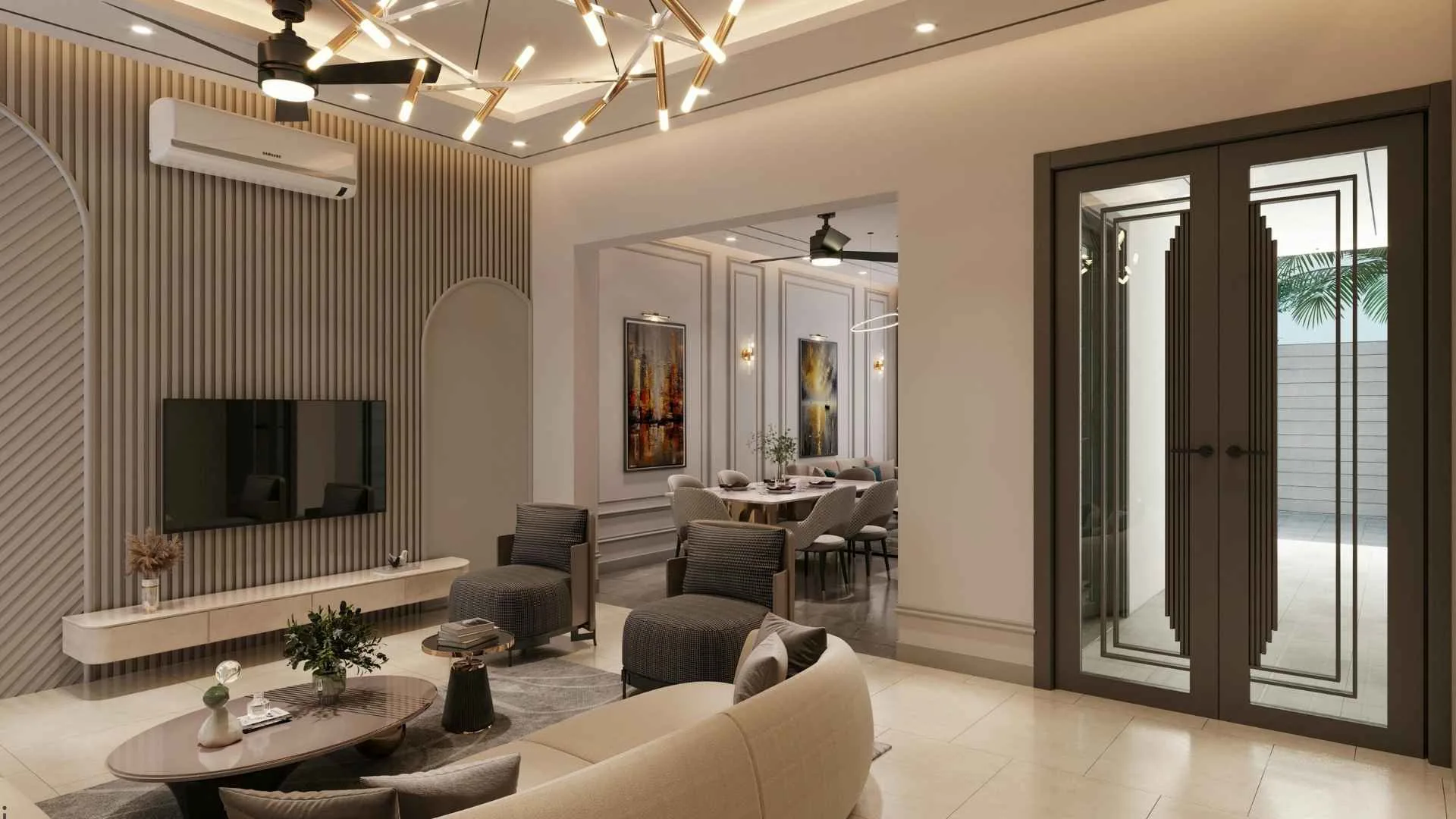
Your furniture arrangement probably isn’t the first thing you blame when the electric bill spikes in July. But it should be on the list. The truth is that certain interior design decisions, ones that look perfectly fine on a mood board, actively fight your cooling system every single day of summer. The result is a home that never quite feels comfortable and a unit that burns through its lifespan faster than it should.
This isn’t about sacrificing style. It’s about understanding which choices quietly stack thermal load against you, so you can make smarter calls without giving up a room you actually love being in.
Why Your Interior Layout Is a Cooling Problem
Air conditioning is one of the biggest consumers of electricity in the American home. According to the U.S. Energy Information Administration, air conditioning alone accounts for 19% of the average American household’s annual electricity use (EIA, 2024) — and that number climbs steeply when your interior is working against the system instead of with it.
The layout of your rooms, the color of your walls, and even the weight of your curtains all influence how much heat builds up indoors. That heat is exactly what your AC has to fight. Give it more to fight, and you pay more to fight it.
Here’s a practical way to think about this: run what I call a Thermal Load Audit before you finalize any major design update. Walk each room at 3 PM on a hot day. Note which surfaces feel warm to the touch, which windows face west or south, and where airflow feels weak. Those are your pressure points. The five choices below show up on almost every audit I’ve ever run.
Dark, Heat-Absorbing Paint Colors on Sun-Exposed Walls
Deep charcoal, forest green, navy, and saturated terracotta are everywhere right now, and they genuinely look stunning. On a north-facing wall? Fine. On a south- or west-facing exterior wall? You’ve just built a solar collector inside your living room.
Dark colors absorb radiant heat. That heat transfers through the wall surface and raises the ambient temperature of the room, which means your AC cycles more often to compensate. The fix is straightforward: reserve your bold, dark shades for north-facing feature walls or interior accent walls that don’t receive direct sun. Use lighter, reflective tones on sun-facing surfaces, even if you have to be more creative with texture and pattern to get the drama you’re after.
If you’re attached to a warm, rich palette throughout, consider investing in insulated wall treatments or low-emissivity window films for sun-exposed glass. The design impact is invisible, but the cooling difference is real.
Heavy Drapes and Blackout Curtains Hung in the Wrong Spots
This one surprises people. Blackout curtains are supposed to block heat, right? They do, but only when they’re closed during peak sun hours. Most homeowners open them every morning out of habit and leave them open. You’ve just turned your west-facing windows into a heat lamp pointed directly at your sofa.
According to the U.S. Energy Information Administration’s 2020 Residential Energy Consumption Survey, 88% of U.S. households use air conditioning, with two-thirds relying on central AC or a central heat pump as their primary cooling equipment. That’s a lot of systems working against windows that are left wide open on a sunny afternoon.
The smarter move is to treat your window coverings as active tools, not static decor. Keep west- and south-facing drapes closed from about noon until late afternoon. Layer cellular shades underneath your decorative curtains; they trap an insulating air pocket against the glass even when the outer drapes are open. It takes a little habit change, but you’ll feel it.
Furniture Blocking Vents and Return Air Grilles
Walk around your home right now and check whether any sofa, bookshelf, bed frame, or area rug is sitting directly over or in front of an air supply vent or a return air grille. If the answer is yes, that’s the easiest fix on this list.
Blocked vents don’t just reduce airflow to one room. They throw off the pressure balance of your entire duct system, which can cause your unit to short-cycle, strain the blower motor, and deliver uneven temperatures across the house. The fix is free: move the furniture six inches, redirect the vent with a deflector, or choose a rug that doesn’t cover the grille. Furniture placement is one of the few design decisions that has a direct mechanical consequence, and most people never make the connection.
A practical note: if your home has a floor plan where a large sectional naturally wants to sit over a vent, consider asking an HVAC technician whether a vent can be relocated. It’s a minor job that pays off every summer.
Skipping a Smart Thermostat Because You Like the Old Look
Classic thermostats have their charm, and there’s a legitimate aesthetic argument for a round Honeywell dial on a mid-century wall. But the energy math is hard to ignore. According to ENERGY STAR, a certified smart thermostat can reduce your heating and cooling bill by more than 8% and save you about $50 a year on average (ENERGY STAR). For homes in extreme climates, savings run considerably higher.
Modern smart thermostats don’t have to look utilitarian. The Ecobee and Nest lines have both invested in clean, minimal designs that sit comfortably in contemporary and even transitional interiors. If the device itself bothers you aesthetically, build a small recessed niche around it, or use the surrounding wall as a gallery moment that draws the eye away. The thermostat becomes a supporting actor instead of the focal point.
“Homes that experience extreme changes in temperature over the course of a year will generally see greater savings with ENERGY STAR-certified smart thermostats.” — U.S. Environmental Protection Agency, ENERGY STAR Smart Thermostat FAQ
That note about temperature swings is worth holding onto, especially if you live somewhere with dramatic seasonal shifts. Automated setbacks during the hours you’re not home are where the real savings accumulate.
When Good Design Isn’t Enough and the Unit Is the Problem
Here’s the scenario that catches people off guard. You’ve addressed every item on the list above. New window treatments, vents cleared, smart thermostat installed, paint colors reconsidered. The house still feels warm and stuffy by mid-afternoon. That’s the moment you need to stop adjusting decor and start looking at the equipment itself.
A concrete example: imagine a west-facing living room in a high-altitude home where summer afternoon temperatures swing fast and the air is exceptionally dry. Low humidity changes how heat feels, and a unit that was sized or serviced for a different climate profile can struggle badly when conditions hit their peak. The interior can be perfectly optimized and the system will still underperform if there’s a refrigerant leak, a failing capacitor, or a blower motor running out of spec.
That’s when calling in a professional matters. Homeowners dealing with persistent cooling problems despite good interior choices often find that a diagnostic visit, not another furniture rearrangement, is what actually resolves it. If you’re in the region and the unit is genuinely struggling, AC Repair in Colorado Springs, CO providers with real diagnostic equipment can tell you within one visit whether the problem is mechanical or environmental.
The Thermal Load Audit in Practice
To close every loop this article opened, here’s the audit as a quick decision checklist you can run this week:
| Design Factor | What to Check | Quick Fix |
| Wall color | Is the darkest wall on a south or west face? | Swap to a lighter shade or add low-e window film |
| Window treatments | Are west-facing drapes open between noon and 5 PM? | Close them during peak sun hours; layer with cellular shades |
| Vent clearance | Any furniture within 12 inches of a supply or return vent? | Move it or use a vent deflector |
| Thermostat type | Still using a manual thermostat? | Switch to an ENERGY STAR certified smart thermostat |
| Equipment condition | Unit running but room still warm after all fixes? | Schedule a professional diagnostic visit |
If you get through all five and the home still runs hot, the unit deserves a professional look before next summer. A well-designed room and a well-maintained cooling system aren’t separate goals. They work together, or they both fail together. Which one on this list are you fixing first?