
17 Interior Decoration Tips (MintPalDecor Guide): Simple Ways to Style Every Room

I’m Stefano Schiavon, and I’ve spent my career studying how buildings affect the people living in them. But long before the research and the professorship, I just loved good rooms — spaces that felt calm, worked well, and looked like someone actually cared about them.
Over at rivon home, that’s the whole idea: design that’s healthy, sustainable, and still beautiful. This guide breaks down real interior decoration tips mintpaldecor searchers are looking for, based on what actually works in real homes — not just what looks good in a photo.
Start With a Plan Before You Touch Anything
Don’t buy furniture or paint before you have a plan. Walk through the room and note how you actually use it — where you sit, where the light comes from, what bothers you now. A five-minute sketch of the layout saves you from expensive mistakes later. This is the first of many tips for interior decorating that people skip, and it’s the one that matters most.

Find Your Personal Style First
Before picking colors or furniture, figure out what you actually like. Save photos of rooms that catch your eye and look for patterns — are you drawn to warm woods, clean lines, soft colors, or bold patterns? Most people mix two or three styles without realizing it. Knowing your style early stops you from buying pieces you’ll want to return in six months.
Here’s a quick breakdown of common styles to help you place yourself:

Choose a Color Palette That Works With the Space
Pick three colors max: a main wall color, a neutral, and an accent. Too many colors fight each other and make a room feel messy.
Look at the room’s natural light first — north-facing rooms feel colder, so warm tones balance them out. South-facing rooms handle cooler tones well. Test paint on the wall for two days before committing, since light changes color throughout the day.
Layer Your Lighting
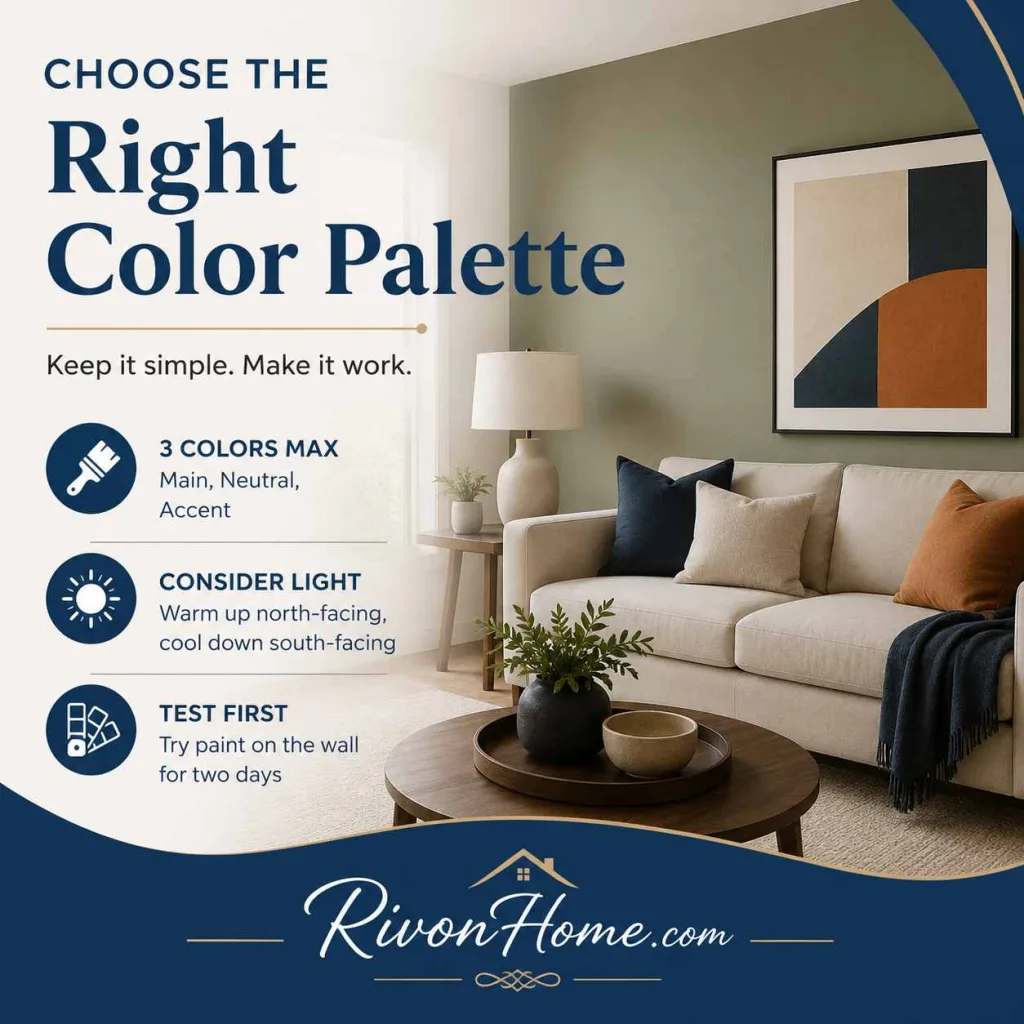
One overhead light is never enough. Good rooms use three types of light:
- Ambient light — general room lighting (ceiling fixtures, recessed lights)
- Task light — for reading, cooking, working (desk lamps, under-cabinet lights)
- Accent light — for mood and highlighting decor (wall sconces, lamps in corners)
Mixing these three makes a room feel finished, not flat. Dimmers are a small investment that changes how a whole room feels at night, and warm-toned bulbs (around 2700K–3000K) feel far more inviting than cold white light.
Mix Textures and Materials
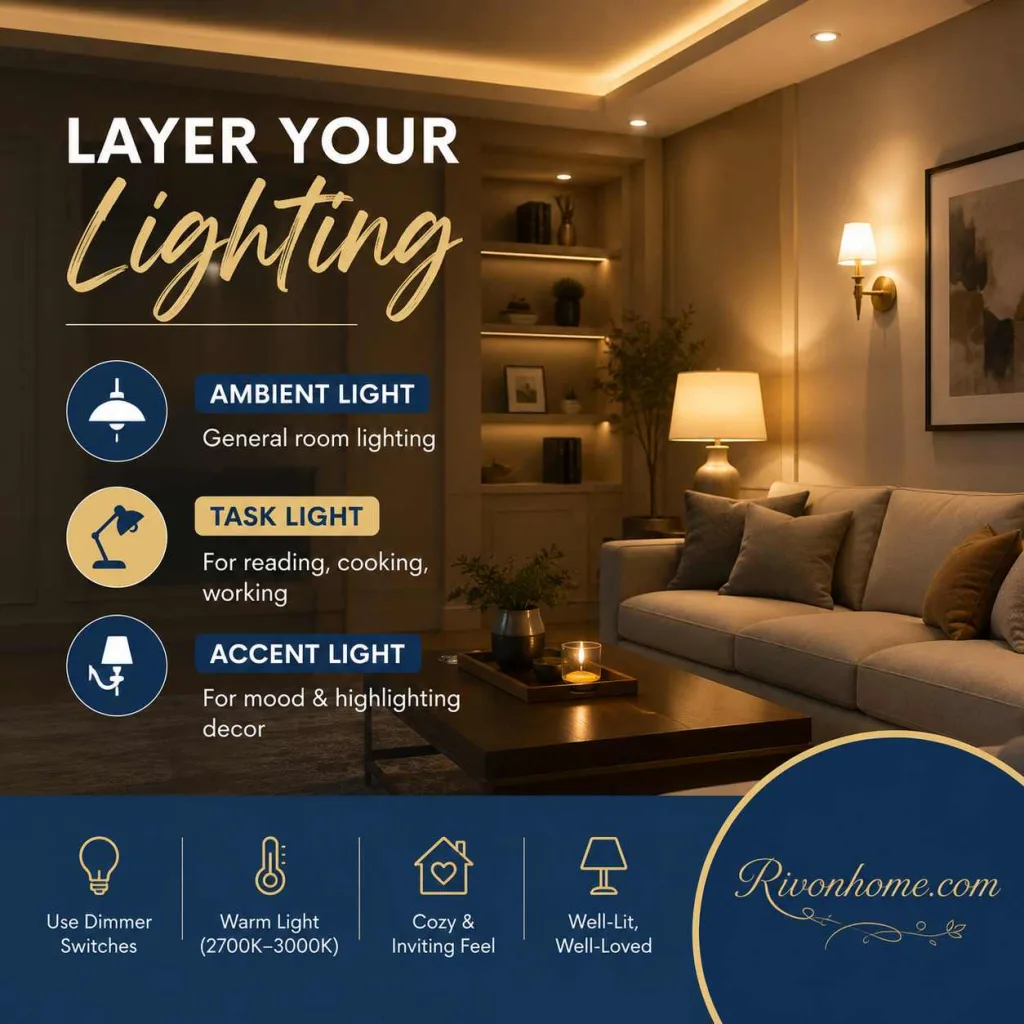
Flat rooms feel boring, even with great colors. Combine a few materials — wood, linen, wool, metal, glass — so the eye has something to move across.
A wool throw on a leather chair, or a linen curtain against a wood floor, does more work than another decorative object ever will. This is one of the simplest interior tips and tricks for a room that feels put-together without trying too hard.
Get Furniture Placement Right
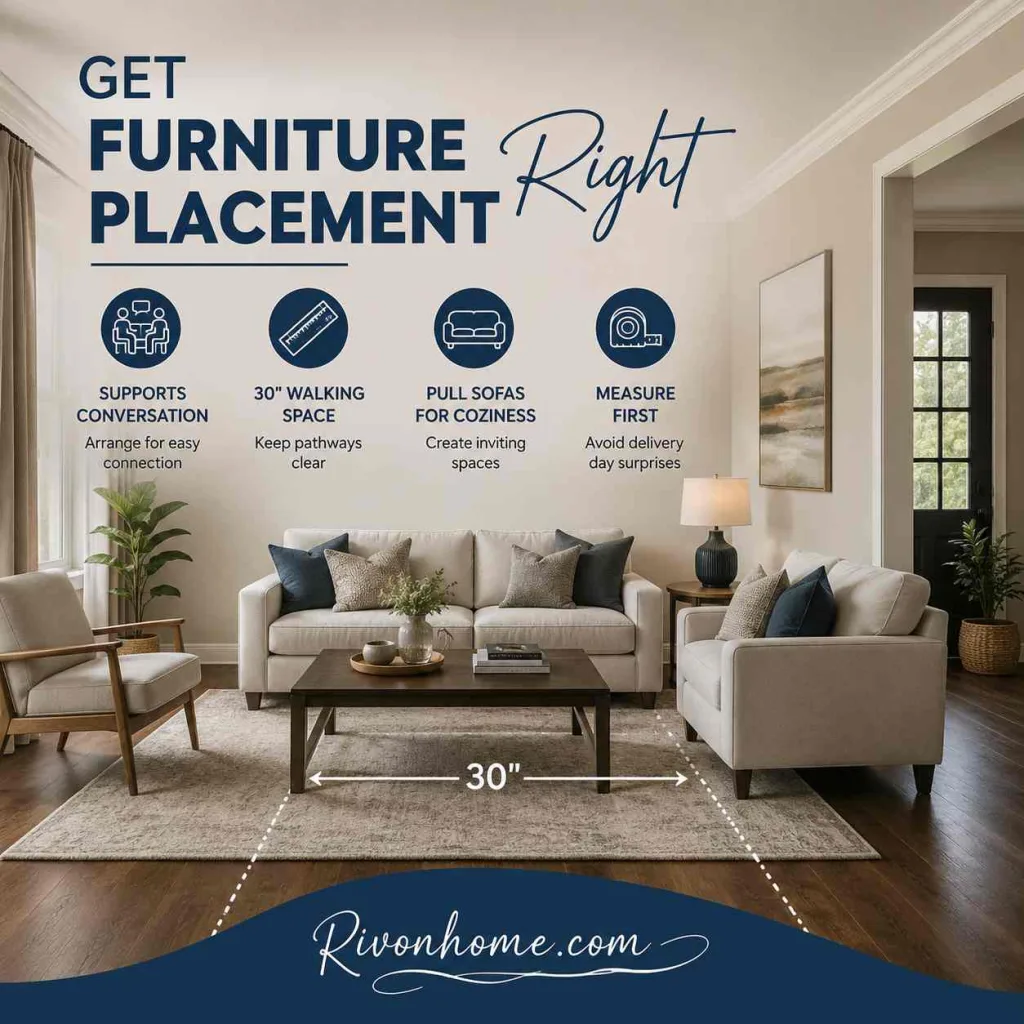
Furniture should support conversation and movement, not block it. Leave at least 30 inches of walking space between major pieces. Pull sofas away from the wall slightly to create a cozier feel in larger rooms.
In small rooms, float furniture at angles instead of pushing everything flat against the walls — it tricks the eye into seeing more space. Always measure doorways and hallways before buying large pieces, so moving day doesn’t turn into a problem.
Choose Decor Pieces With Intention
Every interior decoration piece in a room should either be useful or meaningful — ideally both. Skip generic mass-produced decor and pick a few things that actually mean something: a piece from your travels, art you love, a vase you’d actually miss. A room with five thoughtful objects beats a room with twenty random ones. For more ideas on styling with purpose, browse our Home Decor collection.
Use Rugs and Textiles to Anchor a Room
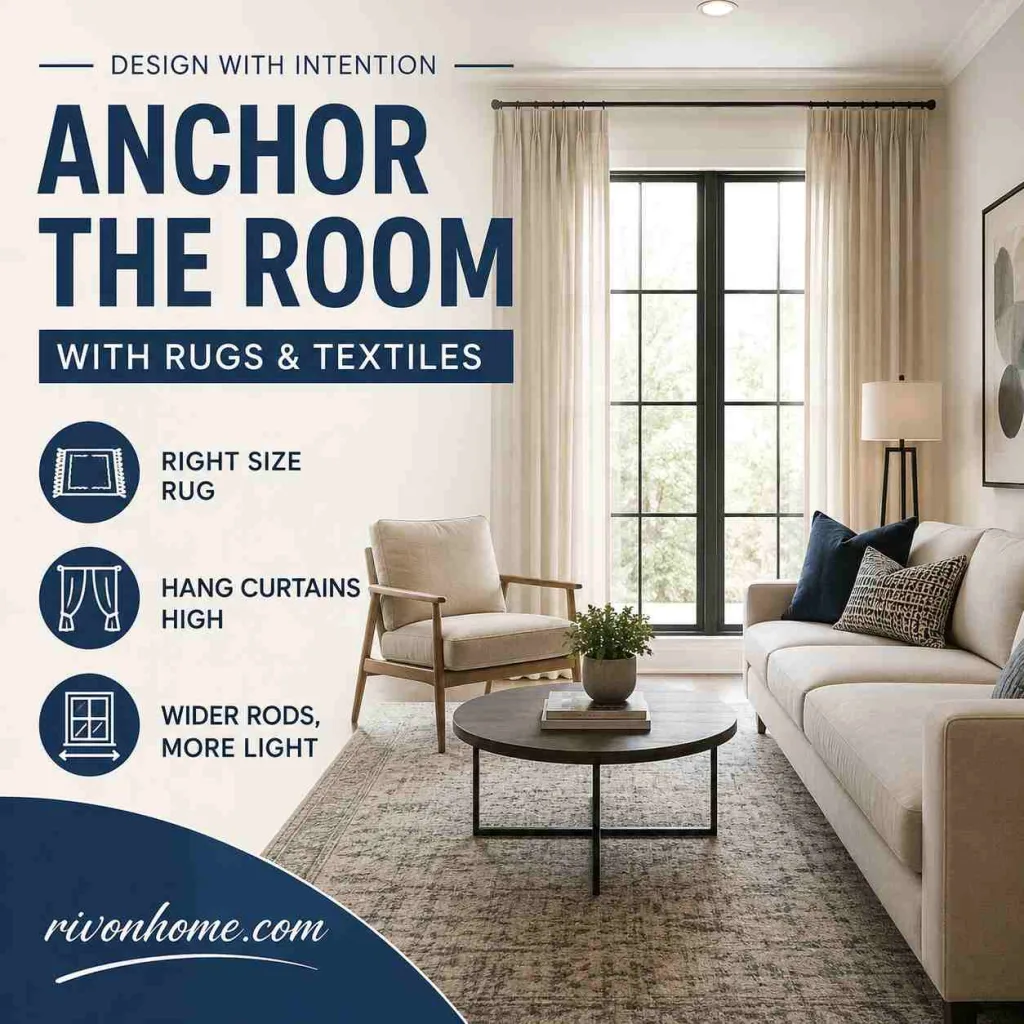
the ceiling look taller than it isA rug that’s too small makes furniture look like it’s floating. As a rule, all four legs of your main seating should sit on the rug, or at least the front legs.
Curtains should hang close to the ceiling, not just above the window frame — this makes ceilings look taller than they are. Choose curtain rods a few inches wider than the window so panels don’t block natural light when open.
Get Wall Decor and Art Placement Right
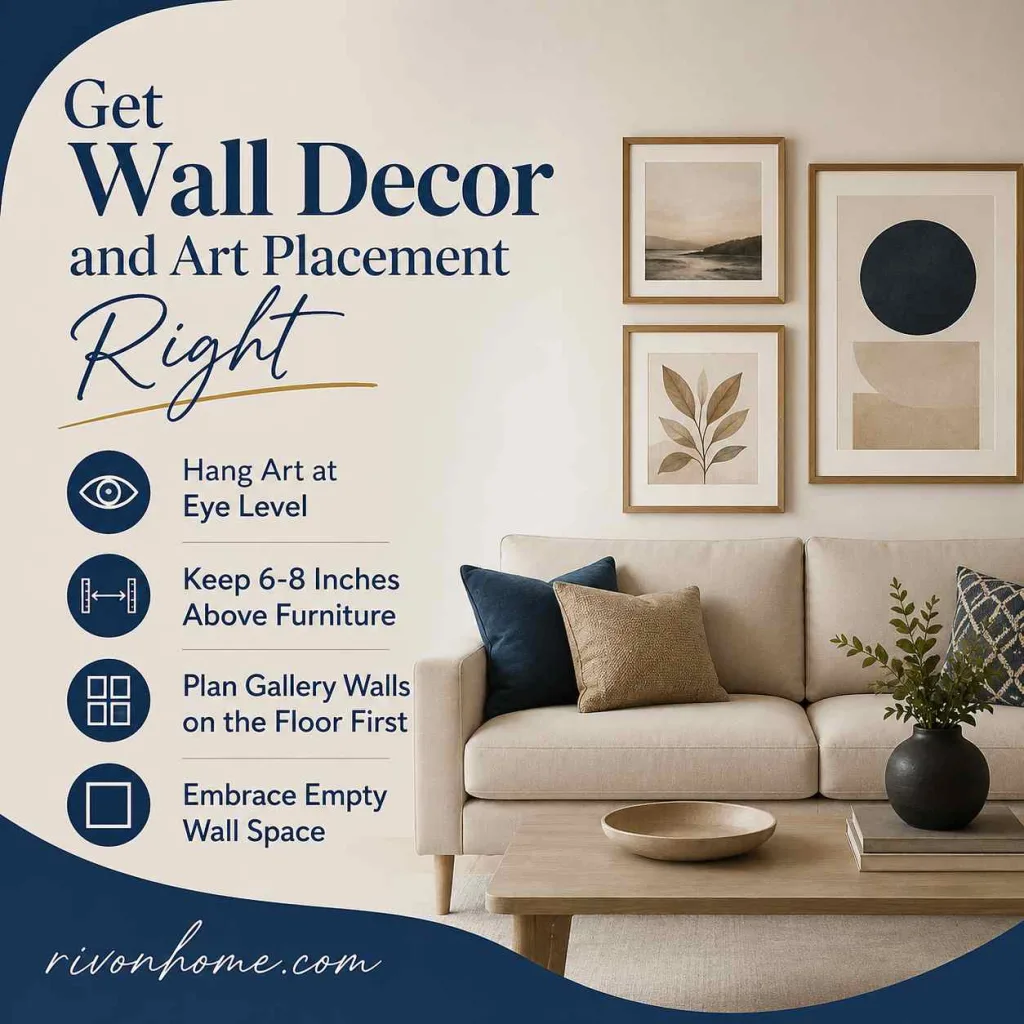
Hang art at eye level — roughly 57 to 60 inches from the floor to the center of the piece. Above furniture like a sofa or console, keep art 6 to 8 inches above the surface.
Gallery walls work best when you plan the layout on the floor first. Don’t be afraid of empty wall space either; a room doesn’t need to be filled to feel finished.
Use Mirrors to Open Up a Room
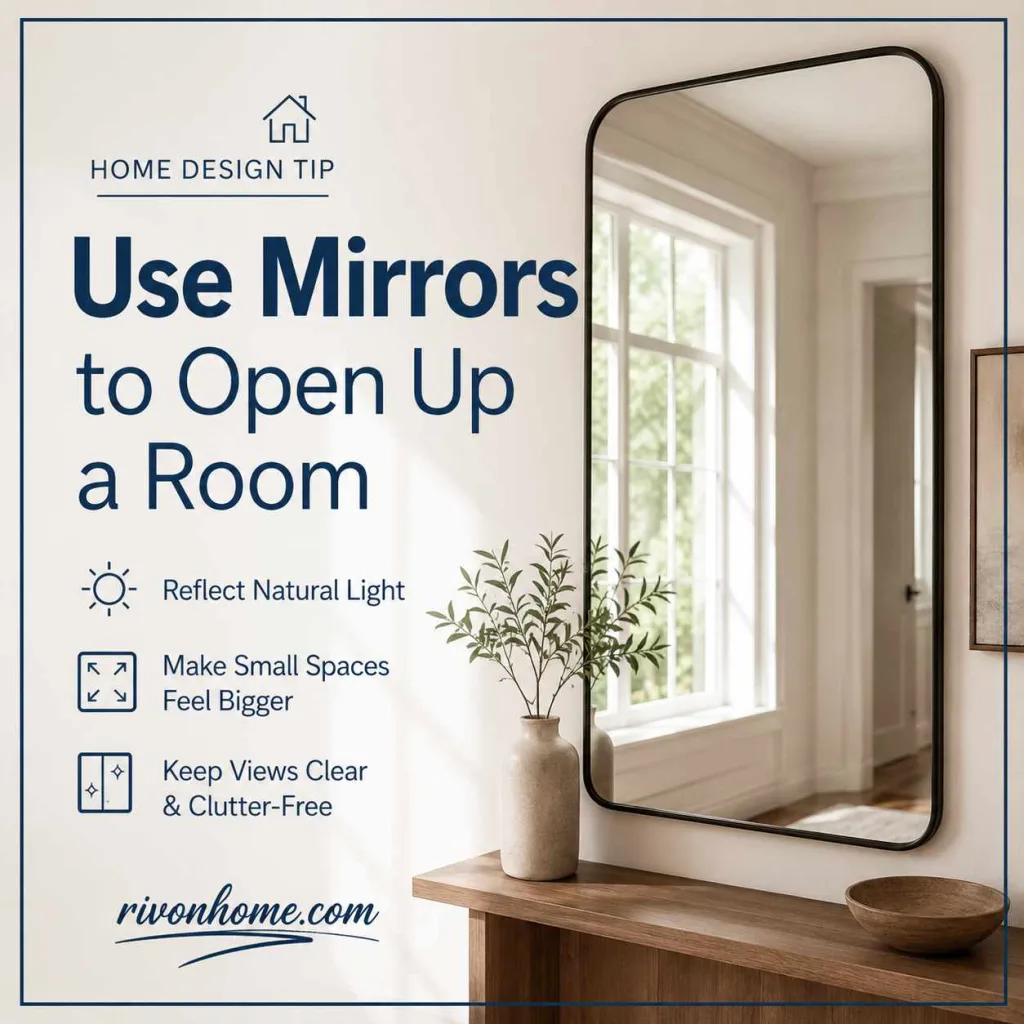
Mirrors do more than let you check your outfit. Placed across from a window, they bounce natural light deeper into a room. A large mirror in a small entryway or hallway makes the space feel wider instantly. Avoid placing mirrors directly across from clutter or a messy view, since they’ll double what’s already there.
Room-by-Room Decorating Tips
Every room in your home has different needs, so here are simple, practical tips to decorate each space the right way
Living room — Build around one focal point, usually the sofa or a fireplace. Keep coffee tables low enough not to block sightlines, and leave room to walk around seating.
Bedroom — Keep colors calm and lighting soft. Invest in good bedding over decorative extras, since it’s what you actually touch every day. Nightstands should be roughly the same height as your mattress top.
Kitchen — Open shelving works only if you’re tidy; otherwise, closed cabinets keep things looking clean. Add one warm light source beyond the overhead fixture for evening use.
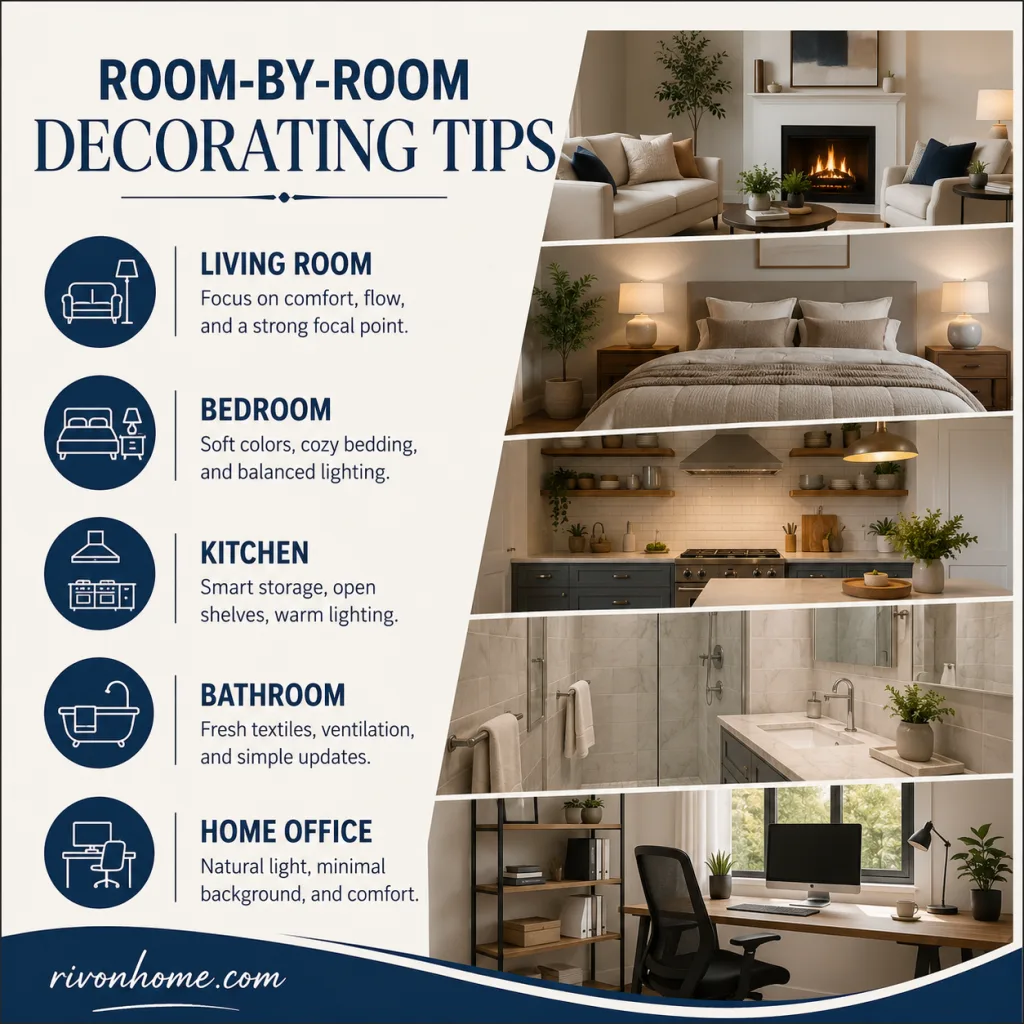
Bathroom — Textiles like towels and bath mats are the easiest way to change the look without renovation. Good ventilation matters as much as style, especially to prevent moisture damage.
Home office — Position the desk near natural light but not facing a glare-heavy window. Keep the wall behind your screen simple if you’re often on video calls.
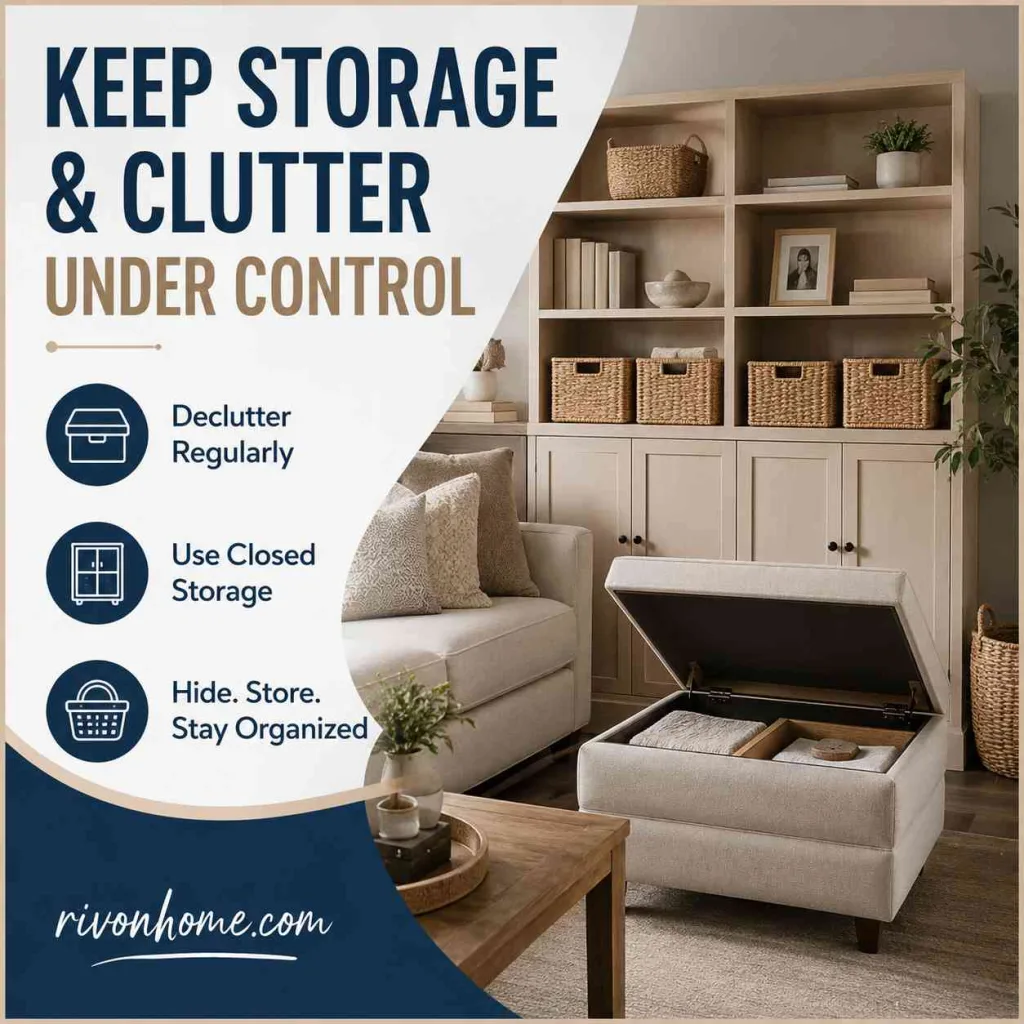
Keep Storage and Clutter Under Control
Clutter is the fastest way to undo good decorating. Before adding anything new, remove what you don’t need. Use closed storage — baskets, cabinets, ottomans with lids — for everyday items so surfaces stay clear. A tidy room always looks more expensive than a cluttered one, regardless of what’s actually in it.
Bring in Real Greenery
Plants add life to a room in a way nothing else does. Low-maintenance options like snake plants, pothos, or ZZ plants work well for beginners and low-light rooms.
Beyond looks, indoor plants can improve air quality and comfort, a point backed by research from the U.S. Green Building Council, which studies how indoor environments affect health and wellbeing.

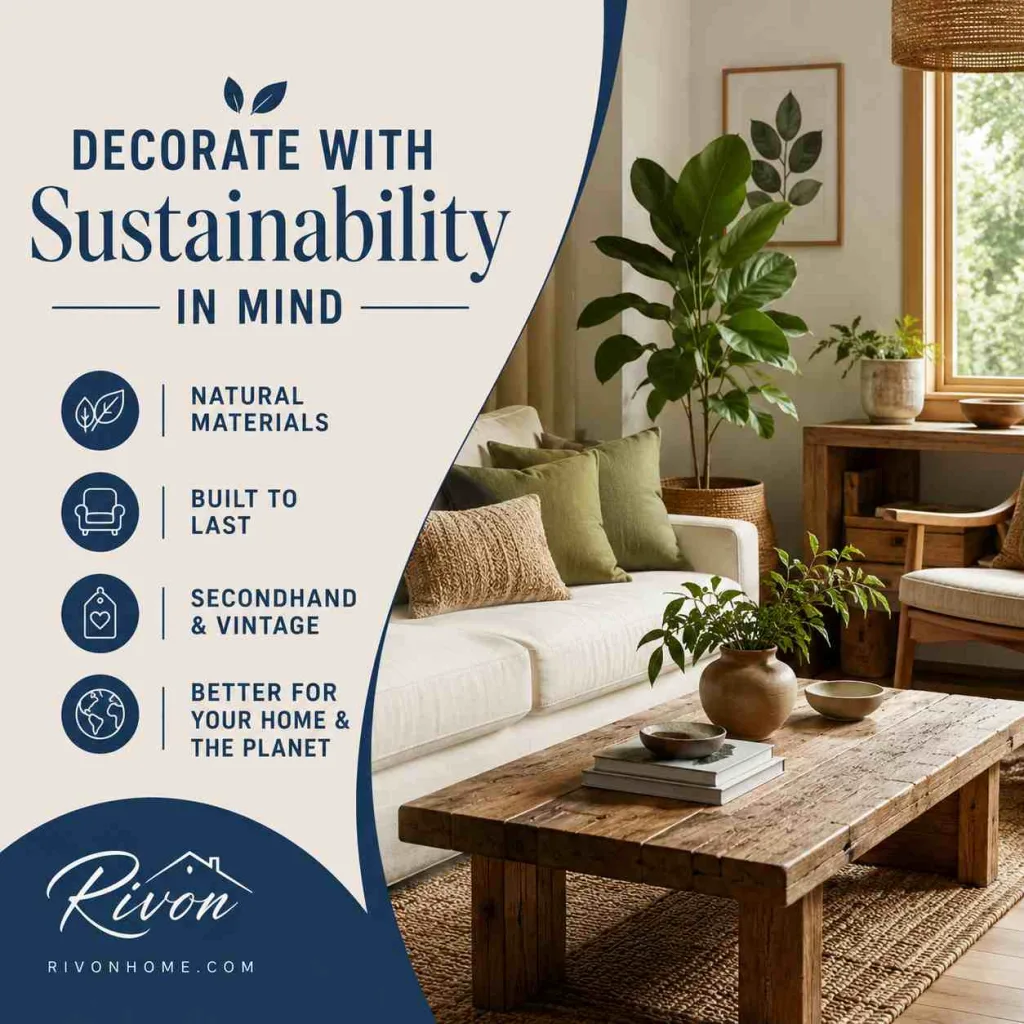
Decorate With Sustainability in Mind
Good decorating doesn’t have to cost the planet. Choose natural materials like wood, wool, and cotton over synthetic ones where you can, and look for furniture built to last rather than replace every few years.
Secondhand and vintage pieces add character while keeping usable furniture out of landfills. Small choices like these add up over time, both for your home and the environment around it.
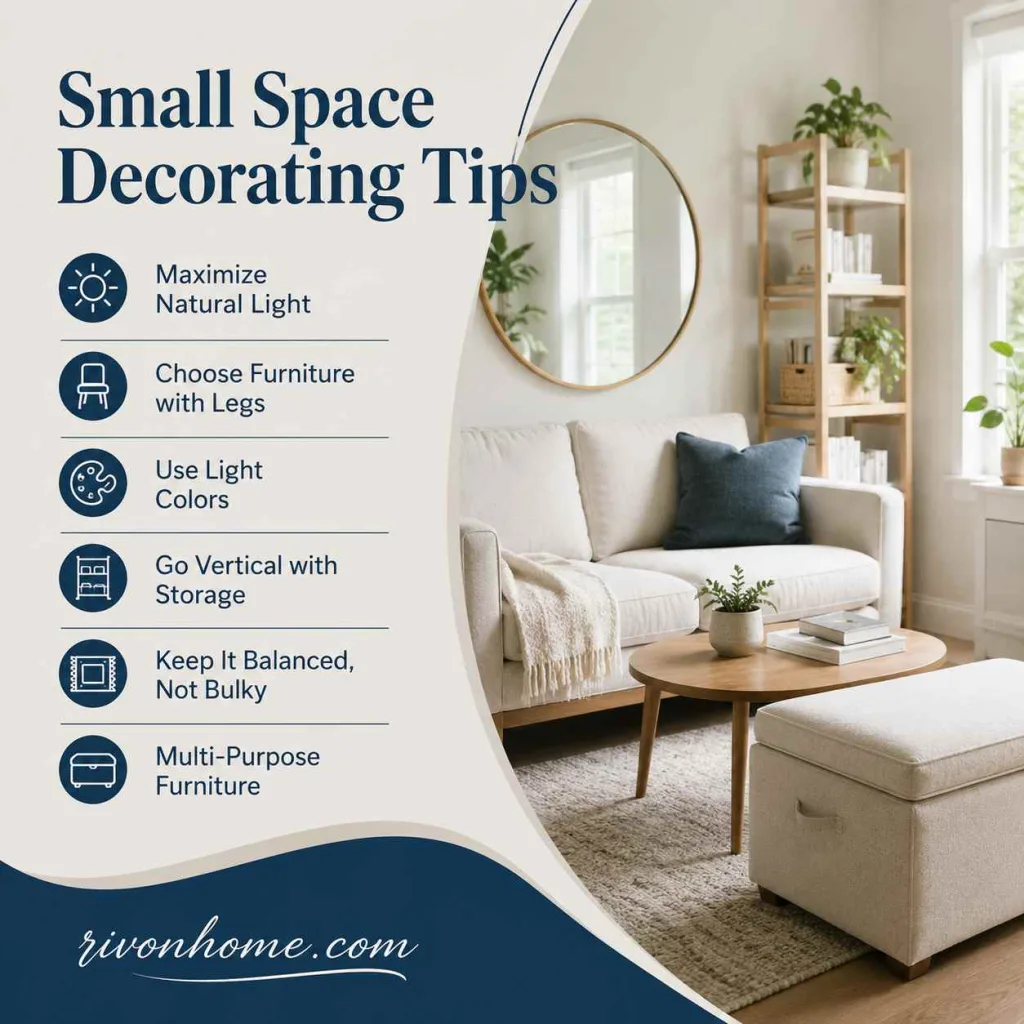
Small Space Decorating Tips
Small rooms need smarter choices, not fewer choices:
- Use mirrors opposite windows to bounce light around
- Choose furniture with legs — it lets light pass underneath
- Stick to a lighter color palette on walls and large furniture
- Use vertical storage instead of wide, bulky pieces
- Avoid oversized rugs or furniture that overwhelms the floor plan
- Multi-purpose furniture, like a storage ottoman, saves space without looking bare
Budget-Friendly Decorating Tricks
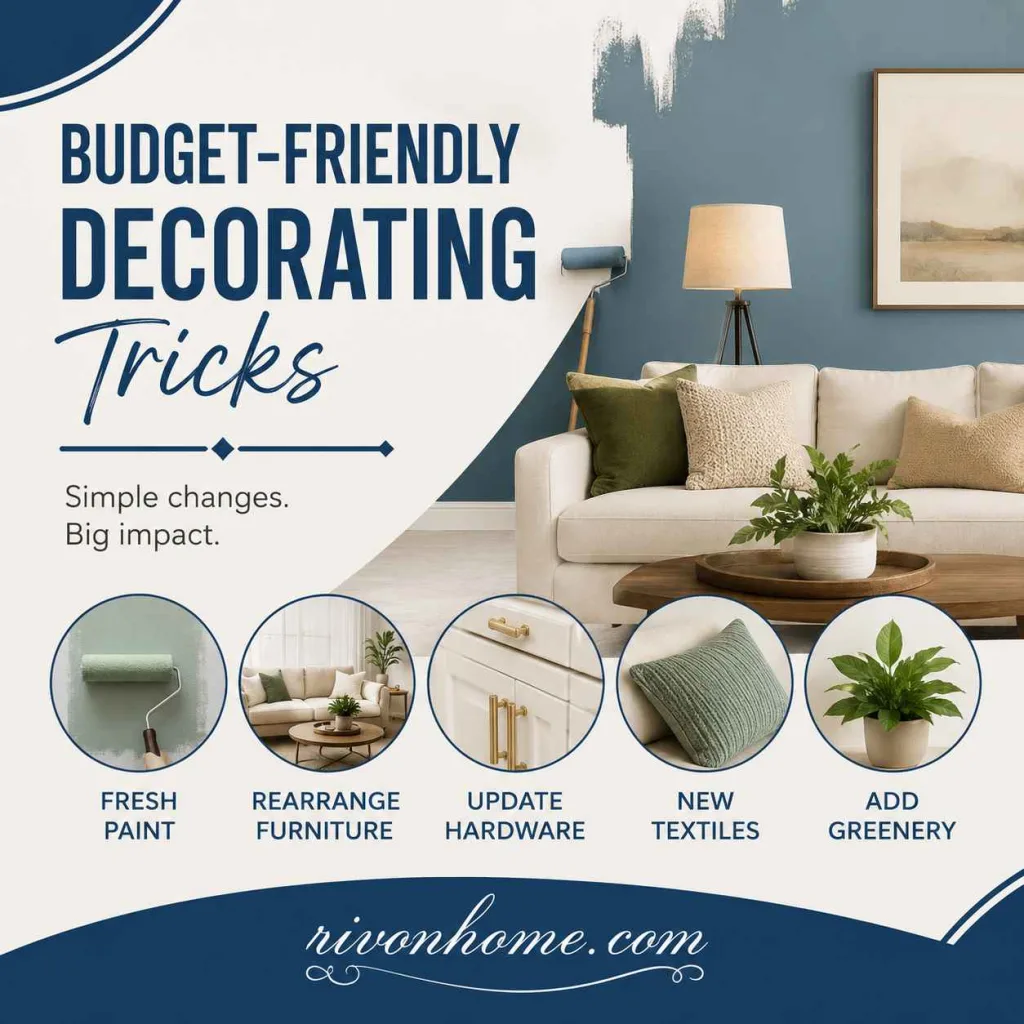
You don’t need a big budget to make a real difference. Paint is the cheapest way to transform a room. Rearranging existing furniture costs nothing and often reveals a better layout. Swapping hardware on cabinets, adding new throw pillows, or reframing old art can refresh a space for very little money. Even changing lampshades or adding a plant can shift how a whole room feels.
Refresh Your Home With the Seasons
You don’t need to redecorate fully to keep a home feeling current. Swap heavier textiles for lighter ones in warmer months, and bring in warmer tones and layered throws as it cools down. Rotating a few decor pieces seasonally keeps a home feeling lived-in and cared for, without any major cost or effort.

Common Interior Decorating Mistakes to Avoid
| Mistake | Why It Hurts the Room | Fix |
|---|---|---|
| Pushing all furniture against walls | Makes rooms feel disconnected | Float pieces slightly, create groupings |
| Matching everything too perfectly | Feels stiff, showroom-like | Mix textures and eras |
| Ignoring scale | Furniture looks awkward, too big or small | Measure the room before buying |
| Skipping lighting layers | Room feels flat or harsh | Add task and accent lighting |
| Too much matching decor | Loses personality | Choose a few meaningful pieces |
| Hanging art too high | Breaks visual connection with furniture | Keep art closer to eye level |
| Buying trend pieces only | Dates the room quickly | Balance trends with timeless basics |
A Note on Working With Local Style
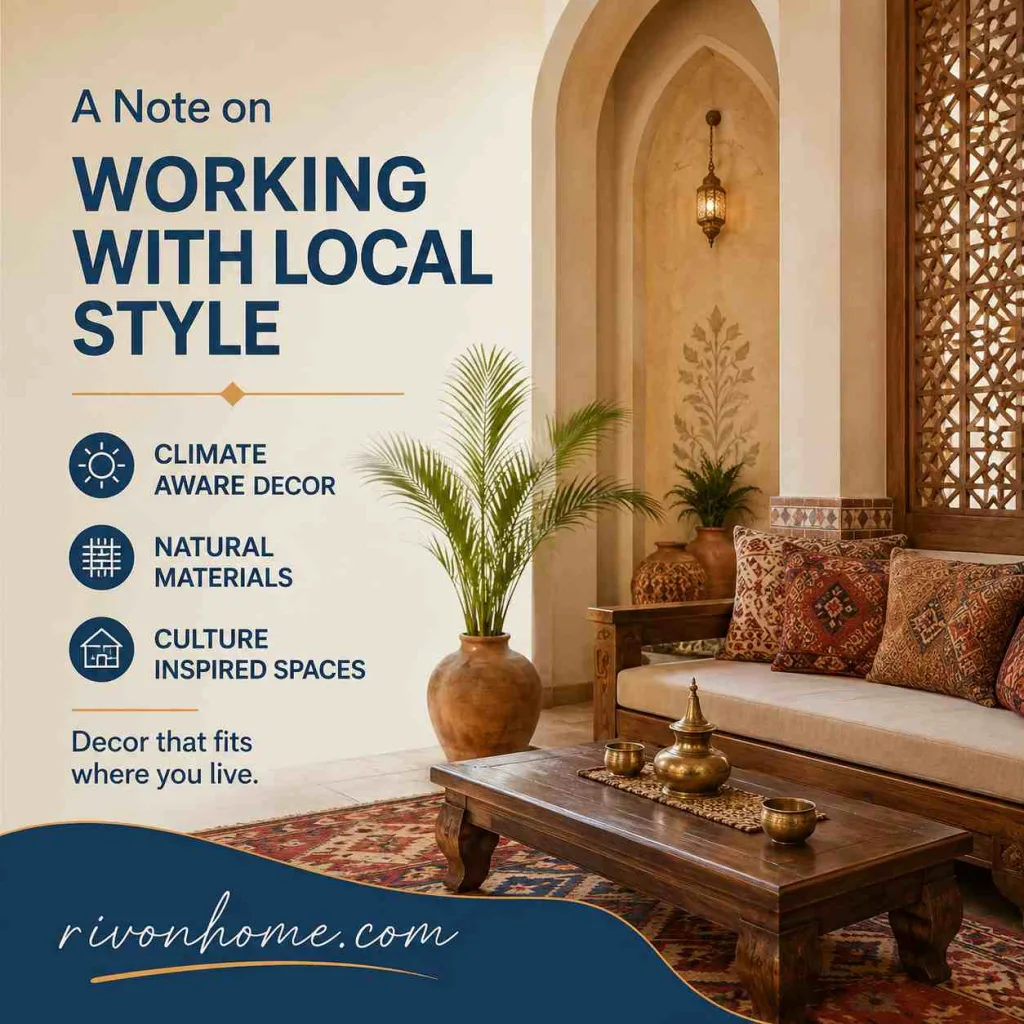
If you’re decorating in a specific region, local climate and culture matter. For example, homes with interior decor multan style often lean into warm tones, natural textiles, and layouts that manage heat well — worth keeping in mind if you’re decorating in that kind of climate. Good decorating always respects where the home actually is, not just a trend from somewhere else.
A Simple Decorating Checklist
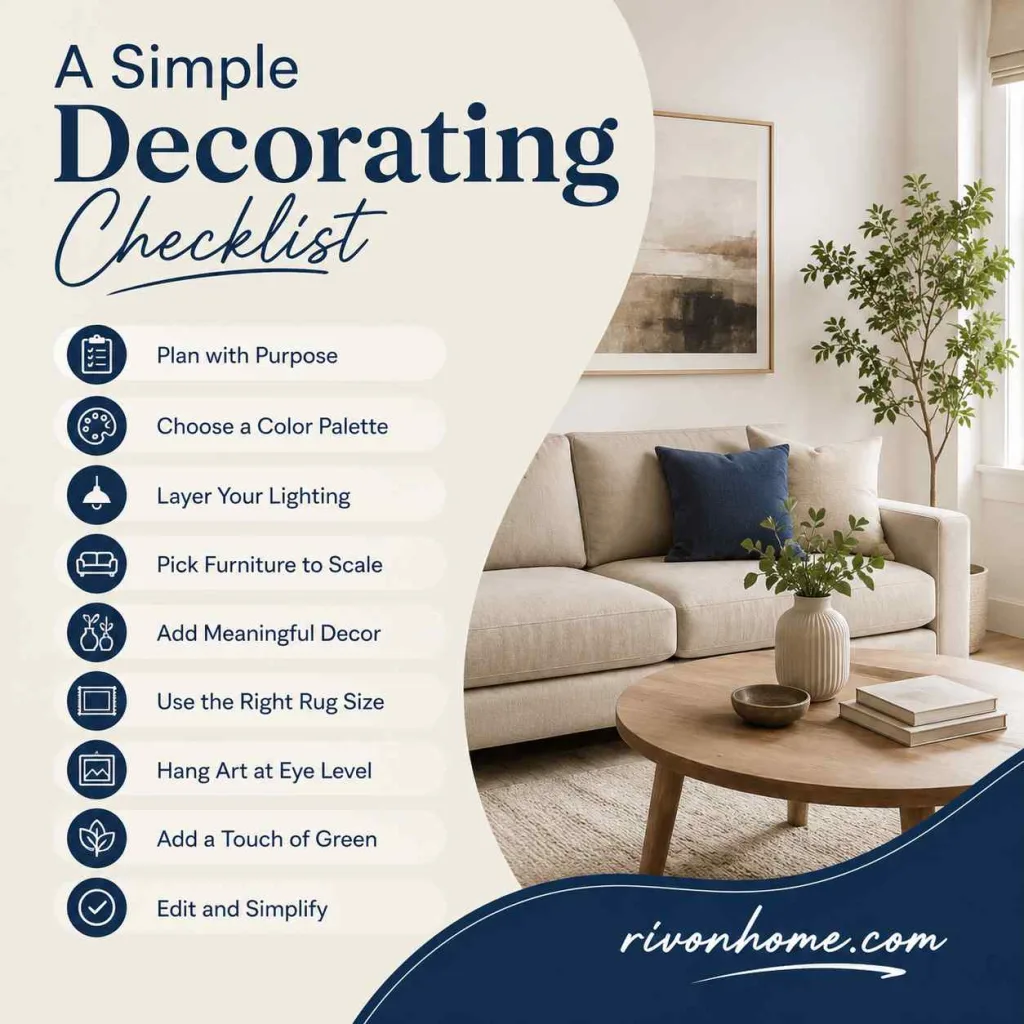
- Walk the room and note how it’s actually used
- Choose a three-color palette based on natural light
- Plan three layers of lighting
- Pick furniture to scale, leaving walking space
- Add one or two meaningful decor pieces, not many small ones
- Choose a rug sized to fit under furniture legs
- Hang art at eye level
- Add one plant for texture and air quality
- Step back and remove anything that feels unnecessary
Final Thoughts
Good decorating isn’t about following every trend — it’s about making choices that fit how you actually live. Start with a plan, layer your lighting, choose pieces with intention, and don’t be afraid to keep it simple.
These interior decoration tips mintpaldecor searchers ask about most all come back to one idea: a home should work for you first, and look good second — though with a bit of care, you can easily have both.
