
Kitchen Upgrading Advice: A Simple, Honest Guide From an Architect

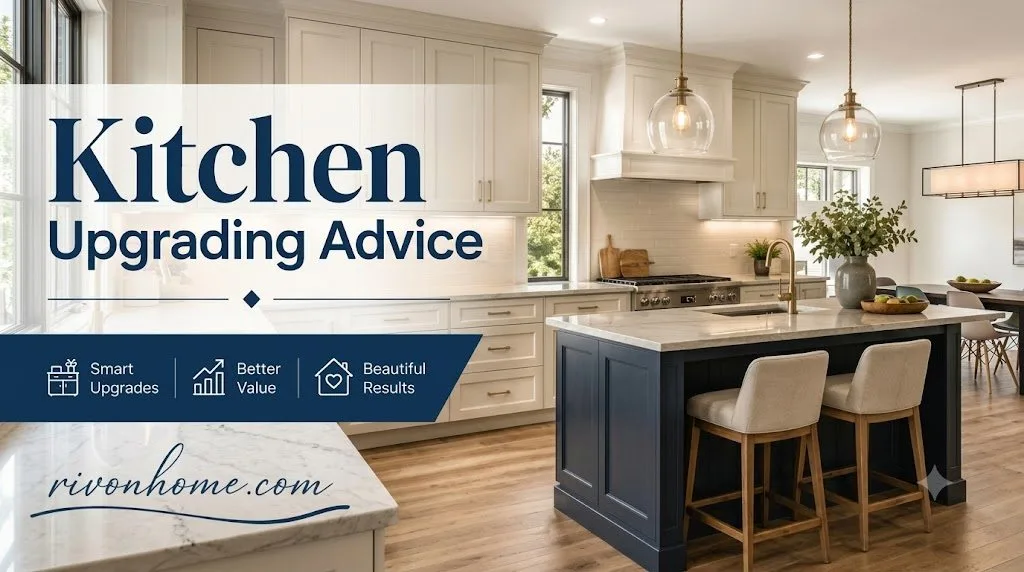
I’m Stefano Schiavon, and I’ve spent my career designing spaces that feel good to live in — not just spaces that look good in a photo. At Rivon Home, that’s the same standard I hold for every room, and the kitchen is where it matters most. It’s the room people actually use every day.
This guide is my honest kitchen upgrading advice, based on real projects, not trends. No fluff. Just what works, what’s worth your money, and what to skip.
Start With a Plan, Not a Shopping List
Before you buy anything, decide what’s actually wrong with your kitchen. Is it the layout? The storage? The look? These are three different problems with three different fixes.
Walk through your kitchen and ask:
- Do I have enough counter space to prep food comfortably?
- Is storage easy to reach, or am I digging through cabinets?
- Does the room feel bright, or dark and closed in?
- Am I upgrading to sell the house, or to live better in it?
That last question changes everything. Selling soon? Focus on Kitchen Upgrading Advice buyers expect. Staying put? Focus on what makes daily cooking easier. Know your “why” before touching a single cabinet — that’s the first rule I give every client. Then set a real budget, and add 15-20% for surprises older homes love to hide.

Kitchen Upgrading Advice That Give You the Best Return
Some Kitchen Upgrading Advice pay you back in comfort and resale value. These are the ones I recommend first.
Repaint or reface your cabinets
Full cabinet replacement is expensive. Repainting or refacing gives you 80% of the visual change for a fraction of the cost. Stick to a timeless color — soft white, warm greige, or a deep, muted green.

Swap the hardware
New knobs and pulls are one of the cheapest ways to make a kitchen feel current. It takes an afternoon and costs very little.

Update the countertops
Quartz is the safest long-term choice — it’s durable, low-maintenance, and holds resale value better than trend materials. Butcher block is a warm, budget-friendly option if you want something different.

Add or refresh the backsplash
A backsplash is a small area that makes a big visual difference. Subway tile, zellige tile, or a simple stone slab all age well.

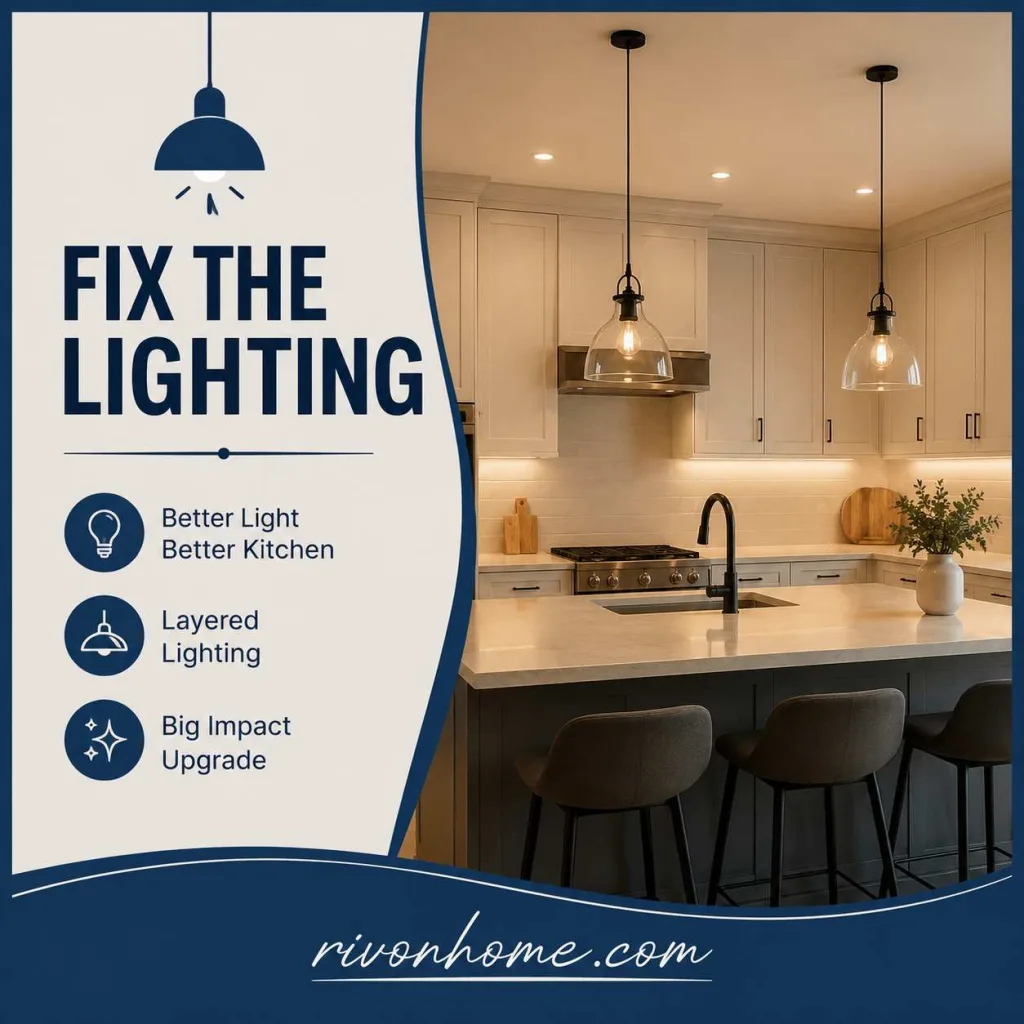
Fix the lighting
This is the Kitchen Upgrading Advice people skip and always regret skipping. I cover it in detail below, because lighting changes a kitchen more than almost anything else.
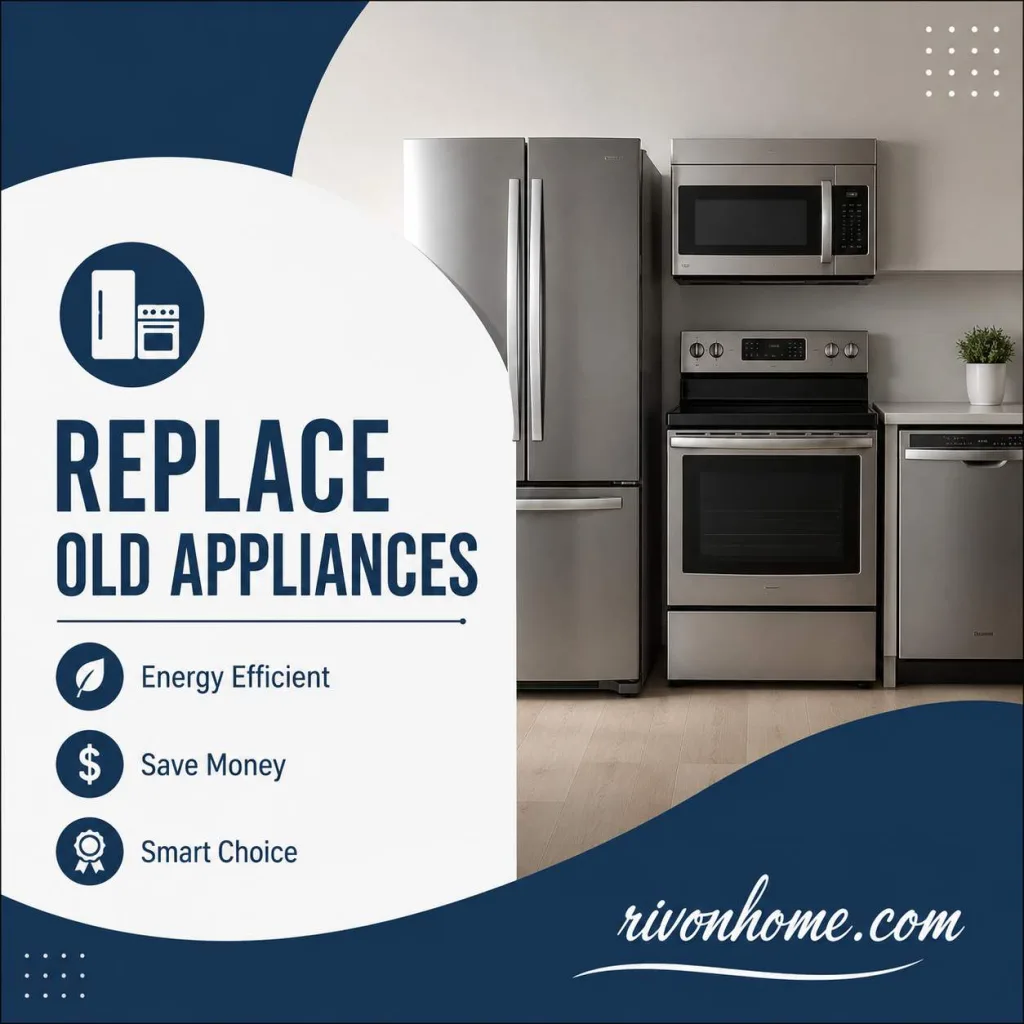
Replace old appliances
Focus on function, not flash. Energy-efficient appliances save you money over time and are a real selling point. The U.S. Department of Energy’s ENERGY STAR program is a reliable place to compare efficiency ratings before you buy.
Best Flooring Options for a Kitchen Upgrading Advice
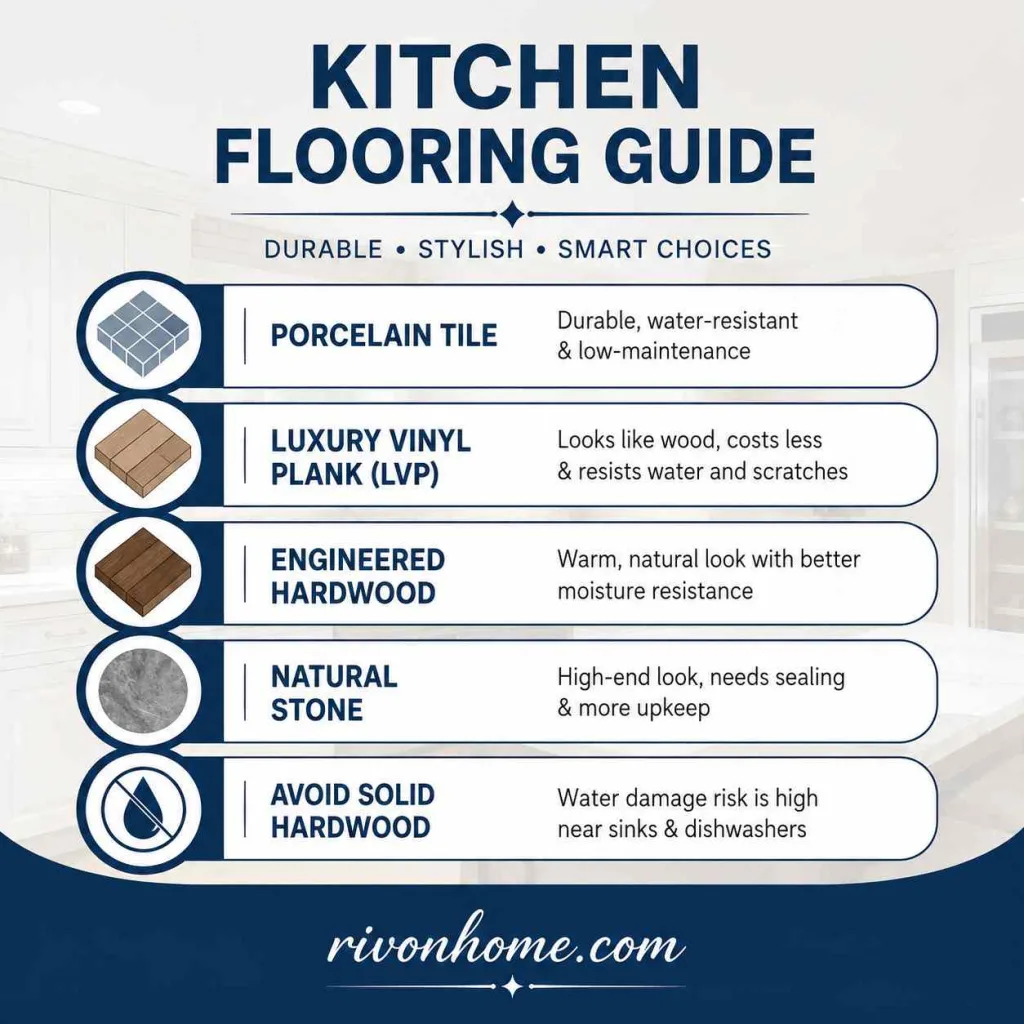
Flooring takes a beating in a kitchen — spills, dropped pans, constant foot traffic — so it needs to handle real life, not just look good on day one.
- Porcelain tile is durable, water-resistant, and low-maintenance. A solid choice if you cook often.
- Luxury vinyl plank (LVP) looks like wood, costs less, and holds up well against water and scratches.
- Engineered hardwood gives you a warmer, natural look with better moisture resistance than solid wood.
- Natural stone looks high-end but needs sealing and more upkeep — worth it only if you’re prepared to maintain it.
Avoid solid hardwood near sinks and dishwashers if you can help it. Water damage is one of the most common flooring problems I see in older kitchens.
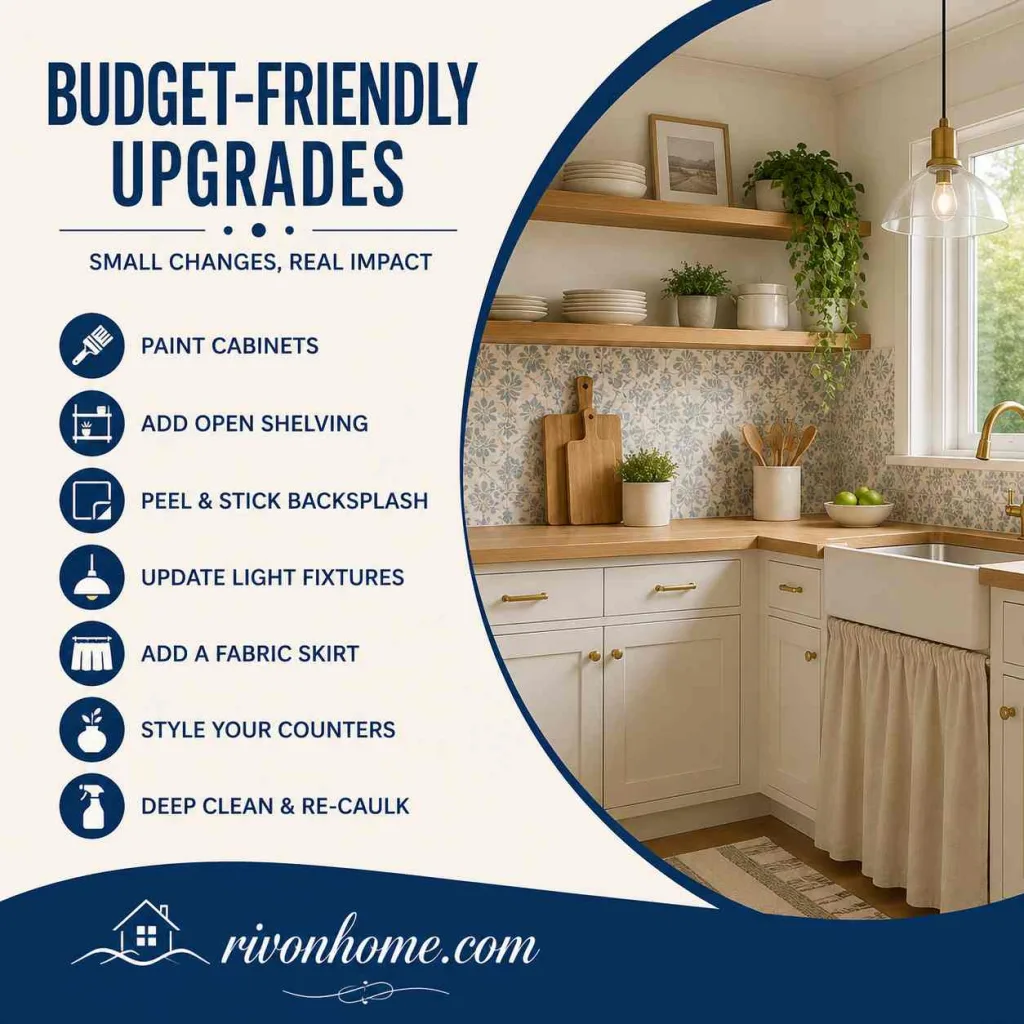
Budget-Friendly Kitchen Upgrading Advice (Small Changes, Real Impact)
You don’t need a full renovation to feel a difference. If you’re on a tight budget, or renting, these changes cost little and still transform the room:
- Paint the cabinets instead of replacing them.
- Add open shelving for a lighter, more personal feel.
- Use removable wallpaper or tile decals on the backsplash — great for renters, since it comes off clean.
- Change the light fixtures, and save the originals if you’re renting.
- Add a fabric skirt to hide an ugly cabinet or open shelf.
- Style your counters with just a few objects. An empty counter photographs better and feels calmer to cook in.
- Deep clean and re-caulk. This sounds too simple to matter, but a clean, tightly sealed kitchen looks newer instantly, for free.
This kind of low-cost kitchen upgrading advice is often the most useful, because it removes the excuse of “I’ll wait until I can afford a full remodel.
Kitchen Upgrading Advice to Avoid
Not every upgrade is worth doing, especially if resale value matters to you. I’ve seen these mistakes on real projects:
| Mistake | Why it hurts you |
|---|---|
| Removing storage walls for “open concept” | You lose real cabinet space that buyers and cooks both want |
| Over-customizing (bold colors, unusual layouts) | Personal taste rarely matches the next buyer’s |
| Cheap materials to save money upfront | They wear out fast and need replacing sooner |
| Luxury, oversized appliances | Most buyers won’t pay extra for them, and they can look out of place in a modest home |
| Skipping ventilation | Poor airflow leads to grease buildup, moisture, and lingering odors |
| Ignoring the work triangle | A kitchen where the sink, stove, and fridge are far apart is tiring to cook in, no matter how nice it looks |
If you only remember one thing from this section: neutral, well-built, and functional will always outlast trendy.
Small Kitchen Upgrade Ideas
Small kitchens need smart choices, not just fewer choices.
- Go vertical. Tall cabinets and shelves near the ceiling use space most kitchens waste.
- Choose light, reflective surfaces. Light countertops and a light backsplash make a small room feel bigger.
- Add under-cabinet lighting. It brightens your workspace without taking up any floor space.
- Use pull-out organizers. Deep cabinets and narrow corners work much harder with the right inserts.
- Skip bulky handles. Slim or recessed hardware keeps walkways clear in a tight galley kitchen.

Smart Storage Kitchen Upgrading Advice to Free Up Space
Most kitchens don’t need more space — they need better-organized space. These upgrades make a real difference without expanding the room:
- Drawer dividers and inserts. They turn one messy drawer into organized sections for utensils, tools, and spices.
- Deep drawers instead of lower cabinets. Drawers are easier to see into and dig through than cabinets with doors.
- A dedicated pantry cabinet. Even a narrow pull-out pantry adds a surprising amount of storage in a small footprint.
- Corner cabinet solutions. Lazy Susans or pull-out corner units make dead corner space usable again.
- Vertical dividers for baking sheets, cutting boards, and trays that usually get stacked and jammed together.
Good storage isn’t about fitting more in. It’s about being able to find what you need without digging.

Sustainable and Healthy Kitchen Upgrading Advice
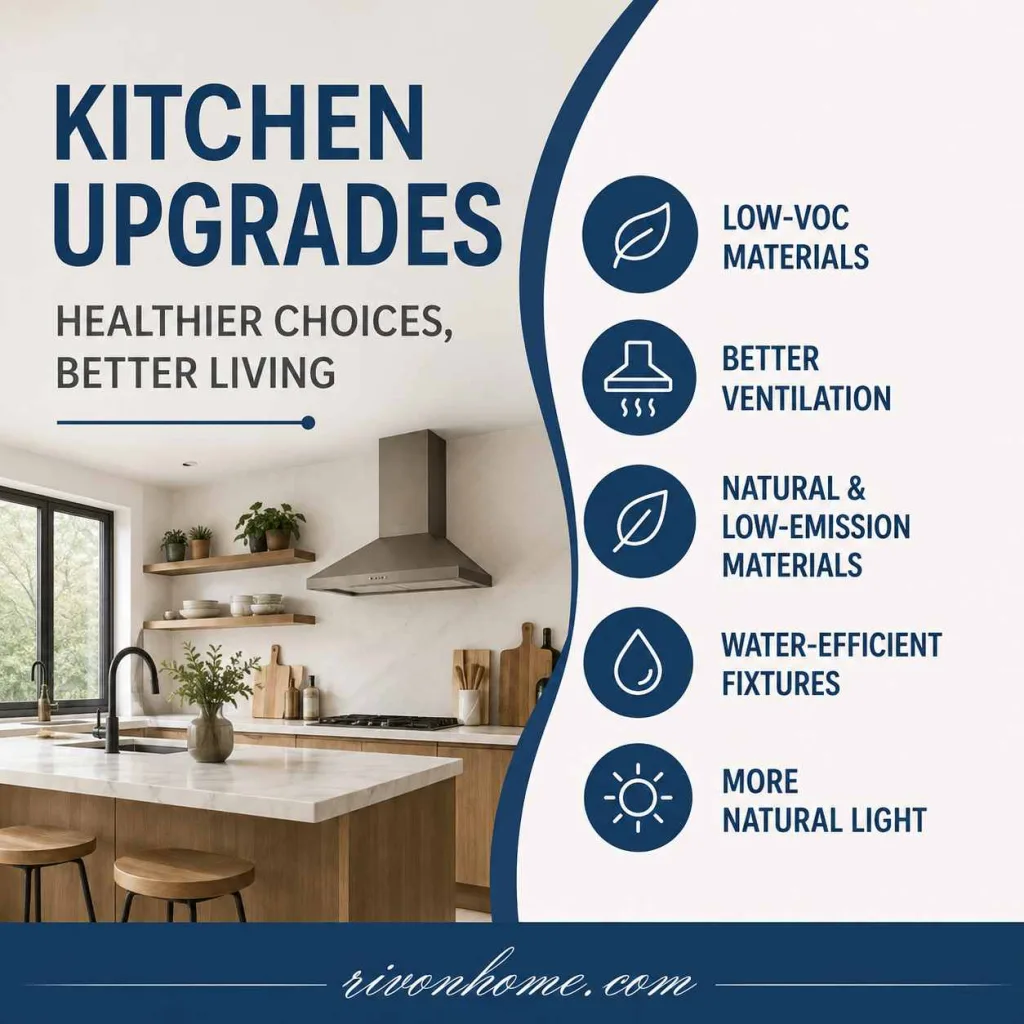
This is the part of kitchen upgrading advice most articles skip, and it’s the part I care about most. A kitchen affects your health more than people realize — the air you breathe while cooking, the materials you touch every day, and the water you use.
- Choose low-VOC paint and sealants. Standard paint releases chemicals into the air for months. Low-VOC options are widely available and cost about the same.
- Improve ventilation. A good range hood removes cooking fumes and moisture before they build up. This matters more than most homeowners realize.
- Pick natural or low-emission materials for countertops and cabinets, like solid wood, quartz, or FSC-certified materials.
- Install water-efficient faucets. They cut water use without cutting performance. The EPA’s WaterSense program lists certified fixtures if you want to compare options.
- Let in more natural light. It’s the simplest health upgrade there is, and it reduces how much you rely on artificial lighting during the day.
None of this needs to cost more. It just needs to be part of the plan from the start.
Lighting: The Kitchen Upgrading Advice Most People Underestimate
Good kitchen lighting works in three layers, not one:
- Ambient light — the main overhead light that fills the whole room.
- Task light — under-cabinet lighting over the counters, where you actually cut and cook.
- Accent light — smaller fixtures over an island or inside open shelves, for warmth and character.
Most outdated kitchens only have the first layer. Adding task lighting alone can make a kitchen feel brand new, and it’s one of the most affordable upgrades on this list.

DIY or Hire a Professional?
Some Kitchen Upgrading Advice are safe to do yourself. Others aren’t.
Good DIY projects: painting cabinets, swapping hardware, open shelving, backsplash tile, light fixture swaps (for fixtures, not wiring).
Call a professional for: plumbing changes, electrical work, moving walls, gas line work for stoves, and full cabinet installation. If a project touches water, gas, or electricity, the cost of hiring someone is small compared to the cost of getting it wrong. For guidance on qualified professionals and design standards, the National Kitchen and Bath Association is a solid, independent resource.

Kitchen Upgrading Advice Cost Guide (Rough Estimates)
Every kitchen upgrade has a price range worth knowing before you commit — here’s a quick, honest breakdown to help you budget smart.

Costs vary a lot by region and material choice, so treat these as a starting point, not a quote.
Quick Answers for Kitchen Upgrading Advice
How much should I spend on a kitchen upgrade?
A common rule is to keep your kitchen renovation under 10-15% of your home’s value. This keeps your spending in line with what you’re likely to recover if you sell.
What’s the single best upgrade for the money?
Cabinet paint plus new hardware. It’s the biggest visual change for the lowest cost, every time.
Can I upgrade a kitchen without a full renovation?
Yes. Paint, hardware, lighting, and a backsplash refresh can transform a kitchen without touching the layout or plumbing.
Final Thought
Good Kitchen Upgrading Advice isn’t about spending more. It’s about spending in the right order — plan first, fix function, then style. Start small if you need to. Even one or two of these changes will make your kitchen feel like a room you actually enjoy standing in.
For more ideas on bringing this same thinking into the rest of your home, visit our Home Decor section.
