
Property Maintenance Tips Every Homeowner Should Know

I’m Stefano Schiavon, an architect and the person behind RivonHome. I’ve spent years studying how buildings age and how small habits protect them. One thing I’ve learned: property maintenance tips only work if they’re simple enough to actually follow.
Most homeowners don’t lose money on big disasters. They lose money on small problems they ignored for too long. A loose gutter. A dripping tap. A furnace filter no one changed. This guide walks you through the property maintenance tips that matter most, in plain language, so you can protect your home without a headache.
Start With a Simple Inspection Routine
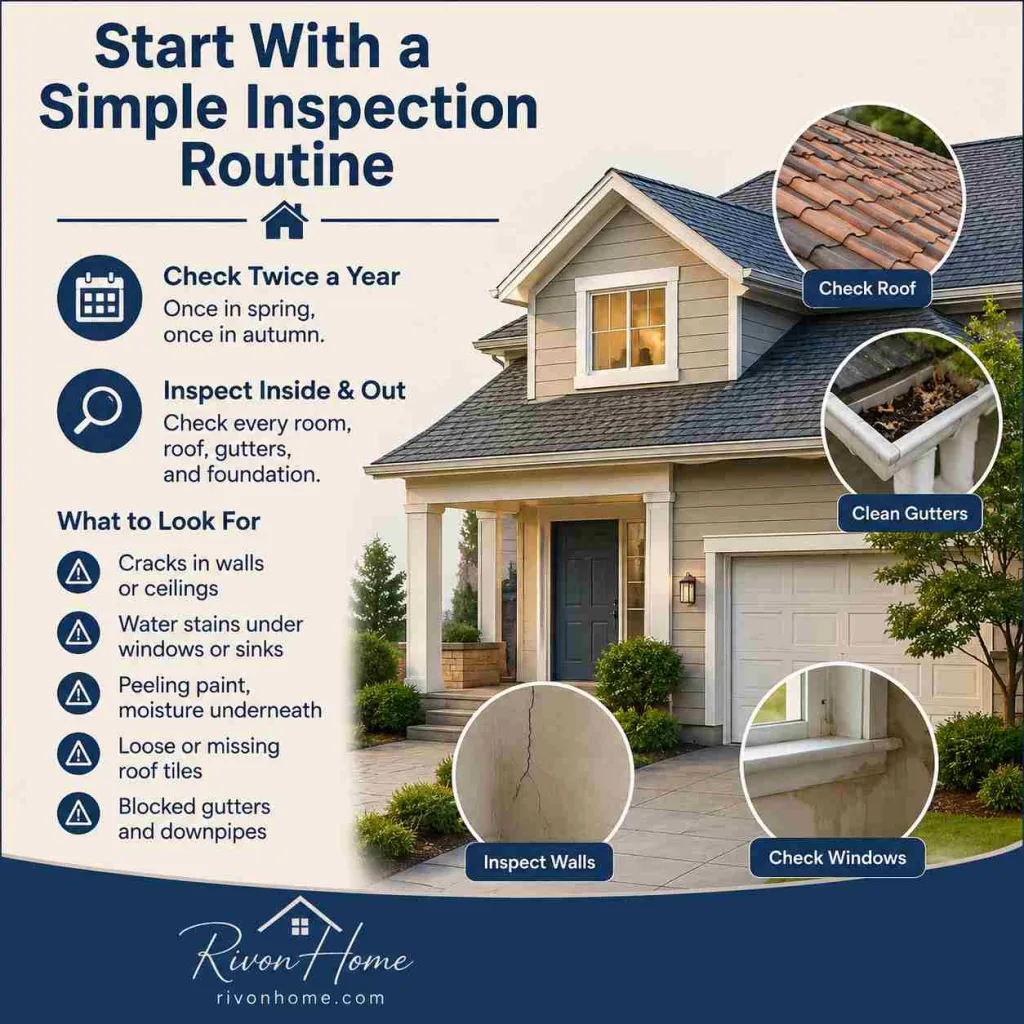
Check your home twice a year for Property Maintenance Tips. Once in spring, once in autumn.
Walk through every room. Look at the ceilings, the walls, and the floors. Then walk around the outside. Check the roof, the gutters, and the foundation.
What to look for
- Cracks in walls or ceilings
- Water stains under windows or sinks
- Peeling paint, which often means moisture underneath
- Loose or missing roof tiles
- Blocked gutters and downpipes
This one habit catches most problems before they turn expensive.
Keep the Roof and Gutters Clear
Your roof takes the most punishment of any part of your home. Clean your gutters at least twice a year, more often if you have trees nearby.
Blocked gutters send water down your walls instead of away from your home. Over time, this causes rot, mold, and even foundation damage.
If you spot cracked tiles or sagging spots after a storm, call a roofer right away. A small repair now costs far less than a full replacement later.

Check Plumbing Before It Becomes a Problem
Plumbing issues rarely start big. They start as a slow drip or a small stain.
Simple plumbing checks
- Look under every sink for leaks or moisture
- Check water pressure once a month
- Test your water heater once a year
- Know where your main shut-off valve is, before you need it
A small leak wastes water every single day. Fixing it early saves money and protects your floors and walls.

Service Your HVAC System Every Year
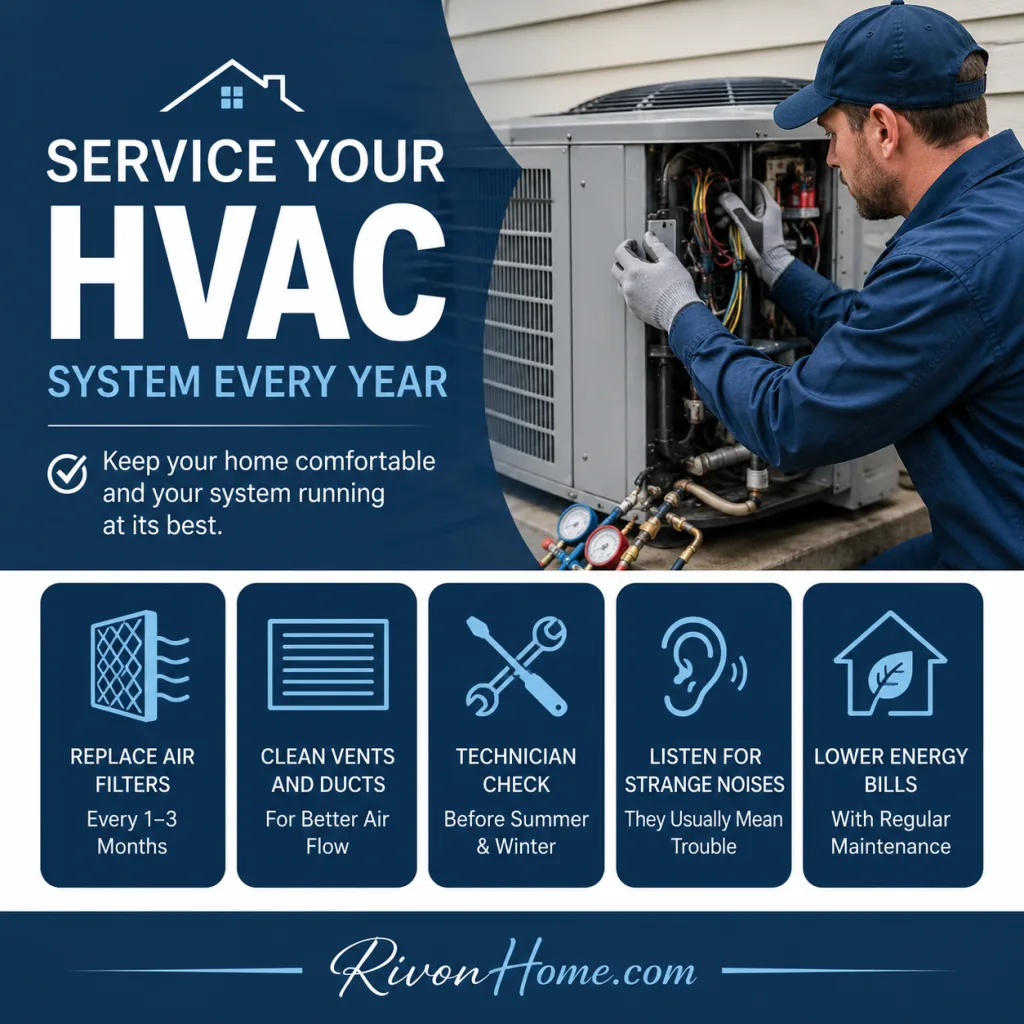
Heating and cooling systems work hard, especially during extreme weather. A yearly service keeps them efficient and helps them last longer.
- Replace air filters every one to three months
- Clean vents and ducts
- Have a technician check the system before summer and winter
- Listen for strange noises, they usually mean trouble
A well-maintained HVAC system also lowers your energy bill. The U.S. Department of Energy notes that regular maintenance keeps cooling systems running at their best efficiency.
Don’t Skip Electrical Safety Checks
Electrical problems are one of the top causes of house fires. Most are preventable.
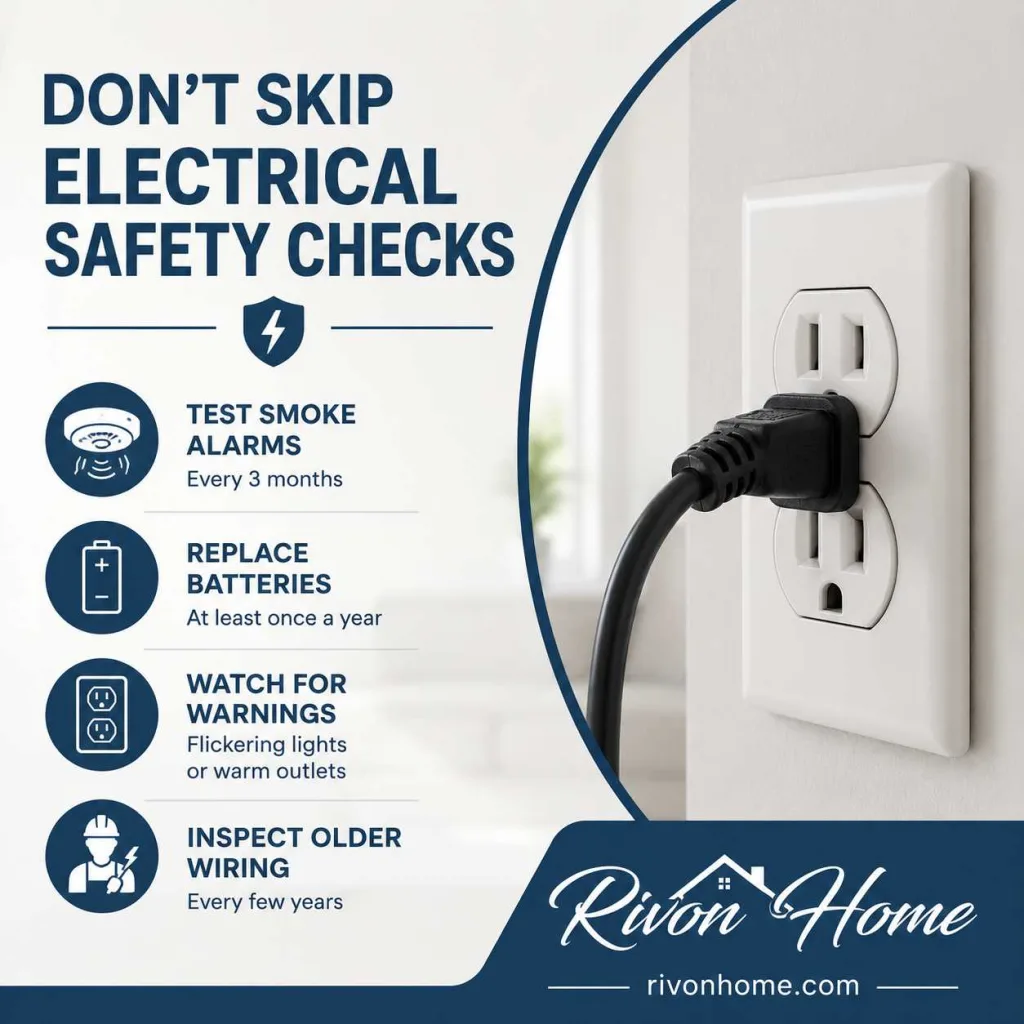
- Test smoke alarms every three months
- Replace batteries at least once a year
- Watch for flickering lights or warm outlets
- Have an electrician inspect older wiring every few years
If your home is more than 20 years old, this step matters even more. Older wiring wasn’t built for today’s appliances and devices.
Build a Maintenance Budget
Set aside about 1% of your home’s value every year for repairs and upkeep. For a $400,000 home, that’s $4,000 a year.
It sounds like a lot until your water heater fails without warning. A maintenance fund turns a stressful emergency into a routine expense.

Focus on Improvements That Actually Add Value
Not every upgrade is worth the cost. Some improvements pay off. Others don’t.

If you want inspiration for updates that actually improve your home’s look and value, browse our Home Decor section for ideas that fit real budgets.
Protect Your Home From Pests
Pests cause damage long before you notice them. Termites, rodents, and ants can weaken wood, wiring, and insulation over time.
- Seal small gaps around doors, windows, and pipes
- Keep firewood and mulch away from exterior walls
- Check attics and crawl spaces once a year
- Schedule a professional pest inspection annually, especially in warmer climates
Catching an infestation early is far cheaper than repairing structural damage later.

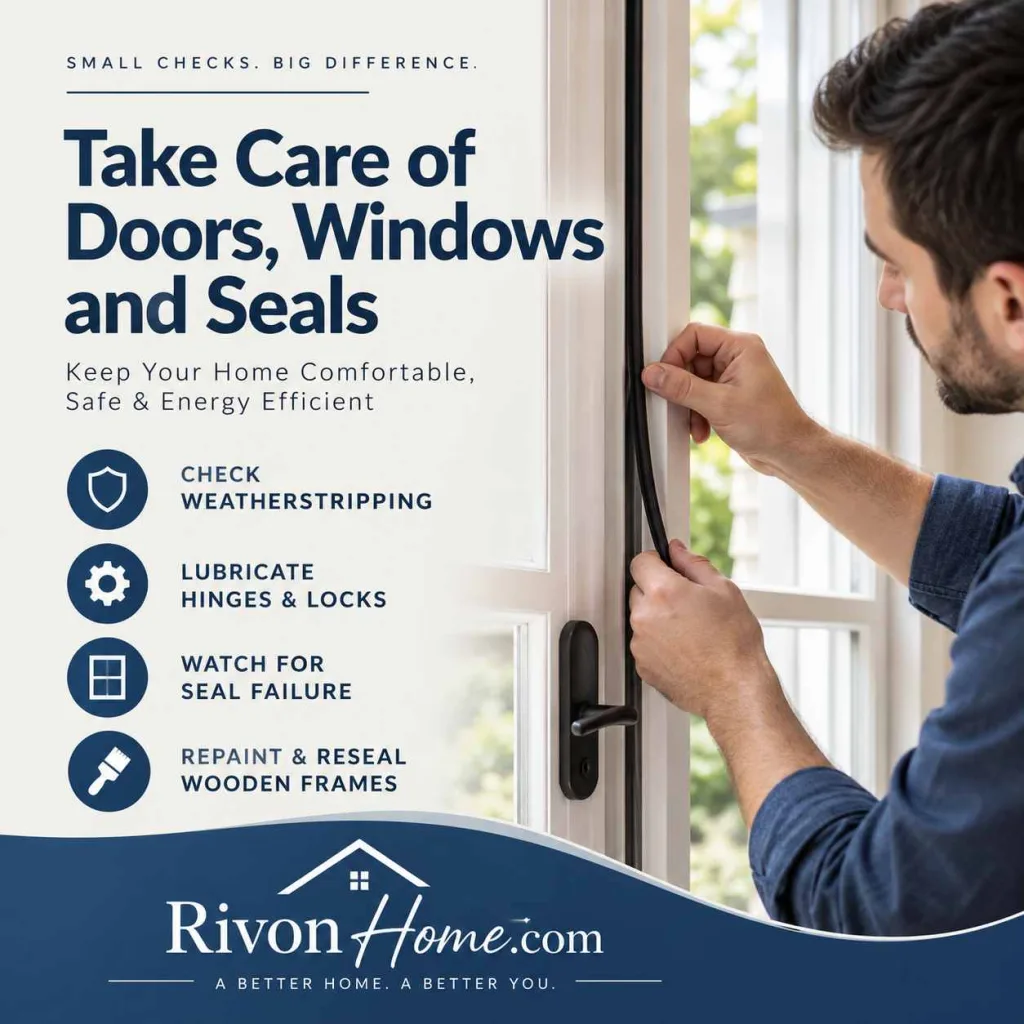
Take Care of Doors, Windows, and Seals
Doors and windows protect your home from weather, noise, and energy loss. Worn seals let in drafts and moisture.
- Check weatherstripping every year and replace it if it’s cracked or flat
- Lubricate hinges and locks so they don’t stick or rust
- Look for condensation between glass panes, a sign the seal has failed
- Repaint or reseal wooden frames before they start to rot
Small fixes here keep your home comfortable and lower your heating and cooling costs.
Maintain Your Outdoor Spaces
Outdoor areas need attention too, not just the inside of your home. Neglected yards and decks can lower curb appeal and even create safety hazards.
- Trim trees and shrubs away from the roof and siding
- Check decks and fences for loose boards or rot
- Reseal driveways and walkways every few years
- Make sure outdoor lighting works, for both safety and appearance
A well-kept yard protects your property and makes a strong first impression if you ever sell.

Know When to Call a Professional for Property Maintenance Tips
Not every repair is a DIY job. Knowing your limits saves you time, money, and sometimes injury.
- Call a licensed electrician for anything involving wiring or your breaker panel
- Call a plumber for major leaks, low water pressure, or sewer issues
- Call a structural engineer if you notice large cracks or a sloping floor
- Call a roofer for any repair above a single story
Hiring the right professional the first time avoids costly mistakes and keeps your home safe.

A Simple Year-Round Maintenance Checklist
Staying on top of your home is easier with a clear seasonal plan. Here’s what to check, season by season.
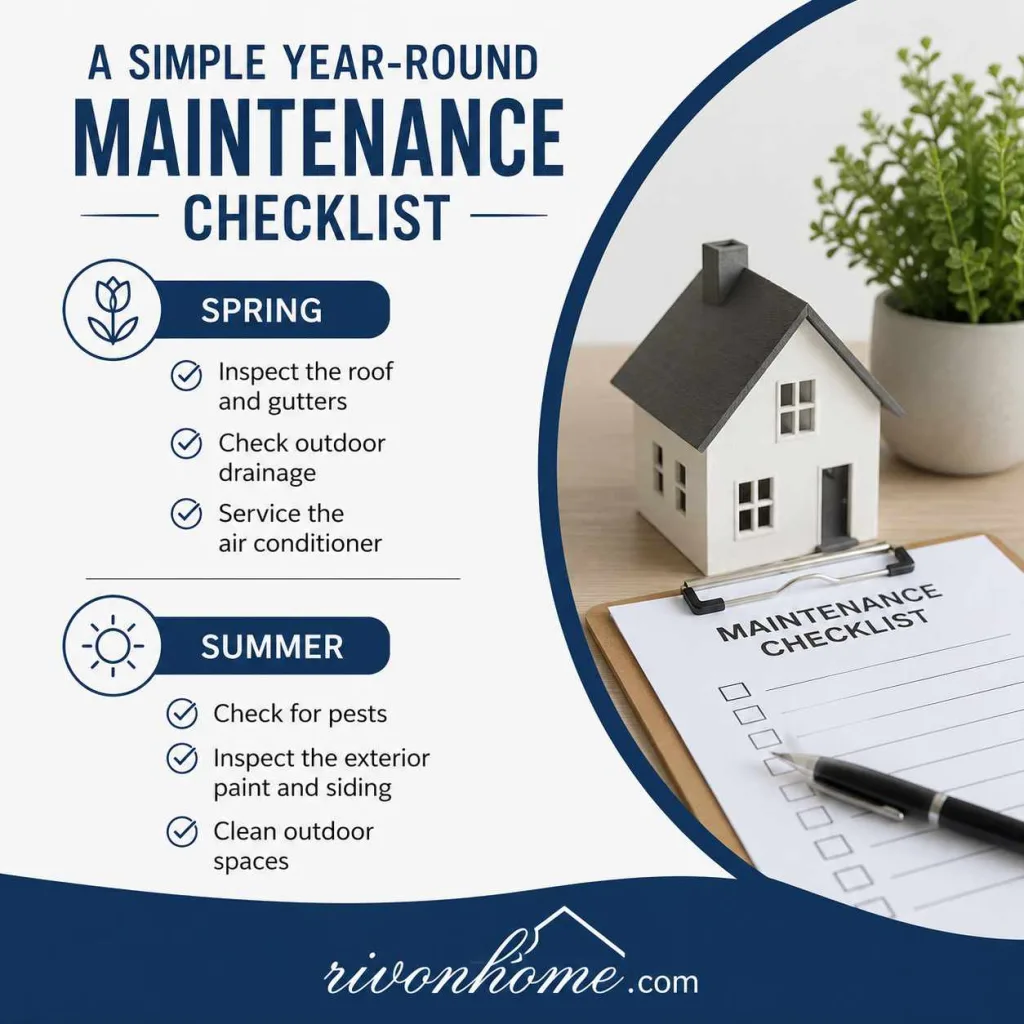
Spring
- Inspect the roof and gutters
- Check outdoor drainage
- Service the air conditioner
Summer
- Check for pests
- Inspect the exterior paint and siding
- Clean outdoor spaces
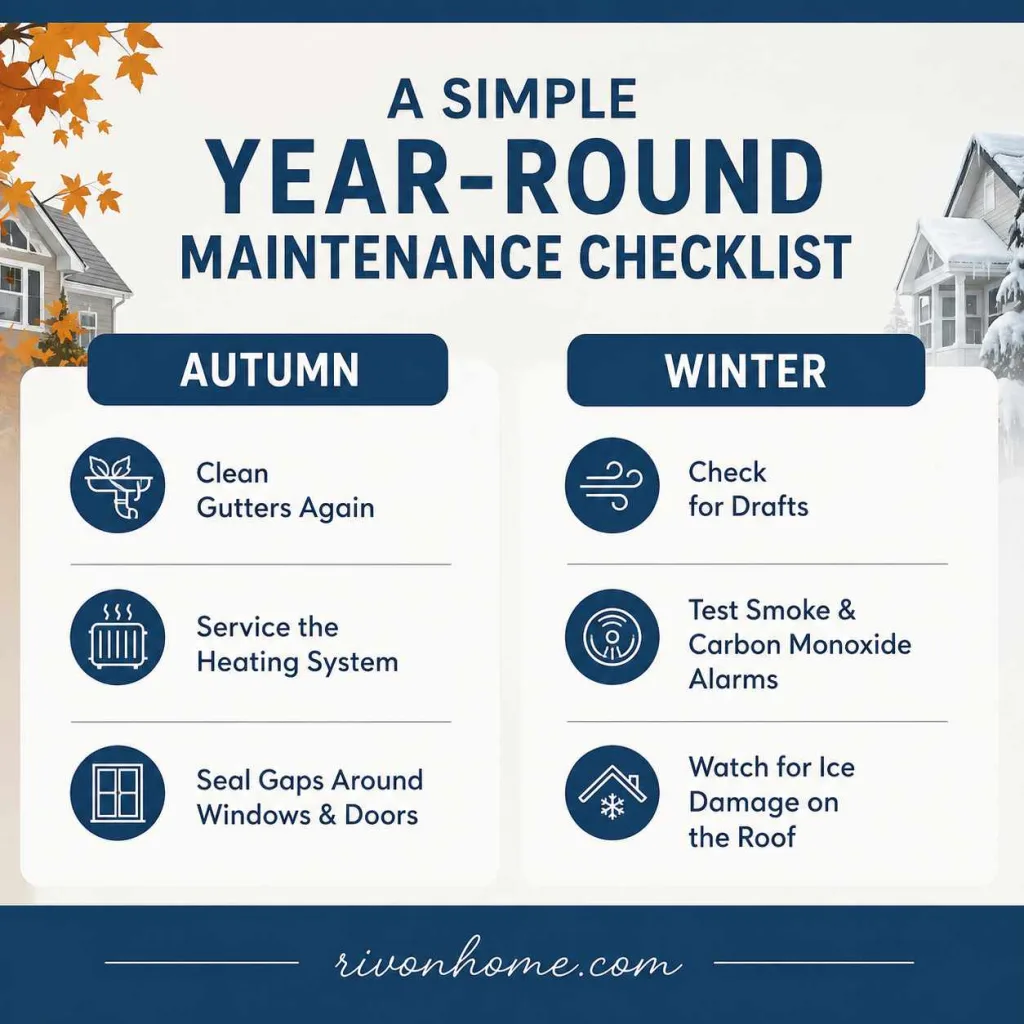
Autumn
- Clean gutters again
- Service the heating system
- Seal gaps around windows and doors
Winter
- Check for drafts
- Test smoke and carbon monoxide alarms
- Watch for ice damage on the roof
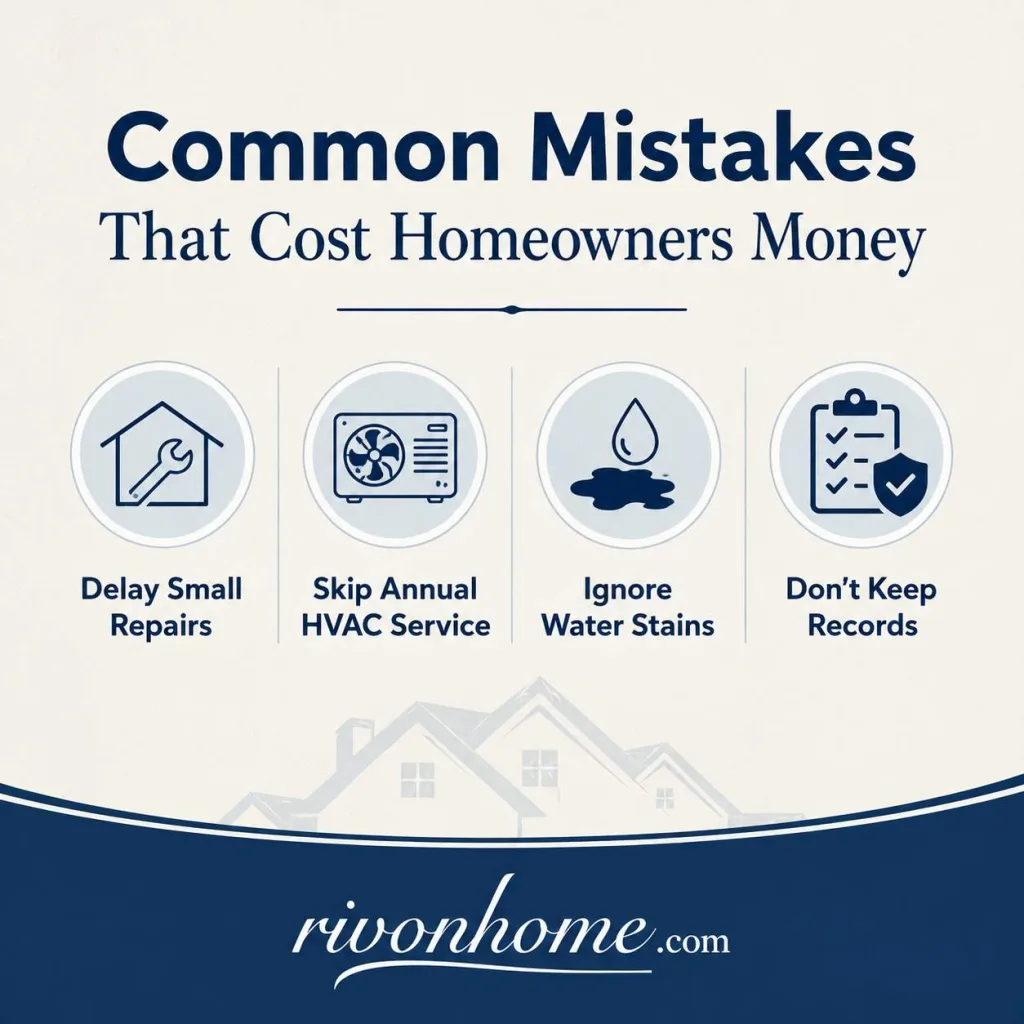
Common Mistakes That Cost Homeowners Money
Waiting too long to fix small issues. A $200 repair today can turn into a $5,000 repair next year.
Skipping annual HVAC service. This shortens the system’s life and raises your energy bills.
Ignoring water stains. They are almost always a sign of a bigger problem hiding behind the wall.
Not keeping records. Save your receipts and photos. They help with insurance claims and add value if you sell later. The National Association of Home Builders offers helpful guidance on tracking home improvements for resale value.
Use Smart Home Devices to Simplify Maintenance
Smart sensors make maintenance easier. Leak detectors, smoke alarms, and security cameras send alerts straight to your phone. You catch problems early, often before they cause real damage. For busy homeowners, these devices act like a second set of eyes, watching your home even when you’re not there to check it yourself.

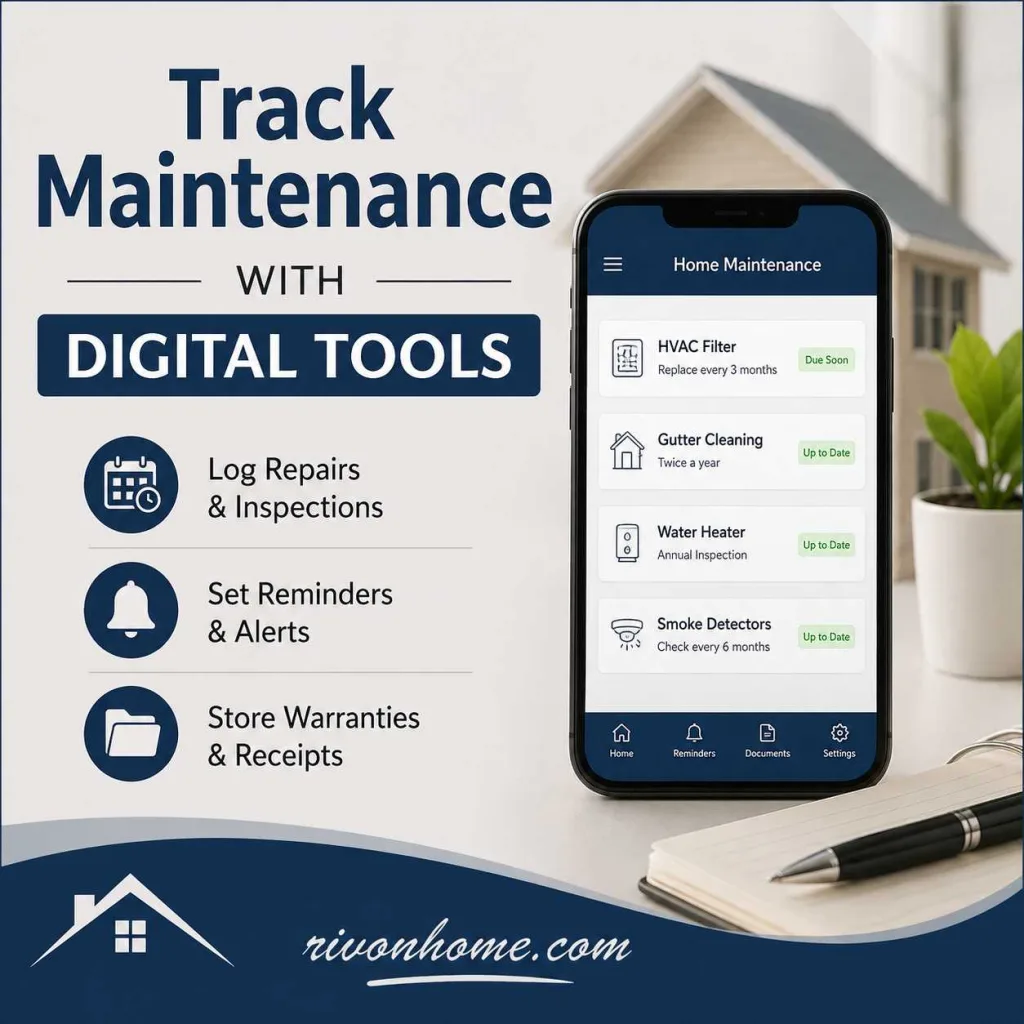
Track Maintenance With Digital Tools
Digital tools keep maintenance organized. Apps let you log repairs, set reminders, and store warranties and receipts in one place. No more forgotten filter changes or missed inspections. This simple habit saves time, prevents small issues from being overlooked, and gives you a clear record if you ever sell your home.
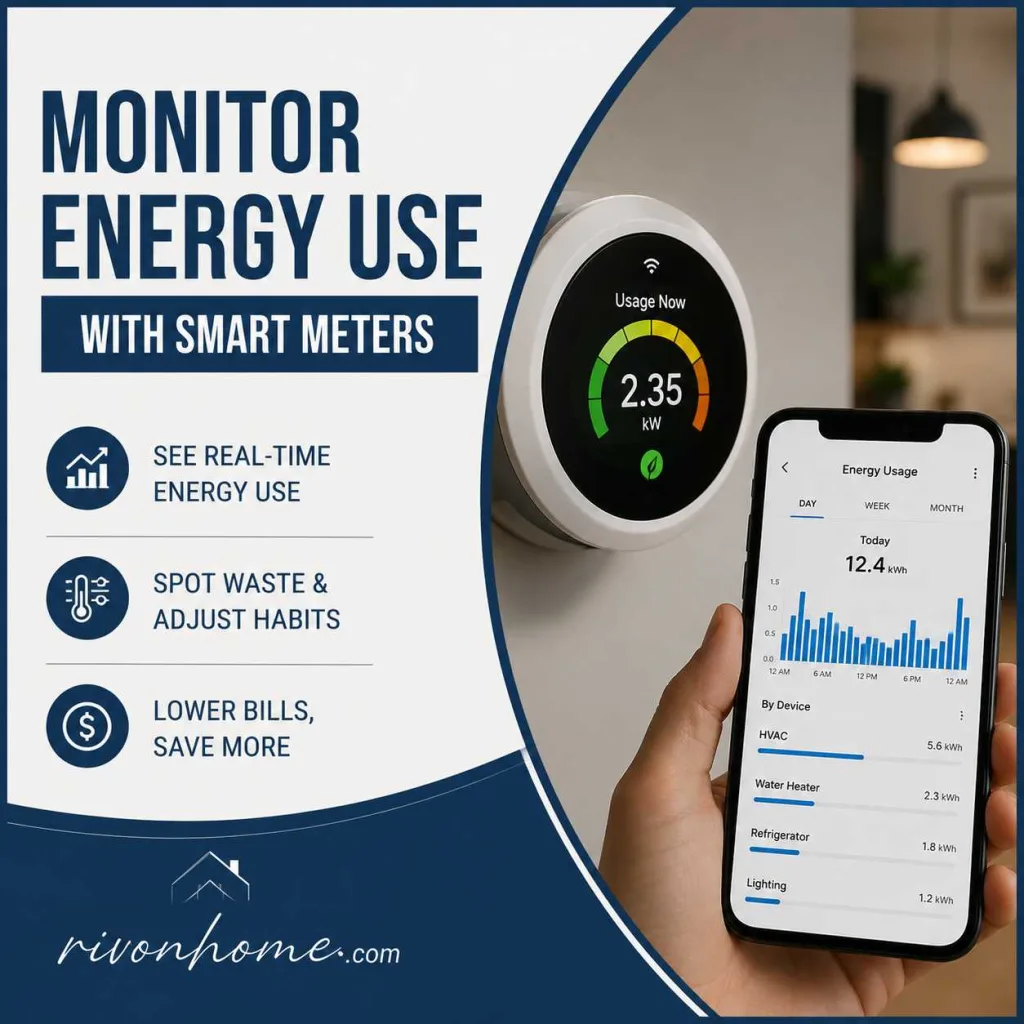
Monitor Energy Use With Smart Meters
Smart meters show exactly where your energy goes. Paired with smart thermostats, they help you spot waste, adjust habits, and lower monthly bills. Instead of guessing, you get real data on heating, cooling, and appliance use. Over time, this insight leads to smarter decisions and noticeable savings on your energy costs.
Frequently Asked Questions About Property Maintenance Tips
How often should I do a full home inspection?
Twice a year is enough for most homes. Do it once in spring and once in autumn.
What’s the most important maintenance task?
Keeping your roof and gutters clear. Water damage causes more long-term harm than almost anything else.
How much should I budget for Property Maintenance Tips each year?
Around 1% of your home’s value is a safe starting point.
Can I do most maintenance myself BY Using Property Maintenance Tips?
Yes, for basics like cleaning gutters, checking filters, and inspecting for leaks. Leave electrical and major roof work to licensed professionals.
Final Thoughts
Good property maintenance tips aren’t complicated. They come down to consistency: check your home regularly, fix small problems fast, and set money aside before you need it.
Follow this guide, and your home will stay safer, healthier, and more valuable for years to come.
