
KDArchitects Landscape Ideas by Morph: A Practical Guide to Natural Outdoor Living


KDArchitects landscape ideas by Morph are built on one simple plan: a yard should work with the house, the land, and the local climate. It should be calm to look at, easy to use, and kind to the environment.
I am an architect and a researcher, so I judge any outdoor design the way I judge a building. Does it work every day? Does it support health? Will it last? At RivonHome, I want you to get ideas you can actually use, so this guide breaks the approach into clear parts and shows how to apply each one to your own yard.
A Quick Note on Where These Ideas Come From
Roger Morph and KDArchitects appear in many online design guides. I could not find a public portfolio or firm record that I can verify, and the guides disagree on several details.
So I treat these ideas as a design approach, not as a list of documented projects. The principles are sound and match good landscape architecture practice. I will not make claims about specific built projects that I cannot confirm.
The Core Design Philosophy
The approach rests on a few ideas that appear again and again. They fit what good landscape architecture has always tried to do.
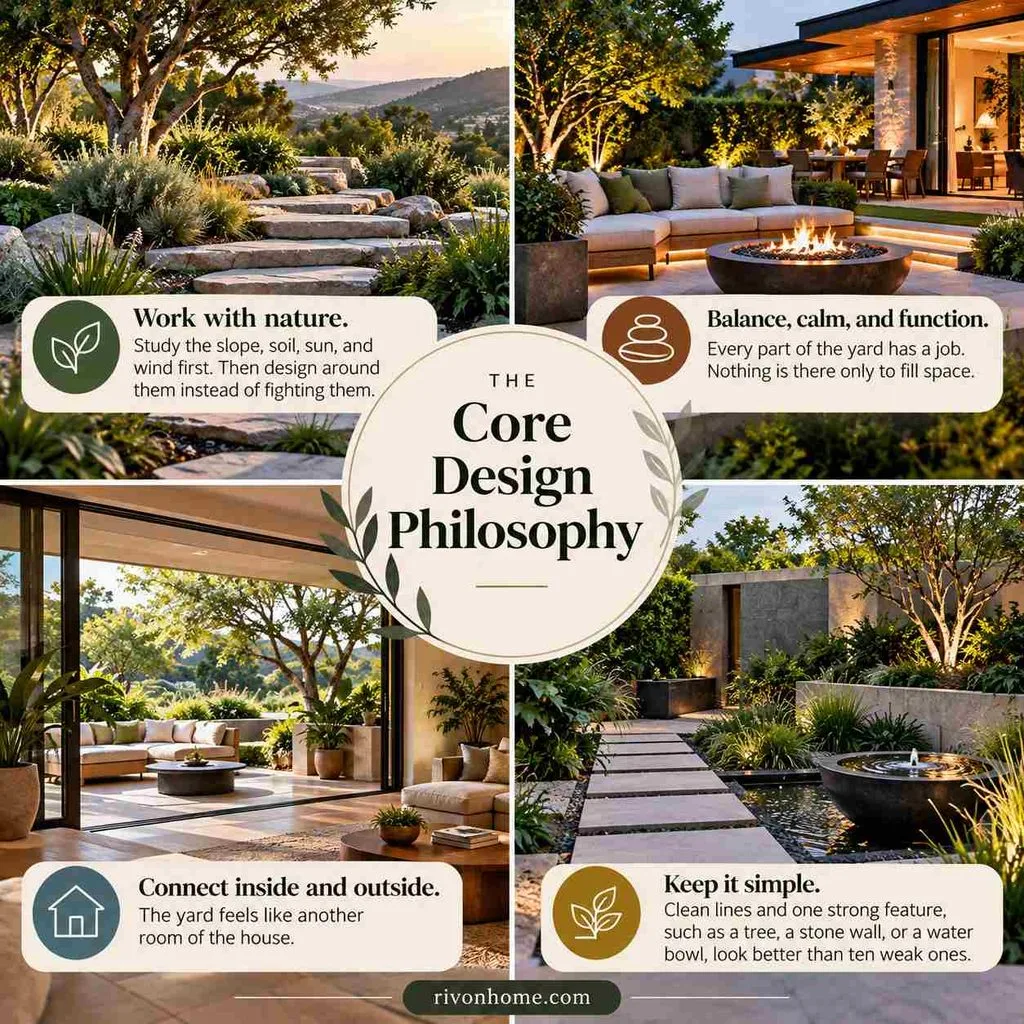
- Work with nature. Study the slope, soil, sun, and wind first. Then design around them instead of fighting them.
- Balance, calm, and function. Every part of the yard has a job. Nothing is there only to fill space.
- Connect inside and outside. The yard feels like another room of the house.
- Keep it simple. Clean lines and one strong feature, such as a tree, a stone wall, or a water bowl, look better than ten weak ones.
This is why the designs feel like timeless, calm yards rather than trend-driven ones.
Blending the House and the Land
Many homes look like boxes placed on grass. The fix is to carry ideas from the house into the yard.
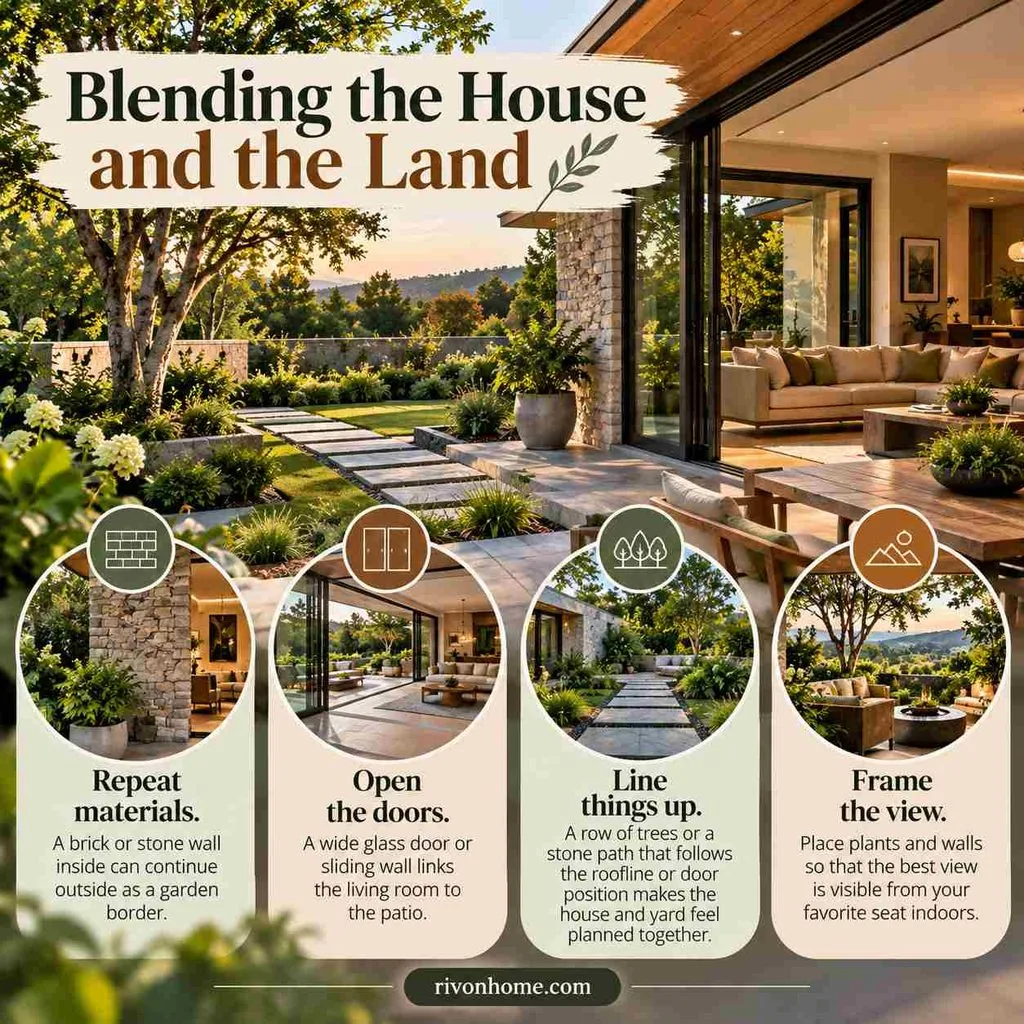
- Repeat materials. A brick or stone wall inside can continue outside as a garden border.
- Open the doors. A wide glass door or sliding wall links the living room to the patio.
- Line things up. A row of trees or a stone path that follows the roofline or door position makes the house and yard feel planned together.
- Frame the view. Place plants and walls so that the best view is visible from your favorite seat indoors.
Even a small stone path from the door to a single tree can do this job.
Sustainable Landscape Design: The Strongest Part
Sustainability is the strongest thread in kdarchitects landscape ideas by morph, and it is also the part best backed by science. The U.S. Environmental Protection Agency notes that water-smart landscaping uses plants and designs suited to local conditions. It can lower water use, fertilizer needs, and upkeep, and it can improve curb appeal.
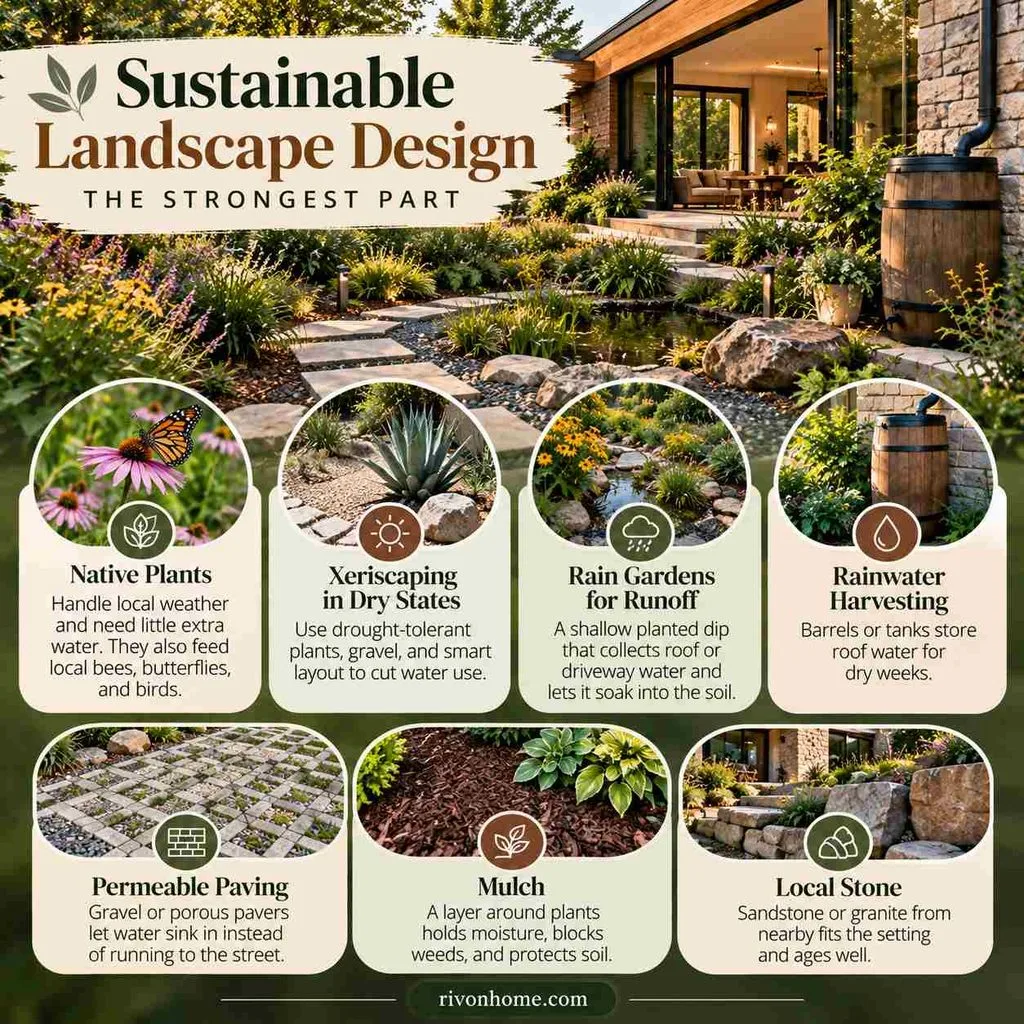
Here are the main practices:
- Native plants. They handle local weather and need little extra water once established. They also feed local bees, butterflies, and birds.
- Xeriscaping in dry states. This means using drought-tolerant plants, gravel, and smart layout to cut water use.
- Rain gardens for runoff. A rain garden is a shallow planted dip that collects roof or driveway water and lets it soak into the soil.
- Rainwater harvesting. Barrels or tanks store roof water for dry weeks.
- Permeable paving. Gravel or porous pavers let water sink in instead of running to the street.
- Mulch. A layer around plants holds moisture, blocks weeds, and protects soil.
- Local stone. Sandstone or granite from nearby fits the setting and ages well.
For planting ideas that also look rich and layered, see these luxury garden design ideas.
Adapting the Ideas to Your Region
The same principles change with the climate. Use this table as a starting point, then check with a local nursery or extension service for plants that suit your exact area.
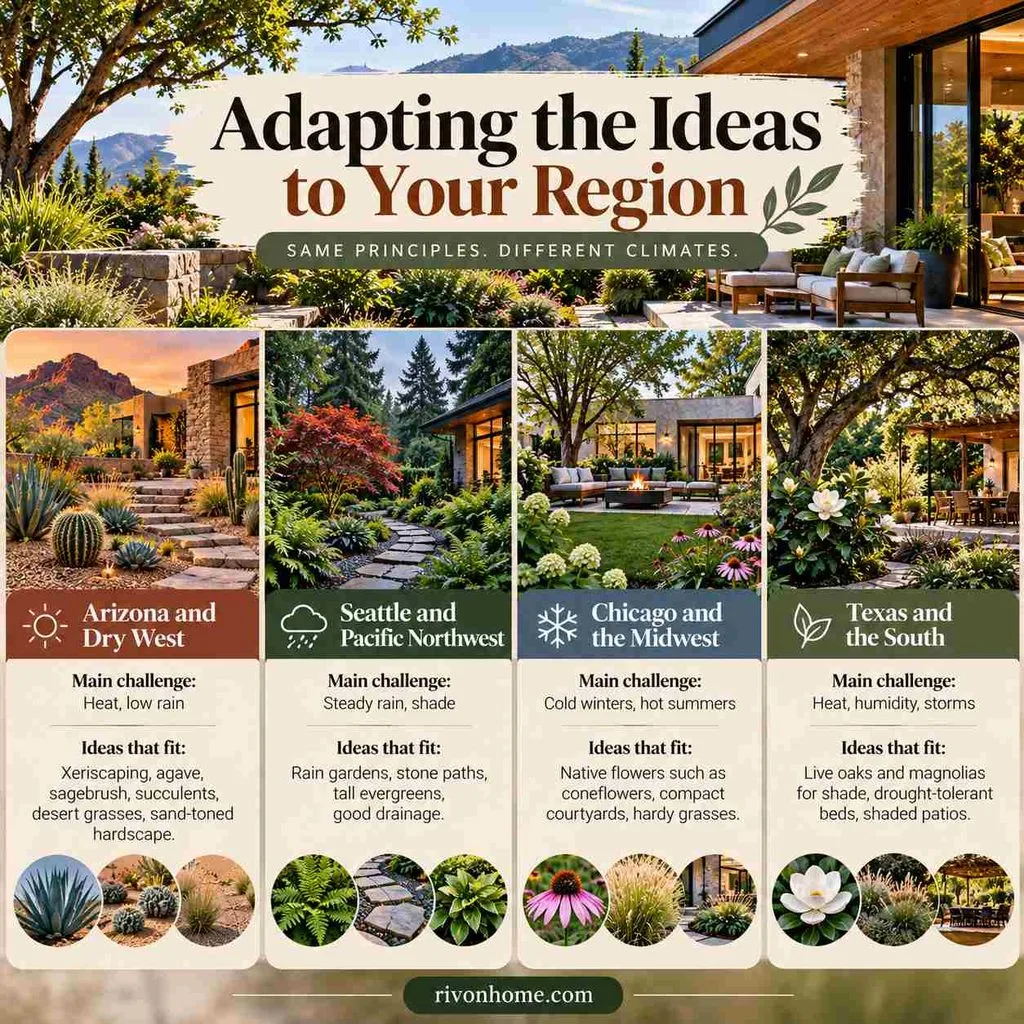
| Region | Main challenge | Ideas that fit |
| Arizona and dry West | Heat, low rain | Xeriscaping, agave, sagebrush, succulents, desert grasses, sand-toned hardscape |
| Seattle and Pacific Northwest | Steady rain, shade | Rain gardens, stone paths, tall evergreens, good drainage |
| Chicago and the Midwest | Cold winters, hot summers | Native flowers such as coneflowers, compact courtyards, hardy grasses |
| Texas and the South | Heat, humidity, storms | Live oaks and magnolias for shade, drought-tolerant beds, shaded patios |
Outdoor Living Spaces That Work Like Rooms
The approach divides the yard into zones by use. Each zone should have one clear purpose.
- Dining or outdoor kitchen near the house door, so carrying food is easy.
- Fire pit area further out, where the yard feels quiet and open.
- Patio as the main gathering space, with shade from a pergola or tree.
- Reading nook in a corner with a bench and fragrant plants.
Pick one main use first, such as dining, and build the rest around it. For more layout ideas, take a look at these outdoor living space ideas.
Minimalism, Light, and Sensory Details
Minimal does not mean empty. It means every element earns its place.
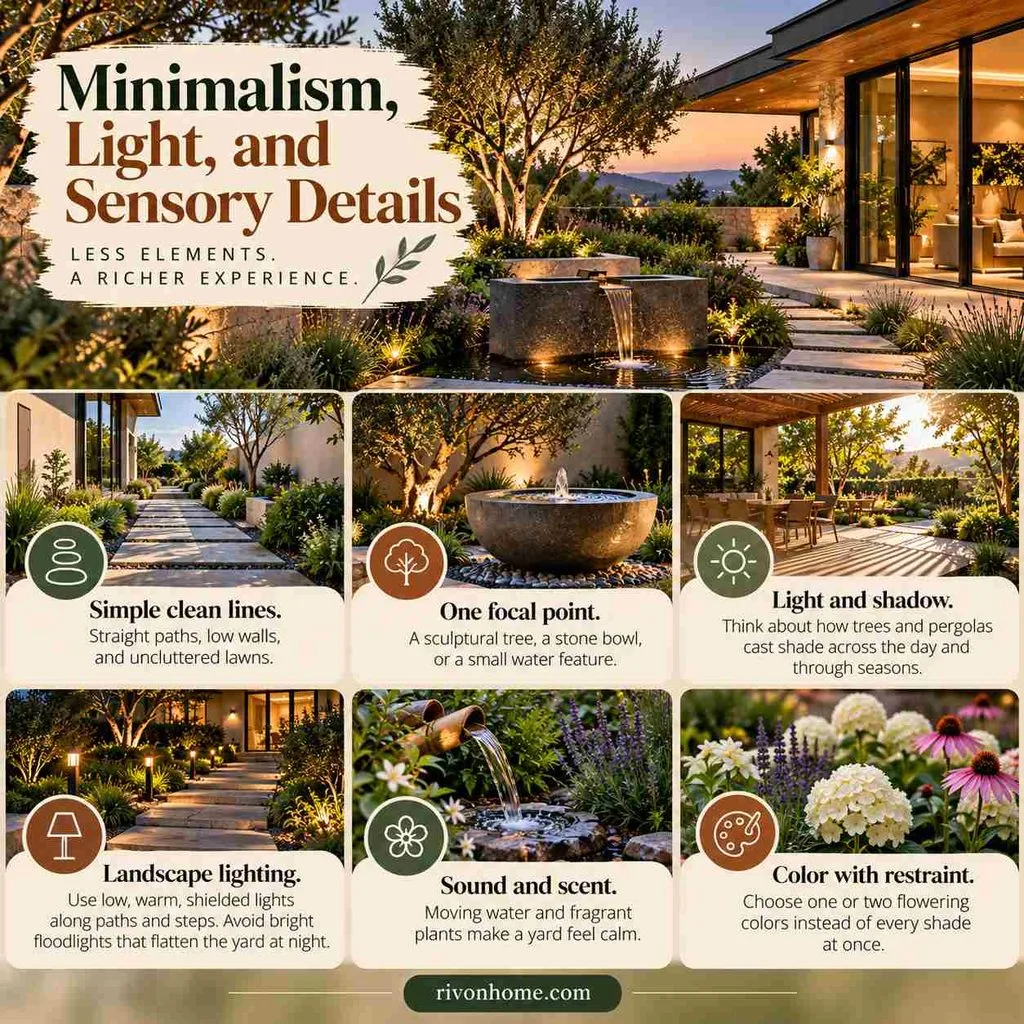
- Simple clean lines. Straight paths, low walls, and uncluttered lawns.
- One focal point. A sculptural tree, a stone bowl, or a small water feature.
- Light and shadow. Think about how trees and pergolas cast shade across the day and through seasons.
- Landscape lighting. Use low, warm, shielded lights along paths and steps. Avoid bright floodlights that flatten the yard at night.
- Sound and scent. Moving water and fragrant plants make a yard feel calm.
- Color with restraint. Choose one or two flowering colors instead of every shade at once.
If you like patterned detail, a stone or pebble mosaic set into a path can be your single strong feature.
Modern Backyard Landscape Ideas for Small and Large Yards
These principles scale well. In a small yard, use them like this:
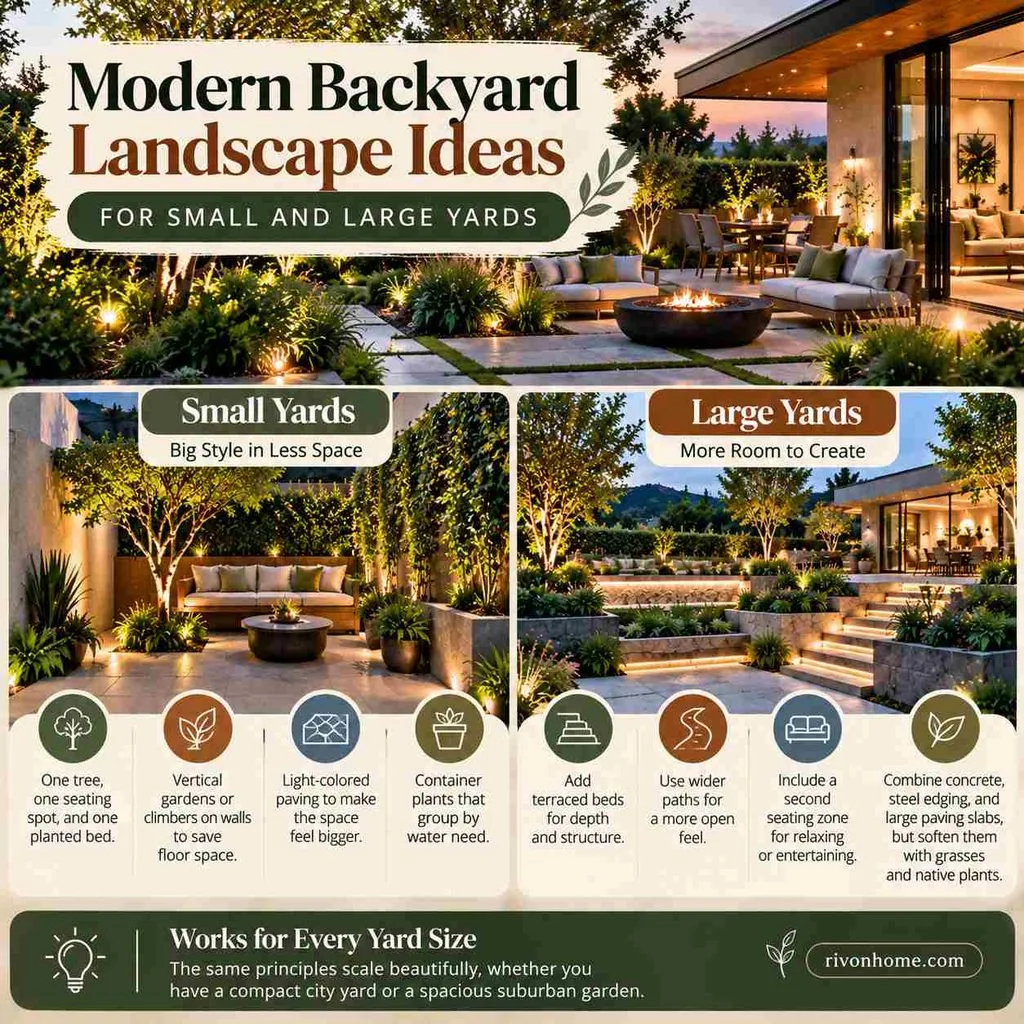
- One tree, one seating spot, and one planted bed
- Vertical gardens or climbers on walls to save floor space
- Light-colored paving to make the space feel bigger
- Container plants that group by water need
In a larger yard, add terraced beds, wider paths, and a second seating zone. For an ultra-modern look, use concrete, steel edging, and large paving slabs, but soften them with grasses and native plants so the space does not feel cold. You can find more inspiration in these luxury backyard design ideas.
Landscape Design Ideas for Different Spaces
The same principles change with the size and shape of your space. Here is how to apply them in the most common places.
Small Urban Courtyard
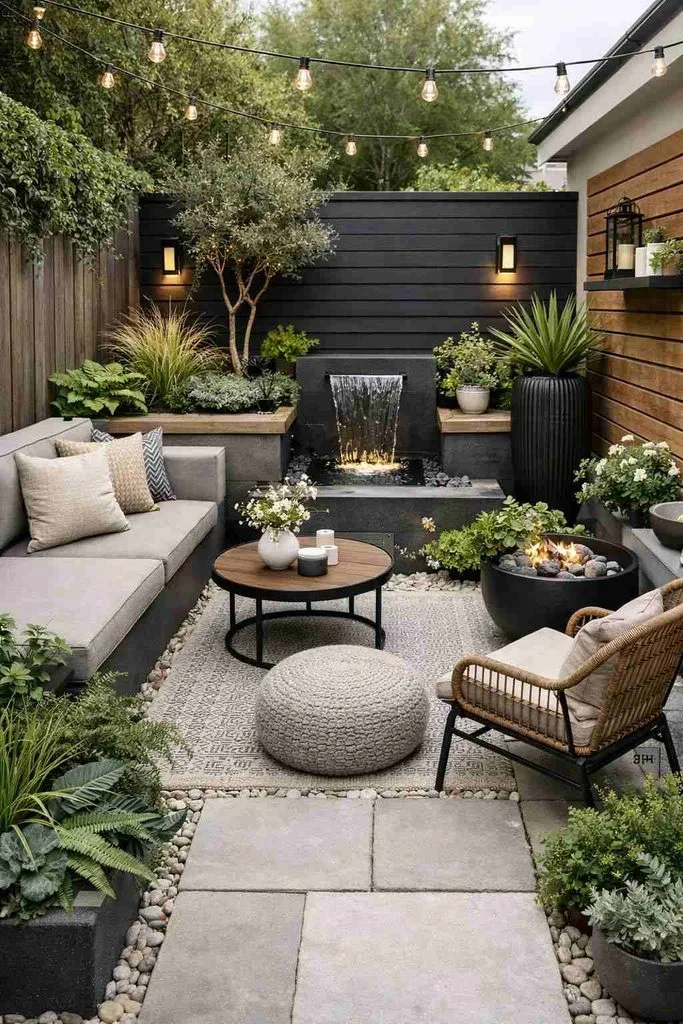
A small courtyard works best with one focal point and few materials. Use light paving to reflect sunlight, add one tree in a large planter, and grow climbers up the walls to save floor space. Keep furniture simple, such as a bench and a small table.
A tiny water bowl adds soft sound that hides street noise. Choose shade-tolerant plants, since courtyard walls often block the sun for much of the day.
Front Yard and Entrance
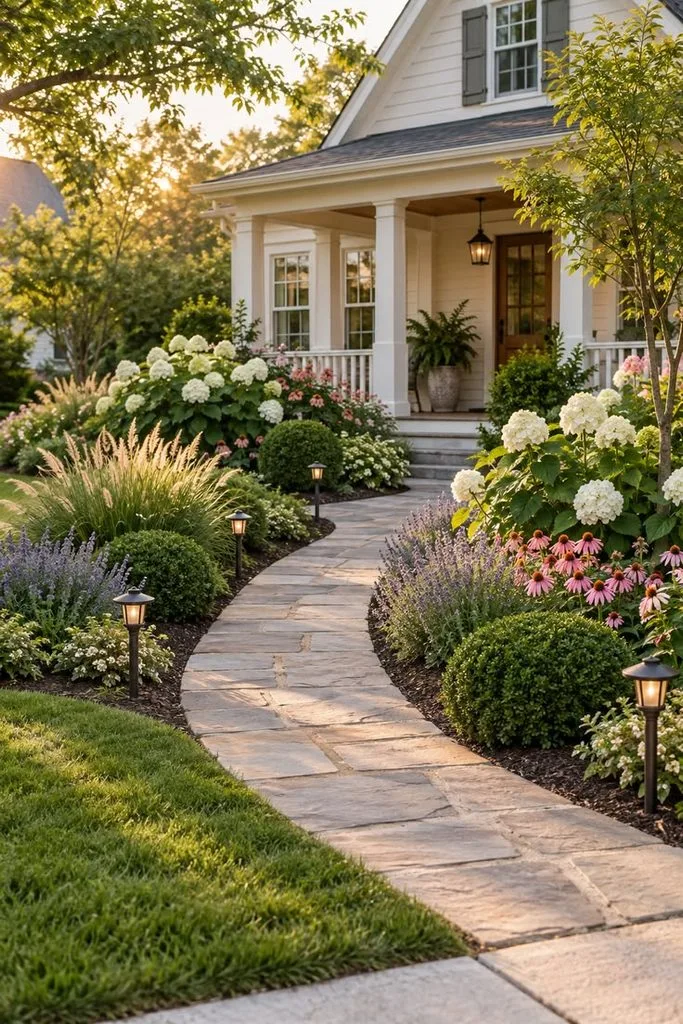
The front yard sets the first impression, so keep it clear and welcoming. Lay a stone path that leads straight to the door, and line it with low plants that do not hide the entry. Add one strong feature, such as a sculptural tree or a low stone wall.
Place soft, warm lights along the path for safety at night. Repeat a material from the house facade so both feel connected.
Backyard Patio and Dining Area
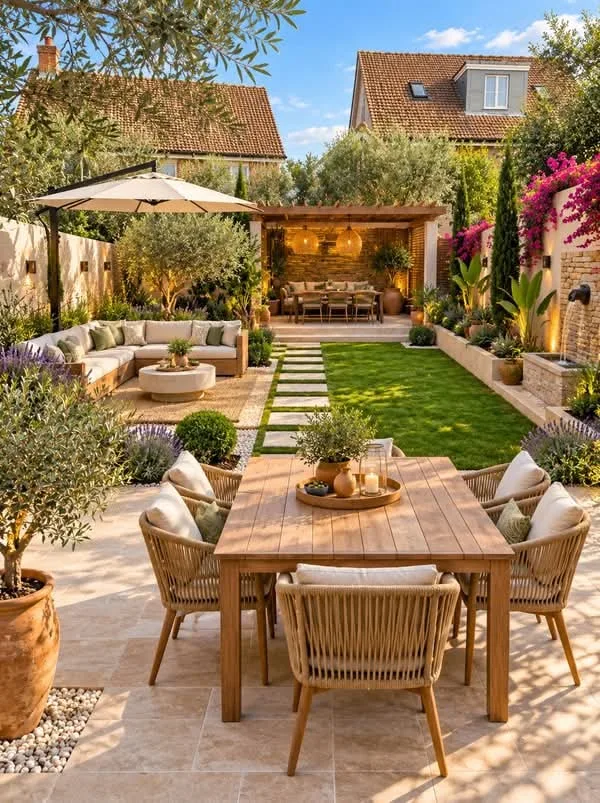
A patio works like an outdoor living room, so place it close to the kitchen door. Use durable paving that drains well, and add shade with a pergola or a tall tree.
Keep the dining table near the house and the fire pit further out, where the yard feels quiet. Surround the space with grasses and fragrant plants for privacy. Leave enough room for chairs to move freely and for people to walk past.
Narrow Side Yard
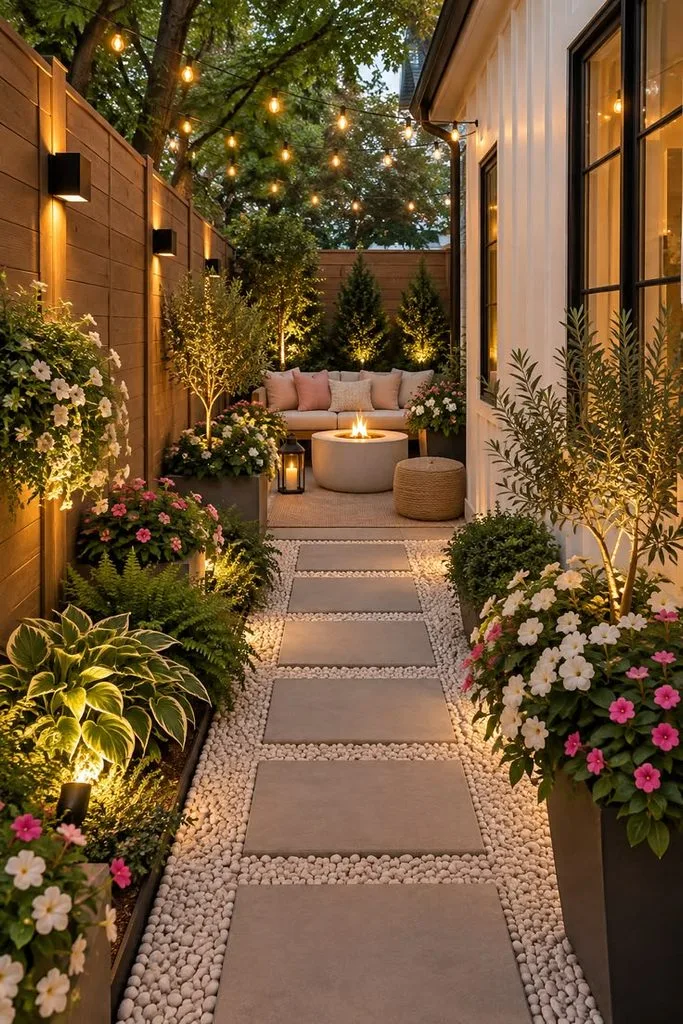
A narrow side yard is often wasted, but it can become a calm passage. Lay a simple gravel or stepping-stone path and plant a single row of tall, slim plants along the fence. Use light colors on walls to bounce daylight into the space.
Add one bench or one small feature at the far end to draw the eye forward. Keep the design clean, since clutter makes narrow spaces feel tighter.
Dry Climate or Desert-Style Yard
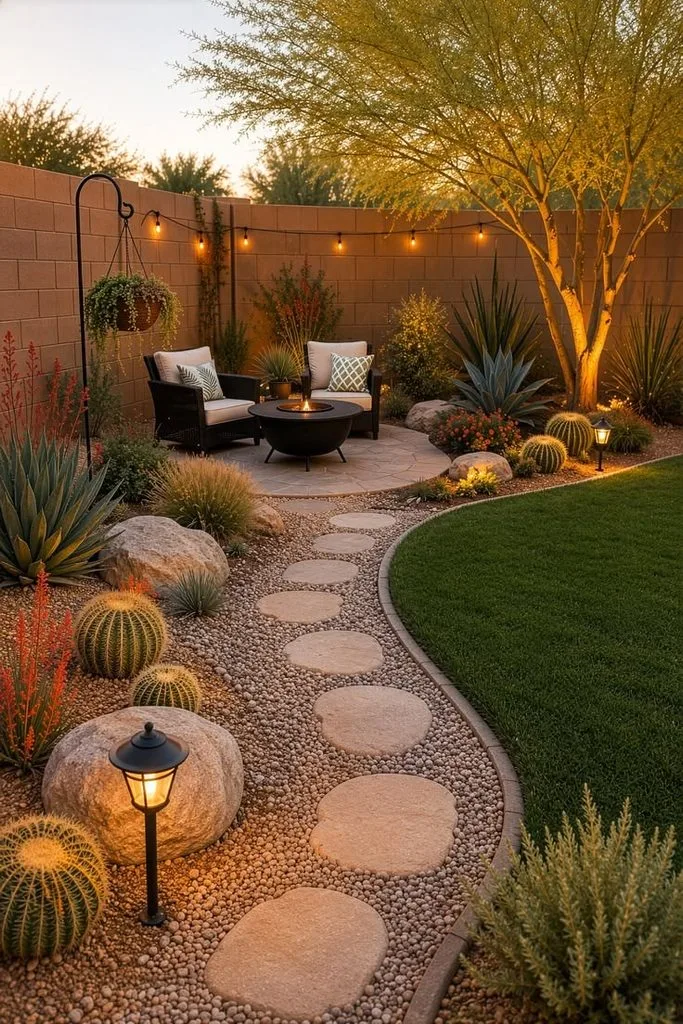
In dry regions, work with the climate instead of fighting it. Use xeriscaping: agave, succulents, desert grasses, and sagebrush, grouped by water need. Choose sand-toned paving and gravel to echo the land.
Leave open space between plants so each shape stands out. Install drip irrigation and add a layer of gravel mulch to keep soil cool. A single shaded seat under a pergola makes the space usable in summer heat.
How to Apply These Ideas Step by Step?
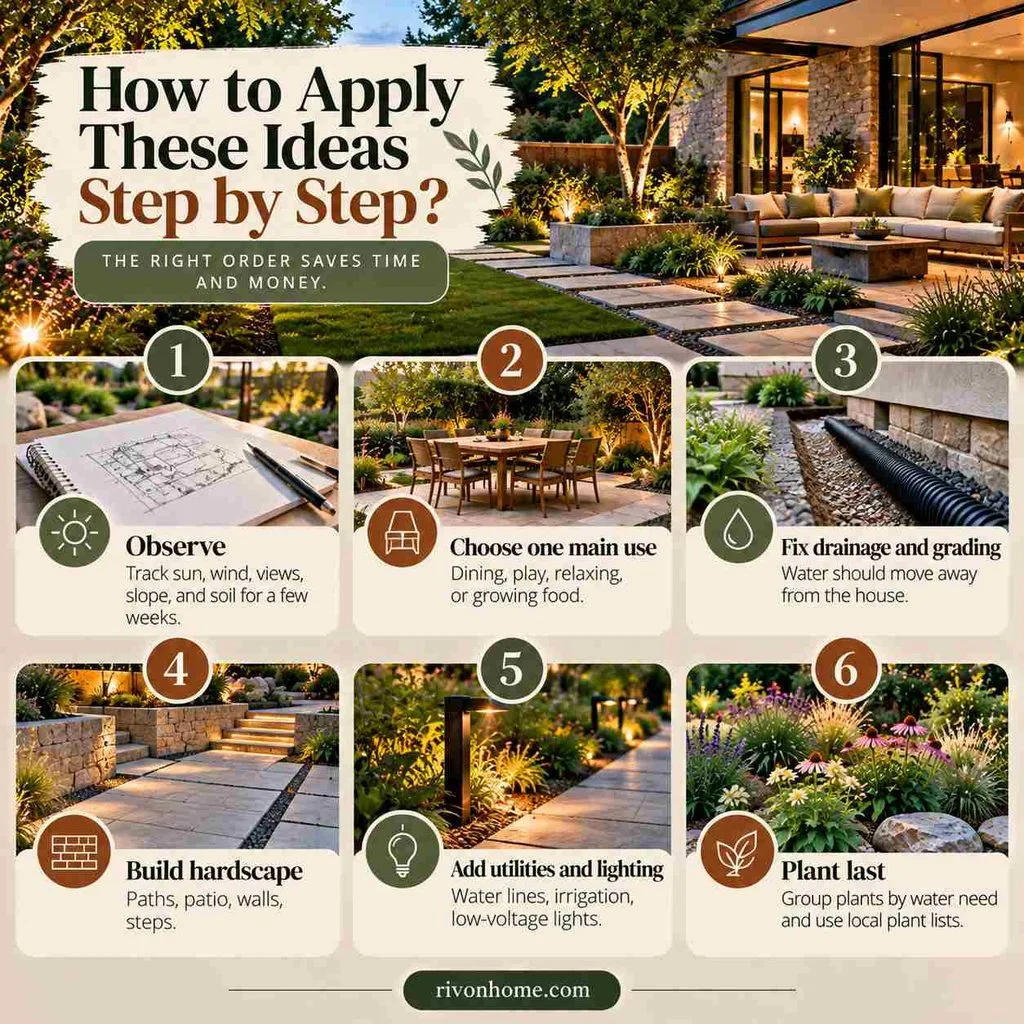
The order matters. Doing things out of order leads to rework and wasted money.
| Step | What to do |
| 1. Observe | Track sun, wind, views, slope, and soil for a few weeks |
| 2. Choose one main use | Dining, play, relaxing, or growing food |
| 3. Fix drainage and grading | Water should move away from the house |
| 4. Build hardscape | Paths, patio, walls, steps |
| 5. Add utilities and lighting | Water lines, irrigation, low-voltage lights |
| 6. Plant last | Group plants by water need and use local plant lists |
Budget, Upkeep, and Property Value
Ask for life-cycle costs, not only the installation price. A yard with native plants and mulch needs less water and less weeding, so it can cost less to keep over time, even if the first build costs more.
To plan spending, you can use this house cost estimator. A well-planned yard also adds curb appeal, and it belongs in any upgrade plan. My guide on smart renovations that add value explains how to weigh outdoor work against indoor projects.
Health matters too. Green views and shaded places to sit help many people feel calmer, and a yard you enjoy is one you will use.
Common Mistakes to Avoid
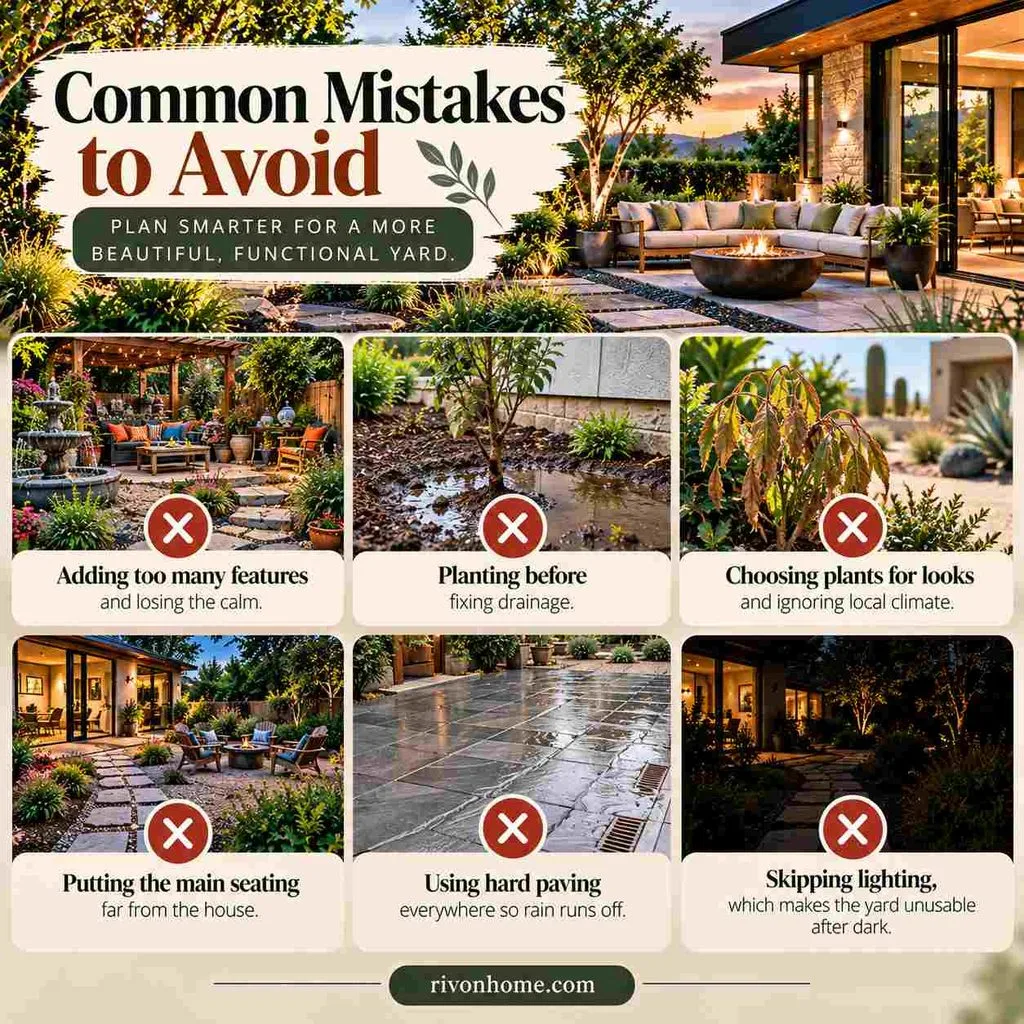
- Adding too many features and losing the calm
- Planting before fixing drainage
- Choosing plants for looks and ignoring local climate
- Putting the main seating far from the house
- Using hard paving everywhere so rain runs off
- Skipping lighting, which makes the yard unusable after dark
Final Thoughts
The main lesson from kdarchitects landscape ideas by morph is to start with the land and how you live, then add only what helps. Study your site, pick one main use, fix drainage, and plant for your climate.
Start small. Add one strong feature, and let the yard grow with you.
Frequently Asked Questions
Who is Roger Morph?
He is the name attached to these landscape ideas in many online guides. I could not verify a public portfolio, so I focus on the design principles instead.
Are these ideas good for a small yard?
Yes. Use one tree, one seating area, one planted bed, and vertical plants on walls.
Do I need a landscape architect?
For simple beds and paths, you can plan it yourself. For slopes, drainage problems, or major building work, hire a licensed professional.
Are KD3 Architects, KDD Architect, or KDM Landscape Design the same firm?
Not necessarily. Several similarly named businesses exist, so check the location and portfolio before hiring anyone.
What does landscape morphology mean?
It is the study of the shape and form of land and how landscapes change. It is a general term and is not tied to any one firm.
