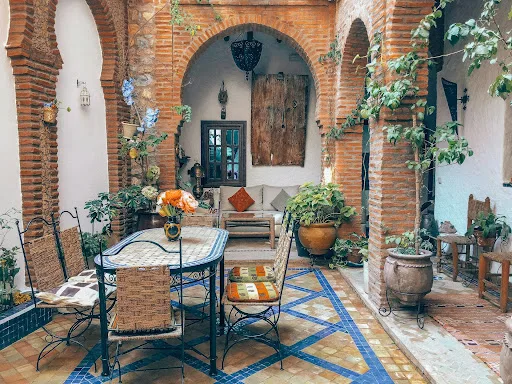
Many interiors begin with furniture. Mexican courtyard design begins with air. Before the sofa, before the wall color, before the lighting plan, there is a simple question: where does the home open up?
That question changes the whole mood of a room. For this article, we got useful insights from DreamProHomesLuxury experts, whose work with San Miguel de Allende properties shows how courtyard living shapes daily comfort, not only architectural beauty.
Modern homeowners are drawn to this idea because it feels calm without feeling empty. A courtyard gives the home a center. Rooms feel connected without losing privacy. Light feels softer. Outdoor space becomes part of everyday life rather than a separate place reserved only for nice weekends.
Begin With the Empty Center
Look at the beautiful colonial homes for sale in Obraje San Miguel de Allende, and one design lesson appears quickly. Many homes do not try to impress from the street first. Their real character is inside, where a patio, terrace, or garden court gives the house its rhythm.
That is the heart of courtyard living. The empty center is not wasted space. It is the part of the home that gives every nearby room a reason to feel better. It brings in daylight. It creates a view. It gives movement through the home a slower pace.
Modern interiors can borrow that idea without copying a hacienda. Even a compact home can have a small internal pause. A reading corner beside a glass door can carry the same spirit. So can a dining room that opens to a planted terrace. Scale here matters less than intention.
Privacy Comes From Turning Inward
Mexican courtyard homes often protect the street side and open toward the interior. From the outside, the house may feel reserved. Once inside, it becomes warmer and more personal. That contrast is one reason the style feels so relevant now.
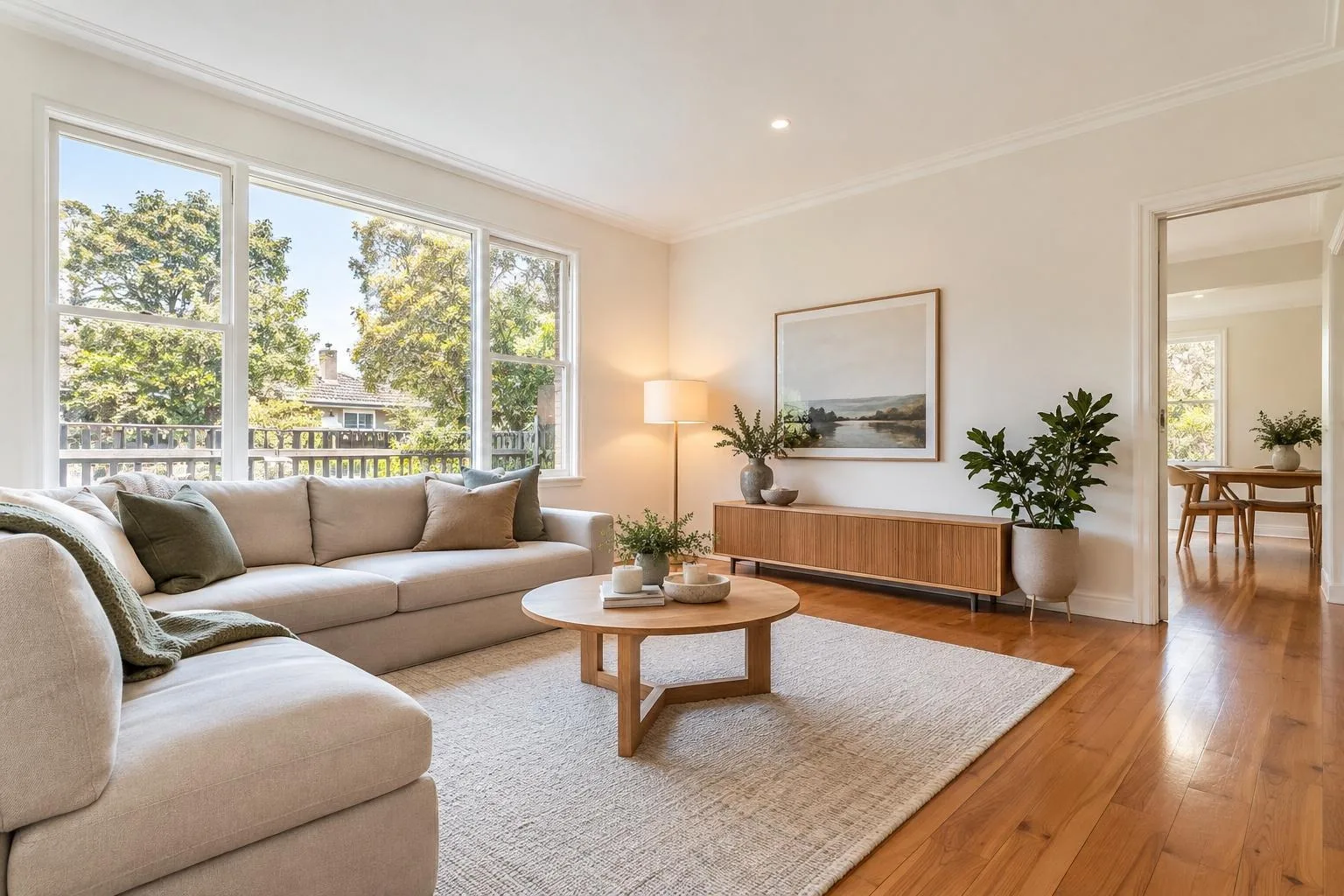
Many modern homes have the opposite problem. Large street-facing windows bring in light, but they also expose daily life. Curtains stay closed. Rooms lose the very light they were designed to receive. Courtyard thinking solves that problem by moving the openness inward.
An entry passage can make the transition feel natural. In traditional Mexican homes, the zaguán often leads from the street to the patio. In a modern home, the same idea can be simpler. A narrow entry with a framed view of greenery can make arrival feel private, calm, and deliberate.
Let Light Arrive Gently
Strong daylight can make a room look beautiful for a photo and uncomfortable after an hour. Courtyard design handles light with more patience. Walls, overhangs, plants, and shaded openings soften brightness before it reaches the interior.
That softer light is one reason courtyard homes feel restful. Rooms near the patio do not depend on a single large window. They borrow light from a protected outdoor room. The effect is pleasant because the sun is filtered before it fills the space.
Modern interiors can use the same principle through smaller choices. A glass door facing a planted side yard can do more for a room than a larger window facing traffic. A shaded patio outside the kitchen can make morning light feel warm instead of harsh. Good light is not only about quantity. It is about control.
Use Materials With Restraint
Mexican courtyard design is often misunderstood as a set of decorative signals. Bright tile, rustic wood, and iron details can be beautiful, but they are not the philosophy. Courtyard living works because the home feels grounded, shaded, and lived in.
Material choices should support that feeling. Lime-washed walls can soften glare. Handmade tile can add more character to a threshold. Warm stone can make a patio feel established rather than newly staged.
Restraint is what keeps the design sophisticated. One expressive surface is usually stronger than several competing details. A tiled stair riser may be enough. A textured wall beside the courtyard may carry the room. When every element asks for attention, the calm disappears.
Make Plants Part of the Architecture
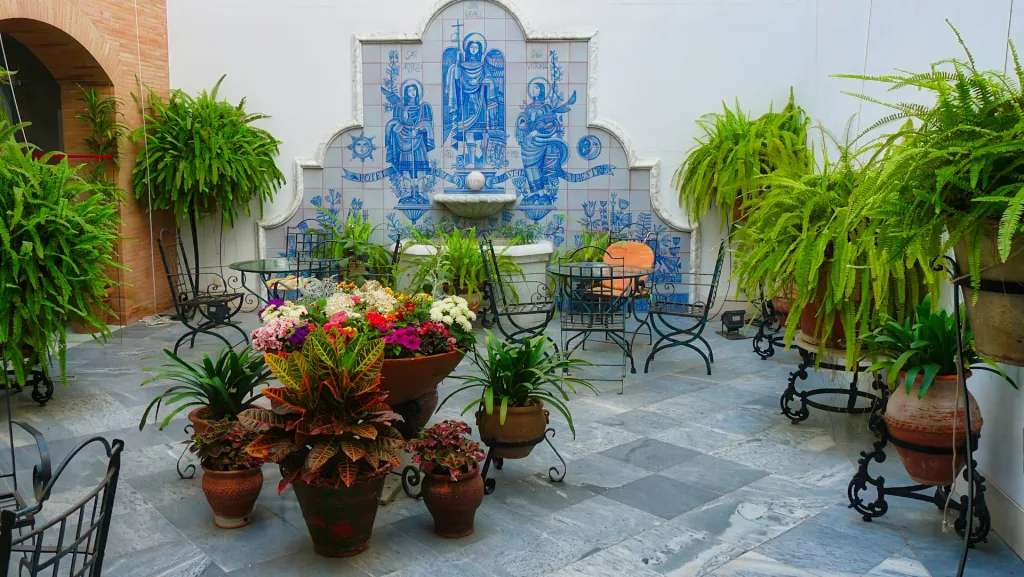
In courtyard living, plants are not accessories brought in after the design is finished. They shape the experience of the home. A tree can cast shade across a wall. A vine can cool a patio edge. A planter can guide the eye from the living room to the open air.
Placement is more important than quantity. Too many plants can make a small courtyard feel crowded. One strong planting choice can give the space a clear identity. The goal is not to create a garden display. The goal is to make nature feel close enough to affect daily life.
Indoor plants can carry the idea when a true courtyard is not possible. Place them where they connect to light and movement. A plant near a threshold feels different from one placed randomly in a corner. It becomes part of the room’s architecture, not just decoration.
Bring Courtyard Thinking into Any Home
Most people will not rebuild their house around a patio. They do not need to. Courtyard thinking can begin with one transition between inside and outside. Choose the spot where your home already has a relationship with light, fresh air, or a small outdoor view.
Improve that spot before adding more decor. Clear the visual path. Use one material that feels natural to the home. Add seating only if the space can support it comfortably. A cramped patio with too much furniture will never feel peaceful.
Apartment dwellers can use the same approach near a balcony or large window. A house with a side yard can turn that overlooked strip into a quiet visual anchor. Larger homes can connect several rooms to one garden court. The principle stays the same: create a protected opening that makes nearby rooms feel more human.
Courtyard living is not nostalgia. It is a smarter way to think about comfort. Mexican design has long understood that a home feels better when air, shade, privacy, and light are planned together. Modern interiors are finally catching up to that wisdom.