The best outdoor entertaining spaces don’t feel like a separate add-on. They feel connected. Easy. Like someone simply opened the doors and the living room kept going. That doesn’t happen by accident.
Start with how people actually move through the home. Where do guests walk when they step outside? Is the outdoor table close enough to the kitchen, or will someone end up doing the awkward plate-balancing shuffle across the yard? Does the afternoon sun hit the seating area right when everyone wants to sit down? Small things, yes. But small things are usually what make a space work.
A good outdoor area shouldn’t feel precious. It should be comfortable enough for a long lunch, casual enough for kids to wander through, and practical enough that no one panics when someone spills a drink. Because someone will. It’s practically a design law.
Match the Mood, Not Every Detail
Indoor-outdoor flow gets talked about a lot, but it’s often misunderstood. It doesn’t mean the patio needs to copy the living room exactly. That can look stiff, like a furniture showroom decided to move outside for the day.
The smarter move is to match the mood.
If the living room has warm neutrals, soft textures, and black metal details, the outdoor zone can echo that through timber-look furniture, cream cushions, matte black lanterns, and woven pieces. If the interior feels bright and coastal, the outdoor area might use pale stone, relaxed linen-look fabrics, and greenery with a loose, breezy shape.
The eye notices these connections, even when people don’t. That’s the point. Design should feel right before anyone can explain why.
For furnished homes and investment properties in Australia’s capital, where colder winters and sunny outdoor seasons both shape how homes are used, furniture packages Canberra can help create a consistent look between indoor living rooms, dining areas, and alfresco spaces without making the property feel overly staged.
Get the Flooring Right First
People often start with furniture. Fair enough. Sofas are more exciting than flooring. But the floor sets the tone.
A tired concrete slab, uneven pavers, or patchy old decking can make even expensive furniture look like an apology. The surface underfoot tells people whether the outdoor area is a finished room or just a spot where furniture happened to land.
Think about the transition from inside to outside. If the living room has warm timber flooring, an outdoor surface with a similar warmth can make the change feel smoother. If the inside uses concrete, stone, or large-format tiles, a clean outdoor tile or streamlined deck can keep the look sharp.
Texture matters too. Outdoor flooring needs grip, especially near pools, gardens, and doors where wet feet are part of life. It also needs to handle table legs, dropped cutlery, muddy shoes, and the occasional enthusiastic dog. Pretty is good. Practical is better. Pretty and practical? That’s the sweet spot.
Create Zones Without Making It Feel Chopped Up
A living room usually has clear zones. There’s a sofa area, a coffee table, maybe a reading chair, maybe a console or sideboard. Outdoor entertaining spaces need the same kind of structure. That doesn’t mean building walls.
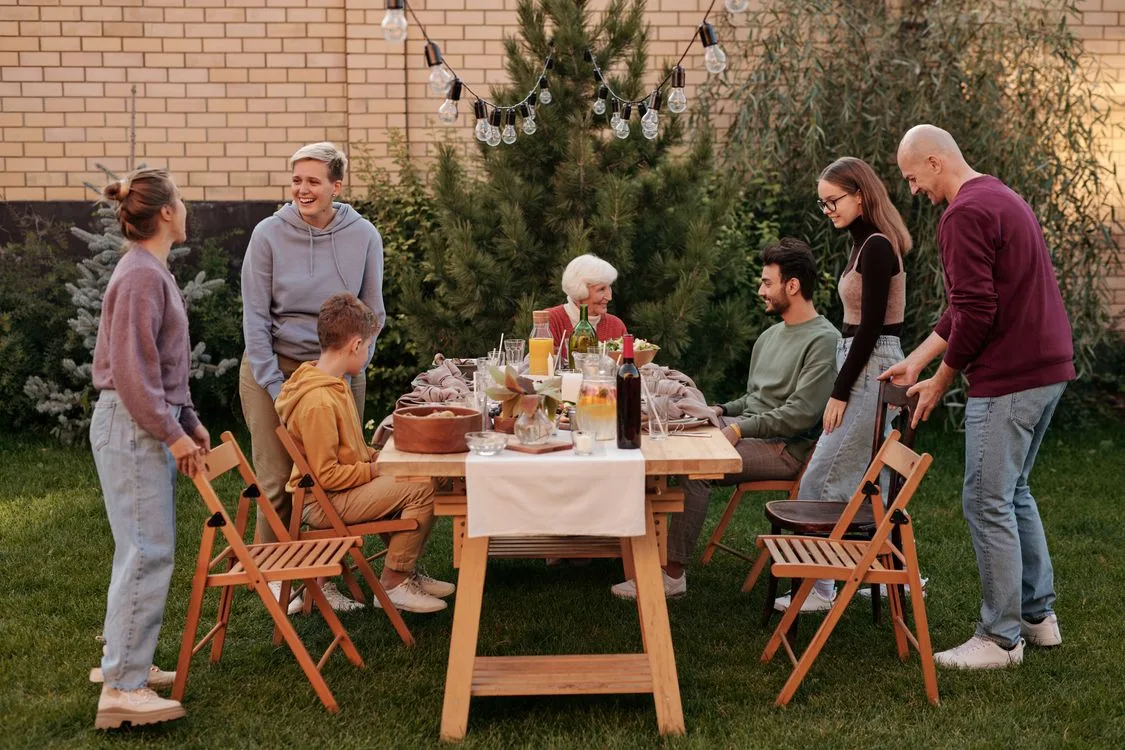
A dining setting works best close to the kitchen or barbecue. A lounge zone can sit slightly further out, where people naturally relax after eating. A pair of chairs beside a planter can create a quieter conversation spot. Not everyone wants to sit in the loudest part of the party. Some people just want to guard the cheese board and talk to one person. Respectable.
Outdoor rugs, planters, lighting, and furniture placement can define each zone without making the space feel boxed in. The goal is flow. People should know where to sit, where to place a drink, and how to move through the area without doing a polite little sidestep around the table every two minutes.
Choose Outdoor Furniture That Feels Like Real Furniture
Outdoor furniture used to have a problem. It often looked either too bulky, too shiny, or too much like it belonged beside a hotel pool. That’s changed.
Now, the best outdoor pieces borrow from indoor furniture. Deep seats. Lower profiles. Rounded edges. Soft cushions. Side tables that don’t wobble when someone puts down a glass. These details matter because they make the outdoor space feel lived in, not just decorated.
Scale is where many people get it wrong. A small courtyard doesn’t need a huge sectional and an eight-seater dining table. It needs breathing room. Two comfortable chairs, a compact table, and a few well-placed plants can do more than a crowded layout ever will.
Large decks can handle more. A proper outdoor sofa, dining area, and serving console can all work, as long as there’s space between them. Bigger isn’t always better. Better is better.
Use Materials That Can Handle Real Life
Outdoor spaces have to work harder than indoor rooms. They deal with sun, rain, dust, wind, leaves, food, shoes, and whatever the weather decides to do that week. So yes, materials matter.
Timber brings warmth. Stone adds weight and texture. Metal gives structure. Woven pieces soften the look. But each choice needs to suit the climate and the way the space will be used. A delicate finish might look beautiful on day one and tired by summer. No one wants that.
A composite decking board can give an outdoor entertaining area the look of timber while offering a lower-maintenance surface for homes that need to handle regular foot traffic, changing weather, and weekend cleaning without turning deck care into a second job.
Soft furnishings help balance harder materials. Cushions, outdoor rugs, throws, and curtains can make a deck or patio feel more like a room. They also make people stay longer. Comfort has that effect.
Let Lighting Set the Mood
Bad lighting can ruin a good outdoor space. One harsh ceiling light over the whole patio? No thanks. It makes dinner feel like a staff meeting. Layered lighting works better.
Wall lights near the entry help connect indoors and outdoors. Garden lights add depth. A pendant over the dining table gives the space a clear center. Lanterns, lamps, and string lights soften the edges without making everything look like a wedding setup.
The goal isn’t brightness. It’s atmosphere. People need enough light to see their food, find their drink, and recognize who they’re talking to. Beyond that, softer is usually better.
Add Greenery With a Plan
Plants can make an outdoor room feel alive, but random pots everywhere can get messy fast. A few strong choices usually look better than twenty tiny pots fighting for attention.
Use plants to frame views, soften fences, and create privacy. Tall planters work well near doors. Climbing plants can cover hard boundaries. Herbs near the dining area add scent and make the space feel useful, not just styled.
Repetition helps. Use the same plant or pot style in a few spots and the whole area starts to feel more intentional. It’s a simple trick, but it works.
Just don’t create an obstacle course. If guests need to dodge three pots and a fern to reach the barbecue, the greenery has taken over.
Make It Easy to Step Outside
An outdoor entertaining area feels like part of the living room when people use it without thinking. That’s the real test.
Wide doors help, but they’re not the whole story. A clear path, comfortable furniture, good flooring, soft lighting, and a visual connection to the interior all do the heavy lifting. The space should invite people out naturally, whether it’s for morning coffee, a lazy lunch, or the part of the evening when everyone has moved from the table but no one wants to go home yet.
That’s when outdoor design works best. It stops feeling like a feature. It becomes part of the home.