Most renovation checklists start with paint colors and cabinet finishes. They should start on the roof. I’ve seen it happen more than once: a homeowner spends weeks picking out the perfect kitchen backsplash, then six months later finds a water stain spreading across the ceiling directly below a roof that’s been quietly failing the whole time.
The renovation budget that was supposed to go toward new countertops ends up covering drywall repair and mold remediation instead, and the kitchen project gets delayed a full season while everyone deals with the roof first anyway. Before you sign off on any remodel, it’s worth spending twenty minutes checking the one part of the house that protects everything else.
1. Granules in the gutters
Asphalt shingles shed a few granules over their lifetime, that’s normal, especially in the first year or two after installation while any loose material works its way off. But if you’re cleaning out the gutters and finding handfuls of grit, or your downspouts are leaving gritty black deposits on the driveway or the ground below them, the shingles have worn past their protective mineral layer.
That granule coating is what shields the asphalt underneath from UV exposure. Once it’s gone in a significant patch, the shingle ages faster in that spot, gets brittle faster, and starts to lose its water-shedding ability. It’s the roofing equivalent of bald tires. You can still drive on them for a while, but the margin for error has basically disappeared. If you notice this during a renovation planning phase, it’s worth getting an actual roofer up there rather than assuming it’s just normal wear, because the rate of granule loss tells you a lot about how much life is actually left.
2. Daylight in the attic
Grab a flashlight, climb up into the attic on a dry, sunny afternoon, and turn off the attic light completely. Give your eyes a minute to adjust. Any pinpricks of daylight coming through the roof deck mean water has a way in too, even if you haven’t noticed a leak yet, because water finds gaps far more easily than light does and it doesn’t need nearly as much of an opening.
This is one of the more reliable DIY checks a homeowner can do without climbing on the roof itself, and it’s worth doing seasonally, not just before a renovation. Small gaps around nail pops, old vent boots, or minor flashing separation don’t leak every time it rains. They tend to leak during wind-driven rain, when water gets pushed sideways under normal drip lines, which is exactly the kind of storm that’s common along the Gulf Coast. If you find light coming through, note roughly where it is relative to the ridge and any chimneys or vents nearby, that detail helps a roofer find the exact spot faster from outside instead of testing the whole surface.
3. Sagging rooflines
Stand across the street, or better, walk to a neighbor’s yard where you get a clean side angle, and look at the roof’s silhouette against the sky. A ridge line should read as a straight line from one end to the other. A dip, a wave, or a soft sag in the middle of a slope usually means the decking underneath has been absorbing moisture for a while and has started to lose its rigidity.
This is different from a shingle problem. Shingles you can replace on a weekend with the right crew. A sagging deck often points to structural rot in the plywood or the rafters themselves, and in older homes, especially anything with a roof original to a house built more than 30 years ago, it’s worth having someone check the framing before assuming a fresh layer of shingles will solve it. Renovating around a structural problem you haven’t diagnosed is how a kitchen remodel budget quietly turns into a much bigger project than anyone planned for.
4. Shingles that curl or cup
Curling at the edges, where the corners of a shingle lift slightly or the whole tab develops a shallow bowl shape, is one of the more reliable visual signs that shingles are past their functional life. It happens as the asphalt loses the oils that kept it flexible, usually from years of direct sun exposure combined with heat cycling between hot days and cooler nights.
Once curling starts, it doesn’t reverse. It also tends to accelerate, because a curled edge catches more wind than a flat one, which means those shingles are more likely to lift and tear during the next storm. If you’re seeing this on more than a handful of shingles, particularly on a south or west-facing slope that gets the most sun exposure through the day, it’s a sign the whole roof is aging out together rather than just having a few isolated bad shingles. That distinction matters for whether a repair makes sense or whether you’re actually looking at a full replacement in the near term.
5. A roof older than 15 to 20 years, with no records
If you bought the house and don’t know when the roof was last replaced, that uncertainty is its own red flag, separate from anything you can actually see. Most standard three-tab asphalt shingles are rated for 20 to 25 years under ideal conditions, and architectural shingles often carry longer warranties on paper. But that number assumes decent attic ventilation, a house that doesn’t sit in constant humidity, and no major storm damage along the way, which isn’t a safe bet in Louisiana or anywhere else along the Gulf.
A quick way to narrow it down: check the permit history with the parish or check with the seller’s disclosure paperwork from when you bought the house, if you still have it. If neither gives you an answer, a roofer can often estimate the age within a few years just from the wear pattern and the type of shingle used, since manufacturers have changed styles and nailing patterns over the decades. Consulting a St. Louis roofing company can also help you get a professional assessment of your roof’s remaining lifespan and identify any repairs that may be needed. Knowing roughly where the roof sits in its lifespan changes the renovation math considerably, since planning an addition or a new HVAC system around a roof that has five years left versus fifteen years left is a very different conversation.
6. Higher energy bills than the house should have
A roof that’s lost its insulating properties, or has ventilation problems in the attic, makes the HVAC system work considerably harder to keep the house at a steady temperature. Poor attic ventilation traps heat in summer, which pushes that heat down into living spaces and makes the AC run longer. In winter, the same ventilation problems can trap moisture, which affects insulation performance in the opposite direction.
If your energy bills have crept up over a year or two and you can’t point to an obvious reason, like a new addition or a change in how many people live in the house, it’s worth having someone check the attic before assuming it’s the windows or the ductwork. Sometimes the fix is as simple as adding or clearing soffit vents that have gotten blocked by insulation over the years. Other times it points to a roof deck that’s no longer doing its job as a thermal barrier, which is a more involved fix but one that pays for itself over time in a climate where the AC runs most months of the year anyway.
7. Visible moss or dark streaking
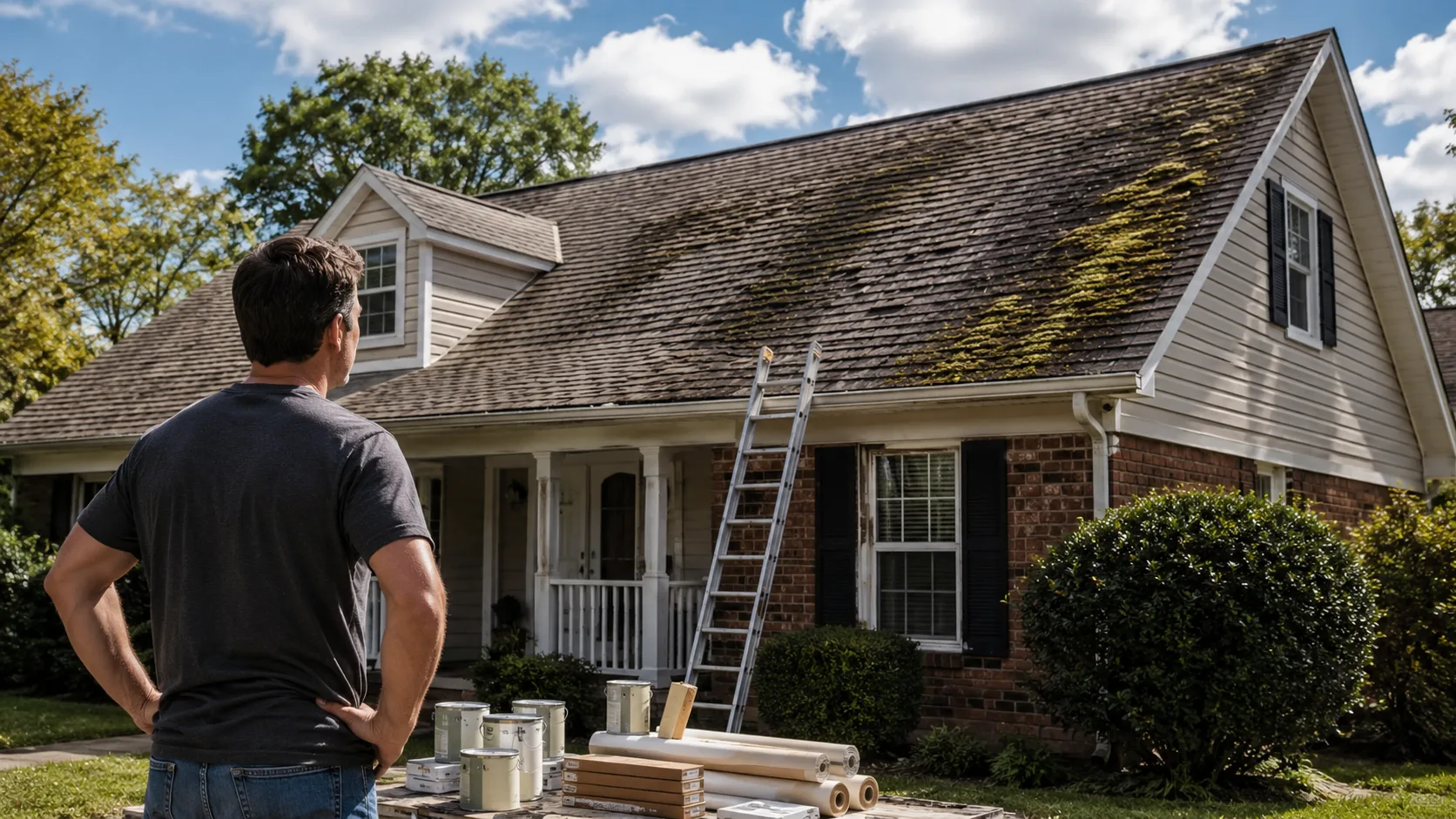
A little algae staining, usually showing up as dark streaks running down from the ridge, is mostly cosmetic and common in humid climates. It doesn’t necessarily mean the roof is failing. But moss that’s established itself in actual patches, rather than just surface staining, is a different situation, because moss holds moisture against the shingle surface constantly rather than letting it dry out between rains.
Over a season or two, that constant moisture speeds up wear underneath the moss, especially on north-facing slopes that don’t get direct sun and stay damp longer after rain. It can also work its way under shingle edges as it grows, lifting them slightly and giving wind and water an entry point they wouldn’t otherwise have. If you’re seeing established moss rather than just streaking, it’s worth having it professionally removed rather than pressure washing it yourself, since aggressive pressure washing can strip granules and do more damage than the moss itself.
Why this matters more before a renovation, not less
Interior renovations change the load and the moisture dynamics of a house in ways people don’t always think about, new insulation, altered attic ventilation when ductwork gets rerouted, sometimes a bumped-out addition that changes how water sheds off an adjoining roofline. Doing that work under a roof with existing problems just locks the issue in behind fresh drywall, where it’s both harder to spot and more expensive to fix once it does show up.
If you spot two or three of these signs, it’s worth getting a professional opinion before the contractors show up for the kitchen. A roof inspection usually costs far less than the water damage it prevents, and it gives you a real number to plan around instead of a guess. In coastal and Gulf South climates especially, where storm seasons run long and humidity never really lets up, that inspection matters more than it would in a drier region where roofs simply don’t take the same beating year after year. Homeowners working with roofing contractors in Covington often build this step into their renovation planning specifically because of how much moisture and wind exposure the area sees, and it’s a much easier conversation to have at the planning stage than in the middle of a remodel.
Check the roof first. Everything else you’re planning to do to the house depends on it staying dry.