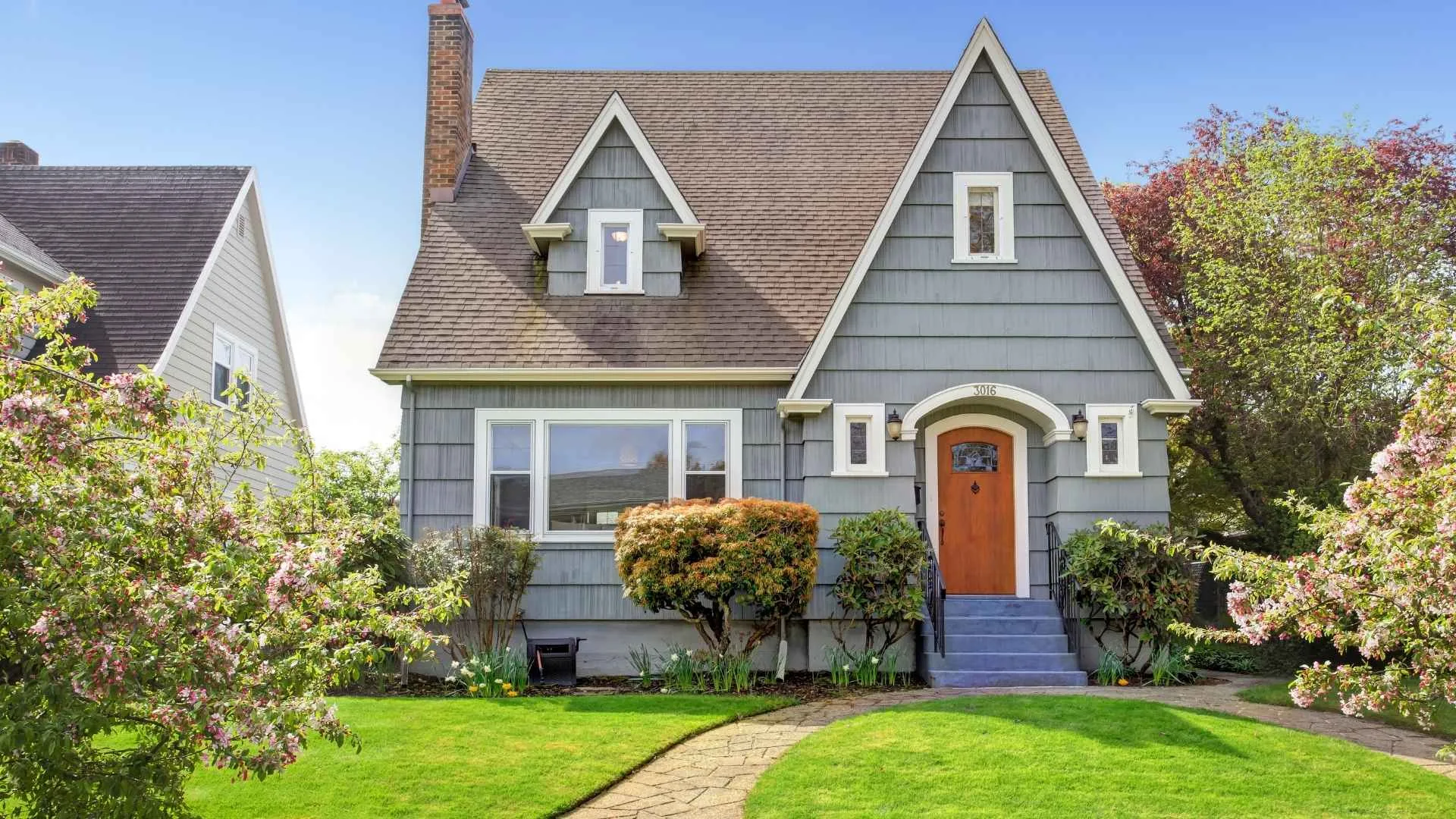
When a buyer forms a first impression of a house, the roof is seldom the thing they name. Yet it fills much of what the eye takes in from the street, frames the facade, and quietly indicates how well the property has been kept. On more expensive homes in particular, it is one of the details that separates a residence that looks considered from one that is merely costly.
That alone is reason to treat the roof as more than weather protection. Its material, color, and profile shape how a house presents itself day to day, how it ages, and, when the time comes to sell, how much assurance it gives a prospective buyer.
Why the Roof Shapes First Impressions
Curb appeal is largely a matter of coherence. A house looks right when its parts agree with one another, and the roof is among the largest of those parts. A roofline suited to the architecture, in a color that sits well against the walls, windows, and landscape, can make a home feel settled before a visitor reaches the door.
The opposite holds just as firmly. A clashing color, an uneven fade, or a covering that feels wrong for the style of the house can undo an otherwise handsome exterior. Because the roof occupies so much of the visible surface, its condition carries more weight in that first glance than most people consciously notice.
How Roofing Choices Signal Quality
Buyers at the upper end of the market are alert to signs of care, even ones they could not quite put into words. A roof that looks deliberate and well kept implies that the rest of the house has been held to the same standard.
Material is part of that signal. Slate and clay tile have long carried associations of permanence and craftsmanship, though both are heavy and can be demanding to install and maintain. Engineered alternatives have since broadened the choices: some metal systems are now shaped and finished to echo those traditional materials while asking less of the structure beneath. A homeowner can therefore pursue a particular character without accepting every constraint the original material once imposed.
Material and Architectural Style
The most convincing roofs support the character of the house rather than compete with it, and what that requires depends on the building.
A Traditional or Estate Look
On a Mediterranean villa, a Colonial, or a country estate, much of the appeal comes from the depth and texture of tile, slate, or wood shake. Products such as textured steel roofing are formed into those familiar profiles and given a textured finish, allowing the roof to retain a traditional appearance while remaining lighter than natural tile or slate.
For houses in wooded or lakeside settings, a shake-style profile can offer the warmth people associate with cedar while potentially requiring less routine maintenance than natural wood typically does.
A Modern, Minimalist Look
Contemporary architecture usually wants the reverse: clean lines, restraint, and a narrow palette. A flat, low-profile roofing system can suit this design, with crisp, even lines and a controlled color range that flat and low-slope forms tend to call for. On a modern house, that evenness reads as intent, and intent is much of what distinguishes a well-designed home.
None of this makes metal better than slate or tile. The relevant shift is that appearance and upkeep can now be weighed somewhat separately, which leaves more room to match the roof to the architecture instead of trading one against the other.
Durability, Weather, and Long-Term Value
Appearance is only worth much if it endures. A roof that streaks or wears within a few seasons erodes the very impression it was meant to create, and on a prominent house that decline is hard to hide.
Weather is the real test, and it differs by place. Coastal homes face salt and wind, mountain properties contend with snow and freeze-thaw cycles, and hot regions experience strong, persistent sun. Rather than trust broad claims about how long a roof will last, it is more useful to consider how a particular product and coating are meant to perform in the conditions of the site. For homes with a more contemporary silhouette, painted modular roofing tends to hold its clean lines well against sun and weathering, since the flat panel shows less of the wear that can appear on textured surfaces over time. A covering matched to those conditions protects both the look of the house and the money spent on it.
There is a practical side as well. A roof that asks for less frequent attention is one fewer standing obligation, which can quietly appeal to a buyer, especially for a house that sits empty for parts of the year.
What Buyers Notice
Prospective buyers rarely inspect a roof closely, but they respond to what it tells them. A few things tend to register, whether or not they are put into words:
Condition. Streaking, moss, missing pieces, or patchy fading suggest deferred maintenance and raise questions about the rest of the house.
Cohesion. A color and profile that clearly belong with the facade make a property feel designed rather than assembled.
Appropriateness. A covering that fits the style—tile on a Mediterranean home or a clean profile on a modern one—looks natural, while a mismatch feels off even to an untrained eye.
Implied upkeep. A roof that appears likely to require frequent maintenance can give a cautious buyer pause, while one that suggests more manageable upkeep provides reassurance.
Together, these details can influence how confident a buyer feels about the condition and long-term upkeep of the property.
Choosing a Roof With Resale Appeal in Mind
For an owner weighing both daily life in the house and its eventual sale, a handful of questions tend to clarify the decision. Does the material suit the architecture and the setting? Will the color and profile still look right a decade on? How is the product meant to hold up in the local climate? And does the choice ease or add to the maintenance the next owner would take on?
Comparing options in person helps more than any catalog. Product ranges such as Novatik roofing systems include both profiled and modular metal styles, and viewing real samples alongside the home’s existing materials in natural daylight makes color, texture, and overall compatibility far easier to judge before making a final decision.
The installer matters as much as the material. Even a well-chosen product can disappoint when the flashing, ridges, and transitions are handled carelessly, and on a considered house those junctions are exactly where the work either reads as finished or does not.
Final Thoughts
The roof is easy to overlook precisely because it is always in view, yet it plays a defining role in how a house is perceived and valued. A roofing system that complements the architecture, weathers gracefully, and suits the property’s long-term needs strengthens both everyday curb appeal and future resale confidence.
Whether the goal is the texture of traditional tile or the clean restraint of a modern profile, the roof deserves to be considered as an integral part of the home’s architectural identity rather than simply the final layer added once the design is complete.