Most people don’t shop for flooring twice in the same decade. That’s what makes the decision stressful, as you are committing to a surface that will be underfoot every single day for fifteen or twenty years, and the sample square in your hand tells you almost nothing about how it will behave when a dog sprints across it or a dishwasher line lets go at 2 a.m.
The premium end of the market doesn’t make this simpler. One brand built its name on waterproof construction. Another has spent fifty years doing nothing but luxury vinyl. Two of the biggest names sell everything from carpet to porcelain, which means “quality” varies collection to collection within the same catalog. Comparing them on price per square foot alone will steer you wrong.
Real luxury shows up in the specs, like on vinyl, look for a thick wear layer (20 mil and up) over a rigid SPC or WPC core, and on hardwood, a 3 to 6 mm veneer that can actually be refinished. Those numbers, not the finish, separate genuine quality from marketing.
Here are eight luxury flooring brands worth your attention, what each one actually does well, where it falls short, and the kind of home it suits. No brand here is the best for everyone.
1. COREtec
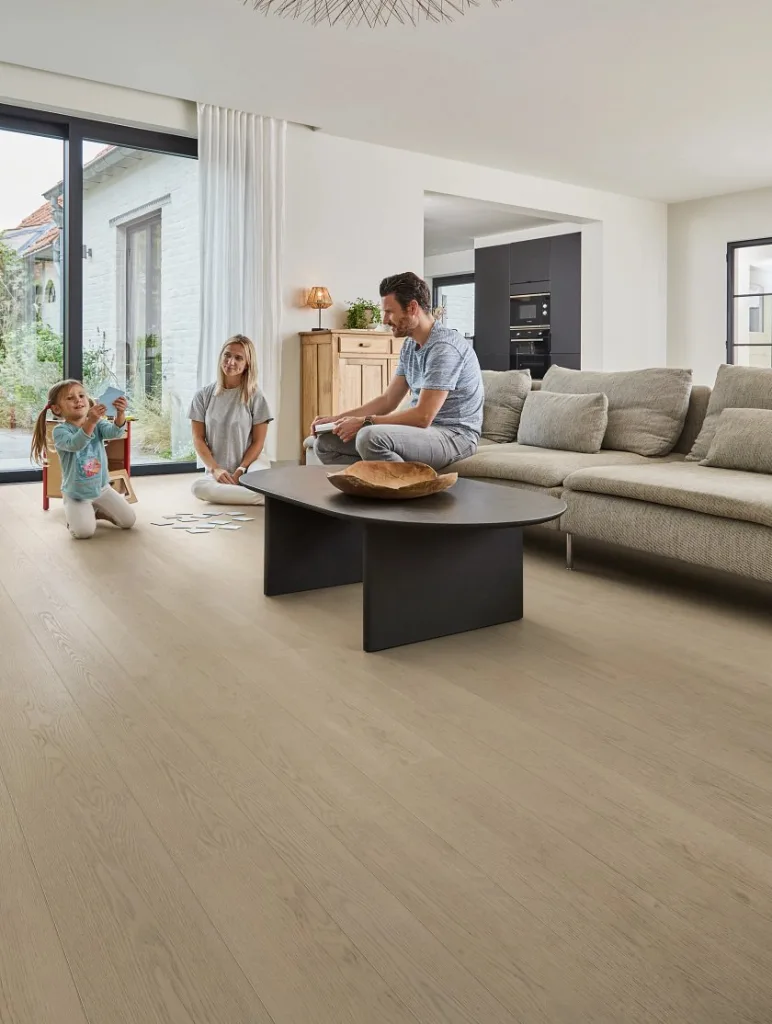
Best for: Homes that need one waterproof floor to run continuously from the entryway through the kitchen to the basement.
COREtec is the brand that arguably created this category. Developed by USFloors and launched in 2012, it introduced a rigid, dimensionally stable core that didn’t swell when wet and received a product patent in 2015 for its waterproof core</Shaw Industries acquired the brand in 2016, which brought serious manufacturing depth behind it.
The detail that still sets COREtec apart is the attached cork backing on many of its lines. Rigid vinyl over a concrete slab can sound and feel like walking on a drum. Cork changes that as it takes the edge off the hardness, cuts the hollow click, and adds a little warmth in a basement or over a radiant-heated slab. It also functions as its own underlayment, which simplifies installation.
The range spans Originals, Premium, and Grande tiers, with plank widths and thicknesses stepping up as you go. Wear layers run from around 12 mil on entry lines to 30 mil on the heaviest-duty options, so the tier you pick matters more than the badge on the box.
Worth Knowing: The softer, cork-backed constructions can show indentation under very heavy static loads such as a piano leg or a loaded bookcase. Furniture cups solve it, but plan for them.
Pricing also sits above most competing rigid-core vinyl, and because the Originals, Premium, and Grande tiers differ so much in thickness and backing, it’s worth reading a full COREtec flooring review before settling on a specific line.
2. Karndean
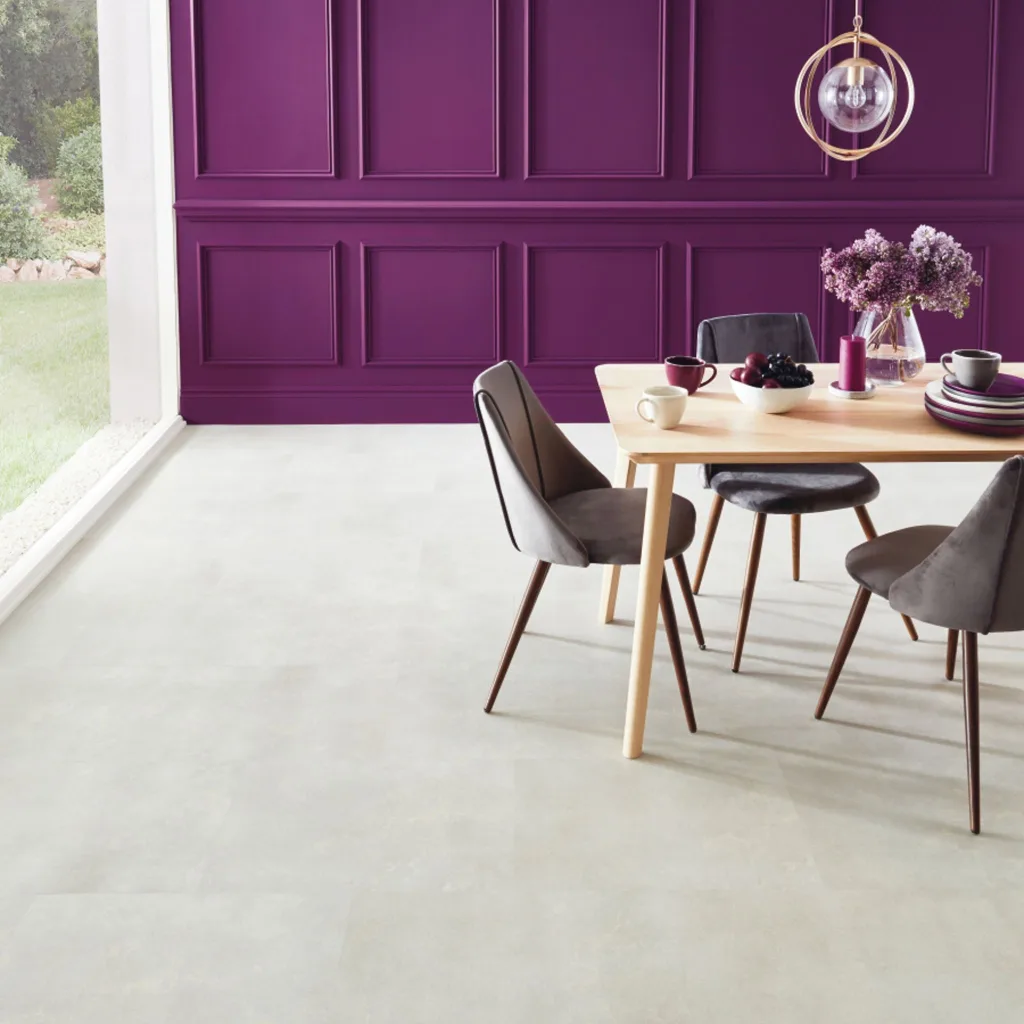
Best for: Homeowners and designers who want a herringbone, a stone-look border, or a genuinely convincing limestone that doesn’t repeat across the room.
Founded in the UK in 1973 and still a family business, Karndean is unusual in that it makes luxury vinyl and nothing else. Fifty years in one category shows up in the product, particularly in the glue-down tile ranges, where thin planks and tiles can be laid in true patterns with contrasting design strips, the way real stone or parquet would be.
The lineup tiers cleanly: Art Select and Da Vinci sit around a 30 mil wear layer, Korlok Select and Van Gogh around 20 mil, with Knight Tile as the entry point. Glue-down construction also makes it the quietest option in this guide and the most forgiving in rooms with large glazing and big temperature swings.
Worth Knowing: The glue-down lines demand a genuinely flat, dry, well-prepped subfloor, and that prep is where budgets get blown. Installation is a specialist job as this is not the range to hand to a general handyman.
Availability runs through authorized dealers rather than big-box stores.
3. Shaw Floors
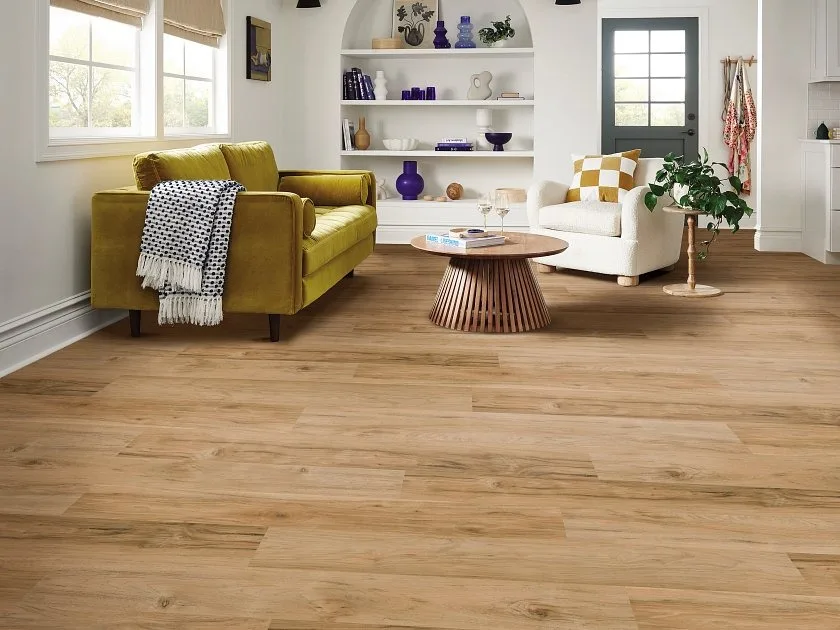
Best for: Renovations where you want coordinated hard surface, carpet, and tile without juggling four suppliers.
Shaw is one of the largest flooring manufacturers in the United States and a Berkshire Hathaway company. That scale is the point: hardwood, laminate, rigid-core vinyl, carpet, and tile all come from one source, with color stories that carry across categories. For a whole-home project, that consistency is genuinely useful; bedroom carpet that relates to the hallway plank is harder to achieve than it sounds when you’re buying piecemeal.
The Floorté range covers most premium residential vinyl needs, and Shaw’s hardwood and carpet lines run from builder-grade up to legitimately high-end.
Worth Knowing: Breadth is also the caveat. Shaw’s catalog spans entry-level to premium, so “Shaw” tells you very little on its own. Ask for the specific collection, wear layer, and warranty document as the gap between the bottom and top of the range is enormous.
4. Mannington
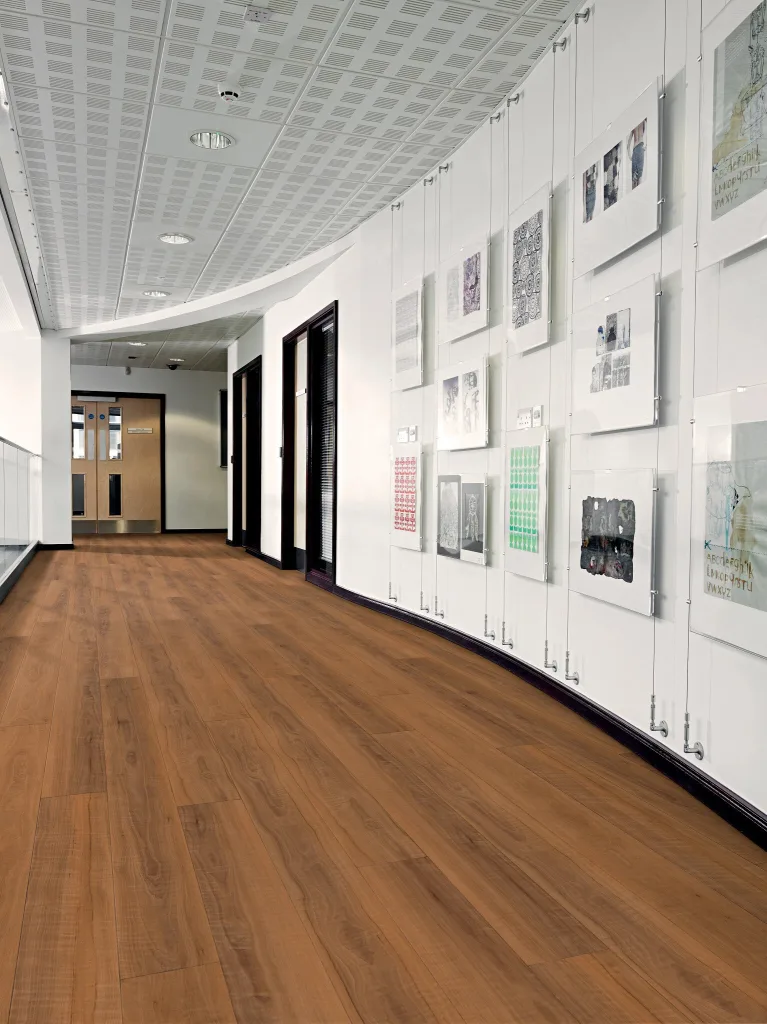
Best for: Busy family homes where the floor needs to survive real life, and the buyer cares where it was made.
Founded in 1915 and still family-owned, the New Jersey company makes luxury vinyl, hardwood, laminate, and sheet vinyl, much of it in US plants. That domestic manufacturing matters to a lot of buyers now, both for supply chain reliability and for the tighter environmental and emissions standards that come with it.
Mannington’s strength is the unglamorous middle: floors that clean easily, resist scratching, and hold their finish under school-run traffic. The Adura line is the one most homeowners land on, offered in both glue-down and floating formats, which gives you flexibility depending on subfloor conditions.
Worth Knowing: The design catalog is more restrained than Karndean’s or Anderson Tuftex’s. If you want something dramatic like heavy character grain, unusual formats, bold stone, you may find the palette a little conservative.
5. Mohawk
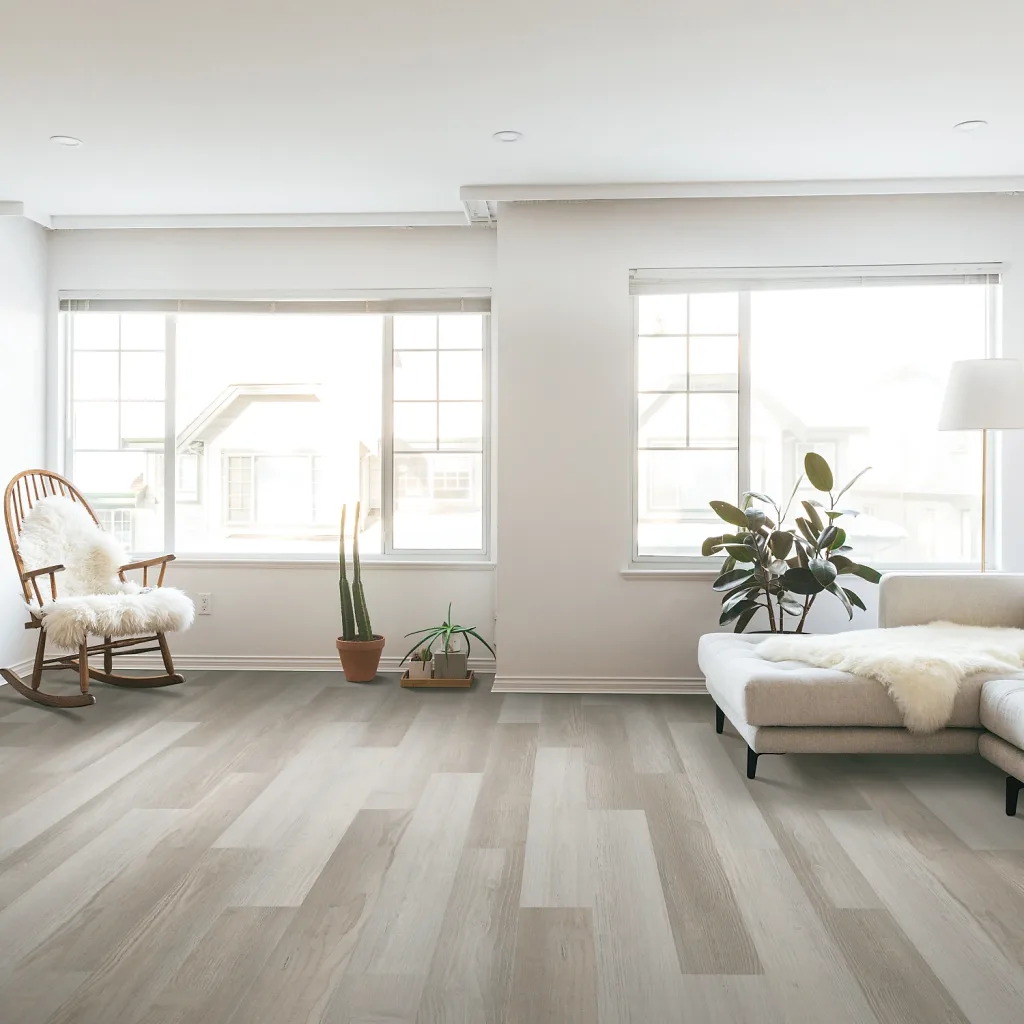
Best for: Buyers who want waterproof, pet-resistant performance and are pricing several rooms at once.
Mohawk traces its roots to 1878 and is one of the largest flooring manufacturers in the world. Its scale funds real R&D; the SolidTech rigid-core vinyl lines are built around waterproof cores with scratch and stain-resistant surfaces, and the company’s engineered hardwood and laminate ranges use proprietary finishes designed for households with pets.
Where Mohawk earns its place here is value density. On a like-for-like spec basis, you’ll often get more square footage for the money than from the boutique brands, with backing from a company that will still exist when a warranty claim comes up.
Worth Knowing: Mohawk sells under a lot of sub-brands and retailer-exclusive labels, which makes cross-shopping confusing. Two floors with different names can be near-identical, and two floors under the same family name can be very different. So, compare spec sheets, not just names.
6. Anderson Tuftex
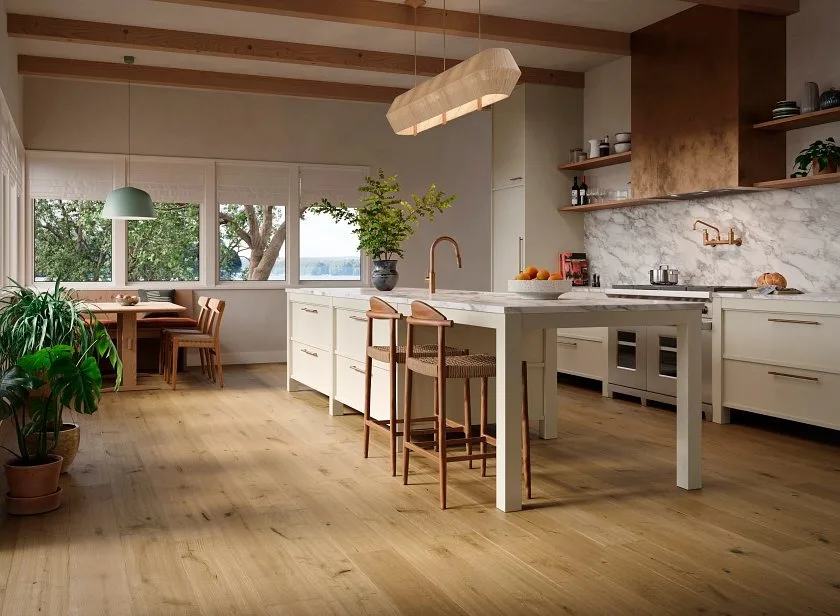
Best for: High-end interiors where the floor is a design feature rather than a background.
Anderson Tuftex, part of Shaw, is where the hardwood conversation gets interesting. The collections lean into wide planks, sawn faces, wire-brushed and hand-worked textures, and layered finishes that read as depth rather than as a stain color. In a room with good light, the difference between this and a standard prefinished oak is obvious from across the space.
The thicker sawn veneers on its engineered lines are the technical argument: enough wear layer to be sanded and refinished, with the stability of engineered construction over a slab or in a humidity-swinging climate where solid wood would misbehave.
Worth Knowing: It’s the most expensive option in the list, and it’s still wood. It will dent, it will patina, and heavy character finishes make future spot repairs harder to blend. That’s a feature if you like the way wood ages and a problem if you don’t.
7. Bruce
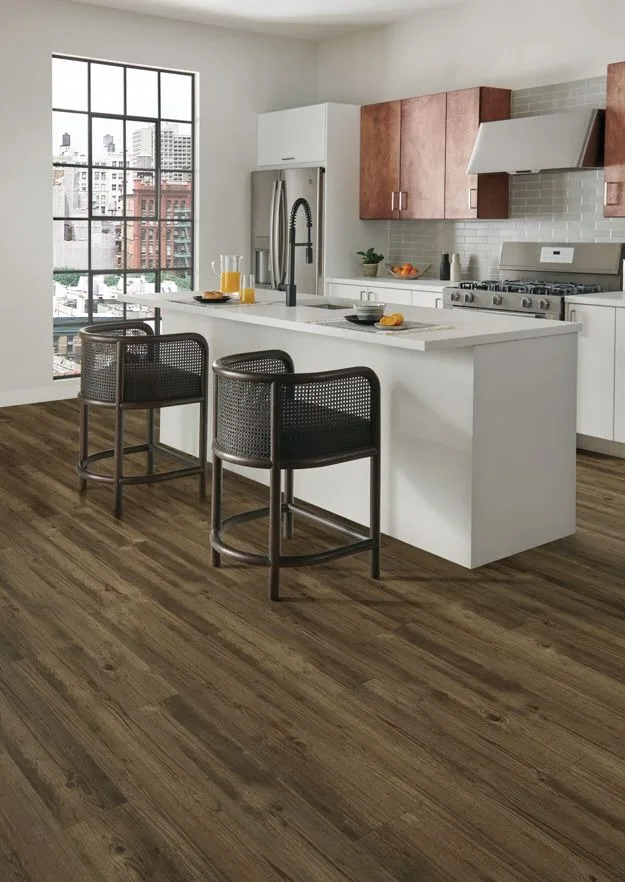
Best for: Homeowners who want genuine wood with refinishing potential, without designer pricing.
Bruce was founded by E.L. Bruce in 1884 and is now part of AHF Products. It’s one of the most widely distributed hardwood brands in the country, built primarily on domestic red and white oak.
The case for Bruce is straightforward: solid ¾-inch hardwood can be sanded and refinished several times across its life. A vinyl floor, however good, gets replaced when it wears. A solid oak floor gets refinished and starts over, which is why hundred-year-old oak floors are still in service. Bruce’s domestic mills produce consistently milled boards with tight tongue-and-groove tolerances, and the grading is clearly labeled so you know how much knot and character you’re buying.
Worth Knowing: Hardwood is the wrong choice for full bathrooms and below-grade basements, and it needs humidity kept in a reasonable band year-round. It also asks more of you day-to-day than vinyl does, with no wet mopping, prompt spill cleanup, and felt pads on everything.
8. Interface
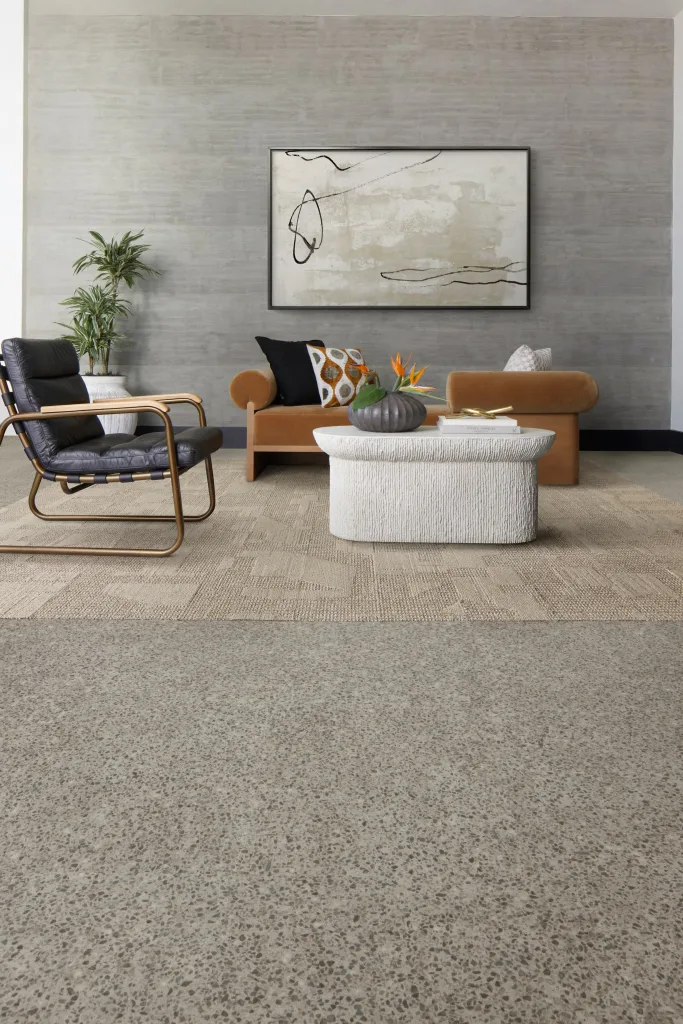
Best for: Owners who want third-party-verified environmental performance and can work within a commercial-oriented catalog.
Founded in 1973 and based in Atlanta, Interface built its reputation on modular carpet tile and LVT with a sustainability program that goes well beyond marketing, including recycled and bio-based inputs, published carbon data per product, and take-back programs that keep old flooring out of landfill.
For a home office, media room, gym, or any space where you want durability and replaceable modules, carpet tile is an underrated residential choice. A stained tile gets swapped instead of the whole room being torn up.
Worth Knowing: The catalog is designed for commercial interiors. Aesthetics skew contemporary and specification-driven, minimum order quantities can be awkward for a single room, and residential dealers are thinner on the ground. It’s the right brand for a specific brief, not a default.
| Brand | Speciality | Best for | Typical residential wear layer |
| COREtec | Waterproof rigid-core LVP | Whole-home waterproof with comfort underfoot | 12–30 mil |
| Karndean | Design-led LVT/LVP only | Stone and wood realism, custom patterns | 20–30 mil |
| Shaw Floors | Everything (LVP, wood, carpet, tile) | One-stop specification across a whole house | Varies widely |
| Mannington | American-made vinyl, wood, laminate | Family homes wanting US manufacturing | 12–22 mil |
| Mohawk | Flooring technology and scale | Waterproof performance at accessible pricing | 12–20 mil |
| Anderson Tuftex | Premium hardwood and carpet | Designer interiors, wide-plank character | 2–6 mm veneer |
| Bruce | Solid and engineered hardwood | Real wood with refinish potential, sensible cost | Solid ¾” / varies |
| Interface | Sustainable modular flooring | Eco-priority projects, high-traffic spaces | Commercial-grade |
How to Choose the Right Luxury Flooring Brand
Work through these in order, as most people get this wrong by starting with looks.
- Start with the wettest room. If the same floor runs into a kitchen, laundry, basement, or full bath, waterproof rigid-core vinyl is the safe answer. COREtec, Karndean’s rigid lines, Mohawk SolidTech, and Mannington Adura all qualify. Hardwood doesn’t.
- Check the subfloor before you fall in love. Glue-down luxury vinyl demands flatness that older homes rarely have without leveling work. Floating floors are more forgiving. Get this assessed early, because remediation can cost as much as the flooring.
- Match durability to household reality. Large dogs and small children push you toward 20 mil and up on vinyl, or toward wire-brushed and textured hardwood that hides wear rather than smooth high-gloss that showcases it.
- Read the warranty, not the headline. “Lifetime limited residential” is a category, not a promise. Look at what’s excluded, whether professional installation is required for coverage, and how the manufacturer handles pro-rated claims.
- Price the installed floor, not the plank. Subfloor prep, underlayment, transitions, trim, furniture moving, and old floor disposal routinely add 50–100% to the material cost. A cheaper plank with heavy prep requirements can end up costing more than a premium one.
- Order samples and live with them. Put full-size planks on the actual floor, in the actual light, for a week. Showroom lighting flatters everything.
The Bottom Line
There’s no single best luxury flooring brand, only the right match for your rooms and how you live in them.
If you want one waterproof floor running through the whole house with comfort underfoot, COREtec is the most complete answer. If the floor is a design statement and you want patterns, borders, or the most convincing stone available, Karndean is worth the extra installation care. Anderson Tuftex is the choice when hardwood character matters more than budget; Bruce is the choice when it doesn’t.
Shaw, Mannington, and Mohawk are the reliable middle of the premium market with broad catalogs, real warranties, and the manufacturing backing to honor them. Interface belongs on the list for anyone weighing sustainability heavily.
Narrow to two brands, get full-size samples of both, and walk on them for a week before you commit. It’s a decision you’ll look at every day for the next twenty years.