At the heart of every effective heating and cooling system lies a sophisticated interplay of scientific principles designed to maintain optimal thermal comfort and indoor air quality. Whether it’s a scorching summer day or a frigid winter night, these systems work diligently to condition the air within our homes and businesses. Understanding these core mechanics is fundamental to appreciating how our environments are regulated and how we can optimize their performance.
The primary mechanism for cooling is often the refrigeration cycle, a marvel of engineering that leverages the physical properties of refrigerants to transfer heat. Heating, on the other hand, typically involves generating heat through combustion or by extracting it from external sources, as seen with heat pumps. Beyond temperature control, modern HVAC systems also play a crucial role in managing indoor air quality through ventilation and filtration. For those seeking to deepen their understanding of these systems and ensure their home’s comfort, exploring resources from local experts can be invaluable. For instance, a dedicated team like the professionals at Mankato Heating & Cooling can provide insights into how these complex systems are tailored to specific regional needs.
The Science of the Refrigeration Cycle
The refrigeration cycle is the engine behind air conditioning and heat pump cooling. It’s a continuous loop that involves four main components: the compressor, condenser, metering device (or expansion valve), and evaporator.
- Evaporator: Located indoors, the evaporator coil contains a low-pressure, cold liquid refrigerant. As warm indoor air passes over this coil, the refrigerant absorbs heat, causing it to undergo a phase change from liquid to a low-pressure gas. This is where heat absorption occurs, effectively cooling the indoor air.
- Compressor: The gaseous refrigerant then flows to the compressor, which pressurizes and heats it significantly. This high-pressure, hot gas is then sent to the condenser.
- Condenser: Situated outdoors, the condenser coil releases the absorbed heat into the cooler ambient air. As the hot, high-pressure gas sheds its heat, it undergoes another phase change, returning to a high-pressure liquid. This process is known as heat rejection.
- Metering Device: Before returning to the evaporator, the high-pressure liquid refrigerant passes through a metering device, which restricts its flow. This causes a sudden drop in pressure and temperature, preparing the refrigerant to absorb more heat in the evaporator and restart the cycle.
This continuous process of heat absorption and rejection is what allows HVAC systems to maintain desired indoor temperatures.
How Ventilation and Air Filtration Protect Indoor Health
Beyond temperature, the quality of the air we breathe indoors is paramount for health and comfort. This is where ventilation and air filtration come into play. Ventilation is the process of introducing fresh outdoor air into a building while expelling stale indoor air. This dilutes pollutants, removes excess humidity, and reduces the concentration of airborne contaminants.
The Centers for Disease Control and Prevention (CDC) provides guidelines for adequate ventilation, recommending a minimum of 5 air changes per hour (ACH) for most occupied spaces. In settings with higher risk, such as hospital rooms with airborne contagions, the recommendation increases to a minimum of 12 ACH. For crowded spaces like bars or commercial kitchens, air change rates can be as high as 30 to 50 ACH.
Ventilation can be achieved through:
- Mechanical ventilation: This involves using fans and ductwork to actively supply and exhaust air. Systems like energy recovery ventilators (ERVs) and heat recovery ventilators (HRVs) can recover heat or coolness from outgoing air to condition incoming fresh air, improving efficiency.
- Natural ventilation: This relies on natural forces like wind pressure and thermal buoyancy (stack effect) through open windows, doors, and vents. It requires little maintenance and can be very inexpensive, though it’s less controllable than mechanical systems.
Air filtration works in tandem with ventilation to remove particulate matter from the air. Filters are rated by their MERV (Minimum Efficiency Reporting Value), with higher MERV ratings indicating greater effectiveness at capturing smaller particles. Proper filtration is crucial for removing dust, pollen, pet dander, and even some microbial contaminants, significantly impacting indoor air quality and protecting occupants from respiratory irritants and airborne contagions. Regular filter replacement, as often as monthly depending on usage and household conditions, is a simple yet critical maintenance task.
Comparing Central Systems, Heat Pumps, and Ductless Options
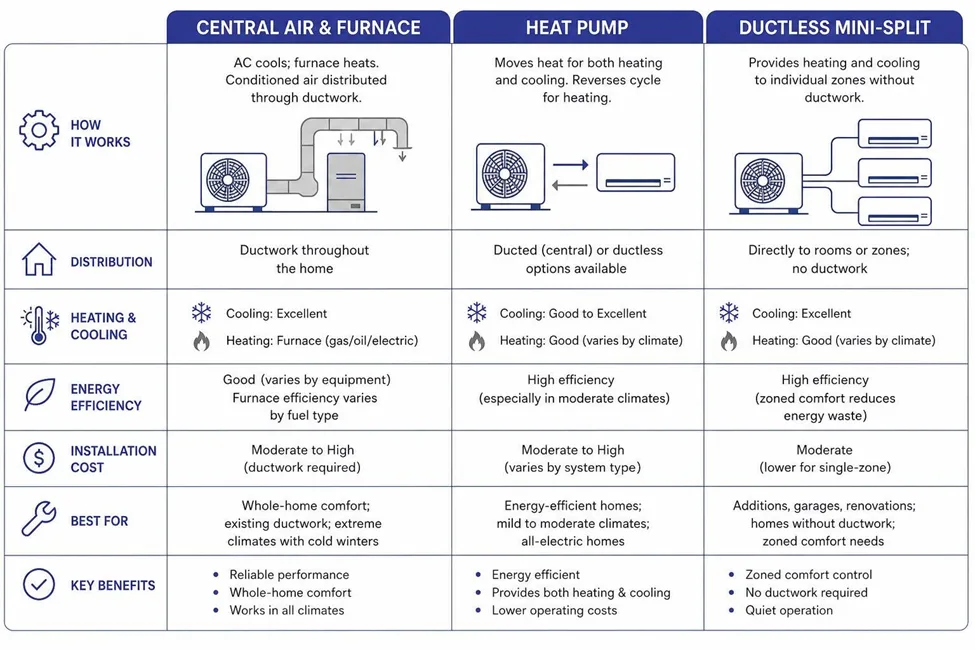
Choosing the right heating and cooling system involves weighing various factors, including your home’s structure, local climate, energy goals, and budget. The market offers a diverse range of solutions, each with distinct advantages and applications. Let’s explore the key differences between central air systems, heat pumps, and ductless mini-splits.
Central Air Conditioning and Furnaces
Central air conditioning and furnaces represent a traditional and widely adopted approach to climate control. These systems typically rely on a network of ductwork to distribute conditioned air throughout the entire home.
- Central Air Conditioning: Most residential central AC systems are split systems, meaning they have an outdoor unit (condenser and compressor) and an indoor unit (evaporator coil and blower fan, often integrated with the furnace). Refrigerant lines connect these two components. Less common for residential use are packaged systems, where all components—compressor, condenser, and evaporator—are housed in a single outdoor unit, typically placed on a roof or concrete slab. Packaged units require more bulky ductwork connections.
- Furnaces: Furnaces are dedicated heating units that generate heat, most commonly through the combustion of natural gas or propane, or via electric resistance coils. The heat is then transferred to air, which is circulated by a blower motor through the ductwork. Common furnace issues include ignition failures and problems with blower motors, which can significantly impact heating performance.
The primary advantage of central systems is their ability to provide uniform temperature control across an entire home from a single thermostat. However, their efficiency can be compromised by duct losses, which, according to statistics, can account for up to 30% of energy consumption in space conditioning. This highlights the importance of well-sealed and insulated ductwork.
The Versatility of Modern Heat Pumps
Heat pumps are increasingly popular due to their remarkable energy efficiency and versatility. Unlike furnaces that generate heat, heat pumps transfer heat. In cooling mode, they operate much like a central air conditioner, moving heat from inside to outside. In heating mode, they reverse the process, extracting heat from the outdoor air (even cold air contains some heat) or the ground and transferring it indoors. This dual functionality makes them highly efficient dual-function systems.
A particularly efficient type is the ground source heat pump (GSHP), also known as a geothermal heat pump. These systems utilize the stable underground temperatures, which generally range from 7 to 24°C (45 to 75°F) at 1.8 meters underground. By tapping into this consistent thermal reservoir, GSHPs can significantly reduce heating and cooling capacity needs compared to air-source heat pumps, which are more affected by extreme ambient air temperatures. The efficiency of heat pumps is often measured by their Seasonal Energy Efficiency Ratio (SEER) for cooling and Heating Seasonal Performance Factor (HSPF) for heating. Many regions, including Minnesota, offer tax credits and incentives for installing energy-efficient heat pumps, making them an attractive investment.
Ductless Mini-Splits for Targeted Heating and Cooling
Ductless mini-splits offer a flexible and energy-efficient alternative, especially for homes without existing ductwork, new home additions, or spaces requiring zoned comfort. As the name suggests, they do not rely on extensive ductwork. Instead, an outdoor condenser unit connects to one or more indoor air-handling units via a small conduit that houses refrigerant lines, power cables, and a condensate drain.
Each indoor unit can be controlled independently, creating individual zones of comfort. This allows occupants to heat or cool only the rooms they are using, leading to significant energy conservation. Mini-splits are particularly effective for:
- Room additions where extending existing ductwork would be impractical or expensive.
- Older homes that lack ductwork.
- Targeting specific areas for enhanced comfort, such as a home office or a rarely used guest room.
While the upfront cost per unit can sometimes be higher than central systems, the long-term energy savings and precise temperature control often justify the investment. Their compact size and quiet operation are additional benefits.
Maximizing Energy Efficiency and Reducing Operational Costs
In an era where energy costs are a significant concern, optimizing the energy efficiency of your heating and cooling systems is crucial. Not only does it lead to substantial savings on utility bills, but it also reduces your carbon footprint. Various factors, from the system’s design to daily usage habits, influence overall energy consumption. Understanding and implementing strategies to improve efficiency can have a profound impact.
Understanding Modern Efficiency Ratings
When selecting or evaluating HVAC equipment, several key ratings indicate its energy efficiency:
- SEER (Seasonal Energy Efficiency Ratio): This rating applies to air conditioners and heat pumps in cooling mode. It measures the cooling output over a typical cooling season divided by the total electric energy input during the same period. The higher the SEER rating, the more energy-efficient the unit. As of 2023, the current industry minimum SEER rating is 14 SEER for new installations in many regions, with higher minimums in some southern states. The EPA has imposed tighter restrictions on HVAC equipment efficiency over the years, driving manufacturers to innovate.
- AFUE (Annual Fuel Utilization Efficiency): This rating is specific to furnaces and boilers. It expresses the percentage of fuel converted into usable heat over a heating season. For example, a 90% AFUE furnace converts 90% of its fuel into heat, with the remaining 10% lost through the chimney or exhaust. Higher AFUE ratings indicate greater efficiency.
- HSPF (Heating Seasonal Performance Factor): This rating applies to heat pumps in heating mode. It measures the total heating output over a typical heating season divided by the total electric energy consumed during the same period. Like SEER, a higher HSPF indicates better heating efficiency.
Understanding these ratings allows homeowners to make informed decisions when purchasing new equipment, ensuring they invest in systems that offer long-term energy savings.
Practical Steps for Homeowners to Lower Utility Bills
Even with an efficient system, daily practices play a significant role in reducing operational costs. Here are some practical steps homeowners can take:
- Programmable and Smart Thermostats: Installing a programmable or smart thermostat allows you to set schedules for temperature adjustments based on your daily routine. For example, you can set the temperature to be higher in summer or lower in winter when you’re away from home or asleep. Smart thermostats can even learn your preferences and adjust automatically, leading to considerable savings.
- Zoning Systems: For homes with central HVAC, implementing zoning with multiple thermostats can provide more granular control. Instead of heating or cooling the entire house, you can condition only the occupied areas, similar to the benefit of ductless mini-splits. This can significantly reduce heating and cooling expenses.
- Sealing Duct Leaks: As mentioned earlier, duct losses can account for a substantial portion of energy waste. Regularly inspecting and sealing leaks in your ductwork can prevent conditioned air from escaping into unconditioned spaces like attics or crawl spaces. Professional duct sealing services can identify and rectify these issues.
- Routine Filter Replacement: A clogged air filter restricts airflow, forcing your HVAC system to work harder and consume more energy. Replacing or cleaning filters regularly (every 1-3 months, depending on usage and household factors like pets) is a simple, inexpensive task that maintains efficiency and improves indoor air quality.
- Optimizing Fan Blade Design: While not a homeowner-level task, it’s worth noting that advancements in design, such as a well-designed fan blade, could reduce the electrical power required to move air by a third. This highlights the ongoing innovation in HVAC technology aimed at improving efficiency.
- Demand-Controlled Kitchen Ventilation (DCKV): For commercial settings, or homes with high-performance kitchens, demand-controlled kitchen ventilation technology can provide significant fan energy and conditioned air savings by adjusting fan speeds based on actual cooking loads rather than running at a constant high speed.
By combining efficient equipment with smart usage habits and diligent maintenance, homeowners can significantly lower their utility bills and enjoy more sustainable comfort.
Essential Maintenance and Professional HVAC Services
Just like a car, your heating and cooling system requires regular care to perform optimally and reliably. Neglecting maintenance can lead to decreased efficiency, premature breakdowns, and costly repairs. Adopting a proactive approach to preventative maintenance is key to ensuring system longevity and consistent comfort.
The Homeowner’s Seasonal Maintenance Checklist
While some tasks require professional expertise, many routine maintenance items can be handled by homeowners. Performing these checks seasonally can help prevent common issues and keep your system running smoothly:
- Filter Changes: As discussed, regularly inspect and replace or clean your air filters. This is perhaps the most critical and easiest maintenance task.
- Clearing Debris: For outdoor units (AC condensers, heat pump condensers), ensure the area around the unit is free from leaves, grass clippings, and other debris. This allows for proper airflow and heat exchange.
- Monitoring Performance: Pay attention to any unusual noises, odors, or changes in your system’s performance. Is it cycling more frequently? Is the airflow weaker than usual? Catching these signs early can prevent minor issues from escalating.
- Checking Thermostat Settings: Ensure your thermostat is set correctly for the season and that its programming is accurate.
- Inspecting Vents and Registers: Make sure all supply and return vents are open and unobstructed by furniture or drapes.
- Cleaning Outdoor Coils: Periodically, gently rinse the outdoor condenser coils with a garden hose to remove accumulated dirt and grime.
These simple steps can go a long way in maintaining your system’s efficiency and extending its lifespan.
The Value of Professional Inspections and 24/7 Emergency Support
While DIY maintenance is helpful, it cannot replace the thoroughness of a professional HVAC tune-up. Scheduling seasonal tune-ups with certified technicians offers numerous benefits:
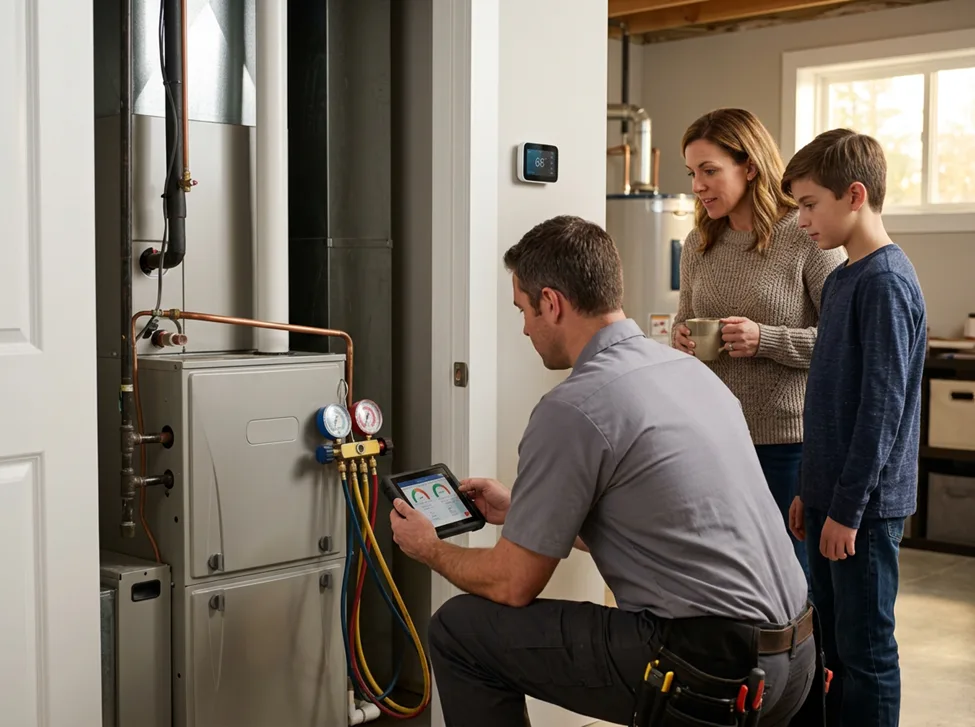
- Diagnostic Accuracy: Professionals can identify subtle issues before they become major problems. They perform comprehensive checks, including measuring refrigerant levels, testing electrical connections, and inspecting components like the compressor and blower motor.
- Safety Checks: For furnaces, professionals will inspect the heat exchanger for cracks, which could lead to dangerous carbon monoxide leaks. They also verify proper fuel combustion and ventilation.
- Coil Cleaning: Beyond a simple rinse, technicians can perform deep coil cleaning of both evaporator and condenser coils, which is essential for maintaining efficiency and preventing compressor damage.
- Refrigerant Charge: They will check the system’s refrigerant charge and identify any leaks, ensuring the system is operating at its optimal level. An improper charge can drastically reduce efficiency and cause premature wear.
- Capacitor Testing: Capacitors are vital electrical components that can degrade over time. Technicians will test them to ensure they are functioning correctly, preventing sudden breakdowns.
Investing in professional tune-ups not only improves efficiency and extends the life of your system but also often comes with warranties and guarantees. Many HVAC companies also offer 24/7 emergency HVAC service, providing peace of mind that help is available whenever a critical breakdown occurs, regardless of the time of day or night. This rapid response can be invaluable during extreme weather conditions, protecting your family’s comfort and safety.
Key Considerations When Selecting a New HVAC System
Replacing an old heating and cooling system or installing one in a new build is a significant investment. Making the right choice involves careful consideration of several factors beyond just the purchase price. The goal is to select a system that provides optimal comfort, energy efficiency, and long-term value tailored to your specific needs.
Assessing Your Home’s Specific Heating and Cooling Load
One of the most critical steps in choosing a new HVAC system is accurately assessing your home’s heating and cooling load. This isn’t simply about home size (square footage); it’s a complex calculation that considers various elements:
- Square Footage: The total conditioned area of your home.
- Insulation Levels: The R-value of your walls, ceiling, and floor significantly impacts heat gain and loss.
- Window Orientation and Type: The number, size, and type of windows (e.g., single-pane, double-pane, low-E) and their orientation relative to the sun affect heat transfer.
- Climate: Your local climate dictates the severity of heating and cooling demands. A home in a colder climate will have different heating needs than one in a hot, humid region.
- Number of Occupants: More people generate more body heat, impacting cooling loads.
- Appliance Heat Gain: Heat generated by appliances like ovens, refrigerators, and electronics contributes to the cooling load.
- Existing Infrastructure: The condition and design of your existing ductwork (if any) can influence system choices. Poorly designed or leaky ductwork can reduce efficiency.
An experienced HVAC professional will perform a detailed load calculation (often using ACCA Manual J standards) to determine the precise heating and cooling capacity (measured in BTUs or tons) required for your home. Oversizing a system can lead to short-cycling, reduced efficiency, and poor dehumidification, while undersizing will result in inadequate comfort.
Navigating Rebates, Incentives, and Financing Options
The upfront cost of a new, energy-efficient HVAC system can be substantial, but various programs and options are available to make these upgrades more affordable:
- Federal Tax Credits: The U.S. government often offers federal tax credits for installing certain high-efficiency HVAC equipment, such as ENERGY STAR certified heat pumps, furnaces, and air conditioners. These credits can significantly offset the initial investment. (Always check current IRS guidelines for eligibility and amounts, as these can change by the current date of July 2026).
- Local Utility Rebates: Many local utility companies offer local utility rebates for customers who upgrade to more energy-efficient heating and cooling systems. These programs are designed to reduce energy demand on the grid. It’s wise to check with your specific electric or gas provider for available incentives in your area.
- Manufacturer Rebates: HVAC manufacturers often provide their own rebates on qualifying equipment, especially during certain seasons.
- Energy-Efficient Upgrades: Beyond the main system, upgrades like smart thermostats, improved insulation, and professional duct sealing can also qualify for various incentives.
- Flexible Payment Plans and Financing: Many HVAC contractors partner with financial institutions to offer financing options, including low-interest loans or deferred payment plans. This allows homeowners to spread the cost of a new system over several months or years, making the investment more manageable.
By proactively researching these opportunities, homeowners can significantly reduce the net cost of their new HVAC system, making energy-efficient upgrades a more accessible and financially sound decision.
Frequently Asked Questions About Heating and Cooling
We understand that heating and cooling systems can be complex. Here, we address some of the most common questions homeowners have to provide clarity and practical advice.
What is the difference between a heat pump and a traditional furnace?
The fundamental difference lies in how they generate heat. A traditional furnace creates heat, typically by burning natural gas or propane, or by using electric resistance coils. It then distributes this heated air throughout the home. A heat pump, on the other hand, does not generate heat; it transfers it. In heating mode, it extracts heat from the outdoor air (or ground, in the case of geothermal systems) and moves it indoors. In cooling mode, it reverses the process, moving heat from indoors to outdoors. This heat transfer mechanism makes heat pumps highly energy-efficient, as they simply move existing heat rather than creating it. They also offer both heating and cooling in a single system, unlike a furnace which only heats.
How often should HVAC air filters be replaced?
The frequency of air filter replacement depends on several factors, but a general guideline is every 1 to 3 months. Factors that might necessitate more frequent changes include:
- Pets: Homes with pets tend to accumulate more dander and hair.
- Allergies or Respiratory Conditions: Individuals with allergies or asthma benefit from cleaner air, requiring more frequent filter changes.
- High Usage: Systems running continuously, especially during peak heating or cooling seasons, will accumulate dirt faster.
- Construction or Renovation: Dust from nearby construction or home renovations can quickly clog filters.
- Occupancy: More people in a home generally mean more dust and particles.
Regular filter replacement is crucial for maintaining good indoor air quality, ensuring optimal system efficiency, and extending the lifespan of your HVAC unit.
Why is professional HVAC installation superior to DIY options?
While some homeowners are adept at DIY projects, HVAC installation is a complex task that is best left to certified professionals for several critical reasons:
- Proper Sizing: As discussed, accurate load calculations are essential. Professionals use specialized tools and knowledge to correctly size a system for your home, preventing issues associated with oversizing or undersizing.
- Code Compliance: HVAC installations must adhere to strict local building codes and regulations, including electrical, gas, and refrigerant handling standards. Professionals are knowledgeable about these codes and ensure compliance, avoiding potential legal issues and safety hazards.
- Safety: Working with electricity, natural gas lines, and refrigerants carries inherent risks. Professionals are trained to handle these safely, minimizing the risk of fires, gas leaks, or refrigerant exposure.
- Efficiency: A correctly installed system operates at its peak efficiency, delivering the promised energy savings. Poor installation can lead to significant energy waste, even with a high-efficiency unit.
- System Longevity: Proper installation ensures all components are correctly connected and calibrated, reducing wear and tear and extending the overall lifespan of the system.
- Warranty Validity: Most HVAC manufacturers require professional installation for their warranties to remain valid. DIY installation can void your warranty, leaving you responsible for future repair costs.
- Specialized Tools and Expertise: HVAC technicians possess specialized tools and years of training to perform complex tasks like brazing refrigerant lines, evacuating systems, and precisely charging refrigerant.
Investing in professional installation ensures your system is safe, efficient, reliable, and covered by warranty, ultimately providing better long-term value and peace of mind.
Conclusion
Ensuring year-round comfort in our homes and businesses is a multifaceted endeavor that hinges on a well-understood and properly maintained heating and cooling system. From the intricate refrigeration cycle that keeps us cool to the vital role of ventilation in safeguarding our indoor air quality, these systems are central to our well-being.
We’ve explored the distinct characteristics of central air systems, versatile heat pumps, and flexible ductless mini-splits, highlighting how each can cater to different needs and architectural constraints. Crucially, we’ve emphasized that maximizing energy efficiency isn’t just about choosing the right equipment; it’s also about informed usage, diligent maintenance, and leveraging available rebates and incentives.
The value of professional partnership cannot be overstated. Regular tune-ups, expert installations, and access to 24/7 emergency HVAC service are not mere conveniences; they are investments in system reliability, long-term comfort, and significant energy savings. By making informed decisions and entrusting your HVAC needs to qualified professionals, you can ensure your indoor environment remains a haven of comfort, health, and efficiency for years to come.