After a heavy rain, most homeowners check the roof or the yard. Hardly anyone thinks to look under the floor. In coastal Virginia, that’s often where the real trouble starts, and it’s why so many people end up researching crawl space solutions Virginia Beach homeowners rely on only after they notice a musty smell or a soft spot in the floor.
The short version is this. When water can’t drain away from a house properly, it collects in the crawl space. That water raises the humidity underneath, the wood framing slowly soaks it up, and once the wood stays damp long enough, fungi move in and start breaking it down. That’s wood rot. It usually takes months or years to show up upstairs, which is exactly why it catches people off guard. Fixing the drainage early is a lot cheaper than replacing joists later.
Why Drainage Comes Before Everything Else
Homeowners searching for crawlspace encapsulation near me are often surprised to hear that sealing the space isn’t always step one. Encapsulation works very well at keeping damp air and ground moisture out. But if water is still flowing into the crawl space every time it storms, a liner alone can’t keep up. The water has to have somewhere to go first.
Think of it like mopping a floor while the sink is still overflowing. The mop helps, but the faucet needs to be turned off.
Where the Water Comes From
In Virginia Beach and all of Hampton Roads, water finds its way under houses in a few common ways:
- The yard slopes toward the house instead of away from it
- Gutters are clogged, or downspouts dump water right next to the foundation
- The water table is high, so groundwater seeps up through the soil after heavy rain
- Rainstorms and nor’easters deliver more rainfall than the ground can soak up.
- The leak in the plumbing system located below the building remains unchecked for several weeks.
- Foundations with vents open to permit moist air from summers enter the space to condense.
Most homes with a wet crawl space have more than one of these going on at the same time.
How Damp Turns Into Rot
Wood rot doesn’t happen overnight. It builds slowly, and it usually goes something like this.
First, the air under the house gets humid. Puddles, wet soil or condensation keep the space damp most of the year.
Next, the wood starts absorbing that moisture. Floor joists, beams and the sill plate sitting on top of the foundation all soak it in. Dry framing stays fairly stable, but wood that stays wet for long periods becomes a perfect home for decay fungi.
Then the fungi go to work. They feed on the wood fibers and slowly weaken them. Rotted wood often looks darker, feels soft when pressed with a screwdriver and may crumble or crack into small cubes.
Finally, the damage shows up inside the house. Floors start to bounce or sag, doors stick, and tile or hardwood may crack or lift.
By the time the floors are moving, the rot has usually been there a long time.
Other Problems a Wet Crawl Space Brings
Rot is the big one, but it’s rarely the only issue. Mold tends to grow on the same damp wood and insulation. Termites, which are common in this area, are drawn to moist, softened wood. Fiberglass insulation between the joists soaks up water, gets heavy and often falls down onto the dirt.
There’s also the air inside the home to think about. Air from the crawl space naturally drifts upward into the rooms above. When that space is damp and musty, so is some of the air the family breathes. Damp air is also harder to cool, so the AC ends up working harder in summer and energy bills creep up.
Warning Signs to Look For
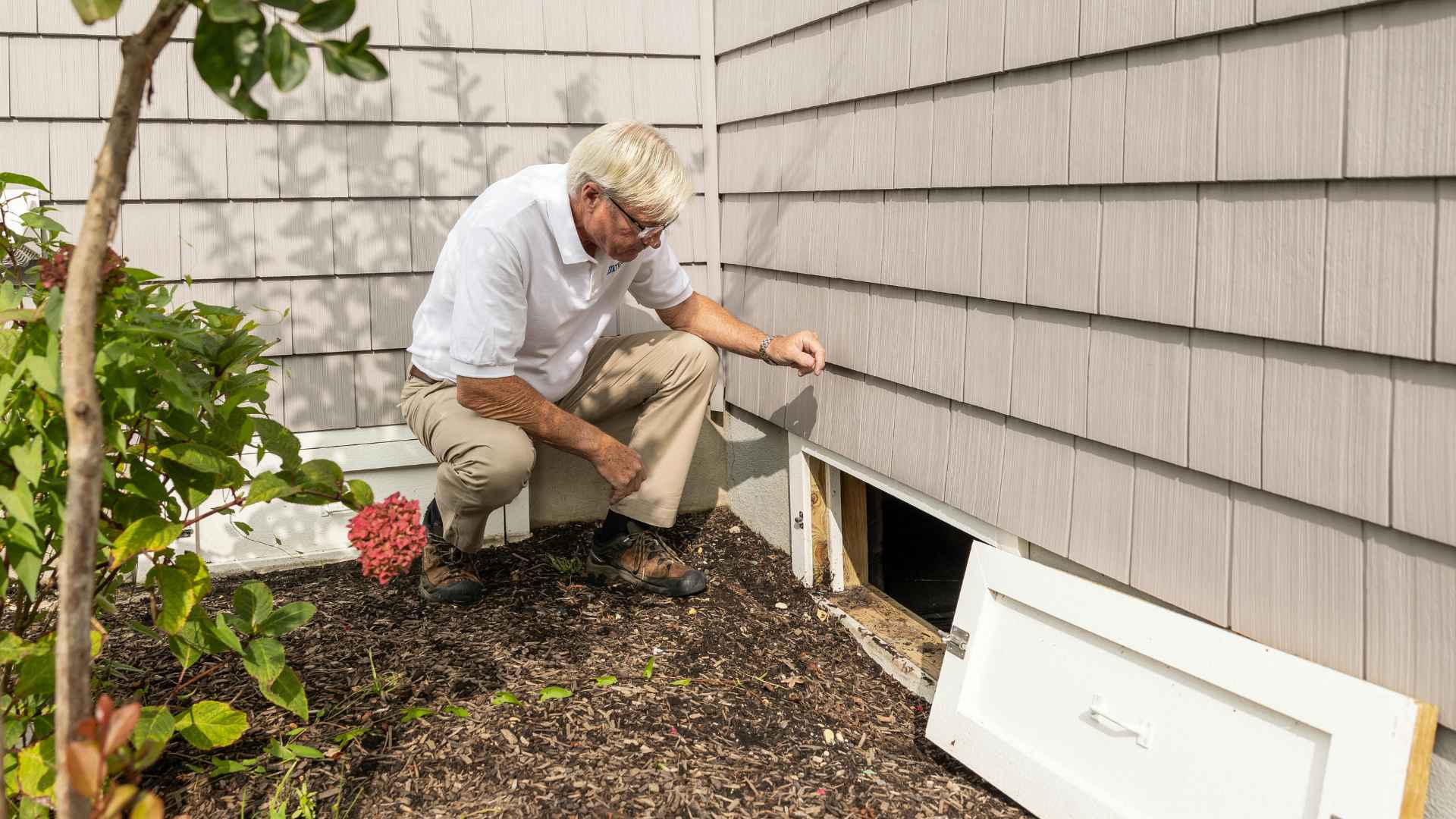
Most of these can be spotted without crawling all the way under the house:
- A musty or earthy smell, especially in lower rooms or closets
- Standing water or wet soil under the house after a storm
- Insulation hanging down or lying on the ground
- White, green or black spots on the wood
- Floors that feel soft, springy or uneven
- Water stains or white chalky streaks on the foundation walls
- More bugs than usual inside the house
Coastal Crawlspace Solutions, which works with homeowners across Hampton Roads, regularly sees these same signs in local homes, and an inspection is usually the first step in figuring out how much water is getting in and how far the damage has gone.
Fixing the Drainage Problem
The fix depends on where the water is coming from, and most good plans start outside the house.
Simple outdoor changes can make a big difference. Cleaning out gutters, adding downspout extensions that carry water several feet away and regrading the soil so it slopes away from the foundation can cut down a lot of the water reaching the crawl space.
When the water table or heavy storms are the problem, work inside the crawl space is usually needed. That might include a perimeter drain along the inside of the foundation walls, which collects water and carries it to a sump pump. The pump then pushes the water out and away from the house. For homes in low-lying areas, this setup is often what finally keeps the space dry.
Any plumbing leaks should be repaired at the same time. It sounds obvious, but a slow drip can undo a lot of good work.
Choosing among crawl space solutions Virginia Beach contractors provide is easier once the source of the water is clear. A good inspection should explain where the water is coming from, not just what it has damaged.
Where Encapsulation Fits In
After the moisture issue has been taken care of, the next step involves keeping the area dry for good. Encapsulation is a process where plastic sheets are placed on top of the floor and along the walls, with the vents being sealed and a dehumidifier used to maintain even humidity levels. The damaged wood is fixed by bolting fresh wood beside the compromised joists.
Many homeowners who look up crawlspace encapsulation near me find that the best results come from doing things in the right order. Drain the water, fix the wood, then seal the space.
For anyone dealing with a damp or musty crawl space, Coastal Crawlspace Solutions offers inspections, drainage work, encapsulation and structural repair for homes throughout the Hampton Roads area.
A wet crawl space rarely fixes itself. The sooner the water is dealt with, the less wood has to be replaced and the healthier the whole house stays.
Frequently Asked Questions
1. How can homeowners tell if a crawl space has a drainage problem?
Common signs include standing water after rain, damp or sagging insulation, a musty smell inside the house and water stains on the foundation walls. A flashlight check after a heavy storm often tells the story.
2. How soon can wood decay begin in a damp crawlspace?
This will depend on how damp the wood is kept. Wood framing that is kept damp for many months can allow decay fungi to establish itself in one or two seasons.
3. Is a vapor barrier enough to stop crawl space moisture?
Not always. A vapor barrier slows moisture rising from the soil, but it won’t stop water coming in from poor grading or a high water table. Drainage problems usually need to be fixed first.
4. Does crawl space moisture affect the air inside the home?
Yes. Air from the crawl space naturally drifts up into the living areas. When that space is damp, it can carry musty odors, mold spores and extra humidity into the rooms above.
5. Can rotted floor joists be repaired?
In many cases, yes. Joists with limited damage can be reinforced by attaching new lumber alongside them. Badly rotted sections may need to be replaced, but the moisture source should always be fixed first.