Your air conditioner is quietly eating nearly a fifth of your home’s electricity budget every single year. Most homeowners only think about it when something breaks, which is exactly the wrong time. A system that gets skipped on maintenance does not just cost more to repair. It costs more every single month it runs, and it dies years earlier than it should. The fix is not complicated, but it does require a plan.
Why Your AC Bill Is So Much Higher Than It Needs to Be
According to the U.S. Energy Information Administration’s Residential Energy Consumption Survey, electricity consumption for air conditioning accounted for about 19% of electricity use in U.S. homes in 2020, making it one of the largest single loads in a typical house. That share climbs fast in warmer states where the unit runs eight or nine months out of twelve.
The frustrating part is that a significant slice of that cost is completely avoidable. Most units are not running at anything close to their rated efficiency. Filters clog, coils accumulate a thin coat of grime, and refrigerant drifts out of spec. None of these things feel dramatic. All of them add up on your utility bill before you ever notice a comfort problem indoors.
The gap between a well-kept system and a neglected one is not trivial. Think of it this way: if cooling represents 19% of your total electricity use, even a 15% efficiency loss from dirt and deferred service adds a real and recurring premium to every bill you pay for the life of that unit.
What Deferred Maintenance Actually Does to a System
Researchers at the National Institute of Standards and Technology put a number on this. A NIST study confirmed what field surveys had long suggested: improper installation and maintenance can push household energy use for cooling on the order of 30 percent higher than it should be. That finding, published as NIST Technical Note 1848, remains the most cited government benchmark on HVAC performance loss.
“Our measurements indicate that improper installation could increase household energy use for space heating and cooling on the order of 30 percent over what it should be.”- Piotr Domanski, NIST, lead researcher on heat pump and air conditioning performance.
The culprits are usually mundane: leaky ducts, an incorrect refrigerant charge, restricted airflow at the coil, or oversized equipment that short-cycles instead of running efficiently. A qualified technician catches all of these during a standard tune-up. Skipping that visit means none of them get caught until the unit fails mid-July. The downstream cost matters too. A compressor that strains for three summers straight does not last as long as one that gets cleaned and calibrated every spring. Some neglected systems fail around the 10-year mark, while units with consistent service regularly push well past 15. That difference represents the entire replacement cost of the unit, potentially twice.
How Long Your AC Should Actually Last
Lifespan expectations vary by system type, and the range is wide enough to make a real difference in your long-term home budget. The table below reflects field data from multiple utility and equipment studies:
| AC Type | Typical Lifespan (Well-Maintained) | Lifespan Without Regular Service |
| Central Air Conditioner | 15 to 20 years | 10 to 12 years |
| Ductless Mini-Split | 15 to 20 years | 10 to 13 years |
| Window Unit | 8 to 10 years | 5 to 7 years |
Sources: EGIA Average Service Life of Residential HVAC Equipment; PNNL and NREL field studies. Climate, installation quality, and usage patterns all shift these numbers, but the maintenance gap is consistent across every study reviewed.
For homeowners in high-heat climates, the erosion happens faster. AC units in the Deep South tend to have shorter lifespans than those in cooler northern climates because they run year-round, which amplifies every small maintenance gap into accelerated wear.
The 3-Season Care Calendar
Most guides suggest “annual maintenance” and leave it there. That is not enough structure to actually build a habit around. The 3-Season Care Calendar breaks it down into three distinct windows, each with a specific job to do:
- Spring (March to April): Professional tune-up before the first hot stretch. The technician checks refrigerant charge, cleans evaporator and condenser coils, inspects electrical connections, and verifies airflow. This is your highest-leverage visit of the year.
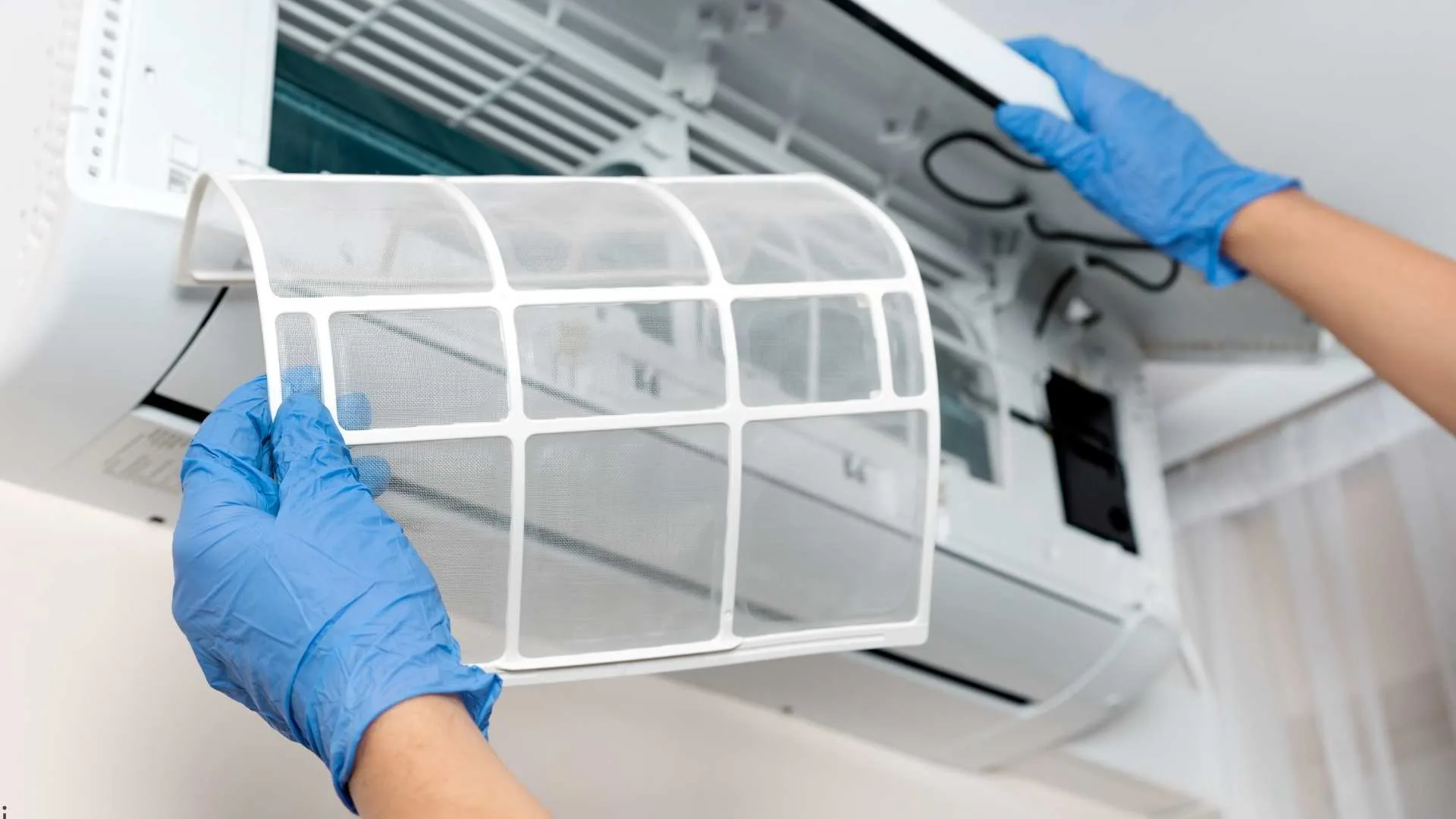
- Summer (June to August): Owner-level checks only. Replace or clean the air filter every 30 to 60 days depending on dust load and pets. Clear debris from around the outdoor condenser unit. Confirm that vents are not blocked by furniture rearrangements, a surprisingly common issue after a room refresh.
- Fall (September to October): A light secondary checkup if your system runs through a long cooling season. Clear the condensate drain line, which can clog with algae after months of humidity removal. If your unit also handles heating, this is when a full inspection makes sense before winter.
Three windows. Two of them you handle yourself in under 20 minutes. One requires a professional. That structure is easy to put on a calendar and easy to actually keep.
How Much Can You Actually Save?
The Department of Energy estimates that proper operations and maintenance practices deliver 5 to 20% annual energy savings, and that comprehensive planned maintenance programs result in a 50% reduction in total maintenance costs compared to reactive approaches. Both findings come from the DOE’s own operations and maintenance resources, cited by the EPA’s 2024 residential energy technical documentation.
Run those numbers against a real scenario. Say your home sits in a warm coastal city, your annual cooling bill runs about $1,400, and your unit is 12 years old. A 15% efficiency gain from a $150 annual tune-up saves roughly $210 per year and extends the unit’s life by three to five years. That is a payback inside the first 12 months, with compounding returns every year after.
For anyone living in a high-demand cooling market, the calculus is even clearer. Homeowners who rely on ac Services Fort Myers know firsthand that a unit running through a Florida summer without service does not just cost more to run. It can fail during the weeks when temperatures and demand on local technicians both peak.
When to Repair and When to Replace
The decision hinge is usually age plus repair cost. A useful rule: if the repair costs more than half the price of a new system and the unit is within three years of its expected end of life, replacement almost always wins on total cost. If the unit is under ten years old and has been reasonably maintained, repair is nearly always the better call.
Signs a replacement conversation is worth having:
- The system is over 15 years old and showing performance decline
- Repair quotes are stacking up across consecutive seasons
- Rooms that used to cool easily now struggle on hot afternoons
- Your utility bills have been climbing without a change in usage habits
None of these individually mean you need a new unit tomorrow. All four together? Start getting quotes.
The Bigger Picture for Your Home
A well-maintained AC system does more than hold down your electricity bill. It manages humidity more consistently, which protects wood floors, cabinetry, and any fabric pieces you have invested in for your living spaces. Rooms feel more stable, air quality improves, and the system is quieter because components are not working as hard. Those are comfort gains that show up every single day, not just on a utility statement.
The best-designed rooms are undone fast by an environment that is too hot, too humid, or too noisy. Thinking about your cooling system as part of your home’s overall quality is not overcorrecting. It is just accurate. A thoughtful maintenance schedule is one of the most practical things you can do for both the performance of your home and the things you put inside it. Start with the spring tune-up. Put it on the calendar now, before the heat makes it urgent. Your future self, your floors, and your electricity bill will all be better for it.