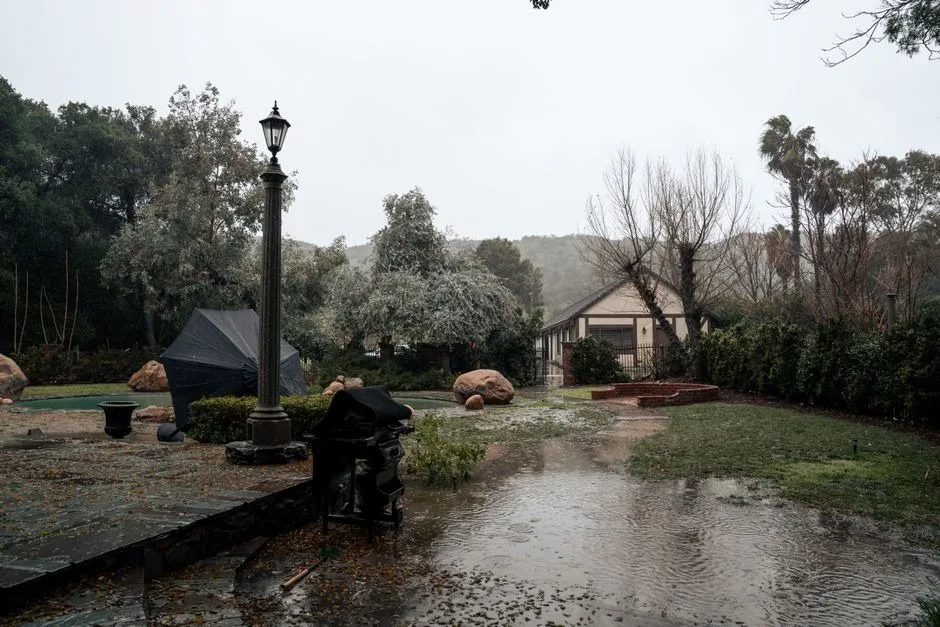
Rain does not soak into a property evenly. It runs along whatever slope it finds, collects in the lowest spots, and sits there until the soil can take it or the sun burns it off. On a well-shaped lot, that process finishes in an hour, and nobody thinks about it again. On a lot with flat sections, compacted clay, or a grade that pitches the wrong way, the same rainfall turns into puddles that last for days. Most property owners notice the puddles long before they notice what the puddles are doing to the grass, the planting beds, and the ground packed against the walls of the house.
Where Yard Water Problems Usually Begin
Rain does not sit still on a property. It follows whatever slope it finds and gathers in the lowest ground, and on most lots that process finishes quietly within the hour. Trouble starts when the grade shifts over the years, when the soil packs down under traffic, and when the same low corner takes the runoff storm after storm until it stops absorbing anything at all. That corner turns soft, then muddy, then unusable, and the grass and beds around it fail one season at a time.
Turning that around takes a close look at the ground first, because slope and soil decide where the water can actually be sent. Get in touch with Sunrise Drainage to design a drainage system around your yard and the conditions in it, rather than a template used on every job. No two properties drain the same way, and a plan built for your ground is what keeps it dry and keeps the landscape healthy.
Reading the Ground After a Heavy Rain
The best time to learn how a property handles water is while it is still wet. Walk the perimeter an hour after the rain stops and look for the places where the ground is still shining. Those spots mark the low points, and they tell you more than any dry inspection ever will. Pay attention to how long the water stays. A puddle that clears within a few hours is usually a soil absorption issue that can be improved. One that is still there the next morning means water arrived faster than the ground could take it and has nowhere else to go.
Also watch the direction the surface water travels while it is moving. Runoff leaves visible evidence behind, including thin lines of silt, flattened grass, and small fans of sand where the flow slowed down and dropped what it was carrying.
Soil, Compaction, and the Speed of Absorption
Two yards can receive identical rainfall and respond in completely different ways because of what lies a few inches below the turf. Sandy ground pulls water down quickly and dries out fast. Heavy clay does the opposite, holding moisture near the surface and releasing it slowly. Most residential lots sit somewhere between the two, and the balance shifts across a single property depending on how the land was worked before the house went up.
Compaction makes the problem worse. Foot traffic, parked vehicles, and construction equipment press soil particles together until there is almost no open space left for water to enter. The surface then behaves like a hard lid. Aerating those areas and adding organic material loosens the structure enough to restore some absorption, which reduces the volume of water that has to be carried away by other means.
The Slow Cost to Lawns and Planting Beds
Grass roots need air as much as they need moisture, and saturated soil pushes the air out. Turf that sits in standing water for extended periods thins, yellows, and eventually gives way to moss and weeds that tolerate the conditions better. Once the lawn thins, the exposed soil erodes faster during the next storm, and the low spot deepens. Each wet season makes the following one worse.
Planting beds suffer in a similar way. Roots that stay submerged lose their ability to take up nutrients, and decay follows quickly in warm weather. Shrubs planted in a depression often look healthy for a year or two, then decline for no obvious reason. The cause is usually below the surface, where the root ball has been sitting in water it cannot escape.
How Moisture Reaches a Home’s Perimeter
The ground immediately against a house should always fall away from the walls. When it does, rain lands and travels outward. When years of settling reverse that pitch, water pools against the base of the structure instead, and it stays there long after the surface has dried. Persistent moisture at the perimeter works its way into the smallest gaps in concrete, expands and contracts with temperature, and gradually widens what began as a hairline crack.
Roof runoff concentrates the problem. A large roof collects an enormous volume of water and delivers it to a handful of discharge points. If that water lands beside the wall and stays close, the soil there is repeatedly saturated while the rest of the property stays comparatively dry.
Small Corrections That Change How Water Moves
Not every wet yard needs an extensive system. Reshaping a shallow swale, extending an underground line by a few feet, or correcting the pitch of a small area can redirect enough flow to solve a localized problem. The value comes from knowing which correction fits the situation, because the wrong one simply moves the water to a different part of the property and creates a second complaint where there was none before.
Larger properties and steeper lots usually need something more structured, with collection points positioned where the water naturally gathers and buried lines running to an outlet that can accept the volume.
Planning Ahead for the Wet Months
Correcting flow works best before the ground is saturated. Dry soil is easier to shape, buried lines settle properly, and new turf has time to establish over disturbed areas. Property owners who wait until the middle of the wet season are working against conditions that make every part of the job harder and slower.
A short inspection each year keeps a working system working. Clear the debris out of surface openings, check that outlets still run free, and look for any new low spot that has appeared since the last inspection. Water finds every weakness eventually, and the properties that stay dry are simply the ones where somebody looked first.