Polished concrete floors have become increasingly popular for their durability and sleek appearance, but getting that professional finish requires the right equipment and materials. If you’re planning a concrete polishing project, you’ll want to know exactly what supplies you need before getting started. What concrete polishing supplies are needed to achieve a polished floor finish?
The essential supplies include a planetary grinder or polisher, diamond grinding discs in progressive grits (typically 30-3000 grit), a concrete densifier, concrete sealer, and dust control equipment like a vacuum system.
While that covers the basics, the specific supplies and grit sequences you’ll need can vary significantly depending on the condition of your concrete, the level of shine you want to achieve, and whether you’re working on a new or existing floor—so understanding these variables will help you avoid costly mistakes and ensure you get the results you’re looking for.
Grinding And Polishing Equipment
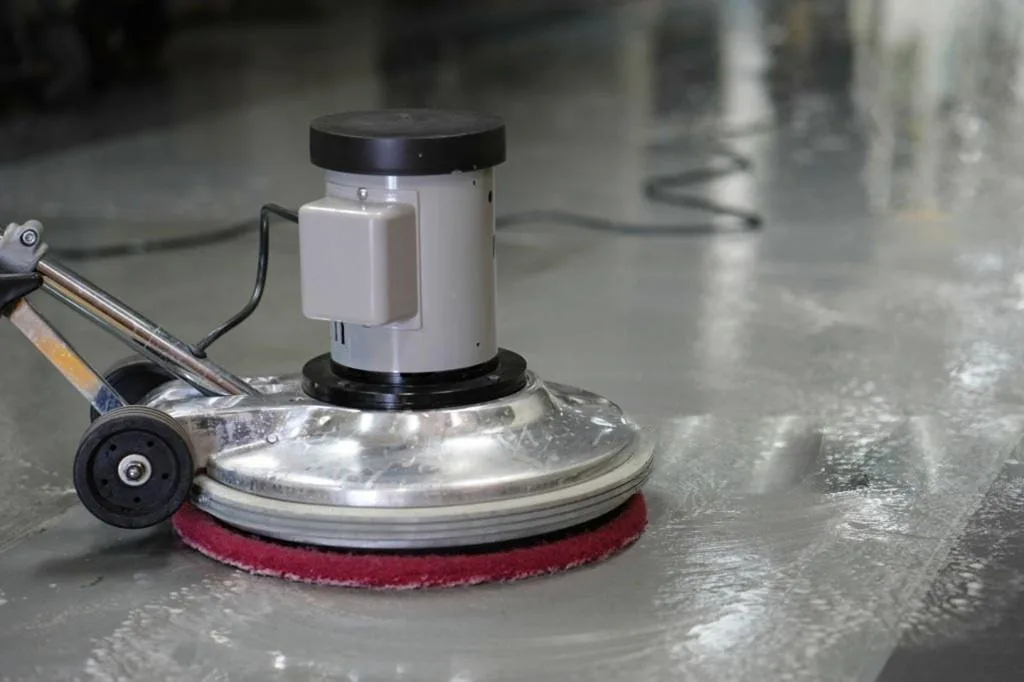
The most critical piece of equipment is a concrete grinder or polisher. For larger commercial projects, a walk-behind planetary grinder with multiple grinding heads is standard — these typically range from 15 to 27 inches in diameter and provide consistent, even results across large surface areas. For smaller residential projects or tight spaces, handheld angle grinders or smaller walk-behind models work well. Choose a machine with variable speed settings and enough weight to effectively grind without leaving swirl marks.
Diamond Abrasives And Grit Progression
Diamond grinding discs do the actual work of polishing. These come in metal bond, resin bond, or hybrid types, and in various grit sizes. You’ll typically start with coarse grits around 30–50 to remove coatings or level uneven surfaces, then work through medium grits (80–120), fine grits (200–400), and finishing grits (800–3,000 or higher). Each step removes scratches from the previous grit and further refines the surface — missing a step or jumping too quickly results in visible scratch patterns that are difficult to remove.
Metal bond diamonds are used for initial heavy grinding stages (typically 6–120 grit) — durable and aggressive, ideal for removing coatings or leveling concrete. Resin bond diamonds use a softer matrix that refines and polishes rather than just grinds, used at 100 grit and higher, where the goal shifts from material removal to shine development. Hybrid bonds bridge the two, often used in the 50–200 grit range. The level of shine you want determines where you stop — satin finishes typically stop around 400–800 grit, semi-gloss around 1,500–3,000 grit, and a true mirror-like finish may require going beyond 3,000 grit.
Chemical Hardeners, Densifiers, And Sealers
Concrete densifiers are liquid chemical solutions — usually lithium or sodium silicate-based — that penetrate and chemically react with the concrete to increase density and hardness. They fill pores and create a harder surface that takes a better polish and resists dusting. Densifier is typically applied after initial grinding around 100–400 grit, then allowed to dry for 12–24 hours before continuing. Some projects apply multiple coats at different stages, particularly on older, porous concrete. Always follow manufacturer instructions as application methods and drying times vary between products.
Sealers provide surface protection — penetrating sealers absorb into the concrete for stain resistance without significantly changing appearance, while topical sealers add additional gloss and protection. Some projects skip topical sealers entirely, relying solely on the densifier and mechanical polishing for a more natural, matte-to-satin finish.
Dust Control, Additional Supplies, And Safety
Concrete grinding generates enormous amounts of fine silica dust — both a health hazard and a cleanup challenge. Professional-grade dust extraction systems or industrial vacuums with HEPA filtration are essential. Many modern grinders have built-in shrouds that connect directly to vacuum systems, capturing dust at the source.
Beyond major equipment, you’ll need crack and joint fillers for repairing imperfections before polishing, degreasers to prep the floor, edge grinders for areas your main machine can’t reach, and backing plates to attach grinding discs. Safety gear is non-negotiable: a properly fitted respirator with P100 or N95 filters protects against silica dust — never rely on basic dust masks. Full face shields or sealed safety goggles, hearing protection, chemical-resistant gloves when handling densifiers and sealers, knee pads, and steel-toed boots round out essential protective equipment.
How To Prepare A Concrete Floor Before Polishing
Proper preparation is often the difference between a successful project and one plagued with problems. Clear and sweep the area, then inspect for existing coatings, sealers, or adhesives that must be completely removed before polishing — they’ll gum up diamond tooling and prevent proper chemical penetration. Test for existing sealers by putting water drops on the surface; if water beads rather than absorbs, a sealer is likely present.
Fill cracks and spalls with epoxy or polyurea fillers designed for polished concrete applications. Clean oil stains and grease with appropriate degreasers and allow to dry completely. Check moisture levels — excessive moisture can interfere with densifier and sealer performance. Tape down plastic sheeting for 24 hours to check for condensation. If the concrete is new, ensure it’s fully cured — at least 28 days — before polishing. Newly poured concrete that hasn’t fully cured will be too soft to polish properly.
Choosing The Right Supplies For Your Project
Selecting the right concrete polishing supplies starts with assessing your floor condition — a brand-new, smooth slab requires fewer aggressive grinding steps than an old, stained, or coated floor. Large commercial spaces justify heavy-duty equipment and bulk supplies, while smaller residential projects can often be completed with rented equipment and smaller material quantities. Renting a planetary grinder makes financial sense for single projects — purchase only consumables like diamond discs, densifier, and sealer.
The size of your project also affects dust extraction needs. Commercial settings typically require dedicated dust collection systems connected to the grinder, while smaller residential projects might manage with a quality shop vacuum with HEPA filtration. Testing a small area first helps you dial in the exact grit progression and supplies needed without wasting time and money on the entire floor.
How To Assess Your Floor And Create A Supply List
Walk through your space and document any existing coatings, damage, stains, or uneven areas before purchasing anything. Determine your desired finish level — satin, semi-gloss, or high-gloss — since this directly dictates how many grit stages and what finishing supplies you’ll need. Calculate your square footage to determine quantities of densifier, sealer, and the approximate number of diamond discs required. Factor in whether you’re renting or buying equipment, as this significantly impacts your total budget.
Check the Safety Data Sheets for all chemicals you plan to use so you understand specific hazards, first-aid procedures, and ventilation requirements. Ensure your work area has proper electrical grounding and GFCI protection, especially if working with water or in damp conditions.
Newly poured concrete that hasn’t fully cured will be too soft to polish properly. Understanding your concrete’s age, existing coatings, and condition is critical—if you’re uncertain about any of these factors, find experts like Paradise Concrete Solutions who offer floor evaluations that can help determine the exact preparation and supplies your project requires.
Ready To Start Your Polished Concrete Project?
Assess your specific floor conditions, document any existing coatings or damage, and decide on your desired finish level before making any purchases. This planning step determines the exact grit progression and quantities you’ll need, prevents costly mistakes, and ensures you have everything on hand to complete your polished concrete floor successfully from start to finish.