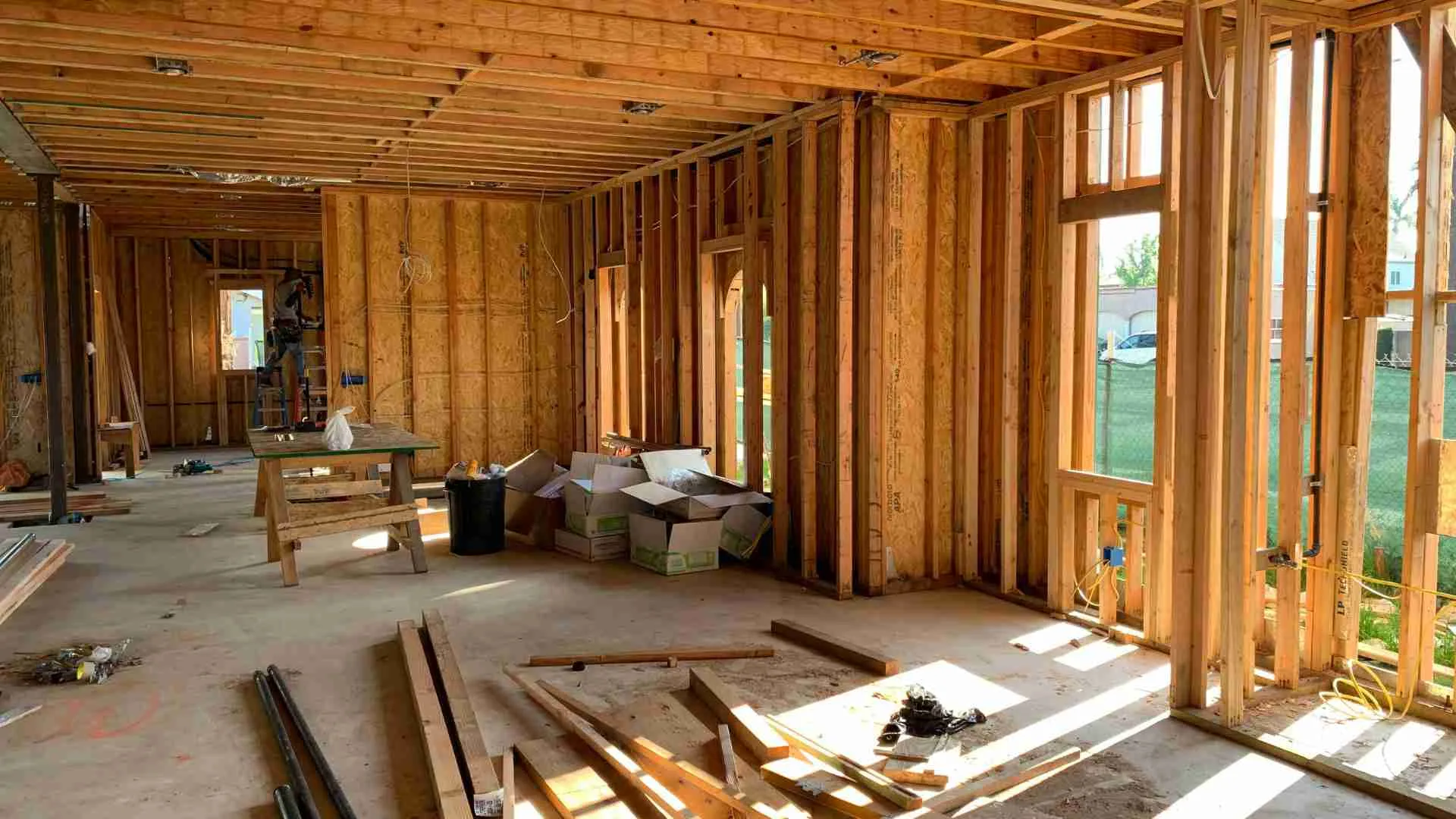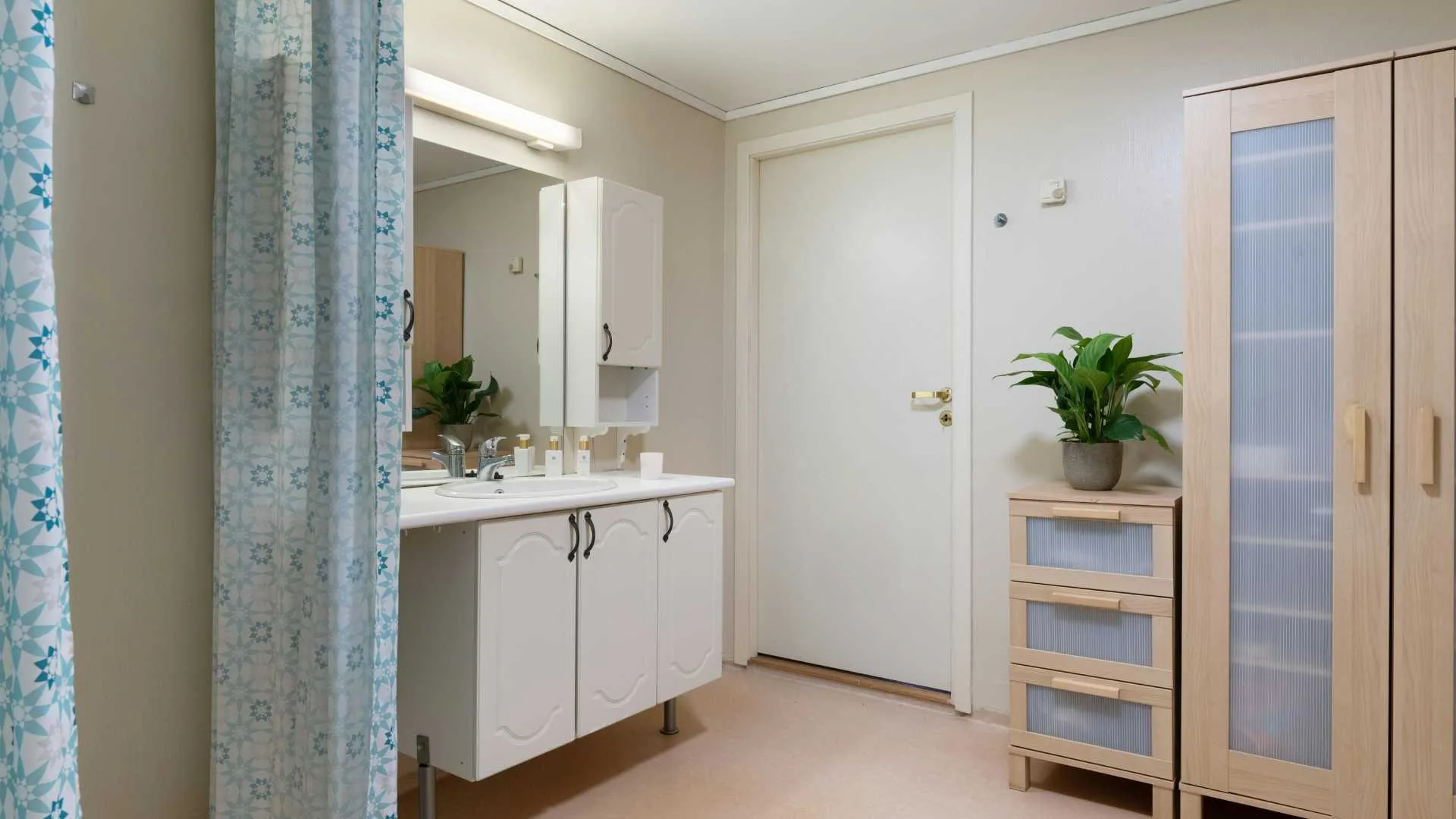
While flawlessly uniform surfaces deliver an undeniable polish, they are rarely the most memorable foundation for a well-resolved interior. True character often emerges from the subtle deviations that make a space feel alive.
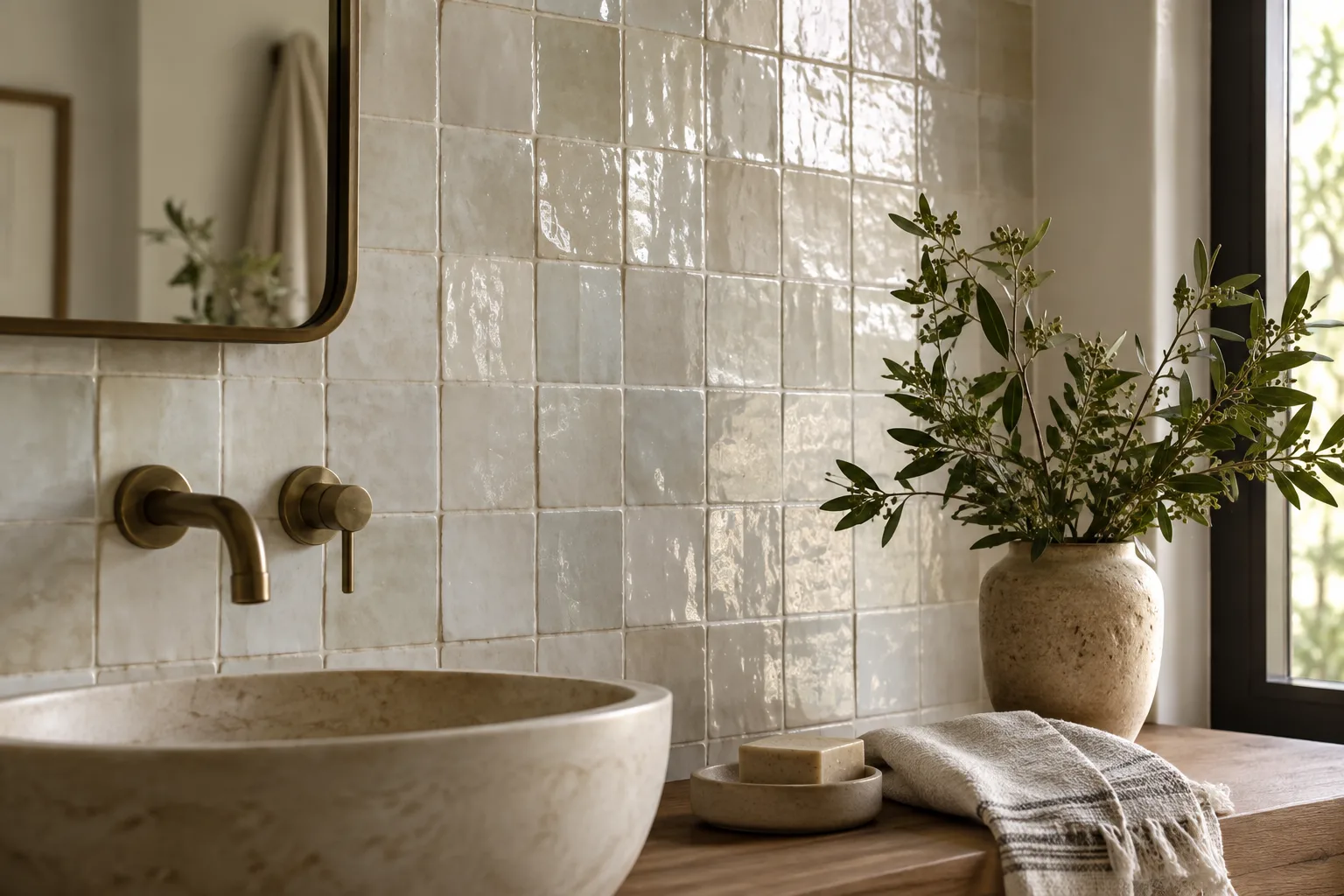
Handcrafted tile elevates these nuances into an art form. Glazes pool in unpredictable depths, edges soften into organic irregularities, and tonal shifts dance across the installation, catching the light in endlessly shifting ways.
Far from being mere decorative afterthoughts, these idiosyncrasies are the very heartbeat of the material’s creation. In contemporary spaces defined by the rigid precision of millwork and sleek architectural lines, this inherent variation provides a vital, grounding counterpoint.
The result is a room that feels deeply considered and intentionally curated, yet refreshingly free from the constraints of rigid control.
Variation gives a surface depth
Machine-made tile is generally valued for consistency. Handcrafted tile offers something different: repetition without exact duplication.
Depending on the material and production method, neighboring pieces can vary in dimension, tone, texture, glaze thickness and edge profile. Those differences become part of the finished composition rather than disappearing once the tile is installed.
Zellige makes the effect particularly easy to see. Traditionally formed from clay and finished by hand, individual pieces may show pits, chips, uneven edges and considerable glaze variation. Installed across a larger area, these characteristics create movement even when every tile is nominally the same color.
Light adds another layer. A glossy handmade wall does not reflect a window or pendant as a perfectly flat plane. Slight differences between tile faces create individual highlights and shadows throughout the day.
This makes handcrafted surfaces particularly effective in relatively restrained rooms. As explored in our guide to creating a home that works for you, an interior does not need to rely on layers of decorative objects for character. Materials can provide much of that richness themselves.
Modern interiors make the differences more visible
Handmade tile does not require a rustic or traditional setting. In fact, some of its most compelling applications appear in otherwise precise contemporary rooms.
Simple cabinetry provides structure. Streamlined fixtures keep the visual field quiet. Timber and stone contribute their own natural variation. Against those elements, handmade tile introduces movement without requiring an elaborate pattern.
Restraint helps.
Cover every surface with strongly varied materials and their individual qualities can begin competing with one another. A tiled shower, backsplash, fireplace surround or defined section of flooring gives the material enough space to establish itself while allowing adjacent finishes to remain calmer.
Bathrooms are especially suited to this balance because tile already has a practical role. One material might continue across the shower walls while a different scale or format defines the floor. Alternatively, a highly varied wall tile can be paired with a quieter floor so the two surfaces do not compete.
For a wet-area project, the shower floor tile collections from clé demonstrate how materials including zellige, cement, stone and mosaics can carry handmade character into the shower itself. Selection still needs to account for the demands of the location, including surface texture, finish, tile size, grout joints, water exposure and maintenance.
The emphasis on variation is closely tied to clé’s approach to tile. Founder Deborah Osburn, an artist and sculptor, built the brand around artisan surfaces and traditional methods at a time when much of the tile industry prioritized uniformity. Zellige has been part of that story from the beginning. Its hand-cut edges, rippled surfaces, glaze variation, pits and other traces of production are treated as characteristics of the craft rather than defects to be engineered away.
As Osburn puts it, “There is nothing like seeing marks of the artisan’s hand.” She describes the variations left by handcraft and kiln firing as pieces of history that cannot be reproduced by a machine.
The same thinking extends beyond zellige. clé’s handcrafted cement tiles intentionally retain tonal variation from piece to piece, while the brand’s Guild explores the meeting point between longstanding artisan techniques and contemporary ceramic production. Across these materials, uniformity is not necessarily the objective. The differences between pieces are what allow an installation to develop depth when seen across an entire wall or floor.
Handcrafted does not mean randomly installed
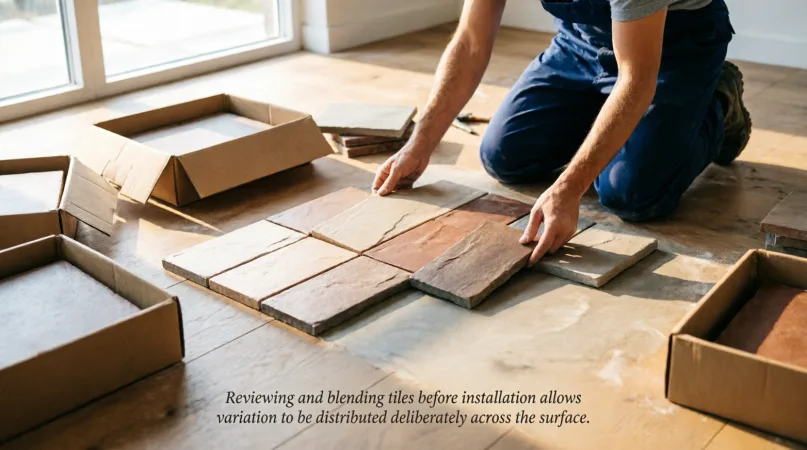
Variation looks effortless when it has been handled carefully.
Treating handmade tile like a calibrated factory product can lead to an installation where colors cluster unexpectedly or dimensional differences become distracting. Opening several boxes and reviewing the material before setting begins gives the installer a clearer picture of the range.
Pieces can then be blended across the installation rather than working through one box at a time.
Dry-laying is especially useful when some tiles have pronounced glaze movement, texture or coloration. A distinctive piece might become a welcome detail at eye level on a backsplash, yet feel misplaced if it lands beneath cabinetry or is cut down at the edge of a wall.
Dimensional variation also influences grout joints and alignment. Instead of forcing every handmade edge into a rigidly uniform grid, an installer familiar with artisan material can adjust spacing subtly while maintaining the overall layout.
Substrate preparation remains important. Handmade characters should come from the tile, not an uneven wall or poorly prepared floor beneath it.
Shower floors bring performance into the material conversation
The shower floor puts handcrafted material in one of the hardest-working areas of the bathroom.
Here, appearance cannot be considered independently from the assembly underneath it. Appropriate substrate preparation, waterproofing, drainage and slope all need to be resolved before the finished tile surface is installed. Tile and grout themselves should not be treated as the waterproofing system.
Format matters as well. Small tiles and mosaics can generally follow the changes in plane required to slope a shower floor toward its drain more readily than a large rigid tile. Additional grout joints also change the feel of the surface underfoot, although slip performance ultimately depends on the specific material, finish and installation.
Cement provides a different expression from glossy handmade ceramic. Its matte surface and subtle pigment variation can create a softer, quieter floor, but sealing and ongoing care need to be considered as part of the specification.
Natural stone introduces its own requirements. Finish, porosity, sealing recommendations and suitability for wet applications can vary considerably between products.
Rather than selecting a shower tile based on material name alone, check the technical guidance for the exact product being specified.
Patina extends the idea of variation
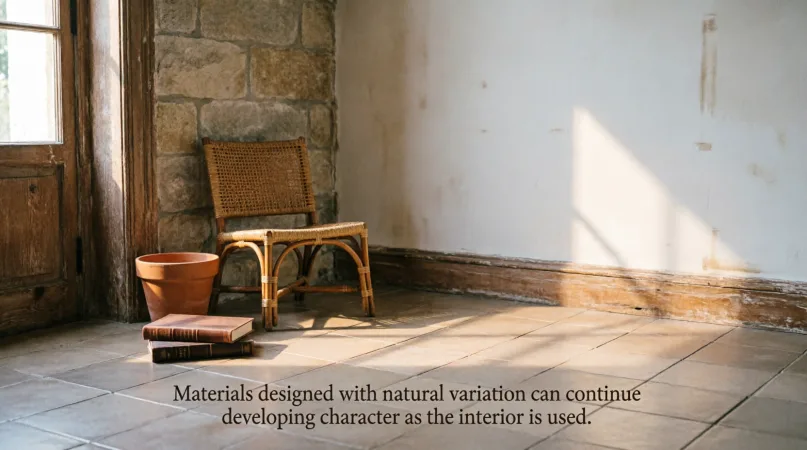
Variation does not necessarily stop when installation is complete.
Some natural and handcrafted surfaces change subtly with use. Cement, terracotta and certain stones can develop patina depending on their finish, sealing, cleaning routine and exposure. The surface at year five may not look identical to the surface on installation day.
For some homeowners, this is precisely the appeal.
Instead of expecting every finish to remain visually frozen, the interior can accommodate the fact that natural materials age. A terracotta floor can become richer in frequently traveled areas. Stone can develop subtle evidence of use. Handmade tile already contains enough tonal movement that the room does not depend on absolute visual uniformity.
This approach also requires realistic maintenance expectations. Porous materials may need sealing, grout requires appropriate cleaning, and acidic or abrasive products may be unsuitable for particular surfaces.
Material longevity starts with knowing how a finish needs to be cared for before it is installed, an approach that fits naturally with our broader thinking around considered home design.
Restraint lets craftsmanship show
Handcrafted tile does not need bold color or elaborate geometry to make its presence felt.
A single-color zellige wall can contain considerable depth because glaze varies from piece to piece.
A cement floor can introduce movement through pigment and texture rather than pattern. Even a straightforward stacked grid becomes softer when its edges and surfaces are not completely identical.
The surrounding finishes can respond by becoming quieter.
Where tile already carries pronounced variation, cabinetry may not need dramatic grain, hardware can remain simple, and additional patterns can be used sparingly. Giving one material room to hold the visual texture usually produces a more composed interior than asking every surface to compete for attention.
This is where the idea of “perfectly imperfect” becomes useful rather than merely stylistic. The imperfections reveal something about how the material was formed, finished and assembled.
A well-planned interior can still have precise sightlines, carefully aligned cabinetry and controlled proportions. Handcrafted tile introduces another layer within that framework: variation that cannot be replicated exactly from one piece to the next.
Rather than disrupting a modern interior, those differences can be what makes it feel individual.