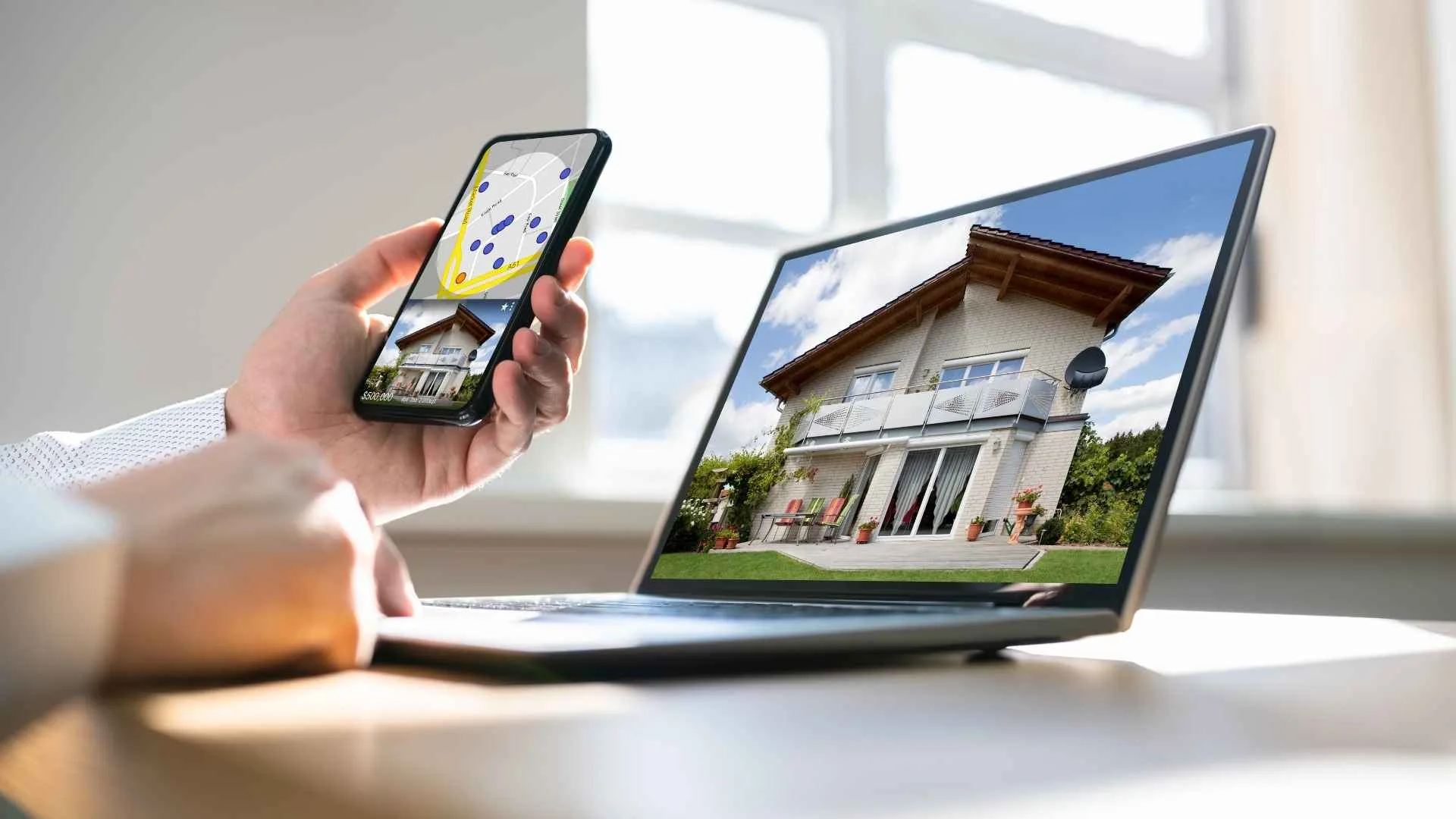
At some point in the last few years, property launches started arriving in my social feeds the same way film trailers do. Slow aerial drone shots over a coastline. A piano chord. A building materialized out of light. Text appearing — not “three-bedroom units from $850,000” but something more like a tagline. The whole thing timed to music, paced like a mood reel, edited to generate feeling before it generated any actual information.
This is not what real estate marketing used to look like. It used to look like glossy brochures, floor plan PDFs, and photographs of a show apartment. What happened?
The Attention Economy Doesn’t Care What Industry You’re In
What happened is that people now live inside an extremely competitive content environment, and industries that need to sell things — including industries that have never thought of themselves as media companies — have to operate inside the same rules.
A prospective buyer scrolling through Instagram on a Tuesday evening is moving through trailer clips, creator content, news fragments, and short-form entertainment before they encounter anything resembling a property listing. The property listing, if it arrives as a static render and a price point, is competing for attention against content that has been specifically engineered to hold it.
Studios like ArchiCGI sit inside this growing overlap between architecture, visual media, and digital presentation, producing assets that help unbuilt projects compete for attention in increasingly video-first environments. The technical work — building photorealistic digital versions of structures that don’t yet exist — is in service of something that’s fundamentally a media problem: how do you make an audience care about a building that currently exists only on paper?
Still Images Still Work. But They’re Not Always Enough.
To be clear about what we’re not saying: a well-executed architectural render remains one of the most effective ways to communicate what a future building will look like. A great exterior render at the right angle, with proper lighting and landscape, can sell a development concept more clearly than pages of descriptive text.
But a still image has limits. It can show what a lobby looks like from one specific camera position. It can’t show how entering that lobby feels, or how the ceiling transitions from a covered approach to a dramatically lit interior, or how the afternoon light shifts across a courtyard as time passes. It can’t show the walk from the building entrance to the rooftop amenity deck, or communicate that the neighborhood surrounding the project is actually pleasant to exist in.
These are experiential qualities — the kind that heavily influence whether a building is somewhere people actually want to be — and they are, by definition, qualities of time and movement. Still images can gesture at them. Motion can demonstrate them.
Architecture Is Borrowing the Language of Film
The more interesting shift isn’t technical. It’s aesthetic.
Watch property launch videos from premium developments closely and you’ll find a visual vocabulary borrowed almost directly from cinema and gaming. Establishing shots that reveal the building’s relationship to its skyline or waterfront. Slow-motion camera movements that communicate prestige through pacing. Lighting design that functions like cinematography, shaping what reads as warm and inviting versus cool and aspirational. Sequences that follow an implied character — never explicitly shown — through spaces in a way that positions the viewer as the future resident.
This is not how architects used to present buildings. It is exactly how directors present films, how game trailers reveal worlds, how luxury brands sell objects nobody needs at prices that seem entirely rational by the end of the video. The emotional mechanics are the same. The industry applying them is different.
The result is property marketing that sometimes reads less like information and more like aspiration — which is a feature, not a bug, when the actual product doesn’t exist yet and you’re trying to build desire before you can build floors.
Motion Especially Matters When There’s Nothing to Visit
This gets to the core practical reason for the shift. For unbuilt properties, the product isn’t available. There’s no show unit to walk through, no street to stand on, no lobby to experience. The entire selling proposition has to be constructed digitally, which means the visual assets aren’t just marketing material — they are the product experience, full stop.
That’s one reason 3D architectural animation services have become more central in launches for hotels, residential towers, mixed-use projects, and cultural venues: motion can show how a place unfolds, not just how it looks from one angle. A 90-second sequence can take you from an aerial view of the site context, through the building entrance, into a lobby, up to an amenity level with city views, and out to a terrace — communicating spatial sequence, scale, neighborhood, and atmosphere in a way that requires multiple still images to approximate and even then falls short.
For categories like hospitality and luxury residential, where the decision is heavily emotional and experiential rather than purely rational, this gap matters a lot. Buyers in these markets are not just acquiring square footage. They’re buying a version of their future life, and they need to be able to imagine it clearly enough to commit to it.
Social Platforms Have Reshaped the Format Expectations
There’s a practical distribution dimension to this too. Content designed as a two-minute cinematic launch film can be cut into thirty-second social reels, fifteen-second ads, a looping hero section on the development website, and a highlight clip for investor presentations — all from the same underlying footage and animation assets.
Static images can be adapted across formats too, but they don’t translate into video-first placements the same way. As advertising budgets increasingly flow toward platforms that privilege motion — Instagram Reels, TikTok, YouTube pre-roll — the economics of having motion assets in your launch toolkit have shifted. What was once a premium addition to a marketing package is increasingly the center of one.
The Risk: When Style Outruns Honesty
Worth saying directly, because it’s the obvious counterargument: a beautifully executed mood film for a project that doesn’t deliver on what it implied is not a neutral thing. Buyers who form expectations from cinematic visuals and then encounter a finished building that fails to match the feeling those visuals promised are buyers who feel misled, regardless of whether the technical specifications were accurate.
The entertainment-ification of property marketing brings all of entertainment marketing’s liabilities with it. Visual spectacle that evokes a lifestyle rather than honestly representing a physical space can function as soft misleading, even when every technical claim is technically accurate. Plans, pricing, specifications, and genuine representations of what the completed project will be remain non-negotiable — and the emotional storytelling works best when it’s in service of a project that will actually deliver what’s being implied.
The Shift Is Real
Property marketing isn’t becoming entertainment in any literal sense. But it is absorbing entertainment media’s clearest lessons about how human attention works: that atmosphere lands before information, that motion holds longer than statics, that audiences form emotional relationships with spaces they’ve never entered if the storytelling is strong enough.
For an industry selling things that don’t yet exist, to buyers who can’t visit them, in feeds where nothing is competing softly for anything — that turns out to be genuinely useful knowledge.