Comfort is easy to describe in a showroom and much harder to judge at home. A seat can feel soft for five minutes and still feel wrong after an hour of watching a film, reading, or sitting with your legs tucked awkwardly to one side.
That is why the comparison between dual power reclining sofas and traditional recliners is not just about technology. It is really about how people use the living room. Some homes need one quiet reading chair. Others need a main sofa that can support long evenings, shared movie nights, and different sitting preferences at the same time.
Traditional recliners have earned their place in living rooms because they are simple, familiar, and personal. You choose a position, lean back, raise your legs, and create a small comfort zone. For many people, that is enough.
A dual power reclining sofa changes the idea slightly. Instead of giving one person a separate comfort chair, it brings adjustable support into the main seating area. The back and footrest can usually be controlled more independently, which gives the body more room to find a position that suits the moment.
The difference sounds small until the living room is used every day. Then it becomes clear that comfort is not one fixed posture. It changes depending on whether someone is sitting upright with coffee, stretching out after work, watching a long film, or trying not to disturb the person sitting beside them.
Comfort Is Not Just Softness
The word “comfortable” is often used to mean soft, but softness alone can be misleading. A very soft seat may feel inviting at first, then start to lack support. A firmer seat may not feel dramatic immediately, but it may keep the body better aligned over time.
Good comfort usually comes from several things working together: seat depth, cushion density, back angle, leg support, head position, arm height, and how easily the body can shift.
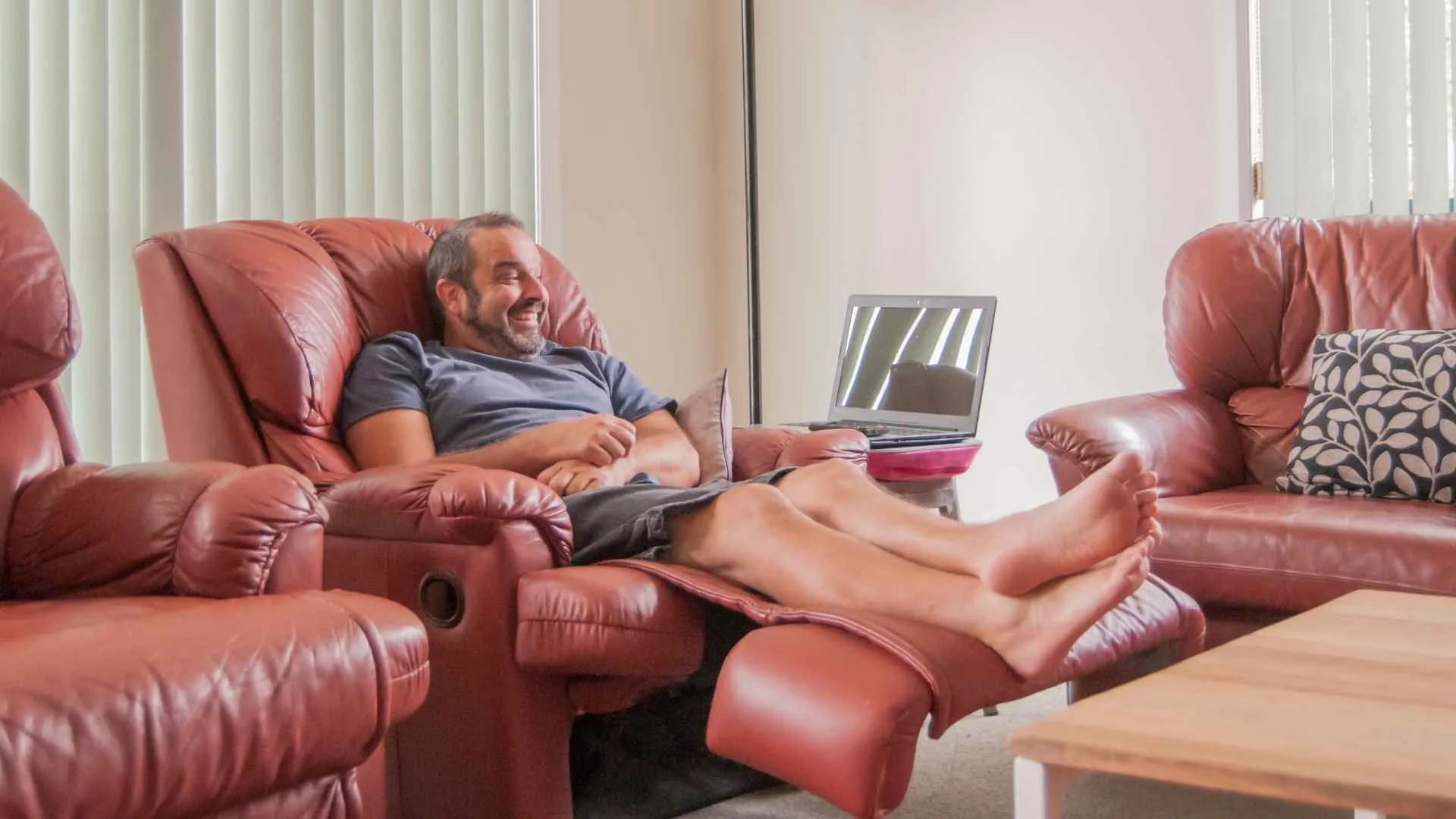
A traditional recliner often moves in one main direction. The back tilts, the footrest rises, and the body settles into a lounge position. That is useful when the goal is simple relaxation.
Dual power reclining gives more control. The user can often raise the legs without leaning too far back, or recline the back while keeping the lower body in a more moderate position. That kind of adjustment is especially useful during long sitting sessions, when the body naturally wants to change position.
A chair or sofa does not need endless features to be comfortable. But it does need to let people sit in a way that feels natural after more than a few minutes.
Where Traditional Recliners Still Work Well
Traditional recliners are not outdated. In the right room, they can be the most practical choice.
They work especially well when one person wants a dedicated seat for reading, watching television, or resting at the end of the day. They also suit rooms where the main sofa is already fixed and the recliner is added as a personal comfort spot.
In smaller homes, a single recliner can be easier to place than a larger reclining sofa. It may sit near a window, beside a bookcase, or in a corner that would otherwise feel unused. When styled well, it can make the room feel more layered and lived-in.
The challenge is visual integration. Some recliners look separate from the rest of the room, almost as if they were added after the design was finished. Oversized arms, heavy backs, and mismatched upholstery can make the recliner feel less intentional.
That does not mean a traditional recliner is the wrong choice. It simply means it needs to be chosen as part of the room, not as an afterthought.
What Changes With a Dual Power Reclining Sofa
A dual power reclining sofa shifts reclining comfort from one seat to the whole seating area.
That makes a difference in shared living rooms. In a family room, one person may want to sit upright, another may want leg support, and someone else may want a deeper recline for a film. A sofa with independent adjustment can support these different habits without requiring separate chairs for everyone.
It also changes the feel of the room. Instead of one “special” recliner that belongs to a particular person, the main sofa becomes more adaptable. The comfort is built into the room’s central furniture rather than pushed to the side.
This is especially useful in homes where the living room is used for long periods. If the sofa is where people watch films, chat, nap, scroll, read, or spend slow weekends, adjustability becomes more than a luxury. It becomes part of how the room works.
A Practical Comfort Comparison
The better option depends on what kind of comfort the room actually needs. A traditional recliner and a dual power reclining sofa solve different problems.
| Comfort factor | Traditional recliner | Dual power reclining sofa |
| Best role in the room | A personal comfort seat | Main shared seating |
| Adjustment style | Usually one broad reclining movement | More control over back and leg position |
| Space planning | Easier to place as a single chair | Needs more room for full extension |
| Visual effect | Can feel separate if not styled carefully | Creates a unified seating zone |
| Best for | Reading corners, personal TV seats, smaller rooms | Family rooms, media spaces, long lounging sessions |
| Comfort strength | Simple, familiar relaxation | Flexible support for different postures |
| Main risk | May look bulky or disconnected | Can dominate the room if oversized |
This comparison is useful because it moves the decision away from “which one has more features?” and toward “which one fits the room and the people using it?”
Think About How Long People Actually Sit
A seat used for ten minutes has a different job from a seat used for two hours.
In a formal sitting room, people may perch, chat, and move around. In that kind of room, a traditional sofa and perhaps one recliner may be enough. In a family room or media room, people settle in for longer. They shift, stretch, lean, snack, pause the film, and return to the same seat.
Longer sitting makes support more noticeable. Leg support can reduce the feeling of pressure. A better back angle can make television viewing more relaxed. A headrest or higher back can help when someone is sitting for an entire film rather than a short conversation.
This is where dual power reclining becomes more useful. It gives people more options without asking them to leave the sofa or rearrange the room.
The real test is not how the furniture looks in a photo. It is how it feels at 9 p.m. when the room is finally quiet.
Do Not Forget the Coffee Table
Reclining furniture changes the way a coffee table works.
A standard sofa can often sit close to a coffee table without issue. A reclining sofa needs room for the footrest to extend. If the table is too heavy or too close, the feature becomes annoying. People either stop using the recliner or keep dragging the table out of the way.
This is why the coffee table should be part of the seating decision from the beginning.
In rooms with reclining furniture, lighter tables often work better. Round or oval tables can soften the route around extended footrests. Nesting tables can be moved more easily. Side tables may become more useful than one large central table, especially if people need a place for drinks while reclined.
A comfortable reclining setup should feel effortless. If using the footrest requires moving three things first, the layout needs adjusting.
Check the Room in Both Positions
Reclining furniture should always be measured twice: closed and extended.
The closed position tells you how the room looks most of the day. The extended position tells you whether the furniture will actually function.
Before choosing a reclining sofa or recliner, check:
- whether the footrest blocks the main walkway;
- whether the sofa is too close to a wall;
- whether the coffee table can stay in place;
- whether side tables are still reachable;
- whether the viewing angle feels natural when reclined;
- whether the room still feels balanced when the seats are extended.
These details matter because reclining furniture is not static. It changes shape during use. A layout that only works when the sofa is closed is not really working.
Visual Weight Matters
Reclining furniture has to fight one old reputation: bulk.
Older recliners were often designed with thick arms, large backs, and heavy bases. They were comfortable, but not always easy to blend into a carefully styled living room. Modern reclining sofas have improved, yet scale and proportion still matter.
If the sofa is large, the surrounding pieces should feel lighter. A slim coffee table, open-leg side tables, simple lighting, and a low-profile media unit can help the room breathe. If the upholstery is dark, the wall color, rug, and accessories may need to soften the overall look. If the sofa is neutral, texture becomes important so the room does not feel flat.
A reclining sofa should look like part of the design, not like equipment brought in for comfort.
That balance is what separates a relaxed living room from a room that looks like a showroom for oversized furniture.
Who Should Choose Which?
A traditional recliner is often the better choice when the room only needs one adjustable seat, the layout is compact, or the homeowner prefers a simple reading or TV corner.
A dual power reclining sofa is usually better when the main sofa is used heavily, several people need comfort at the same time, or the room functions as a media or family space.
A simple way to decide is this:
- Choose a traditional recliner if reclining is mainly for one person.
- Choose a dual power reclining sofa if reclining comfort should be shared.
- Choose a traditional recliner if the room is small and already has a main sofa.
- Choose a power reclining sofa if the sofa is the center of daily living.
- Choose simpler seating if the room is mainly formal or decorative.
- Choose adjustable seating if the room is used for long, relaxed sessions.
The right answer depends less on the furniture category and more on the way the household spends time.
Final Thoughts
Dual power reclining sofas and traditional recliners both improve comfort, but they do it in different ways.
A traditional recliner creates a personal comfort spot. It is simple, familiar, and often easier to add to an existing room. A dual power reclining sofa brings adjustability into the main seating area and gives several people more control over how they sit and relax.
Neither option is automatically better. The better choice is the one that fits the room’s purpose.
If the living room is mostly for short visits, a traditional recliner may be enough. If the room is where people spend long evenings, watch films, and unwind together, a more adjustable sofa may make everyday comfort feel easier.
Good living room seating should not only look inviting. It should support the way people actually live.