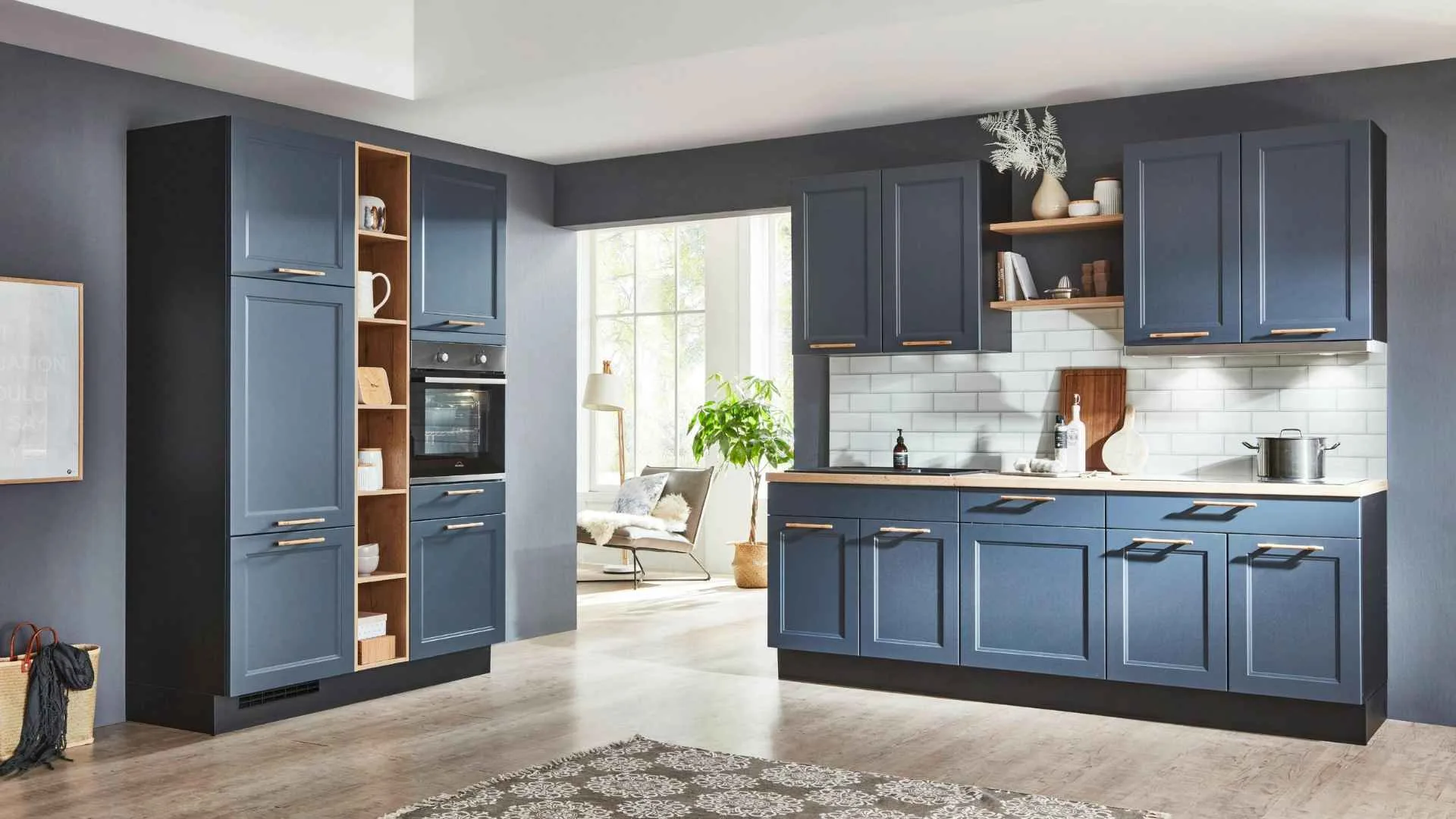
You have 3 feet of usable counter. So every appliance that lands there is competing with your cutting board, your coffee mug, and the stack of mail you keep meaning to sort. That math is why I stopped buying kitchen gadgets years ago, except for one. If you want the short version: the tool worth keeping is the one that does five jobs without asking for a whole cabinet.
That tool is the immersion blender. Not because it looks nice on a shelf, but because it replaces a blender, a whisk, a potato masher, and a food processor for most weeknight cooking. Mine lives in a drawer and comes out more often than anything else in the kitchen.
Here’s what I’ll cover: why small kitchens punish single-use gadgets, what an immersion blender genuinely does well, what it does not, and a short checklist for deciding whether one belongs in your kitchen.
Why small kitchens punish single-use gadgets
Walk through a typical American kitchen and count the appliances that exist for exactly one recipe. The panini press. The egg boiler. The avocado slicer shaped like a small green handle. Each one felt like a good idea in the store.
Storage is the real cost. According to the Bureau of Labor Statistics, housing is the single largest category in the average American household budget, which means every square foot you pay for is doing double duty. A gadget that eats a cubic foot of cabinet to make one dish is not a bargain. It is rent.
I learned this the hard way in a rental with two drawers total. I donated four appliances in one weekend and never missed any of them. The one I kept was the one I used three times that same week.
What an immersion blender actually does well
Soups, obviously. You blend right in the pot, which means no ladle transfer, no second vessel to wash, and no burned forearm from pouring hot liquid into a blender jar. That last point matters more than people admit. Hot liquid in a sealed blender jar is a genuine hazard, and the U.S. Food and Drug Administration publishes home food safety guidance precisely because kitchen shortcuts cause real injuries.
Beyond soup, here is where mine earns its place:
- Whipping cream in a narrow cup in about a minute, faster than dragging out the stand mixer
- Blending a smoothie directly in the cup I’ll drink from
- Mashing potatoes and squash without a ricer or a hand masher
- Emulsifying salad dressing in a jar, which stays mixed for days instead of separating by dinner
- Puréeing a can of tomatoes for sauce when I want it smoother than crushed
Five jobs, one drawer. That ratio is the entire argument.
The variable speed control is the feature people underrate. You want low speed to keep soup from splashing the backsplash and higher speed for frozen fruit. A trigger grip beats a stiff button, especially if you have wrist issues or you’re blending something thick.
What it doesn’t do, and why that’s fine
It will not crush ice into snow. It will not knead dough. It will not turn a block of frozen fruit into sorbet without some patience and a little liquid. If you make large batches of nut butter every week, get a food processor and accept the cabinet cost.
Here’s my honest take: most people overbuy blenders for smoothies they make twice a month. A full-size blender is the right call for a household of four doing daily shakes. For one or two people cooking normal meals, the stick version wins on cleanup alone. Washing a blender jar with blades at the bottom is the worst dish in the kitchen, and I will die on that hill.
A five minute checklist before you buy
Run this before you add anything to your cart. It takes about as long as boiling water.
- Name three dishes you already cook that need blending or mashing. If you can’t, you don’t need the tool yet.
- Open the drawer where it would live. If it doesn’t fit, decide now what leaves.
- Check the shaft length against your tallest pot. A short shaft means soup up to your elbow.
- Look for a detachable shaft. The motor stays dry, the blade goes in the dishwasher, and cleanup drops to seconds.
- Consider attachments only if you’d use them weekly. A whisk attachment earns its keep. A third chopping disc usually doesn’t.
The detachable shaft is the one I would not compromise on. Everything else is preference.
The test I use before any kitchen purchase
I call it the Three Week Rule, and it’s saved me more money than any budgeting app.
Before buying a gadget, I borrow one or use a friend’s for three weeks. If I reach for it at least twice a week without reminding myself, it stays on my list. If I forget it exists by week two, I don’t buy it. No spreadsheet, no guilt, just behavior.
I ran this test on an immersion blender back in a cramped apartment. By week one I was using it for soup. By week three I was using it for dressing, whipped cream, and mashed sweet potatoes. It passed easily. A countertop ice maker failed the same test in ten days.
You can run a lighter version of this today. Pull out the appliance you use least and set it on the counter for a week. If you don’t touch it, it’s already gone, you just haven’t admitted it yet.
Where it fits in a real kitchen
A studio apartment with one drawer benefits most. A big suburban kitchen with an island benefits too, because you stop hauling the heavy blender out of a lower cabinet for small jobs. And anyone cooking for one or two people gets the biggest jump in usefulness, since recipes scale down and the stick handles small batches better than a full pitcher.
Pair it with a good cutting board, a sharp knife, and one heavy pot. That’s a working kitchen. Everything else is optional, and honestly, most of it is clutter wearing a price tag.
So here’s the question worth sitting with: if you cleared out every appliance that failed the Three Week Rule, what would actually be left on your counter? Start there. Then decide whether one small tool deserves the space you just freed up.