A sticking window or drafty door often triggers a replacement search before anyone has defined the problem. New units may be appropriate when an assembly has widespread failure, but replacement is not the only response to worn hardware, poor alignment, damaged weatherstripping, or a failed local joint.
A better decision starts with the outcome the homeowner wants. Is the goal reliable operation, improved security, less air movement, corrected moisture entry, quieter hardware, or a new appearance? Each goal points to a different scope.
Describe the Symptom Before Choosing the Solution
Operate the opening once without forcing it. Note where movement changes, whether the lock aligns, and which parts remain stable. A sash that will not stay open differs from a frame that is soft or distorted. A door that misses the latch differs from one with widespread material deterioration.
Write observations instead of conclusions. ‘Door rubs at the upper latch corner after closing’ is useful. ‘Frame needs replacement’ is a diagnosis that has not yet been supported.
The condition should also be repeatable. Seasonal humidity, direct sun, and wind pressure can change behavior. If the problem appears only under particular conditions, record them before scheduling work.
Repair Is Most Plausible When the Problem Is Local
Localized hardware failure, a worn moving seal, an isolated alignment issue, damaged screen material, or a limited perimeter joint may support a repair conversation. The surrounding frame, glass, and wall still need to be evaluated, but the symptom does not automatically require removal of the entire unit.
- The opening is structurally stable and the issue is tied to one serviceable component.
- The desired result is restored operation or sealing rather than a different size or style.
- The surrounding material is sound and there is no evidence of widespread water damage.
- Replacement would add disruption without addressing a separate wall or moisture problem.
These points are not a homeowner diagnosis. They are reasons to request an evaluation that considers repair before assuming replacement.
Replacement Becomes More Relevant When Failure Is Broad
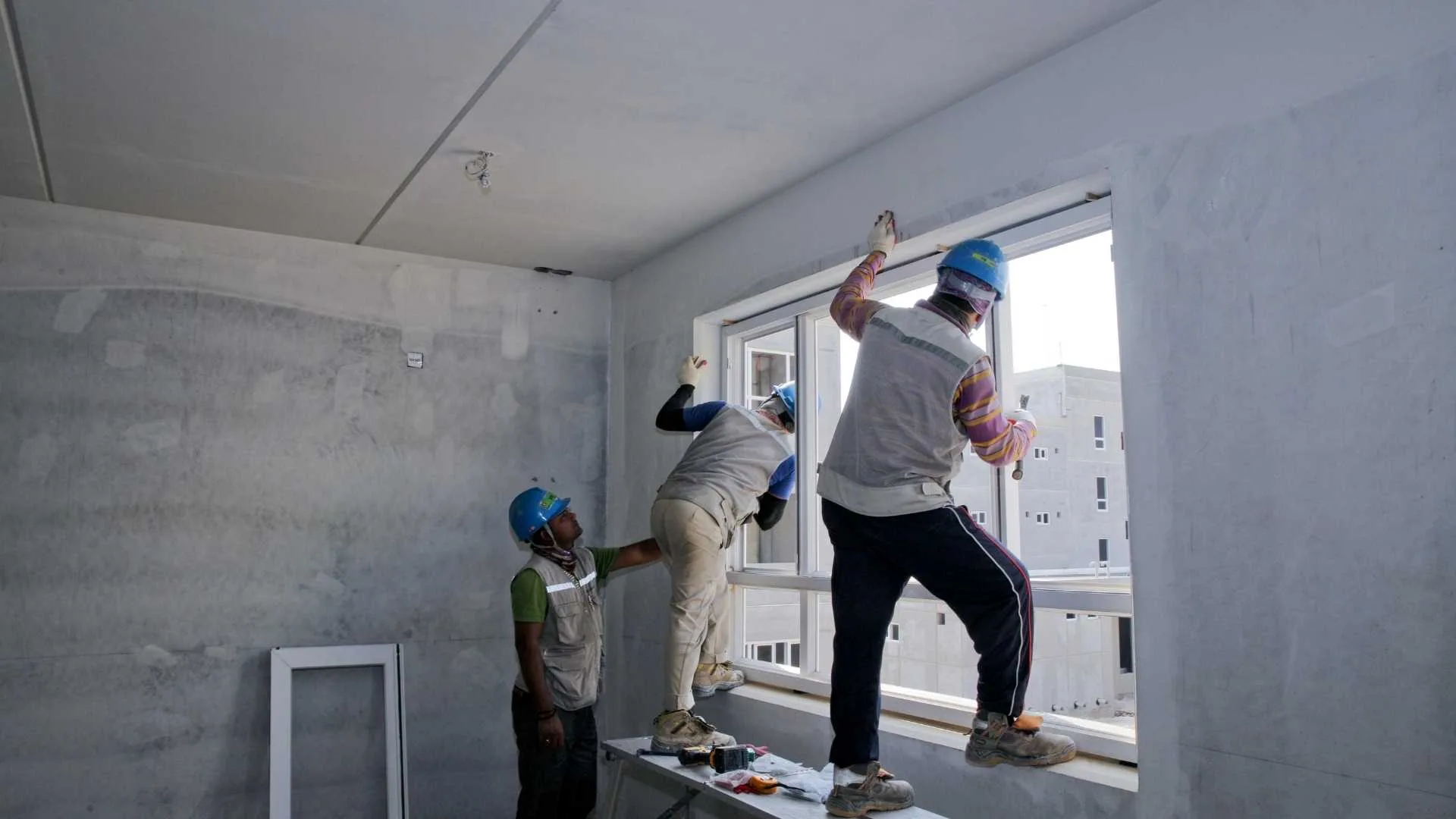
Widespread frame decay, repeated sealed-glass failure across multiple units, severe distortion, incompatible prior alterations, or a major design change can shift the discussion. A homeowner may also want a different opening type, larger glass area, or performance that the existing assembly cannot reasonably provide.
Even then, the surrounding opening matters. Replacing a window without addressing water entry, flashing, or rough-opening conditions can carry the original problem into the new work. The replacement scope should explain how the new unit connects to the building envelope.
Historic or architecturally distinctive openings deserve particular care. Their proportions, trim, and original material may carry value that a generic replacement does not preserve. Repairability should be assessed before irreversible work begins.
Compare Disruption Along With Cost
The lowest initial price is not the only factor. Repair and replacement affect trim, paint, exterior finishes, window treatments, furniture access, and the time a room is out of use. Ask what must be removed, what will be reused, and which finish work is included.
A clear scope should state the expected functional result. ‘Window will close and lock normally’ is more testable than ‘window tune-up.’ For a door, define alignment, latch engagement, threshold clearance, and the condition of visible seals.
Chicago-area homeowners considering a proportionate scope can discuss CapaHome window and door repair after gathering photographs and repeatable symptoms. The linked brand belongs inside the decision framework, not as proof that every opening can be repaired.
Ask Questions That Reveal the Scope
Ask which component is failing, what evidence supports that conclusion, and whether the surrounding frame and wall show a separate issue. Request an explanation of what will remain, what will change, and how the result will be tested.
If moisture is present, ask how the entry path will be investigated before finishes are covered. If air movement is the concern, ask whether it occurs at the moving sash, the frame perimeter, or another part of the room.
Retest the Result Instead of Assuming It
A completed repair should be checked against the original symptom. If the window failed to lock without lifting, test that exact motion. If the door admitted air at the lower corner, observe the same point under comparable conditions when possible.
Retesting should also look for unintended effects. A tighter adjustment should not make the unit difficult to operate. New sealant should not block drainage. Replacement hardware should not conflict with a screen or window treatment.
Ask what maintenance the repaired component will need and which changes should trigger another inspection. A simple explanation of normal movement, cleaning, and visible warning signs is more useful than a vague instruction to monitor the opening.
Keep the final scope, photographs, and outcome together. That record helps if a seasonal symptom returns and prevents the next professional from repeating work without knowing what was already changed.
Compare the Disruption as Well as the Price
The practical cost of a project includes more than the quoted line item. Ask what happens to trim, paint, wall finishes, window treatments, alarms, and nearby furniture; how the opening will be protected; and which party restores disturbed surfaces. A focused repair may preserve more original material, while a replacement may address limits that adjustment cannot overcome. Neither scope should be selected from price alone. Compare the expected service outcome, access needs, finish work, warranty boundaries, and the way the result will be tested. A written comparison makes it easier to see whether a lower initial figure simply leaves necessary connected work outside the proposal.
Choose the Smallest Scope That Solves the Right Problem
Repair is not automatically cheaper or better, and replacement is not automatically more complete. The right choice is the smallest defensible scope that reaches the desired outcome without ignoring connected damage or performance limits.
Begin with observation, define the expected result, and compare the disruption created by each option. That process turns a vague problem into a decision the homeowner can evaluate, rather than a purchase made because one component has become inconvenient.