
Baba Yaga House: Stepped Inside a 300Year Old Russian Folk Tale

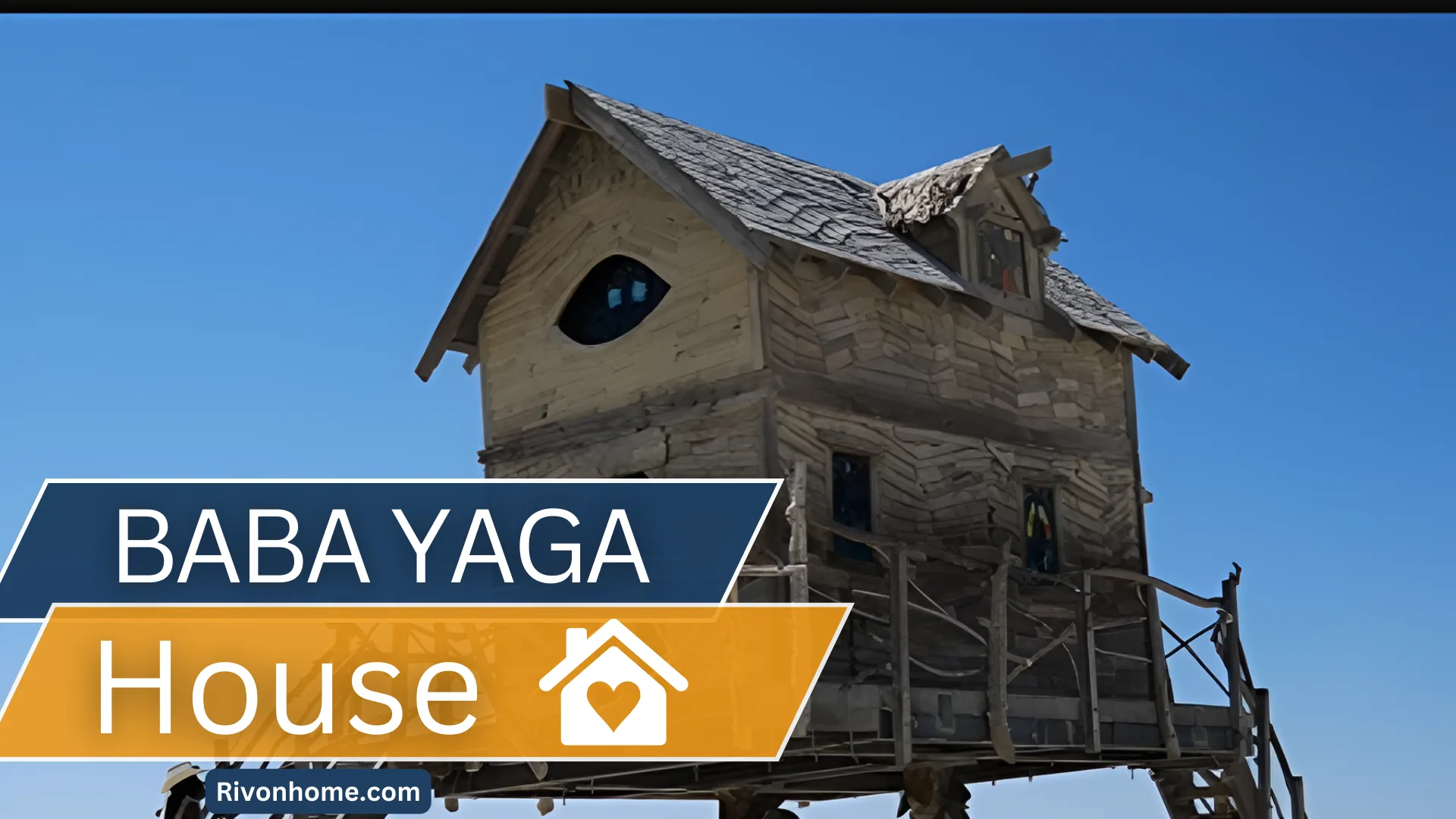
Deep within the shadows of old Slavic folklore stands one of the strangest homes ever imagined. If you have ever heard of a house that walks on chicken legs, spins on command, and hides deep inside a dark Russian forest — you are already thinking about the Baba Yaga house.
This is not a celebrity mansion or a luxury villa. It is something far older and far stranger. It is a small wooden hut perched on living legs, sitting at the very edge of the human world, where fairy tales begin and normal rules stop working.Love iconic homes with a legendary story? Explore our full tour of Meghan Markle & Prince Harry’s most private residence.
I visited a full-scale recreation of this legendary dwelling, and I am going to take you through every corner of it — the outside, the inside, and everything the old Russian folk tales say about it. Let me show you what I found.
Baba Yaga House Location
There is no ZIP code. No street address. No Google Maps pin. The Baba Yaga house exists deep in a Slavic forest, somewhere beyond the world you know. In the old Russian tales, travelers only found it when they were already lost — walking until the trees closed in and all familiar paths disappeared. The hut sat in a clearing, turning slowly on its chicken legs, its back facing the visitor until the right words were spoken.
Baba Yaga House Tour — I Visited and Here Is What Happened
Hi, I’m Stefano Schiavon. I visited the legendary hut of Baba Yaga with my friend Darya, a researcher of Slavic folklore. She told me to approach slowly — and when I saw the hut standing high on thick wooden legs, I understood why.
The weathered timber walls leaned at strange angles, and a dark oval window stared down like an eye. Inside, the space felt magical: paper flowers covered the beams, crystal ornaments scattered tiny points of light, and the air smelled of dried herbs and old wood. It felt less like a house and more like stepping into a living fairy tale. Moments like this are exactly why I share unusual homes through RivonHome.
Inside the Baba Yaga House — 5 Images That Tell the Whole Story
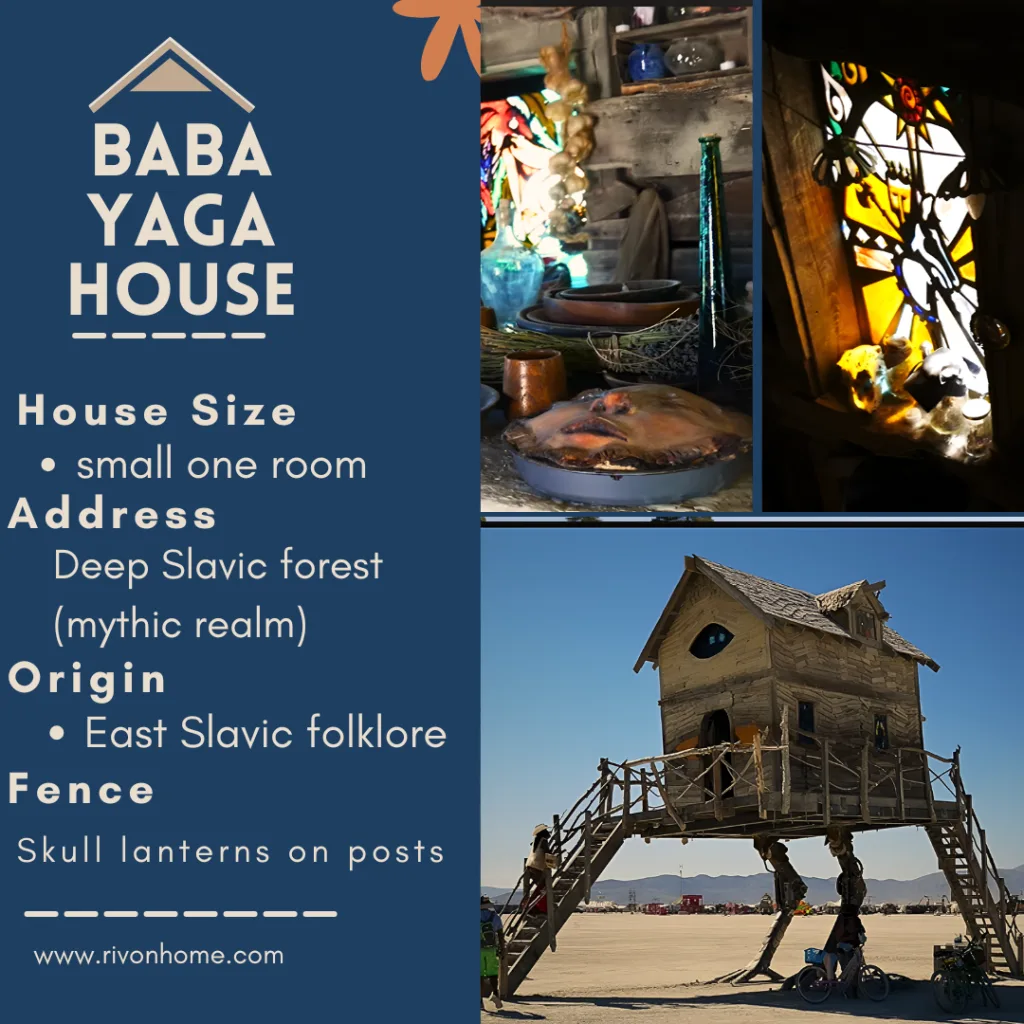
I stepped inside and let the five images do the talking — each one capturing a different corner of this ancient, mysterious space. Here is what I found.
The Walker of the Open Plain
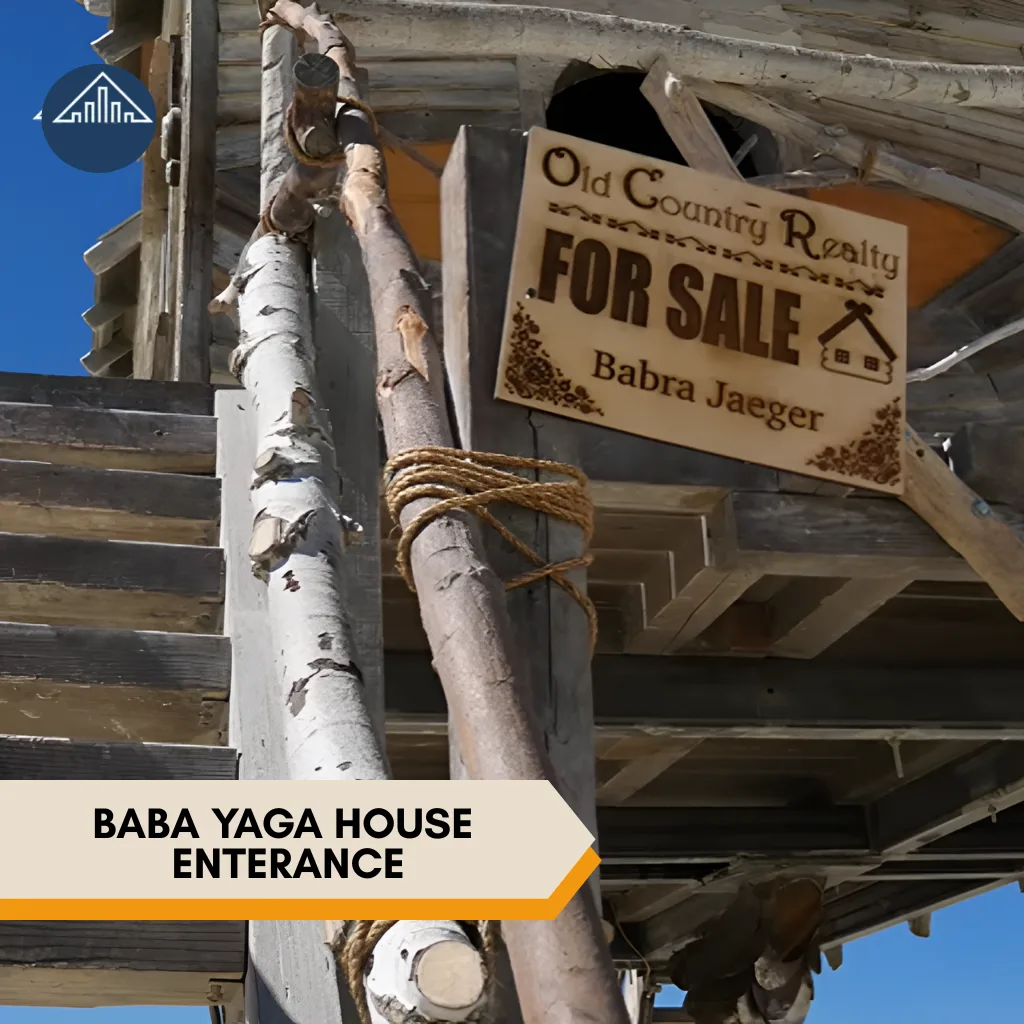
This is the full exterior shot. The hut stands elevated on thick jointed wooden legs above open ground. The pale timber walls are uneven and weathered. A grey shingled roof sits on top. A dark oval eye-window watches from near the peak.
A long wooden staircase climbs to an open platform with a railed walkway. The legs below look like they could move at any moment. This is the Baba Yaga house exactly as the Russian folk tales described it — raised above the earth, belonging to neither ground nor sky.
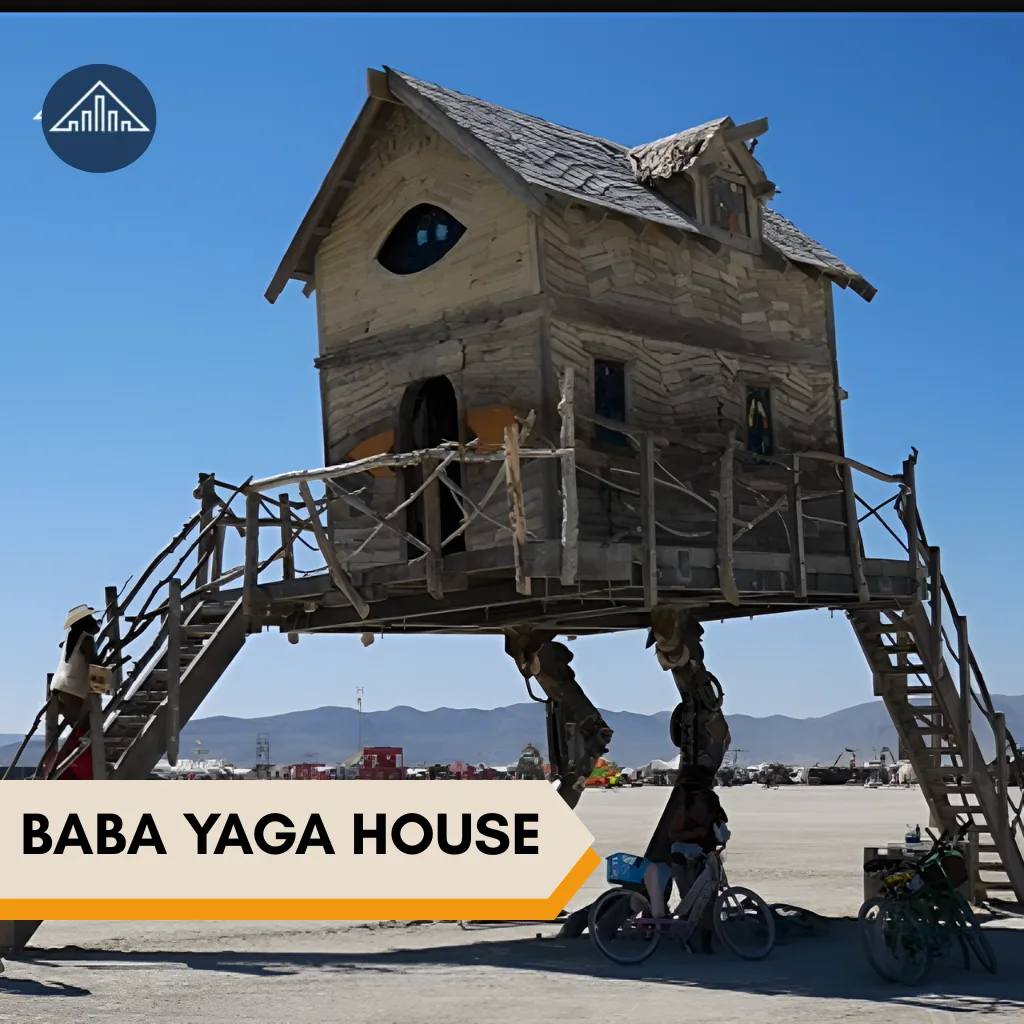
Enterance: For Sale by Babra Jaeger
Look closely at the birch-wood support post and you will see a wooden sign reading: “Old Country Realty — FOR SALE — Babra Jaeger.” It hangs slightly crooked, tied with rough rope in thick knots. The engraved wood is styled to look antique and official.
This is the greatest joke in folk art history — the most untameable dwelling in Slavic legend, listed for sale by a realty company. In the old stories, no one owned this house. You came to it because you had to. Seeing it on the market somehow makes the whole legend feel more alive. 😄
The Table of Forgotten Feasts– Kitchen
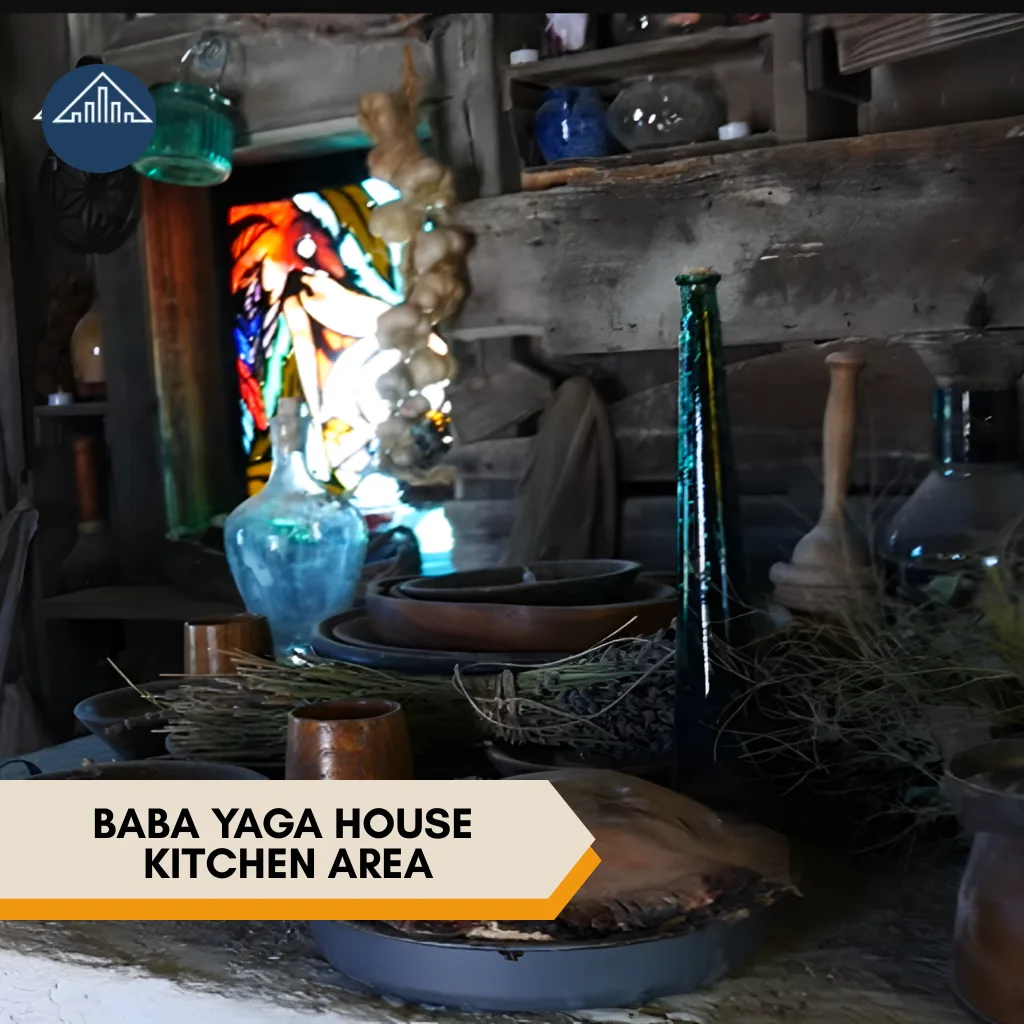
The interior table is covered with dark iron bowls, clay cups, stacked plates, dried herbs, pine branches, and tall glass bottles in deep green and pale blue. A firebird stained glass panel glows through an opening in the back wall, flooding the dark space with reds, oranges, and blues.
A dried fish rests on a low plate in the foreground. Every object on this table has purpose. This is not decoration. This is Baba Yaga’s working kitchen — a place of old magic, ritual knowledge, and forest medicine.
Where the Broom Meets the Garden – Rooftop
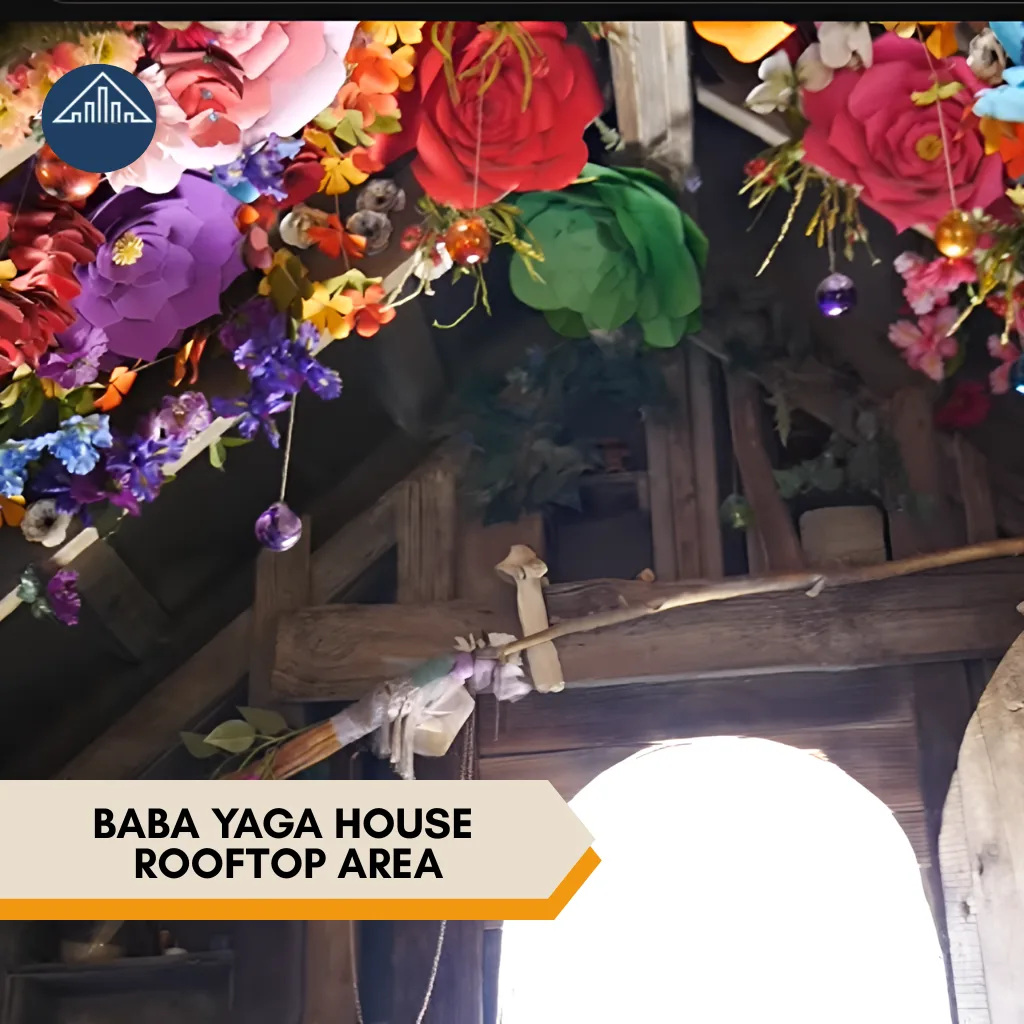
Look up inside the hut and find a ceiling covered in hundreds of oversized paper flowers — deep red roses, purple peonies, bright orange blooms, blue clusters, and lush green leaves — with glass and crystal ornaments hanging between them.
At the center of the arched doorway, hanging diagonally across a dark beam, is Baba Yaga’s broom. Rough handle, tied bristles, small flowers tucked into the binding. In Russian folklore, this broom sweeps away her sky-tracks so no one can follow her. Seeing it surrounded by flowers creates one of the most unexpected and beautiful contrasts in the whole space.
The Firebird Glass at Midnight
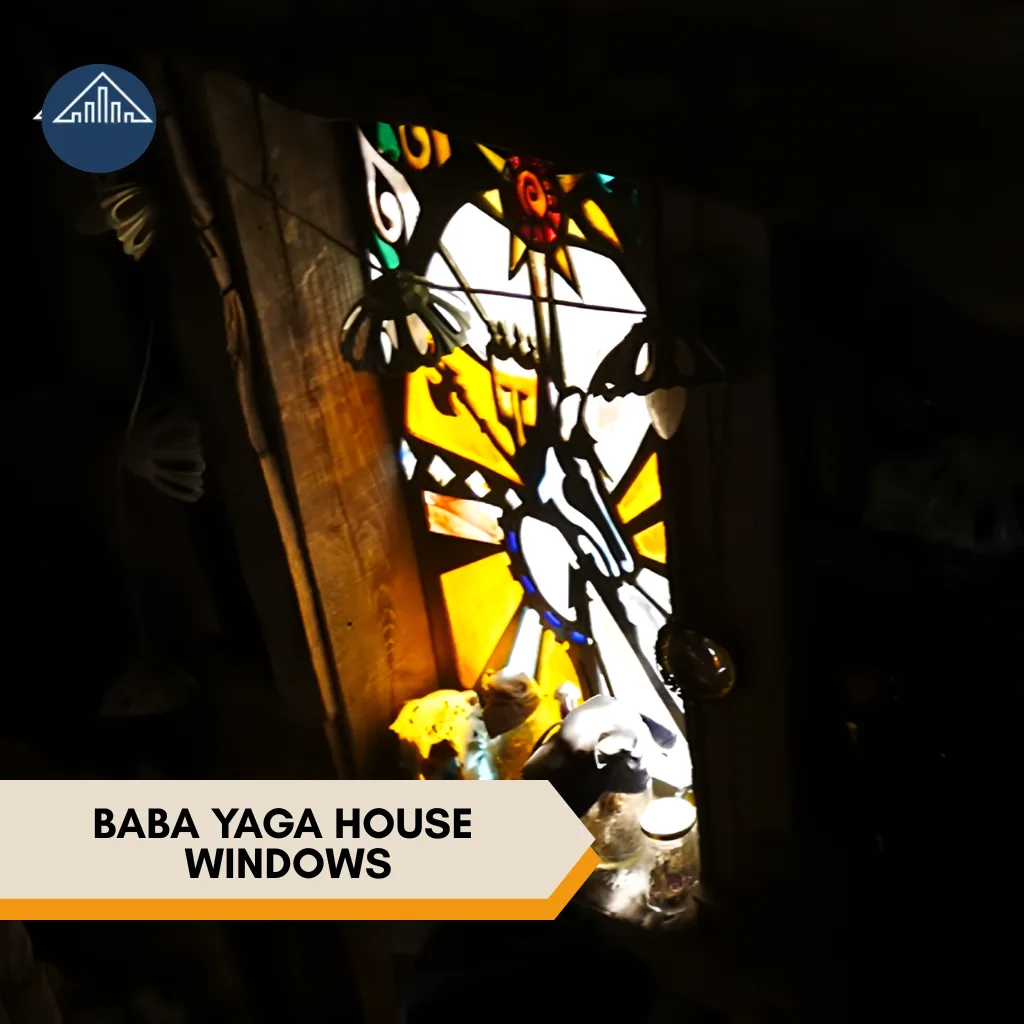
Photographed in near-total darkness, this stained glass panel glows like a living fire. Bold black lead lines form a firebird in flight against blazing gold and amber yellows, with flashes of blue and red at the edges. Small ceramic figures and glass bottles sit on the windowsill below, lit by the warm light pouring through.
The wooden frame is raw and dark, completely unfinished. In Russian fairy tales, the firebird is a creature of immense power — beautiful and deadly. Here it burns quietly inside Baba Yaga’s house. Always present. Always watching. 🌙
Outdoor Space of the Baba Yaga House
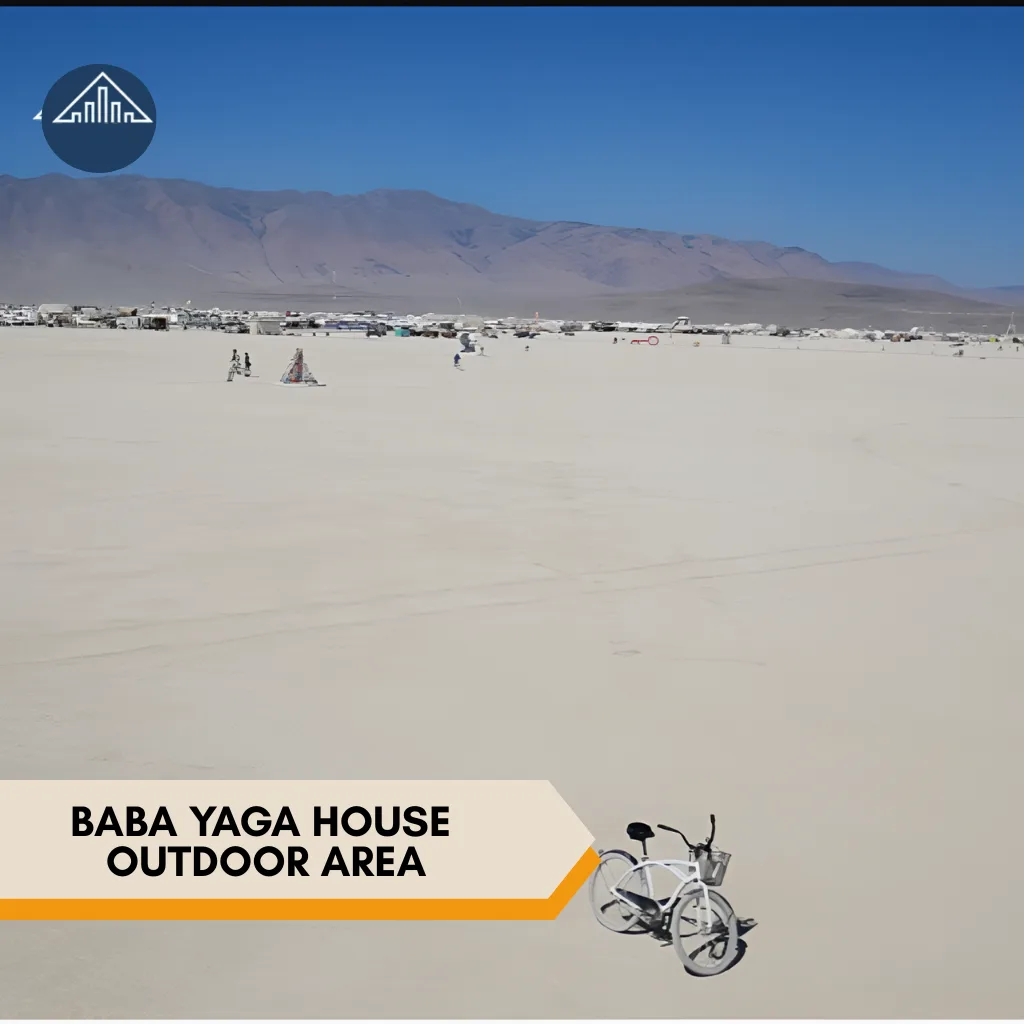
The outdoor space is raw and open — the hut towers above you on thick wooden legs, pale weathered timber walls leaning in every direction, a long staircase climbing up to the entrance platform. You look up at that dark oval eye-window staring back down, and you feel it immediately — this place does not welcome you, it tests you.From open plains to English gardens — Adelaide Cottage has outdoor spaces worth exploring too.
She Read the Folk Tale — Then She Built It
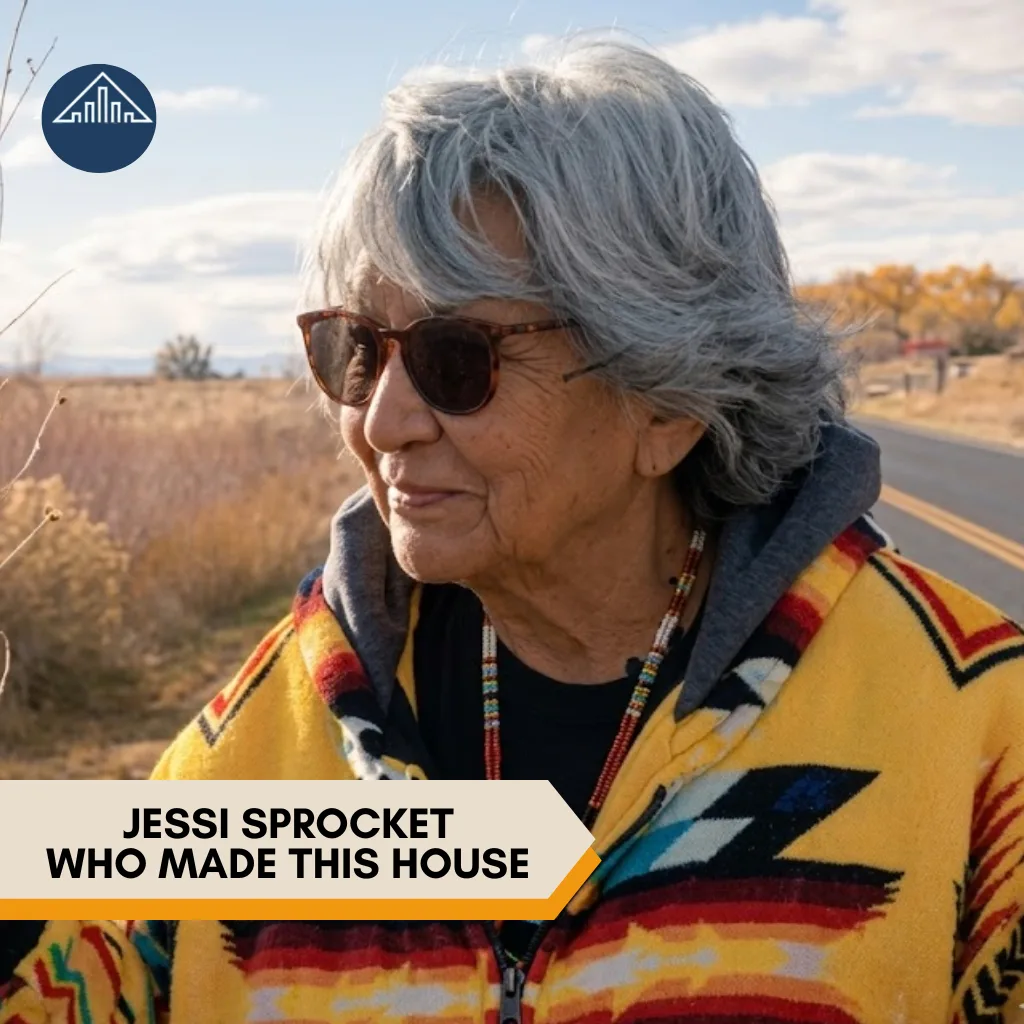
The brilliant mind behind this legendary structure is Jessi Sprocket, who led a creative group called Baba Yaga’s Book Club — now known as The Cauldron. She built this incredible 28-foot house for Burning Man 2018, designing every single detail herself — the 12-foot chicken legs covered in hand-cut custom scales, nine custom stained glass windows, the flower-covered ceiling, and the trinket-filled loft interior inspired by Miyazaki’s Howl’s Moving Castle.
What started as a deep love for Slavic folklore became one of the most talked-about art installations in Burning Man history. After the festival, the house moved to Fly Ranch in Northern Nevada in 2019, where it still stands today, welcoming visitors through guided nature walks.
Cultural Worth and Modern Influence
Today the Baba Yaga house holds extraordinary cultural worth. It appears in global literature, Hollywood films, tattoo studios, video games like Rise of the Tomb Raider, Minecraft builds, and museum collections worldwide.
The folklore economy it drives generates millions annually in tourism, merchandise, and creative licensing. As a design icon, it has inspired entire interior aesthetics — dark cottagecore, Slavic folk revival, raw timber spaces with glowing stained glass accents.
My own clients ask for this feeling regularly. They want spaces that feel alive, ancient, and full of story. Baba Yaga invented that aesthetic centuries before it had a name. 🏆
FAQ — Everything You Want to Know About the Baba Yaga House
After the tour, I know you have questions — and so did I. Here are the most common things people ask about the Baba Yaga house, all answered in one place.
What is the Baba Yaga house name?
The official Slavic name is Izba na kuryikh nozhkakh — meaning “hut on chicken legs.” It is also called izbushka, meaning “little hut,” in Russian fairy tales.
What is the Baba Yaga house meaning?
The house represents a threshold between the living world and the spirit world. Entering it is a rite of passage. Heroes in the tales must face it before continuing their journey — it tests courage, wisdom, and character.
Why does the Baba Yaga house have chicken legs?
Real elevated huts on wooden stumps were common in Finno-Ugric forest regions. Over generations of storytelling, those stumps transformed into living chicken legs — connecting the house to birds, spirits, and the boundary between worlds.
What is the Baba Yaga house tattoo meaning?
The tattoo represents personal transformation, standing at a crossroads, and protection through facing the unknown. It is one of the most meaningful symbols in Slavic-inspired body art.
Baba Yaga Net Worth: How Much Is the Hut Worth?
In real estate terms, the Baba Yaga house has no market value — no bank will finance a home on chicken legs with a skull fence and no bathroom. But in cultural currency? She is priceless. 🏆 Her image appears in global literature, Hollywood films, tattoo art, video games, and museum collections.
The folklore economy around Baba Yaga generates millions in merchandise, tourism, media, and creative licensing annually. As a design icon, the hut has inspired interior aesthetics from dark cottagecore to Slavic folk revival décor — and that influence only grows every year.
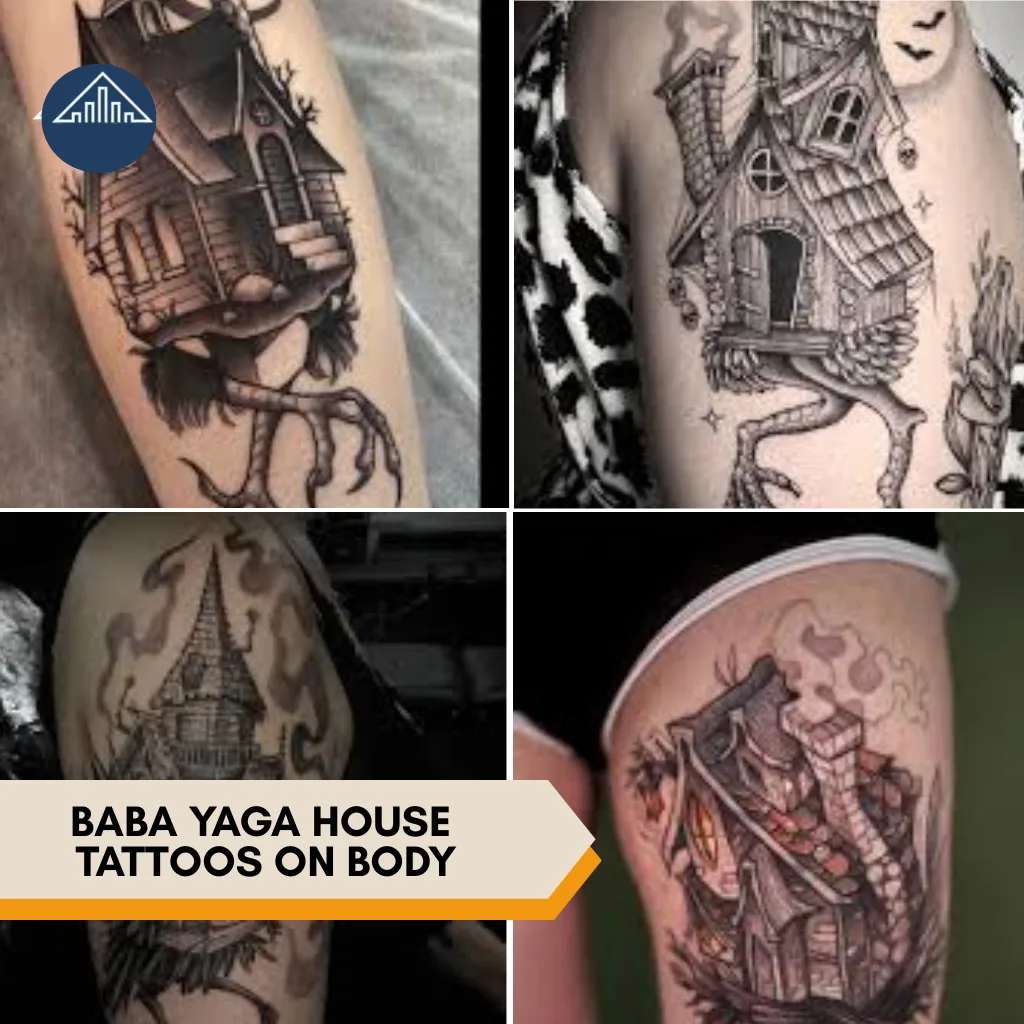
What Does the Baba Yaga House Tattoo Look Like?
The Baba Yaga house tattoo is one of the most striking pieces in Slavic-inspired body art. Most designs show the small wooden hut elevated high on gnarled chicken legs, surrounded by dark forest trees and a full moon glowing behind it.
The skull fence posts line the pathway to the door. Some designs add Baba Yaga herself flying overhead in her mortar and pestle. The linework is bold and dark — deep blacks, fine details on the wood grain and legs, with occasional splashes of color in the moon or the glowing windows. It is the kind of tattoo that tells a complete story in a single image.
Conclusion
I hope this tour through the legendary Baba Yaga house gave you something real — not just facts, but a feeling. From the weathered hut perched on its jointed legs to the glowing firebird window flickering in the dark, every detail carries the eerie magic of old Slavic folklore. This strange dwelling belongs to Baba Yaga, a figure whose stories have traveled through centuries of Russian folklore.
It’s a house that tests you, a house that watches you — standing right at the edge where the ordinary world fades and something ancient begins. Even today, its imagery appears in films, games, tattoos, and art around the world.
And interestingly, I see echoes of this in design conversations with clients. Many people are drawn to spaces filled with raw timber, glowing glass, wild textures, and interiors that feel alive with story. Because the best homes, like the Baba Yaga house, don’t just shelter you — they leave a legend behind. 🌲✨
If you enjoyed exploring this celebrity home, don’t stop here — there are many more incredible mansions and hidden estates waiting for you to discover. 🏡✨
