Agricultural environments, by their very nature, are dynamic landscapes where dust is an ever-present factor. Activities such as tilling, planting, and harvesting churn vast amounts of soil, organic matter, and other particulates into the air. This isn’t just common dirt; it often includes fine silt, pollen, and even microscopic organic fragments. These airborne contaminants are categorized by size, with PM10 (particulate matter 10 micrometers or less in diameter) and PM2.5 (particulate matter 2.5 micrometers or less) being particularly concerning due to their ability to penetrate deep into respiratory systems and HVAC components alike.
When these fine particles infiltrate HVAC systems, they impose significant mechanical strain. Filters become clogged rapidly, forcing blower motors to work harder to pull air through the restricted media. This increased workload translates directly into higher energy consumption and accelerated wear and tear on critical components. For instance, the unique composition of agricultural dust, often containing abrasive silica and sticky organic materials, can be particularly detrimental. We’ve observed that specific regional dusts, like those found in the Palouse region, can clog AC coils faster than average, leading to reduced cooling capacity and increased energy use. For more in-depth information on this specific challenge, exploring Palouse HVAC filter advice can offer valuable context.
This constant bombardment of dust leads to several critical issues:
- Increased Static Pressure: As filters become saturated, the resistance to airflow increases, creating higher static pressure within the ductwork. This forces the blower motor to operate outside its optimal range, leading to inefficiency and potential overheating.
- Coil Contamination: Beyond the filter, fine dust particles can bypass less efficient filters or accumulate on evaporator and condenser coils. This layer of grime acts as an insulator, significantly reducing the coils’ ability to transfer heat. For air conditioning systems, this means less effective cooling. For refrigeration units, it compromises their ability to maintain precise temperatures, which is critical for food safety and product preservation.
- Compressor Failure: The reduced heat transfer caused by dirty coils can lead to the compressor working harder and running longer cycles, increasing its operating temperature. Over time, this excessive strain can lead to premature compressor failure, one of the most expensive repairs for any HVAC or refrigeration system.
- Reduced Indoor Air Quality: Perhaps most importantly, when filters fail to capture these agricultural particulates effectively, indoor air quality suffers. Occupants of homes, offices, or facilities in these environments may experience increased respiratory issues, allergies, and general discomfort.
Understanding these impacts underscores the necessity of a robust and proactive filtration strategy. It’s not just about comfort; it’s about protecting valuable equipment, managing energy costs, and safeguarding health.
Optimizing Air Filtration in High-Dust Environments
Effective air filtration in high-dust agricultural environments requires a strategic approach that goes beyond simply changing filters. It involves understanding filter specifications, selecting appropriate types, and ensuring system compatibility.
MERV Ratings and Filter Thickness
The Minimum Efficiency Reporting Value (MERV) rating is a crucial indicator of a filter’s ability to capture airborne particles. MERV ratings range from 1 to 16 for residential and light commercial applications, with higher numbers indicating greater filtration efficiency.
- Lower MERV (1-4): Basic fiberglass filters primarily capture larger particles like lint and dust mites. While inexpensive, they offer minimal protection against fine agricultural dust and require very frequent replacement in dusty conditions. They also allow significant bypass airflow around the filter media.
- Medium MERV (8-11): Pleated media filters in this range are a common choice for many homes and businesses. They effectively capture pollen, pet dander, mold spores, and a substantial portion of the finer dust particles. An electrostatic charge on the filter media can enhance particle capture.
- High MERV (13-16): These filters are highly effective at trapping very fine particles, including bacteria, smoke, and the smallest agricultural silts (PM2.5). However, higher MERV ratings often mean denser filter media, which can restrict airflow.
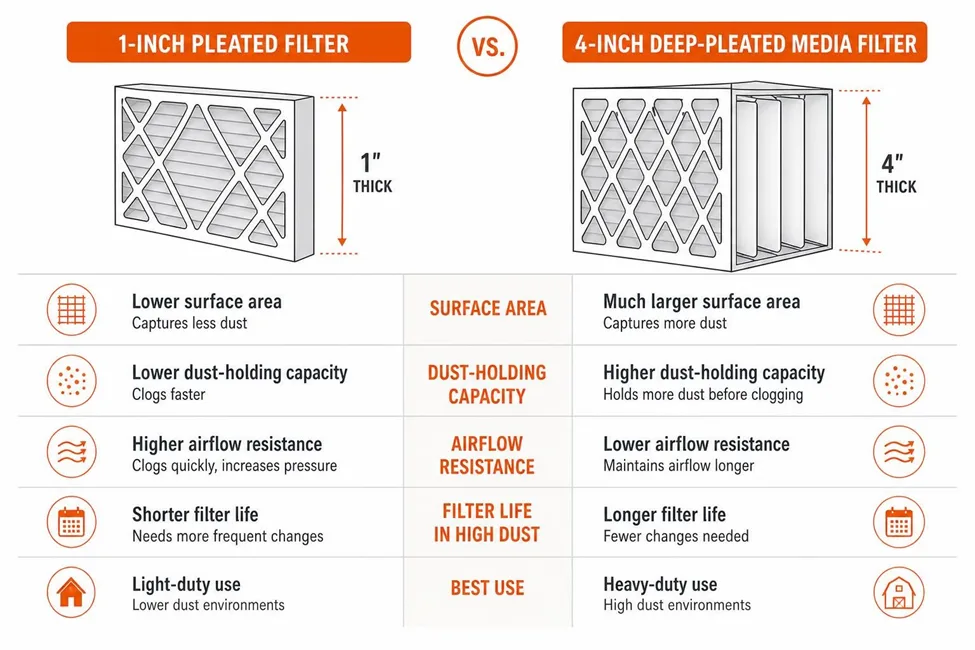
Filter thickness also plays a significant role. Standard 1-inch filters are common but have limited surface area. In contrast, 4-inch or even 5-inch deep-pleated media filters offer a much larger surface area, allowing them to capture more particulates without excessively restricting airflow. This increased capacity means they can last longer even in dusty environments, making them a more efficient choice in the long run.
Here’s a comparison of typical 1-inch and 4-inch pleated filters:
Selecting Filters for Commercial Refrigeration Services
For commercial refrigeration units, filter selection is paramount not only for mechanical protection but also for maintaining food safety and product integrity. Refrigeration systems rely on efficient heat dissipation through their condenser coils. When these coils become caked with agricultural dust, their efficiency plummets.
- Condenser Coils: Dust accumulation on condenser coils forces the compressor to work harder, leading to higher energy consumption and increased risk of breakdown. Filters, often located in the air intake of the refrigeration unit’s machine compartment, prevent this accumulation.
- Heat Dissipation: Proper airflow across the condenser coils is vital for effective heat rejection. A clogged filter or one with a poor MERV rating can severely restrict this airflow, leading to elevated operating temperatures for the refrigerant and compressor.
- Food Safety: While filters directly impact mechanical performance, their role in maintaining stable temperatures indirectly supports food safety. Any disruption to temperature control due to system inefficiency can compromise perishable goods. Therefore, selecting filters that effectively remove airborne contaminants, including those that might carry mold spores or bacteria, contributes to a cleaner operating environment for the refrigeration unit.
We recommend using high-efficiency filters that can withstand the specific dust challenges of agricultural settings without unduly restricting the airflow essential for refrigeration unit operation. Regular inspection and replacement are even more critical for these systems to prevent costly spoilage and maintain compliance with health standards.
Balancing System Static Pressure and Filtration Efficiency
While higher MERV ratings and thicker filters offer superior filtration, it’s crucial to balance this with the capabilities of your HVAC or refrigeration system. Every system is designed to operate within a specific range of static pressure.
- Blower Motors: The blower motor is responsible for moving air through the system. If a filter creates too much resistance (high static pressure), the blower motor has to work harder. This can lead to increased energy consumption, premature motor wear, and even motor failure.
- Energy Consumption: A struggling blower motor consumes more electricity, driving up energy bills. The U.S. Department of Energy estimates that keeping your filter clean can reduce energy consumption by 5-15%, saving a significant amount monthly on heating and cooling costs, especially when considering the increased run times in dusty conditions.
- Pressure Drop: The difference in air pressure across the filter is known as pressure drop. While some pressure drop is necessary for filtration, excessive pressure drop indicates a clogged filter or one that is too restrictive for the system. This can lead to reduced airflow throughout the building, resulting in uneven heating or cooling and decreased comfort.
- System Longevity: Operating an HVAC or refrigeration system with consistently high static pressure shortens its lifespan. Components are constantly under stress, leading to more frequent repairs and a need for earlier system replacement.
Before upgrading to a higher MERV filter or a thicker model, we advise consulting with an HVAC professional. They can assess your system’s design and current static pressure to recommend the highest efficiency filter that won’t compromise performance or system longevity. Sometimes, a system upgrade or modification may be necessary to accommodate higher-efficiency filtration without adverse effects.
Recommended Filter Replacement Schedules for Dusty Climates
In high-dust agricultural environments, the standard “change your filter every 90 days” advice is often insufficient. The sheer volume of airborne particulates means filters can become fully loaded in a fraction of that time.
Accelerated Replacement Intervals
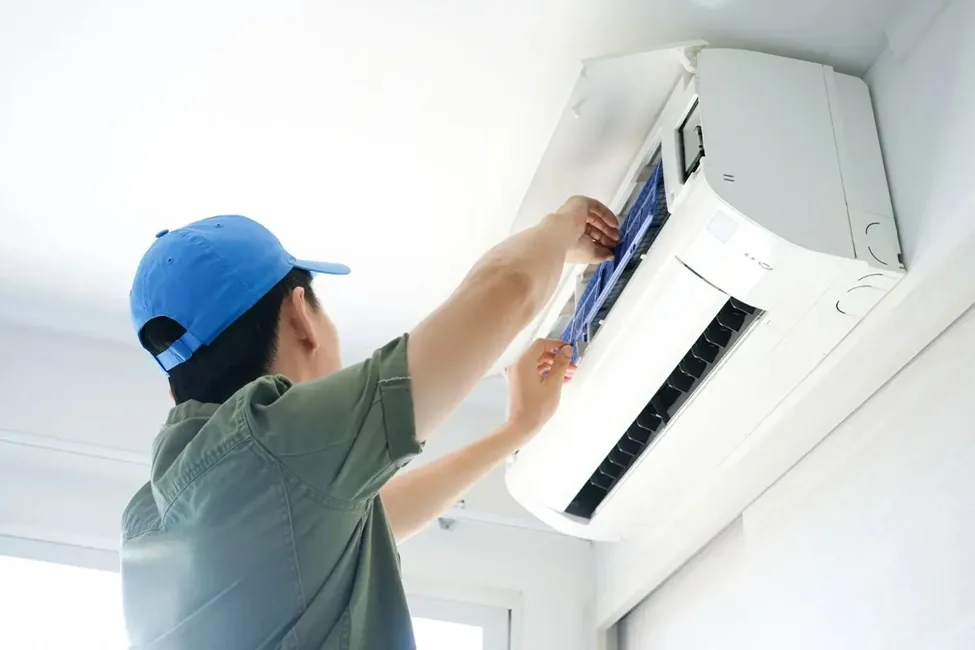
- General Dusty Conditions: For homes or commercial spaces in dusty agricultural areas, we typically recommend checking filters monthly and replacing them every 30 to 45 days. This is a significant departure from standard recommendations but is essential to maintain air quality and system efficiency.
- Peak Agricultural Seasons: During harvest season, tilling, or periods of high wind, the dust load can increase dramatically. In these extreme conditions, filters may need to be checked weekly and replaced as frequently as every 14 to 20 days. One bad windstorm, for example, can do three months’ worth of clogging in a single afternoon.
- Seasonal Shedding (Pets): While not directly agricultural, homes with pets in dusty areas face a double challenge. Pet hair and dander combine with agricultural dust to rapidly clog filters. For homes with multiple pets, a filter’s lifespan can be cut by a third, potentially requiring changes every 20-30 days.
Visual Inspection and the Light Test
Regular visual inspection is your first line of defense. We encourage occupants to perform monthly checks, especially during peak dust seasons.
- Visual Signs: A filter that appears gray, fuzzy, or has a thick layer of accumulated dirt is a clear indicator it needs replacement. If you can’t see the filter media through the accumulated grime, it’s definitely time for a change.
- The Light Test: A simple and effective method is the “light test.” Remove the filter and hold it up to a bright light source. If light cannot easily pass through the filter, it’s too clogged to function efficiently and needs immediate replacement.
Adjusting Schedules for Tractor Cab Pressurizer and Recirculation Filters
Tractor cabs in agricultural environments face an even more concentrated dust challenge, making their specialized filtration systems critical for operator health and comfort. Most modern tractors utilize a two-filter system:
- Pressurizer (Fresh Air) Filters: These filters draw in outside air, cleaning it before it enters the cab. They are crucial for maintaining positive pressure inside the cab, which helps prevent unfiltered air from seeping in through seals and cracks.
- Recirculation Filters: These filters clean the air already inside the cab, removing any contaminants that may have entered or been generated internally.
Maintenance intervals for tractor cab filters are typically measured in operating hours due to the intense and variable nature of agricultural work:
- Inspection: Visually inspect filters every 50 hours of operation.
- Cleaning: Clean filters every 250 hours. For dry filters, use low-pressure compressed air (30 psi or less), blowing from the clean side to the dirty side to dislodge particles. Never use water on dry paper filters unless explicitly approved by the manufacturer.
- Replacement: Replace filters every 500 hours or annually, whichever comes first. In extremely dusty conditions, such as during haying season or in very dry, sandy soil, these intervals may need to be shortened significantly, potentially requiring cleaning every 2-3 days and replacement much more frequently. Activated carbon filters, often used for odor and chemical filtration, should never be cleaned and must be replaced after 500 hours or 1 year.
Always refer to the tractor’s operator manual for specific recommendations, as intervals can vary by manufacturer and model. Keeping a spare set of clean filters on hand allows for quick changes in the field, minimizing downtime.
Aligning Residential HVAC and Commercial Refrigeration Services Maintenance
A comprehensive approach to air quality in agricultural settings extends to all systems. We advocate for aligning preventative maintenance schedules across residential HVAC and commercial refrigeration services.
- Preventative Maintenance: Regular, scheduled maintenance for all systems ensures filters are changed on time, coils are cleaned, and components are inspected. This proactive approach identifies potential issues before they become costly breakdowns.
- Coil Cleaning: Beyond filter changes, professional coil cleaning (both evaporator and condenser coils) is essential, especially for refrigeration units where dust accumulation directly impacts cooling capacity and energy efficiency.
- System Calibration and Runtime Optimization: During maintenance visits, technicians can calibrate thermostats, check refrigerant levels, and optimize system settings. This ensures that even with the challenges of agricultural dust, systems are running as efficiently as possible, reducing unnecessary wear and tear and extending their operational life.
By integrating these maintenance routines, we help ensure consistent indoor air quality and reliable operation across all critical systems in high-dust environments.
Proactive Maintenance Strategies to Extend Filter Life
Beyond regular filter changes, several proactive strategies can significantly extend filter life and reduce the overall dust burden on your HVAC and refrigeration systems in agricultural environments.
- Pre-Cleaners: For both HVAC systems and heavy machinery like tractors, installing pre-cleaners can be a game-changer. These devices, often mounted upstream of the main filter, are designed to remove larger dust particles before they reach the primary filter. For example, a Donaldson TopSpin HD pre-cleaner can remove up to 85% of incoming contaminants, while a Strata Cap can remove up to 96%. This dramatically reduces the load on the main filter, extending its lifespan by 60% or more and decreasing maintenance costs by 30% in dusty conditions.
- Duct Sealing: Leaky ductwork is a major culprit for drawing in unfiltered air, especially in dusty environments. Sealing leaks in return ducts, particularly those running through attics, crawl spaces, or basements, prevents the HVAC system from pulling in dust and debris from unconditioned spaces. This ensures that all air passing through your system goes through the filter as intended.
- Entry Mats and Cleaning Protocols: High-quality entry mats at all entrances can trap a significant amount of dust and dirt before it enters the building. Implementing a routine of removing shoes indoors and regularly cleaning these mats can prevent a substantial amount of agricultural dust from becoming airborne inside.
- Recirculate Mode: During periods of extremely high outdoor dust (e.g., harvest season, windstorms), temporarily switching your HVAC system to “recirculate” or “fan on” mode can be beneficial. This keeps the outdoor air intake closed, continuously filtering the air already inside the building rather than constantly pulling in new, heavily contaminated outdoor air. However, remember this doesn’t introduce fresh air, so use it judiciously.
- HEPA Vacuuming: Regular vacuuming with a HEPA-certified vacuum cleaner effectively removes settled dust from floors and surfaces, preventing it from becoming airborne and recirculating through your HVAC system. This complements your air filtration efforts by reducing the overall dust load within the indoor environment.
- Weather Stripping and Sealing: Sealing gaps around windows and doors with weather stripping and caulk prevents unfiltered air and dust from infiltrating your home or building directly. This reduces the amount of particulate matter that your HVAC system’s filter needs to contend with.
By implementing these strategies, we can create a multi-layered defense against agricultural dust, ensuring your filters last longer, your systems run more efficiently, and your indoor air quality remains consistently high.
Frequently Asked Questions about Dusty Climate Filtration
We often receive questions regarding the unique challenges of air filtration in high-dust agricultural environments. Here are answers to some of the most common inquiries:
How often should you change your air filter in a high dust agricultural environment?
In a high-dust agricultural environment, the recommended frequency for changing your air filter is significantly more often than the standard 90-day guideline. We advise checking your filters monthly and replacing them every 30 to 45 days as a baseline. During peak agricultural activities like harvest, planting, or tilling, or during periods of high winds, this frequency may need to increase to every 14 to 20 days, or even weekly, depending on the visible dust accumulation. For tractor cab filters, specific operating hour intervals apply, typically replacing every 500 hours or annually, but with more frequent cleaning (every 250 hours) and visual inspection (every 50 hours) in very dusty conditions.
What are the signs that your air filter needs to be replaced sooner than expected?
Several indicators suggest your air filter needs premature replacement:
- Visible Dirt and Discoloration: The most obvious sign is a filter that appears gray, fuzzy, or heavily coated with dust and debris. If you can’t see the filter media through the accumulated dirt, it’s time for a change.
- Reduced Airflow: You might notice weaker airflow coming from your vents, indicating that the filter is restricting the passage of air.
- Increased Household Dust: If you observe a noticeable increase in dust accumulating on furniture and surfaces shortly after cleaning, your filter may not be effectively capturing airborne particles.
- Longer HVAC Run Times: Your heating or cooling system might run for longer cycles than usual to reach the desired temperature, signaling that it’s working harder due to restricted airflow.
- Rising Energy Bills: A clogged filter forces your system to consume more energy, leading to an unexplained increase in your utility bills.
- Unusual Odors: A musty or burning odor can sometimes indicate a heavily soiled filter.
- The Light Test: As mentioned, holding the filter up to a light source. If light doesn’t easily pass through, it’s ready for replacement.
How do pre-cleaners and filter upgrades impact replacement frequency in Refrigeration Services?
Pre-cleaners and filter upgrades can significantly impact replacement frequency and overall efficiency in Refrigeration Services within dusty agricultural environments.
- Pre-cleaners: By installing pre-cleaners, which remove a substantial portion of larger dust particles before they reach the main filter, the primary filter’s lifespan can be extended dramatically. This means fewer full filter replacements, reducing both material costs and labor time. For refrigeration units, this translates to more consistent airflow over condenser coils, reducing strain on the compressor and maintaining optimal operating temperatures for longer periods.
- Filter Upgrades: Upgrading from basic fiberglass filters to higher MERV-rated (e.g., MERV 8-13) pleated media filters, especially thicker 4-inch or 5-inch options, provides superior particle capture capacity. These filters have more surface area to trap dust, allowing them to last longer than standard 1-inch filters in dusty conditions. While the initial cost may be higher, the extended lifespan, improved system efficiency, and better protection for sensitive refrigeration components often result in long-term savings and reduced maintenance headaches. It’s crucial, however, to ensure the refrigeration unit’s blower motor can handle the increased static pressure of higher MERV filters without compromising airflow. A professional assessment can help determine the optimal balance.
Conclusion
Navigating the unique challenges of a high-dust agricultural environment requires a diligent and informed approach to air filtration. For both residential HVAC systems and critical commercial refrigeration services, understanding how often to change your air filter in a high dust agricultural environment is not merely a recommendation—it’s a necessity for protecting equipment, managing energy consumption, and ensuring healthy indoor air quality.
We’ve explored how the pervasive nature of agricultural dust, from fine silts to organic particulates, can prematurely clog filters, strain blower motors, and lead to costly system failures. By recognizing the limitations of standard filter replacement schedules and adopting accelerated intervals tailored to dusty conditions, you can significantly mitigate these risks. Strategic filter selection, leveraging appropriate MERV ratings and thicker pleated media, forms the backbone of an effective filtration strategy, while balancing filtration efficiency with system static pressure ensures longevity and performance.
Furthermore, proactive measures such as installing pre-cleaners, sealing ductwork, and implementing rigorous cleaning protocols can dramatically extend filter life and reduce the overall dust burden. For specialized applications like tractor cabs, understanding the nuances of pressurizer and recirculation filters, along with their specific maintenance schedules, is paramount for operator well-being.
A well-executed air filtration plan is an investment in the health of your equipment and the people within your spaces. By prioritizing regular inspections, timely replacements, and smart maintenance strategies, we can all breathe easier, knowing our systems are running efficiently and effectively, even amidst the dustiest agricultural endeavors.