A student apartment often has to serve many purposes at the same time. It is your bedroom, study area, dining room, entertainment space, and place to recover after a long day. When every square meter matters, creating a comfortable layout can feel like solving a difficult puzzle. Where should the desk go? How can you invite friends over without making the room feel crowded? And how do you separate study time from relaxation when everything happens in one space?
The good news is that you do not need a large apartment or an expensive renovation. With thoughtful planning, flexible furniture, and a few creative choices, even a small studio can feel organized and welcoming.
The best student apartment layout ideas focus on balance. Your home should help you concentrate when deadlines are close, relax when classes are finished, and enjoy social time without creating chaos. Think of your apartment as a small stage: the furniture may stay the same, but the setting should easily change for different parts of your life.
1. Divide the Apartment into Clear Activity Zones
The first step is to divide your apartment into zones based on what you do there. A zone is simply an area designed for a particular activity, such as studying, sleeping, eating, or socializing.
You do not need walls to create these areas. Furniture placement, rugs, lighting, curtains, and storage units can create visual boundaries. For example, a rug under the sofa can define the relaxation area, while a desk lamp can make your study corner feel separate.
This zoning method is especially useful in a studio apartment where the bedroom, living room, and kitchen share one open space. Without clear zones, the apartment may feel like one crowded room. With them, it begins to feel like a complete home.
Start by observing your natural habits. Do you study better near a window? Do you watch films from your bed because the sofa faces the wrong direction? Do bags and books collect near the door? Your daily routine will show you where each zone should be.
Place the activities that require the most concentration in quieter parts of the apartment. Keep social areas closer to the entrance or kitchen when possible. This way, friends do not need to walk through your sleeping or study space whenever they visit.
Build a Calm Relaxation Zone
After hours of lectures, reading, and assignments, students may need extra support so they can make time to relax and recover. When deadlines become overwhelming, some students look for professional help and choose to buy thesis online, allowing them to reduce stress and create more time for rest. Professional writers for stable pricing help with assignments on time. A comfortable chair, a soft floor cushion, or one side of the sofa can then become a personal recovery zone.
Keep this area visually different from your study corner. Use softer lighting, warmer colors, cushions, or a small rug. While the study zone should feel clean and energetic, the relaxation zone should feel gentle and comfortable.
In a studio apartment, you can separate the bed from the rest of the room with an open bookshelf, curtain, folding screen, or tall plants. An open shelf is particularly useful because it creates separation without blocking all the light. It can also store books, decorations, and baskets.
Avoid turning the bed into the main seat for every activity. Studying, eating, and watching television in bed may sound comfortable, but it can make it harder to sleep. When possible, create another place to sit, even if it is only a compact armchair or floor cushion.
Think about what relaxation means to you. Perhaps you enjoy reading, gaming, listening to music, or simply having a quiet cup of tea. Design the space around that activity instead of copying a perfect apartment from social media. A home should fit your real life, not perform for a photograph.
Create a Focused Study Corner
Your study area should support concentration. A desk placed directly beside your bed may be convenient, but it can also blur the line between working and resting. Your brain may begin to connect the entire room with assignments and stress.
Try to place the desk near a window or against a quiet wall. Natural light can make the space feel more open, while a wall-facing desk reduces visual distractions. However, avoid positioning your computer where sunlight creates screen glare.
Keep only useful items on the desk. A laptop, notebook, lamp, and small organizer may be enough. Too many objects can make the area feel mentally noisy. A clear desk works like a clear road: it gives your attention somewhere to go.
Vertical storage is valuable in a small student apartment. Install shelves above the desk for textbooks, folders, and stationery. A pegboard can hold headphones, notes, cables, and small supplies without using desk space. In a rented apartment, removable hooks and freestanding shelves can provide similar benefits without damaging the walls.
Good lighting is also essential. Use a focused desk lamp for evening study sessions, but choose a warm or neutral light rather than an extremely bright, cold bulb. The goal is to stay alert without making your apartment feel like an office building.
Finally, use a visual signal to mark the end of study time. Close your laptop, place your books in a drawer, or switch off the desk lamp. This simple habit tells your mind that work is finished.
2. Choose Furniture That Works More Than One Job
Multipurpose furniture is one of the smartest solutions for a small student home. Every item should earn its place. A piece of furniture that performs two or three jobs gives you more flexibility without filling the apartment.
A sofa bed is a classic example. During the day, it provides seating for relaxing or entertaining. At night, it becomes a sleeping area. This option works well in a studio, although you should choose a model that is easy to open and comfortable enough for regular sleep.
An ottoman with hidden storage can serve as a seat, footrest, coffee table, and place for blankets or textbooks. Add a stable tray on top, and it becomes a useful surface for drinks or snacks.
A folding dining table is another valuable choice. You can keep it against the wall when working alone and open it when friends visit. Some wall-mounted tables fold completely flat, leaving valuable floor space free.
Nesting tables are equally practical. They fit under one another when you need more room but can be separated when guests need somewhere to place drinks. Stackable stools offer the same benefit. They provide extra seating without taking up permanent space.
Your bed can also become a major storage tool. Choose a bed frame with built-in drawers, or use flat storage boxes underneath it. Store seasonal clothing, spare bedding, shoes, or rarely used supplies there. In a very small room, a loft bed can free the area below for a desk, wardrobe, or small sofa.
However, multipurpose furniture should still be easy to use. A table that takes twenty minutes to unfold will probably remain closed. A storage bed that is difficult to lift may become frustrating. Flexible furniture should make life simpler, not turn every activity into a construction project.
Before buying anything, measure your apartment carefully. Mark the furniture dimensions on the floor with removable tape. This allows you to see how much walking space will remain. A sofa may look compact in a showroom but feel like a giant ship once it enters a small apartment.
3. Improve the Layout with Storage, Light, and Color
A good layout is not only about furniture placement. Storage, lighting, and color can completely change how spacious and organized an apartment feels.
Start by using vertical space. Many student apartments have empty walls but crowded floors. Tall bookcases, wall shelves, over-door organizers, and hanging storage can move belongings upward. This creates more open floor space and makes the room easier to clean.
Closed storage is helpful for items that create visual clutter. Use baskets, boxes, drawers, or cabinets for cables, cleaning products, paperwork, and personal items. Open shelves can display attractive objects, but filling every shelf may make the room look busy. Leave some empty space so the apartment can breathe.
Create storage near the places where you use specific objects. Keep study materials beside the desk, shoes near the entrance, cooking tools in the kitchen, and entertainment equipment close to the sofa. When storage matches your routine, staying organized requires less effort.
Lighting should also support different activities. One ceiling light is rarely enough. Use layers of light instead: a desk lamp for studying, a floor or table lamp for relaxing, and small decorative lights for social evenings.
Natural light can make a small apartment feel larger, so avoid blocking windows with heavy furniture. Use light curtains or blinds that provide privacy without making the room dark. Place a mirror across from or beside a window to reflect light through the space. A large mirror can act like an extra window, creating the illusion of depth.
Color has a similar effect. Light neutral shades such as white, cream, pale gray, or soft beige can make walls feel farther away. However, your apartment does not need to look empty or cold. Add personality through cushions, artwork, bedding, rugs, and plants.
Choose two or three main colors and repeat them around the room. This creates a connected look, even when the apartment contains several different zones. For example, dark blue cushions in the relaxation area can match a blue desk organizer and a small blue kitchen accessory.
Plants can also soften the layout. A tall plant can act as a natural divider, while small plants bring life to shelves and windowsills. Choose low-maintenance varieties if your schedule is busy. An unhealthy plant will not create the peaceful atmosphere you imagined.
Do not forget sound. In a shared apartment, rugs, curtains, cushions, and fabric furniture can absorb noise. Headphones are useful, but soft materials can make the whole space feel calmer. If you live with roommates, agree on quiet study periods and social hours before noise becomes a source of conflict.
4. Design a Flexible Space for Friends and Social Time
Entertaining in a student apartment does not require a large dining room. You simply need a layout that can change when people arrive.
Begin by protecting the main walking paths. Guests should be able to move between the entrance, seating area, kitchen, and bathroom without stepping over bags or squeezing around furniture. Leave open space through the center of the room whenever possible.
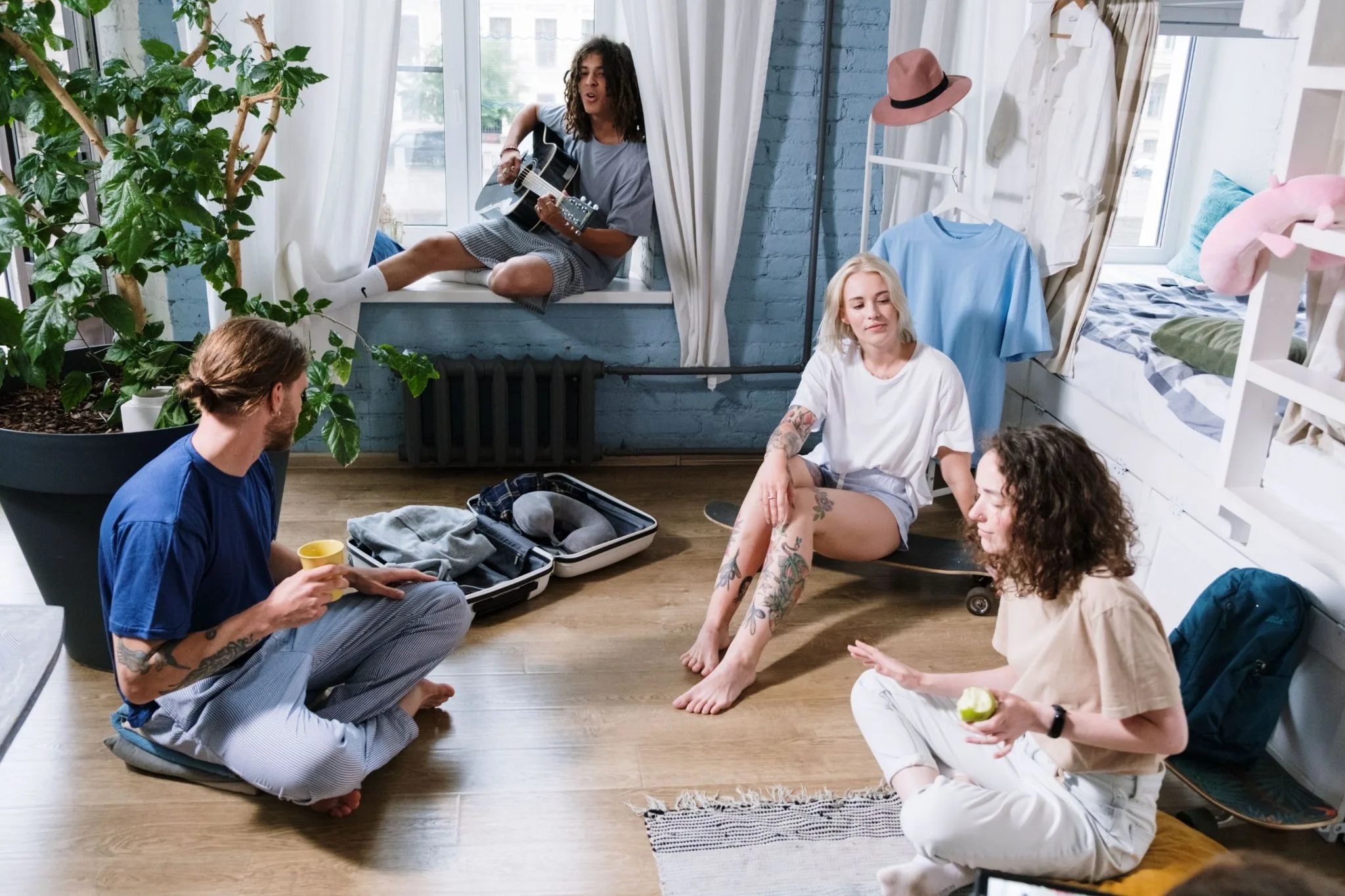
Arrange seating to support conversation. Instead of placing every chair toward a television, angle some seats toward one another. A sofa, armchair, ottoman, and two floor cushions can create a relaxed circle without requiring matching furniture.
Portable seating is perfect for student apartments. Folding chairs can hang behind a door or slide under a bed. Floor cushions can be stacked in a corner. Lightweight stools can move from the kitchen to the living area whenever needed.
A coffee table with wheels can also help. Keep it in the center during a quiet evening, then roll it aside to create more room for games, food, or movement. Small side tables are easier to rearrange than one large, heavy table.
When entertaining, use the kitchen as part of the social space. Set up drinks and snacks on the counter rather than crowding the main seating area. A simple tray can turn a small kitchen surface into an organized serving station.
You should also think about the atmosphere. Warm lamps, a tidy entrance, low-volume music, and a few comfortable seats can make guests feel welcome. People remember how a space feels more than how expensive the furniture looks.
Before friends arrive, place personal study materials and valuable items in closed storage. This protects your belongings and quickly reduces clutter. Keep a basket nearby for last-minute cleaning. When the doorbell rings, you can collect loose items and deal with them later.
Still, do not design the entire apartment around occasional guests. You live there every day, while visitors may come only once or twice a week. Your personal comfort, study habits, and sleep quality should remain the main priorities.
The most useful entertaining layout is flexible rather than permanent. On Monday morning, the apartment may be a quiet study space. On Friday evening, the same furniture can shift into a friendly social area. Like a pocketknife with several tools, a successful student apartment adapts without becoming complicated.
Conclusion
The best student apartment layout ideas are not about following strict design rules. They are about creating a space that supports the different parts of your life. Clear zones help you separate studying from sleeping. Multipurpose furniture saves room and gives you flexibility. Smart storage reduces clutter, while layered lighting creates the right mood for work, rest, or social time. Most importantly, your apartment should reflect your habits, personality, and priorities. You do not need perfect furniture or a large budget to create a comfortable home. Start with one problem area, make a practical change, and observe how the space feels. Little by little, your apartment can become more than a place where you keep your belongings. It can become a focused classroom, a peaceful retreat, and a welcoming meeting place—all within the same four walls.