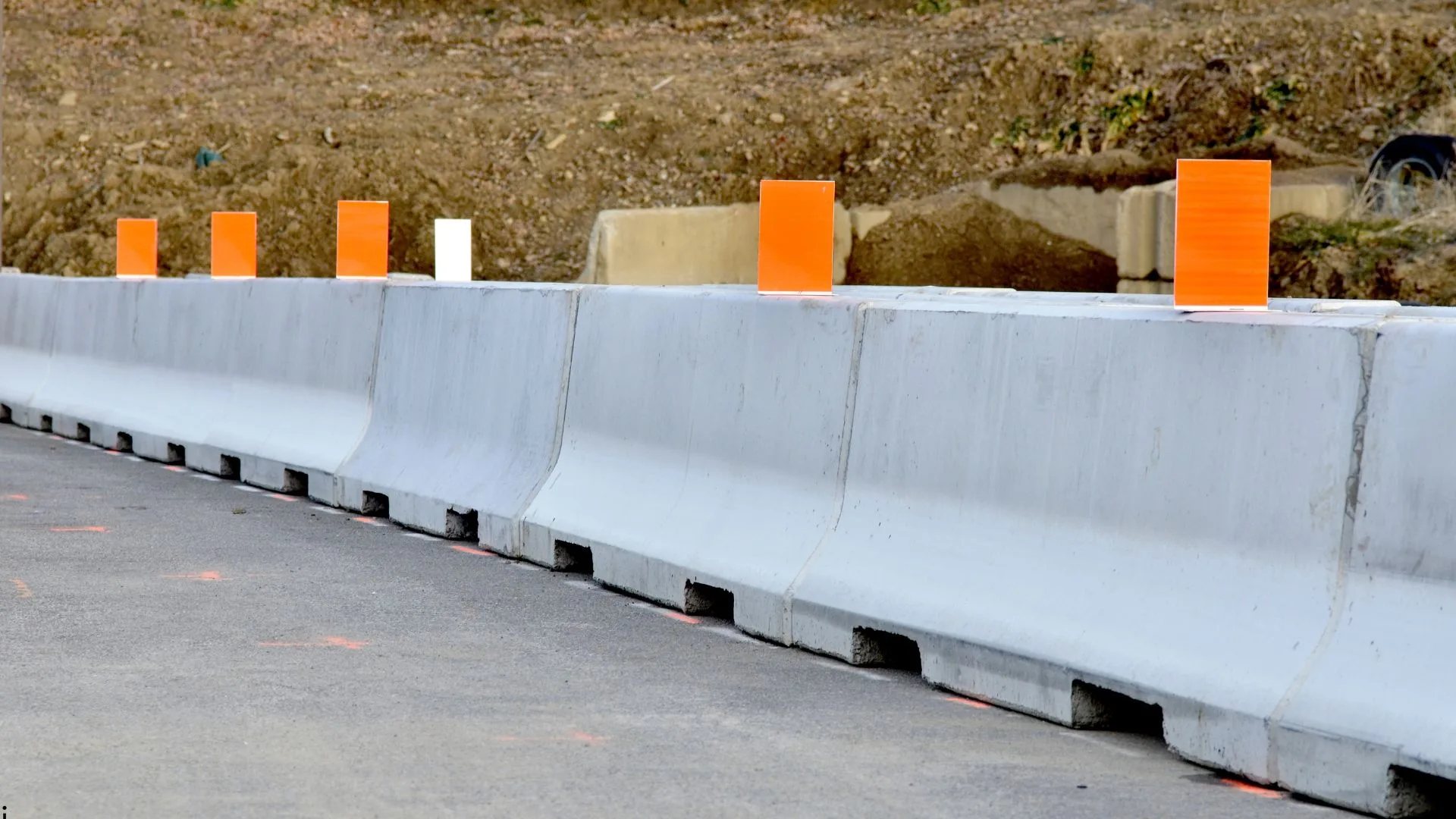
Specifying the wrong concrete barrier can cost a project weeks of rework. Concrete barriers seem straightforward until you’re deep in a DOT submittal and realize your chosen unit was tested under NCHRP 350, not the current MASH 2016 standard, and now the whole spec needs revisiting. Throw in the logistics of moving heavy precast units across multiple states and keeping dimensional accuracy consistent across a large order, and the sourcing process gets complicated fast. After reviewing dozens of suppliers, manufacturers, and distributors, this guide covers five options worth serious consideration for perimeter protection and khttps://rivonhome.com/blog/asphalt-paving-and-repair-services/
safety work.
The shortlist methodology
Public information formed the backbone of this evaluation. Review platforms, company websites, case studies, and directory listings were all pulled into the picture. Only companies with a demonstrated track record in the construction space made the cut.
→ See the full research breakdown
- 48 Barriers – Best for construction contractors and facility managers needing quick access to new or used barriers
- Michie Concrete Products – Best for precast concrete and Redi-Mix products for infrastructure and commercial/residential construction
- Tensar Corp – Best for ground stabilization and soil reinforcement in construction projects
- Key Concrete – Best for excavation and site preparation services
- Superior Concrete – Best for large-scale structural concrete projects
Why Concrete Barriers Are More Than a Line Item
Treating concrete barriers as a commodity purchase is a mistake that shows up in change orders and field delays. The difference between a barrier that meets MASH TL-3 certification and one that only carries an outdated NCHRP 350 approval can determine whether a DOT inspector signs off on your work zone or shuts it down. Sourcing matters just as much. Heavy precast units require careful coordination of delivery windows, placement equipment, and site access, and a supplier who underestimates that logistics burden creates real schedule pressure.
Getting the specification right from the start, down to the containment level rating (TL-2, TL-3, or TL-4), the compressive strength of the concrete mix in PSI, and the unit weight in pounds per linear foot, gives your project a foundation that holds up under review and under impact.
Quick-Look Comparison: 5 Best Concrete Barriers
Note: All data in this table is sourced from review platforms and the official websites of the listed companies.
| Company Name | Years Operating | Headquartered In |
| 48 Barriers | Since 2003 | Springfield, Missouri |
| Michie Concrete Products | Since 1974 | Henniker, New Hampshire |
| Tensar Corp | Since 1983 | Irving, Texas |
| Key Concrete | Since 1997 | Fort Wayne, Indiana |
| Superior Concrete | Since 2002 | Lake Stevens, Washington |
1. 48 Barriers – Best for Quick Access to New and Used Barrier Inventory Nationwide
What Is 48 Barriers’s Business?
48 Barriers is a family-owned brokerage that has been sourcing and distributing barrier products since 2003. They work across all 48 contiguous states, which is genuinely rare for a single operation. Their catalog covers Jersey barriers, K-rails, bin blocks, T-walls, military barriers, security planters, and two proprietary lines: CastleGuard™ and DecoBarrier™. When a contractor needs concrete barriers for perimeter security without waiting on a manufacturer’s production schedule, 48 Barriers connects them to available inventory, both new and used, across the country.
Why Does 48 Barriers Belong on This List for Concrete Barriers?
Moving 25,000+ barrier units in a single year means they’ve handled the logistics challenges, the DOT coordination, and the spec variations that slow most sourcing efforts down. That kind of volume and geographic reach is hard to match, especially when a project deadline doesn’t allow for manufacturing lead time.
Real-World User Take:
Contractors and facility managers consistently point to speed and availability as the standout qualities here. Getting access to both new and used inventory across 48 states means fewer dead ends when a project hits a sudden barrier shortage. The CastleGuard™ and DecoBarrier™ lines also get attention because they solve the aesthetic problem that standard Jersey barriers simply don’t address.
2. Michie Concrete Products – Best for Precast Concrete Manufacturing in New England
What Is Michie Concrete Products’s Business?
Michie Concrete Products has been running three precast plants in New Hampshire since 1974. They manufacture traffic barriers using computer-controlled concrete mixes and engineered reinforcing materials, which means the dimensional accuracy and compressive strength on each unit are tightly controlled. Beyond traffic barriers, they produce bridges, culverts, fire cisterns, and precast buildings. Their NPCA certification is renewed annually, so quality standards aren’t a one-time checkbox (which matters when you’re specifying barriers for infrastructure work). The Interstate 93 bridge project is one of their more recognized credits.
Why Does Michie Concrete Products Belong on This List for Concrete Barriers?
Nearly five decades of precast manufacturing experience means they’ve worked through the tolerances and reinforcing details that affect how a barrier performs on impact. For New England-based projects requiring traffic barriers with consistent quality across volume orders, their three-plant operation gives them production capacity that a single-facility manufacturer can’t match.
Real-World User Take:
Michie’s reputation is built on precision and regional reliability. Civil engineers and contractors working on New England infrastructure tend to come back to them because product consistency across large orders holds up. That kind of repeat confidence is worth paying attention to.
3. Tensar Corp – Best for Ground Stabilization Under and Around Barrier Systems
What Is Tensar Corp’s Business?
Tensar has been developing ground stabilization and soil reinforcement products since 1983, operating across more than 80 national markets today. Their two main product lines are Tensar geogrids, which are polymer-based reinforcement systems used in roadways and public infrastructure, and Geopier foundation systems for ground improvement under structures. These aren’t barrier products in the traditional sense, but they’re directly relevant when heavy precast concrete units are being placed on unstable or sloped terrain (a challenge that causes real placement problems on worksites). The American Society of Civil Engineers recognized Tensar geogrid as one of the innovations shaping civil engineering, back in 2018.
Why Does Tensar Corp Belong on This List for Concrete Barriers?
Anchoring and interlocking concrete barriers on soft or uneven ground is one of the most overlooked failure points in work zone setup, and Tensar’s geogrid systems address that ground-level challenge directly. With 64 patents filed and foundational technologies built over nearly 50 years, their approach to sub-base performance is grounded in data, not guesswork.
Real-World User Take:
The 2019 Manufacturing Excellence Award and the civil engineering community’s recognition of their geogrid technology give Tensar strong third-party credibility. Practitioners in road construction and infrastructure describe the Tensar geogrid’s ability to reduce base layer movement under load as a meaningful factor when permanent or semi-permanent barrier installations are involved.
4. Key Concrete – Best for Site Preparation and Excavation Before Barrier Placement
What Is Key Concrete’s Business?
Key Concrete started as a weekend side operation and grew over 27 years into a full-service excavating contractor based in Fort Wayne, Indiana. They handle site preparation, grading, utilities, and stormwater management. Their work is built on a straightforward set of values: integrity, quality materials, and clear communication throughout a project. The City of Fort Wayne and local commercial clients have both recognized them for completing complex site work, including a 50/50 sidewalk repair contract, with strong results and consistent communication. That track record tells you something about how they run a job.
Why Does Key Concrete Belong on This List for Concrete Barriers?
Proper site grading and preparation directly affect how well concrete barriers sit, interlock, and hold position over time. A team that understands excavation and stormwater drainage brings a detail-level awareness to barrier placement that a barrier-only supplier typically doesn’t.
Real-World User Take:
The community reputation Key Concrete has built in Fort Wayne points to a pattern of doing the work right and communicating clearly when something comes up. Local contractors and municipal clients describe their results as consistently solid, which for site prep work that affects everything downstream carries real weight.
5. Superior Concrete – Best for Large-Scale Structural Concrete and Retaining Wall Projects
What Is Superior Concrete’s Business?
Superior Concrete has operated out of Lake Stevens, Washington since 2002, focusing on large-scale structural concrete including retaining walls, detention vaults, commercial foundations, and multi-story concrete structures. What sets them apart from typical subcontractors is that design, manufacturing, and installation are all handled in-house. No handoffs between separate firms means fewer coordination gaps. They’re the largest detention vault contractor in Snohomish and Northern King County, building over 50 vaults annually, and they’ve reportedly bought more hollow-core planks than any other single contractor from Concrete Technology of Tacoma (not cheap to maintain that volume, but it reflects serious scale).
Why Does Superior Concrete Belong on This List for Concrete Barriers?
Retaining walls and large structural perimeter applications require exactly the kind of integrated design-to-installation capability that Superior Concrete has built over 22 years. Their single-source model keeps structural perimeter projects on schedule when coordination between separate design and build teams would otherwise introduce delays.
Real-World User Take:
Over 22 years of operation, Superior Concrete has consistently received recognition for exceeding client expectations on complex structural projects. The combination of volume scale and in-house control tends to produce results that hold up both structurally and on a timeline.
How the Top Contenders Were Selected
The selection process started broad before getting tight. Here’s how the shortlist was built.
Preparing and Recording Metrics
A wide initial list was assembled from multiple source types: contractor directories, precast concrete manufacturer databases, regional DOT-referenced supplier lists, and review platforms. Each entry was logged with available details including years operating, geographic reach, product categories covered, and any certifiable quality signals. The goal at this stage was breadth, not judgment, pulling enough options into the picture that the eventual cuts would be made on real comparison rather than a narrow starting pool. Companies covering Jersey barriers, K-rails, precast traffic barriers, and related concrete perimeter products were all included in the initial sweep.
Narrowing the Field to Qualified Options
From that broad list, entries without a verifiable operational history in the construction space were removed first. Companies where the product descriptions were vague, or where the barrier-related products couldn’t be confirmed through their own published materials, were set aside. Review patterns across platforms were then analyzed for each remaining company. Options that showed a consistent pattern of delivery, accuracy, and site reliability were kept. Those with a single isolated review or no traceable project history were cut regardless of how compelling their website copy sounded.
The Fact-Checking Step
Each company’s claims were cross-referenced against independent sources. Certification references, project credits, and geographic coverage claims were checked against what reviewers, case studies, and third-party directories actually reported. Where a company’s site described capabilities that reviewers or project references didn’t reflect, that gap was noted and weighted in the evaluation. Real-world results carry more signal than self-reported capacity.
Awards, Mentions, and Industry Voice
External recognition was factored in as an additional signal. Industry awards, mentions in civil engineering publications, and citations by professional associations were noted for each company. Tensar’s recognition by the American Society of Civil Engineers and their 2019 Manufacturing Excellence Award, along with Michie Concrete’s NPCA certification record, are examples of the kind of third-party validation that strengthens a company’s position on a shortlist like this. These signals don’t replace operational evidence, but they add useful context.
Evidence That Matters for Concrete Barriers
The final filter looked at barrier-relevant evidence. This included dedicated product pages for traffic barriers and perimeter protection systems, reviewer comments that referenced specific project types (work zone barriers, perimeter security, road safety), and case study details tied to construction zone or site protection applications. Companies where barrier products were incidental to a much broader catalog were evaluated on the depth of their barrier-specific experience, not just the presence of the product in their lineup. The specificity and depth of experience in the concrete barrier space determined the final five.
Decision Factors When Picking Concrete Barriers
Choosing a concrete barrier supplier or product isn’t just about who has units available. Several factors separate a good-fit option from one that creates problems mid-project.
- Industry and Domain Experience: Look for suppliers or manufacturers with a track record in traffic barriers, work zone protection, or perimeter security. Years in operation matter, but the type of work they’ve done matters more.
- Features and Service Options: Consider whether you need new or used inventory, custom dimensions, proprietary aesthetic options (like decorative barrier lines), or specialized products such as T-walls and military barriers for higher-security applications.
- Pricing Structure: Cost per linear foot varies widely between new precast units, used inventory, and rental options. Budget planning should account for transportation and placement costs, which can rival the barrier cost itself on large orders.
- Results Measurement: For road safety applications, verify containment level ratings (TL-2, TL-3, or TL-4) and confirm MASH 2016 compliance. Older NCHRP 350-tested products may not meet current state DOT specifications.
- Industry Knowledge and Compliance: AASHTO, MASH TL-3/TL-4, FHWA guidelines, and state DOT specifications vary across jurisdictions. A supplier who understands multi-state DOT requirements can save time on submittals.
The Takeaway
Concrete barrier sourcing rewards specificity. The companies on this list each bring something distinct, whether that’s nationwide inventory reach, precision precast manufacturing, structural design integration, or site-level ground preparation. Matching the right option to your project type, containment requirements, and timeline is what turns a barrier line item into a project asset. As MASH 2016 compliance becomes more uniformly enforced across state DOTs, the gap between specification-ready suppliers and the rest will only widen.