For rural homeowners, a private water source is both an essential household system and a long-term responsibility. Whether water comes from a drilled well, a cistern, or a shared system, regular attention helps protect health, comfort, and property value. Households facing major access or infrastructure challenges may also find support for clean-water wells and septic systems through organizations focused on rural water needs.
Safe water management does not have to be complicated. It starts with knowing where your water comes from, testing it on a sensible schedule, protecting the area around the source, and responding quickly when something changes. It also helps to view the water system as a connected set of parts: the source, the well or storage structure, the pump and plumbing, any treatment equipment, and the land uses nearby. A problem in one part of that system can affect the reliability of the whole household supply.
Why Water Planning Matters for Rural Homes
Private wells are not monitored and treated in the same way as public water systems, so the homeowner must take an active role in water safety. Conditions can change after flooding, drought, nearby construction, septic trouble, or changes in surrounding land use. A clear-looking glass of water is not proof that it is safe, because some contaminants have no noticeable taste, smell, or color.
Water planning also makes it easier to act calmly when a problem occurs. A household that knows the well location, has recent test results, and keeps service contacts available can give a contractor or local health official more useful information. This is especially important for homes with infants, older adults, pregnant household members, or anyone whose health may make water-quality concerns more urgent.
Know Your Water Source
Start by identifying the system that serves your home. It may be a drilled, bored, or driven well, a shared well, a cistern supplied by hauled water, or an older system with few records. Your source may also depend on a pump, pressure tank, storage tank, filters, softeners, or other treatment equipment.
Gather the records you can find, including well construction details, depth and location, pump information, past lab reports, repair invoices, permits, and inspection documents. Keeping these items in one household water file makes future testing, repairs, and property decisions easier.
If records are missing, begin creating them now. Note the location of the wellhead, pressure switch, electrical controls, shutoff valves, treatment units, and outdoor spigots. Labeling equipment where practical and saving photographs can be useful when explaining the system to a contractor, preparing for a power outage, or transferring information to a future owner.
Build a Simple Testing Routine
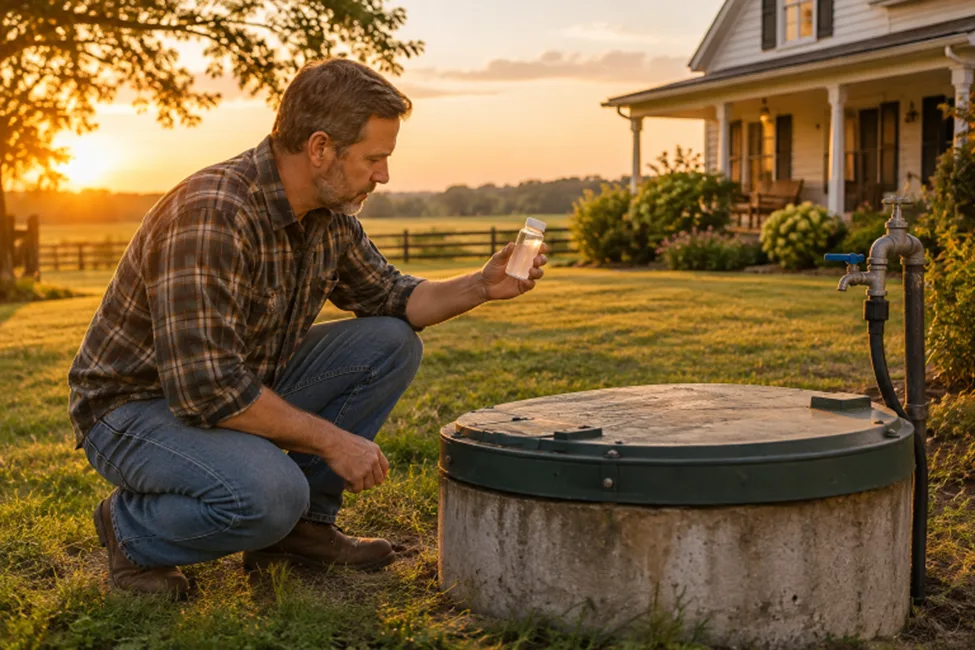
A regular testing routine creates a baseline, making it easier to recognize meaningful changes. The annual well safety guidance from the Centers for Disease Control and Prevention recommends testing private well water for harmful germs and chemicals and checking the well for mechanical problems at least once each year.
- Find a certified drinking-water laboratory in your area.
- Follow the laboratory’s instructions for containers, timing, and sample collection.
- Include basic tests such as bacteria and nitrate when appropriate for local conditions.
- Add tests based on local geology, agriculture, industry, wildfire impacts, or fuel storage.
- Test again after flooding, well repairs, unusual odors, or changes in taste, color, or pressure.
Save each result with the date, the laboratory name, and a note about conditions at the time of sampling. For example, record whether there had recently been heavy rain, a long dry spell, construction, a pump repair, or a change in treatment equipment. Comparing results over time can be more informative than relying on a single sample, particularly when mineral content or water appearance changes gradually.
Common Water Quality Risks
Different problems call for different responses. Germs can enter through damaged well caps, poor drainage, floodwater, or nearby septic failures. Nitrates may be associated with fertilizer, animal waste, or failing septic systems. Metals such as arsenic and manganese can occur naturally in groundwater, while lead may come from plumbing components.
PFAS testing may be appropriate in areas with known industrial, landfill, or firefighting-related sources. Sediment can signal a change in the well, pump, casing, or groundwater conditions. Hardness and other minerals may create scale, affect laundry, or shorten the life of appliances, even when they are not a direct health concern.
Local conditions should guide the testing plan. For instance, homes near intensive agriculture may need to discuss nitrate, nitrite, pesticide, or bacterial testing with a local health department or qualified laboratory. Homes near mining, fuel storage, waste sites, major roads, or industrial activity may have different concerns. A test result should be interpreted in context rather than used to assume that every water source has the same risks.
Protect the Area Around the Well
Good protection begins above ground. Keep runoff flowing away from the wellhead, and check that the cap, casing, and visible pipes are intact. Do not store fuel, paint, pesticides, waste, or other chemicals near the water source. Keep livestock and pets away from the immediate well area, maintain the septic system, and mark the well location before grading, landscaping, or construction begins.
After severe weather, walk around the well area once conditions are safe. Look for standing water, erosion, damaged caps, exposed wiring, leaning pipes, vehicle damage, or anything that could allow surface water to enter the system. Avoid driving heavy equipment over buried water lines or near the wellhead, since compaction and accidental damage can create expensive problems that may not be obvious right away.
Plan for Repairs and Maintenance
A working pump does not guarantee that the entire system is in good condition. Watch for weak flow, pressure that rises and falls rapidly, repeated pump cycling, leaks, cloudy water, unusual noises, burning smells, or sudden changes in taste and odor. Check filters and treatment devices before they become clogged, and have older or damaged equipment evaluated by a qualified professional.
Keep a simple maintenance log for filter changes, softener service, pressure-tank work, disinfection, pump repairs, and inspections. This record can reveal repeating issues and help distinguish a short-term plumbing problem from a concern that may involve the well itself. It can also help a service professional understand what has already been checked before recommending repairs.
Choose Water Treatment With Care
Treatment should follow testing, not guesswork. First identify the specific contaminant or water-quality concern, then select a method designed to address it. Confirm that the system can handle your household’s flow rate, learn the replacement schedule for filters, membranes, salt, or ultraviolet lamps, and understand any wastewater the equipment produces.
Point-of-use systems treat water at one location, often a kitchen tap. Whole-home systems treat water before it reaches fixtures throughout the house. In either case, retest after installation to confirm that the system is performing as intended.
Consider both operating requirements and the purchase price. A treatment device that is not maintained on schedule may not provide the expected protection, and some equipment can affect water pressure or require drainage, electricity, or extra space. Ask the installer which contaminants the system is intended to reduce, what replacement parts it needs, and how the household will know when service is due.
Prepare for Water Emergencies
Prepare for pump failures, power outages, storm damage, and contamination before they happen. Store several days of drinking water in clean, food-safe containers, know how to shut off power to the pump, and keep contact information for a well contractor, electrician, plumber, and laboratory. If contamination is suspected, use bottled water or another confirmed safe source until the water has been treated and tested. Boiling can address some germs, but it does not remove many chemicals or metals.
Make sure everyone in the household knows where the emergency water supply is stored and which faucets or appliances should not be used if the system is damaged. Following a flood, visible damage, or chemical spill, do not assume the water is safe simply because power and pressure have returned. Seek local guidance, inspect the system, and arrange testing before returning to normal use.
Budget for Safe and Reliable Water
A practical water budget includes laboratory tests, inspections, filter replacements, electrical work, pump and pressure-tank repairs, emergency storage, and possible well rehabilitation or replacement. The EPA’s private well information notes that private well owners are responsible for delivering safe drinking water to their households. Setting aside a repair reserve can make a sudden problem less disruptive and reduce pressure to choose the lowest-cost option without considering long-term upkeep.
When comparing repair or treatment estimates, look beyond the initial price. Ask about expected maintenance, replacement parts, warranty terms, electrical needs, disposal requirements, and follow-up testing. A lower upfront cost may not be the most economical choice if the equipment is difficult to maintain or poorly matched to the household’s actual water conditions.
Questions to Ask Local Professionals
Bring These Questions to the Appointment
- What contaminants or water-quality concerns are common locally?
- Which tests should be completed first?
- Is the well properly sealed, protected, and drained?
- Does the pump meet the household’s current needs?
- What maintenance schedule is appropriate for this equipment?
- How will repairs or treatment affect water pressure?
- How will the water be tested after work is complete?
- What warning signs would justify an earlier inspection or another water test?
- Which maintenance tasks can the homeowner safely complete, and which should be left to a licensed professional?
A Practical Path Forward
Managing rural water does not require a technical background. Keep useful records, test regularly, protect the well area, maintain equipment, and address warning signs early. A few consistent habits can help protect your household from unsafe water, costly interruptions, and preventable repairs.