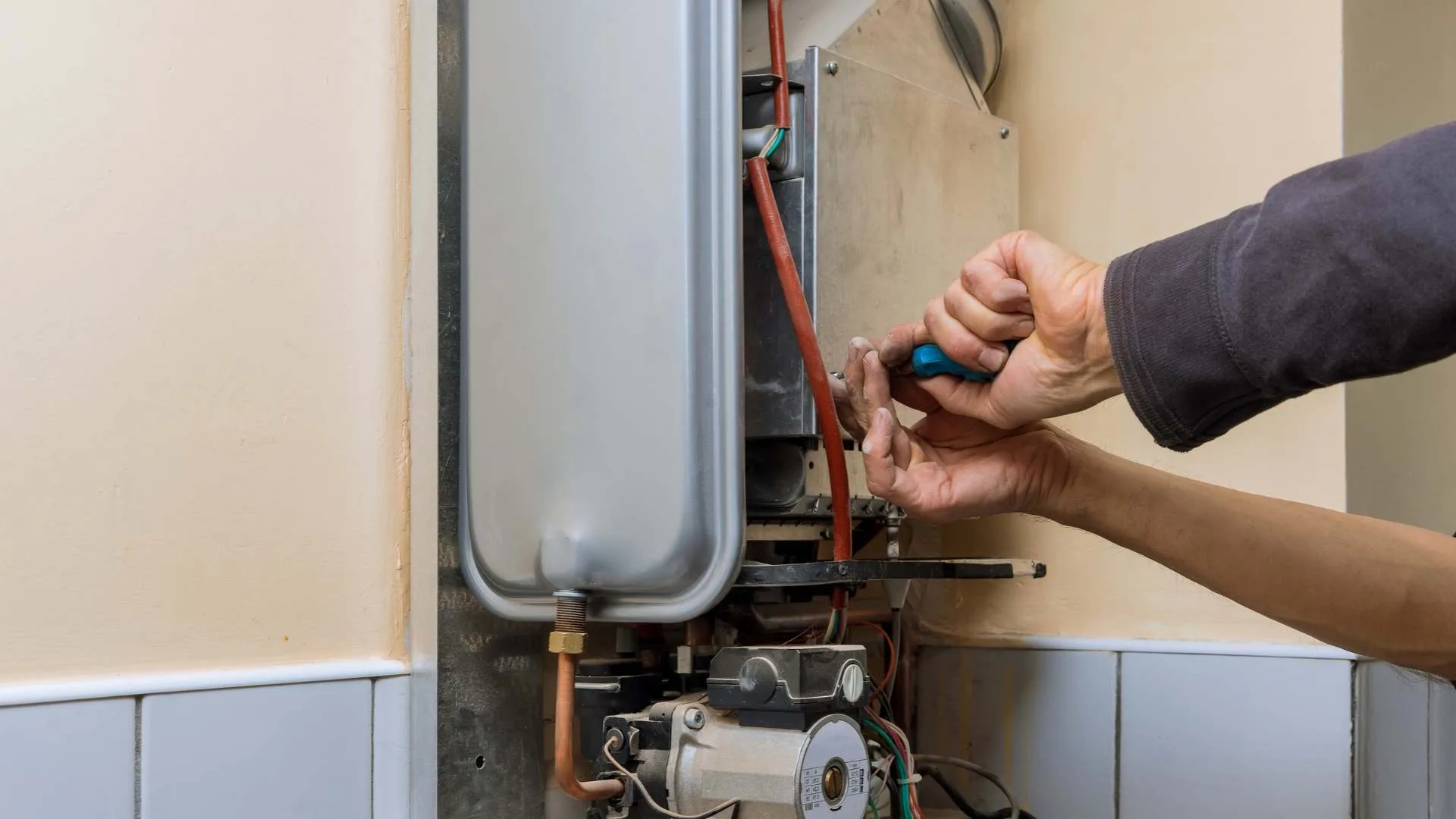
That puddle under the tank showed up on a Tuesday. By Thursday, the basement smelled like a wet dog and the showers were ice cold. Most water heater failures don’t happen overnight. They telegraph themselves for weeks, and the homeowners who catch the signals early spend a fraction of what the ones who wait end up paying.
So here’s the promise: by the end of this piece, you’ll know which noises, smells, and temperature swings actually matter, which ones you can safely ignore for a while, and the five-minute monthly check that keeps a small issue from turning into a flooded utility closet.
The sooner you book water heater repair, the cheaper the fix usually is. A failed heating element is a small job. A rusted-out tank that lets go at 2 a.m. is a new floor, a new unit, and a very long night.
What your water heater is trying to tell you
Water heaters are dramatic. They don’t suffer quietly. If you know the language, you can usually predict a failure weeks ahead of time. Here’s what each symptom means, roughly in order of how much sleep you should lose over it.
- Rumbling or popping. Sediment has settled on the bottom of the tank and the burner is boiling water underneath it. Annoying, but fixable with a flush.
- Rusty or metallic water. Either the anode rod is spent or the tank lining has started to corrode. The first is a cheap part. The second means the unit is living on borrowed time.
- A sulfur or rotten-egg smell. Usually a reaction between the anode rod and bacteria in the water supply. Foul, but rarely dangerous.
- Water pooling at the base. This is the one to take seriously. A leak from a fitting can be repaired. A leak from the tank itself cannot.
- Hot water that quits after a few minutes. Typically a failed lower heating element or a dip tube that’s broken off.
My honest take: rusty water plus a tank older than a decade is the combination I’d stop negotiating with. You can chase it with a flush and a new anode rod, and sometimes that buys you a couple more years. But once the steel itself is compromised, you’re just waiting for a bad day.
Should you repair it or replace it?
This is the question that actually keeps people up at night, and the answer comes down to two numbers: age and the cost of the fix.
| Unit Age | Repair Cost | What I’d Do |
| Under 6 years | Any reasonable amount | Repair it. The unit has plenty of life left. |
| 6 to 10 years | Under a third of a new unit | Repair, but start setting money aside. |
| 6 to 10 years | Half the price of new or more | Replace. You’re paying for time you won’t get back. |
| Over 10 years | Any amount | Replace. Every repair is a gamble at this point. |
Tankless units play by slightly different rules. They last longer, often twice as long as a tank, but they’re also fussier about water quality. Scale buildup inside the heat exchanger is the number one killer, and it shows up as reduced flow or an ignition that keeps cycling on and off.
One universal rule holds for both types: heating water is one of the largest single energy expenses in an average American home. That’s not a sales pitch, it’s baseline data from the Department of Energy. Which means a unit that’s working twice as hard to do the same job is costing you money every single day you put off the decision.
The monthly check that takes five minutes
You don’t need tools for most of this. You need a flashlight and a short memory for what “normal” looks like.
- Look at the floor around the base of the tank. Any moisture, staining, or white mineral crust counts as a finding.
- Open a hot tap and listen. Popping, banging, or a rattle that wasn’t there last month is worth noting.
- Fill a white mug with hot water and hold it against a sheet of paper. If the water tints the mug, you’ve got corrosion somewhere in the system.
- Test the pressure relief valve by lifting the lever and letting it snap back. If nothing comes out, or it keeps dripping afterward, that’s a service call.
- Check the temperature setting. If it’s cranked past 120 degrees to compensate for lukewarm showers, that’s a symptom, not a solution.
Write the date on a sticky note and slap it on the tank. It sounds silly until you’re standing in the basement at year eleven trying to remember when you last thought about any of this.
When the water smells and where it comes from
Water quality gets blamed for a lot of things it didn’t do, but it genuinely does drive how long a heater lasts. Hard water leaves scale. Aggressive water eats anode rods. If your supply comes from a municipal system, the Environmental Protection Agency sets the drinking water standards your utility has to meet, and those standards tell you a lot about what’s flowing into your tank every day.
If you’re on a private well, you’re your own utility. Nobody’s testing your water but you.
Here’s where I’d draw the line on DIY. Flushing a tank and swapping an anode rod are weekend jobs for a confident homeowner with the right wrench. Anything involving the gas valve, the venting, or the electrical elements is not. Gas work especially. A venting mistake doesn’t announce itself with a bang. It quietly puts carbon monoxide in your house, and you won’t smell it.
How to pick who you actually call
A quick, slightly cynical framework for choosing a repair company. I call it the Three Questions test, and it takes about four minutes on the phone.
- Ask what they’ll check before they quote. A real technician tests the thermostat, elements, relief valve, and visible connections first. Anyone quoting a price before seeing the unit is guessing.
- Ask for the license number. Don’t be shy about it. Write it down while you’re on the phone.
- Ask what happens if the repair doesn’t hold. A straight answer here tells you more than a hundred five-star reviews.
You can also run the same test on the company’s website before you dial. Look for a physical address in your area, a service area list that names your town, and a clear statement of what they repair versus replace. Vague sites are vague for a reason.
And if you’re staring at a tank that’s already leaking, shut off the water supply at the top of the unit, kill the power or the gas, and make the call. That’s the whole emergency plan. Everything past that point is somebody else’s job.
Water heaters are one of the few home systems that give you a warning before they quit. A little rumbling, one rusty shower, a damp spot on the concrete. Catch any one of those and you’re looking at a repair bill. Ignore all three and you’re looking at a Saturday you’ll remember for years.
So what’s your tank doing right now? If you can’t answer that without walking downstairs to check, that’s your cue to go look.