Most people who build a home dance studio get the order wrong. They buy the mirror first because it looks the most dramatic, mount it on a bedroom wall, then discover the carpet underneath grabs their shoes and the ceiling is too low for a lift. Three hundred dollars later, theyre back at the hardware store.
Here is the better sequence: figure out what your body needs from the room, fix the surface and the edges, then decorate. Your practice space is a working room before it is a pretty one. If you treat it that way, youll spend less and dance more.
Ive set up two of these rooms in rentals now, and the lessons were identical both times. You dont need square footage as much as you need a level, slightly forgiving surface with a clean border. For anyone putting down a permanent practice zone, durable Marley dance floors solve the hardest part of the job in one purchase, because the surface and the cushion come as a single roll instead of two separate layers you have to line up.
Start With the Questions You Can Answer Before You Buy Anything
What style are you actually practicing? That single question should drive every other decision. Ballet and contemporary work wants a smooth, low-friction surface that lets you turn without sticking. Tap wants a hard, resonant floor and will wreck a soft roll. Hip hop and jazz can handle more grip. If your practice is mixed, you have to compromise, and the compromise should lean toward the style you spend the most hours on.
Then measure the room honestly. Not the wall to the wall. The clear space between the bookshelf and the radiator, minus the swing of a door. A six foot wide mat in a room with three feet of walk-around is a usable studio. A ten foot mat wedged against two walls is a bruise waiting to happen.
Ceiling height is the third thing. You can dance under a low ceiling for years and never notice how much it changed your movement until you get into a real studio. Stand in the room, reach up, and imagine a jump. If your hand touches drywall, your combinations are going to shrink whether you mean them to or not.
The Floor Is the Whole Ballgame
Nothing else in the room comes close in importance. A sprung or padded surface absorbs impact and gives you back a little energy on the rebound, which is why dancers can rehearse for hours in a proper studio and feel wrecked after twenty minutes on concrete. According to OSHA, surface condition and standing stress are a recognized part of workplace ergonomics, and the same logic applies to a room where you spend five evenings a week.
Youve got three realistic options at home. Interlocking foam tiles are cheap, soft, and grippy enough to fight your turns. Theyre fine for kids and for mat work, and I wouldnt put pointe work on them. A vinyl roll laid over a padded underlay gives you a professional feel but doubles your installation work and leaves seams to trip on.
The third option is a pre-cut Marley roll with foam already bonded to the back, which is what most serious home setups land on. It lies flat, it doesnt slide, and you roll it up when you need the room back for guests. The practical advantage is one clean edge instead of four stacked layers creeping apart under your feet after a month.
A quick buying checklist
- Measure your clear floor and subtract two feet from the smallest dimension for safety margins.
- Confirm the color works with the room, since a dark floor in a dark room feels like a basement.
- Ask whether you need tape or a seam kit, because many rolls ship without it.
- Check the return policy before you cut anything. Pre-cut rolls are usually final sale.
- Store the roll upright on its core when its not in use, never folded.
Mirrors, Barres, and the Stuff That Gets Ignored
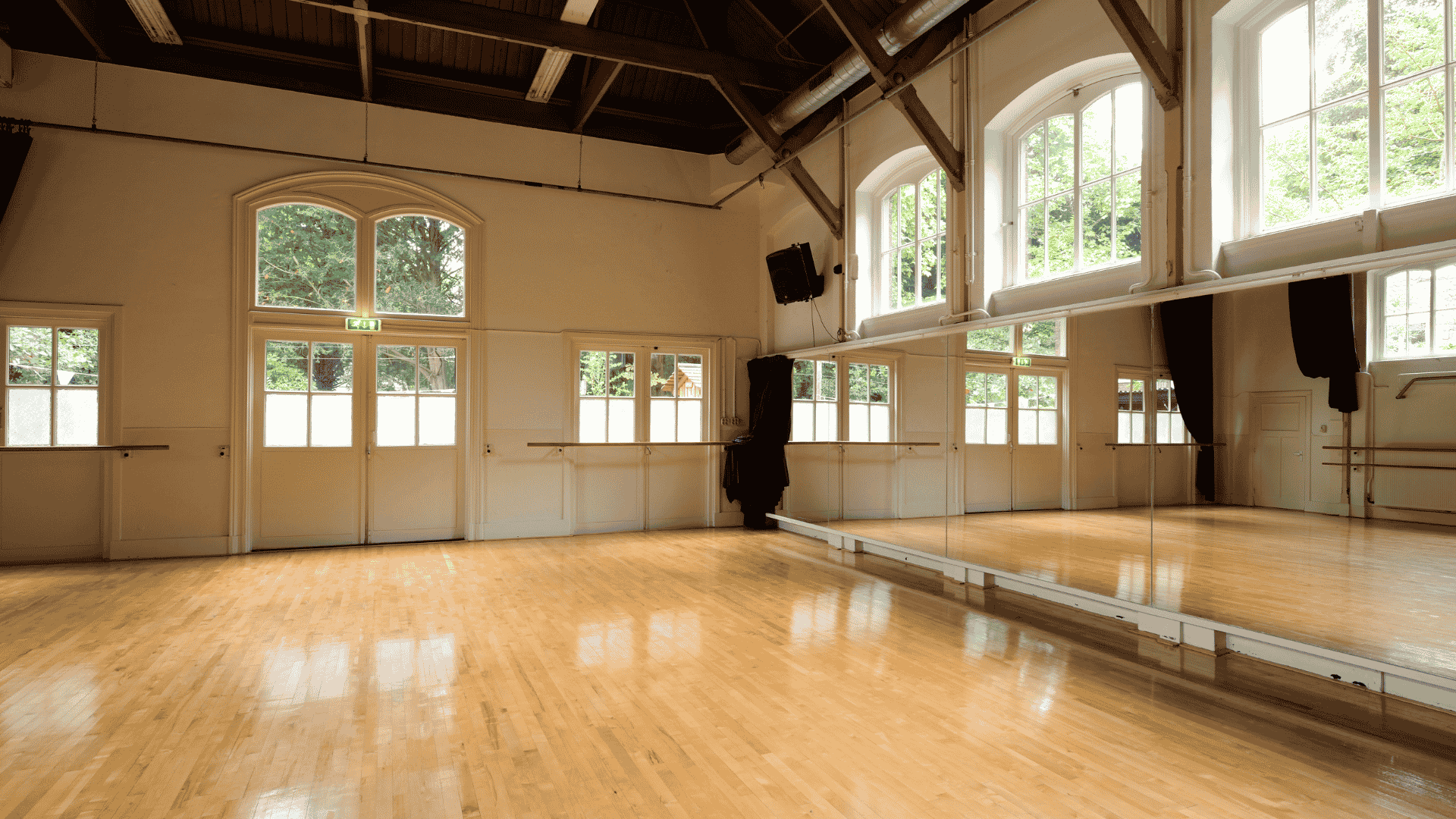
A mirror earns its wall space, but placement matters more than size. You want it on a wall you face during your usual combinations, not behind you, and you want the bottom edge above the floor so a foot doesnt find it. Freestanding leaning mirrors are the simplest rental-friendly answer, and they move when you do. If you do mount one permanently, follow the anchor guidance that any hardware manufacturer publishes and treat a full length mirror as a heavy object, because it is one.
A barre doesnt have to be a barre. A sturdy chair back, a wall-mounted rail at hip height, or a length of pipe fixed to studs all do the job. What matters is that it doesnt wobble when you pull on it, so test it with your full weight before you trust it with a battement.
Clearance rules arent just about your body. The ADA sets out accessible path widths for homes and public spaces, and while your spare room isnt a public building, those numbers are a useful reality check on how much open floor you actually need to move safely. Wide, unobstructed space is a feature, not wasted square footage.
Lighting and Sound, Which Nobody Budgets For
Overhead lighting alone makes a room feel like a conference center, and it throws shadows straight down across your feet. Add a second light source at an angle and the space instantly reads better, both for dancing and for the video youll inevitably record. A floor lamp in the corner with a warm bulb costs less than a mirror and does more for how the room feels at 9pm.
Sound is the sleeper issue. A bare room with hard walls bounces noise, so your speaker has to work harder and the neighbors hear more than you want. A rug in the corner, curtains, and a bookshelf break up the reflections. If youre on a second floor, a thick mat is also a courtesy to whoever lives below you.
One more thing people skip: storage. Where do the shoes go, the resistance bands, the foam roller, the tape? A closed cabinet or a lidded bench keeps the room from becoming a pile of gear you have to step over to reach the barre. NIST publishes reference material on measurement standards that matters more than it sounds when youre ordering flooring by the roll, because a tape measure that reads an inch short will cost you a return you cant make.
The Weekend Plan I Would Actually Follow
Clear the room completely and live with it empty for a day. Youll notice the squeaky board, the outlet you forgot, the window that gets too hot at 4pm. Then measure, order the floor, and leave the mat rolled out flat for a full day before you cut or tape anything. Lay down your shoes and do ten minutes of your usual warm-up. If your turns stick or your landings feel harsh, you learned that before you spent more money.
After the floor settles, mount the mirror, add the second light, then deal with storage last so you buy the right size the first time. Decorate at the very end, with one thing you love looking at, because youll be in that room more than any other guest in your house.
A home studio isnt a smaller version of a professional one. Its a room that has to do two jobs, and the good ones are built around a surface you can trust rather than a wall that photographs well. Get the floor right and everything else gets easier.
So what is your spare room actually telling you right now? Stand in it, look down, and decide whether the surface underneath you is ready for the hours you’re about to put into it.