Thirteen years in a house teaches you things no inspection report covers. One of them is that water almost never fails where you notice it first, and that a homeowner’s gut feeling about plumbing is wrong about half the time.
Here’s the good news: you don’t need a license to figure out whether you’re looking at a twenty-minute fix or a two-day project. You need to know what to look at and what to leave alone. Once you stop treating every symptom as equally urgent, three practical signals separate one from the other.
The first one shows up before you call anyone: how the fixture behaved the last three times you used it. A single stall means something got caught and moved on. A pattern means something is building, and calling Al Terry plumbing services early beats waiting for the water to prove its point at midnight on a Sunday.
What follows is the framework I’ve used to sort real projects from annoyances across my own house, my parents’ place, and a rental that taught me expensive lessons I’d rather you skip.
A slow drain that comes back every few weeks
Everyone owns a plunger. Not everyone reads what the drain is telling them.
If one sink or tub drains slowly but everything else in the house runs fine, the clog is likely local to that fixture. Pull the stopper, clear the hair and soap scum, and watch what happens over the next week. Most of these stay fixed.
What matters more is whether other fixtures join in. A tub draining slowly, a bathroom faucet gurgling, and a laundry sink backing up all point to the same shared branch line, and that’s a different job with a different price tag. You can think of it as a driveway problem versus a street problem. Clearing your own driveway is yard work. A blocked street needs a different crew entirely.
One more signal worth knowing: listen to the floor around the fixtures. If the tile feels warmer or sounds hollow when you tap it, water may already be sitting under it. That’s not a clog. That’s moisture that has been quietly expanding for a while, and it changes the scope fast.
When the water heater is older than your car
Water heaters don’t fail dramatically. They fail politely, and then all at once.
Rusty water from the hot tap, popping noises during heating, and a faint metallic smell tell you the tank lining is wearing through. A puddle under the unit is a stronger signal: it means the tank itself has started to give. Once that begins, replacement is the honest answer, not a repair.
Setting the temperature is a genuinely useful move, and most households never touch it. The Department of Energy notes that water heating is one of the largest energy expenses in a typical American home, which is why dialing the tank down a few degrees pays you back quietly every month while you decide what to replace it with.
Water running where it shouldn’t
Water showing up in places without a fixture is the one situation I’d never ask a homeowner to diagnose alone.
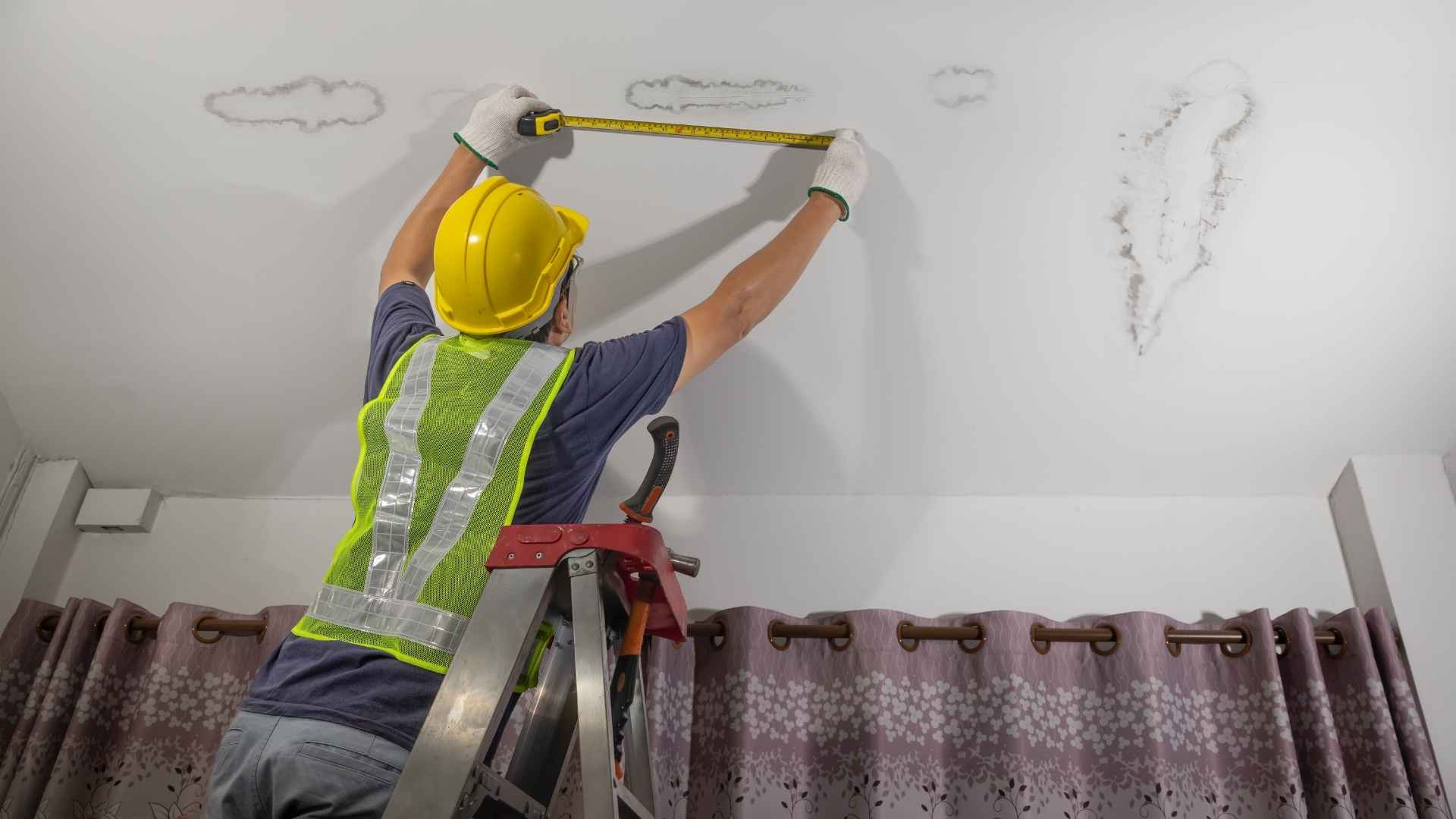
If a cabinet under a sink stays damp after a full dry-out and two days of normal use, you have a slow supply leak or a failing drain gasket. Neither improves with patience. A ceiling stain below a bathroom, a buckled section of floor, or a baseboard that has started to swell all point to water traveling away from its source, which is why guessing at the location wastes the most time and money.
Here’s where homeowners lose the most. They test by tightening things. Shutoff valves under sinks and toilets are often a decade past useful, and turning one that hasn’t moved can turn a small drip into a full spray across a bathroom in seconds. If you want to check a connection, put a dry paper towel under it and leave it for a day. That tells you more and risks less.
Mold is a fair warning sign too, though not the one people expect. Indoor mold needs moisture, and the EPA points to water intrusion and high indoor humidity as the leading indoor causes, so growth along a baseboard is really a plumbing message delivered by your building.
The two-minute self check
Run through these before you call anyone, and you’ll describe the problem accurately, which shortens the visit and the bill.
- Write down which fixtures act up, and in what order.
- Time how long a sink takes to drain the same volume it usually handles.
- Dry every cabinet under every sink, then check with your hand after a day.
- Note the last time the water heater was replaced, even if it’s a rough guess.
- Photograph any stain, bubble, or discoloration before it spreads further.
- Leave shutoff valves alone if they’re stiff or crusted. Wait for a professional.
That list takes less time than brewing coffee, and it gives a plumber the three facts that actually matter: scope, spread, and duration. You’ll get a faster, more accurate answer, and you’ll spend less time on the phone describing symptoms in circles.
One habit I’d suggest keeping: write the date and what you did on a piece of tape inside the cabinet door. Future you will forget, and a two-line note is worth more than any warranty folder.
The parts you shouldn’t touch
Appliances are replaceable. Supply lines and gas connections aren’t forgiving.
Anything behind a wall, under a slab, or connected to a gas line belongs to a licensed professional. So does anything involving the main shutoff, especially if the valve hasn’t budged in years. I’ll take a cautious route here every time. Saving a service call by opening a wall yourself usually costs more once the ceiling below it is wet.
A repair that stays fixed is the only repair worth counting. If you find yourself fixing the same fixture twice in a season, you’re not repairing anymore. You’re paying rent on a problem that keeps getting pricier.
What to do next
Sort your issue into one of three buckets. A single fixture that acted up once goes on your watch list. A repeating pattern or a second fixture joining in gets a call this week. Water where it doesn’t belong gets a call today.
Those three buckets cover most of what homeowners face, and they’ll keep you from overpaying for small problems or underreacting to the ones that turn a floor into a project. Your house gives you signals constantly. The trick is knowing which ones to answer.
What’s the last plumbing issue you let slide longer than you should have, and what finally pushed you to call?