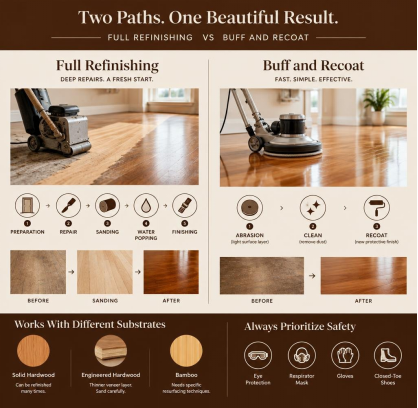
Restoration is not a one-size-fits-all process. The ideal approach depends entirely on the depth of the damage and the composition of your flooring. When we look at modern restoration, we primarily categorize methods into two camps: abrasive restoration (sanding) and surface renewal (chemical or mechanical recoating).
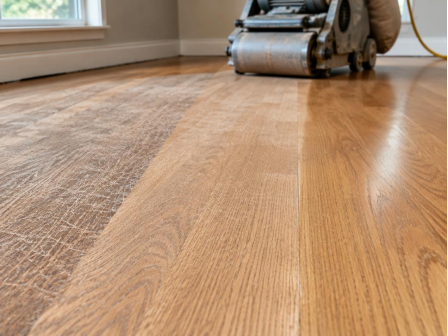
For floors with deep scratches, gouges, or uneven surfaces, dustless sanding remains the gold standard. This process removes the old, damaged finish and a thin layer of the wood itself, effectively providing a “blank canvas” for a new stain and protective topcoat. Modern professional equipment utilizes high-powered vacuums attached directly to the sanders, capturing the vast majority of dust before it settles in your home.
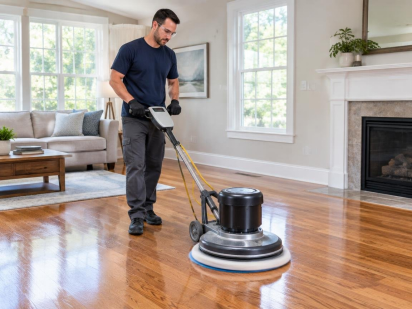
Alternatively, for floors that are structurally sound but simply dull or scuffed, buff and recoat (often called screen and recoat) is highly effective. This method involves abrading only the very top layer of the existing finish to create “teeth” for a new coat of polyurethane to bond to. It is significantly faster and less invasive than full sanding. If you are uncertain which path is right for your specific floor type, reviewing a detailed Supreme Flooring restoration analysis can help you align your expectations with the current state of your wood.
Step-by-Step Sanding and Refinishing for Supreme Flooring Restoration
Full refinishing is a labor-intensive but rewarding project. Before you begin, clear the room entirely—including window treatments and wall decor—and seal off adjacent rooms with plastic sheeting to contain any stray dust.
Non-Sanding Refinishing and Resurfacing Alternatives
If your floors haven’t reached the point of requiring major wood removal, you might consider floor revitalizers or chemical abrasion. These products are designed for prefinished floors or surfaces where the protective layer has worn thin but the wood underneath remains pristine.
To determine if your floor is a candidate for these non-sanding methods, perform a simple test: rub a small, hidden area with mineral spirits. If the floor becomes cloudy or tacky, it likely contains wax or oil residues that will prevent new finishes from adhering. In such cases, a professional cleaning or a full buffing is required.
Substrate Considerations for Supreme Flooring Restoration
Not all floors are created equal. Solid hardwood is the ideal candidate for repeated sanding, as it can be refinished up to 10 times in its lifespan. Conversely, engineered hardwood possesses a much thinner veneer layer; if you sand too deeply, you risk exposing the plywood core, which cannot be repaired. Bamboo, while durable, often requires specific resurfacing techniques rather than traditional sanding to avoid damaging its unique fiber structure.
Regardless of the material, safety is paramount. Always equip yourself with the proper PPE:
Economics, Long-Term Care, and Project Feasibility
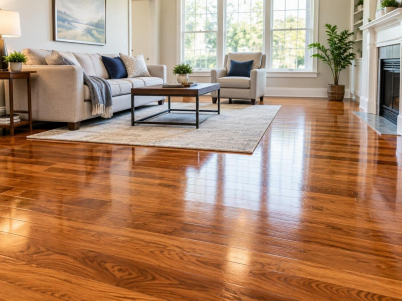
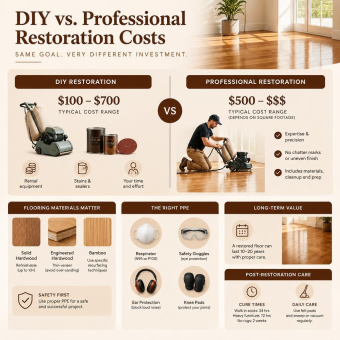
When assessing the feasibility of a restoration project, we must look beyond the immediate aesthetic improvement. A properly restored wood floor can last another 10 to 20 years with consistent maintenance.
Cost Breakdown: Professional vs. DIY Flooring Restoration
The financial gap between DIY and professional services is substantial. DIY restoration typically incurs costs between $100 and $700, depending on the rental cost of professional-grade sanders and the price of high-quality stains and sealers. However, professional services—which can range from $500 to several thousand pounds or dollars depending on the square footage—include the expertise needed to avoid “chatter marks” (sander vibration lines) and uneven stain application.
In regions like New Jersey, where labor costs and material availability vary, professional services are often preferred for larger homes. While a DIY approach offers significant upfront savings, the cost of “error remediation”—fixing a botched sanding job—can often exceed the initial price of hiring a professional.
Post-Restoration Maintenance and Replacement Guidelines
Once your floors are restored, the goal is to protect your investment.
When to Replace Instead of Restore: There are instances where restoration is no longer practical. If you notice structural rot, deep water damage that has caused the boards to buckle and warp permanently, or if the floor has been sanded so many times that the tongue-and-groove connection is compromised, replacement is the only safe path forward. If you are unsure about the structural integrity of your boards, consulting with a professional can help you determine if your floor has reached its end of life or if it still has a few more decades of beauty left to offer.