Key Takeaways
- You can successfully grow these vibrant plants outdoors year-round in USDA Zones 9 through 11.
- Balancing sunlight exposure is necessary to maintain their brilliant leaf colors without causing sunburn.
- Proper soil drainage and consistent watering schedules are the foundation of a healthy tropical garden.
- Choosing the right cultivars lets you design a landscape with diverse textures, heights, and color palettes.
Many gardeners first meet crotons as striking potted houseplants that brighten indoor spaces during colder months. If you live in a warmer region, you have the unique opportunity to bring these tropical beauties directly into your garden beds. Adding these shrubs to your yard brings intense bursts of red, orange, and yellow to your outdoor space. Growing crotons in your landscape is entirely possible, provided you understand their specific environmental needs and seasonal preferences.
Understanding the Ideal Climate for Outdoor Crotons
The scientific name for these vibrant plants is Codiaeum variegatum, and they originate from the warm, humid environments of Southeast Asia and the Pacific Islands. Because of their tropical origins, they require a frost-free environment to thrive as permanent outdoor fixtures. Southern and coastal homeowners located in USDA Zones 9 through 11 can safely incorporate them into their year-round landscape designs. In these zones, the mild winters prevent the deep freezes that would otherwise damage the tender foliage.
If you live farther north, you can still enjoy these plants outside during spring and summer. Many northern gardeners plant them in large patio containers that can be easily moved indoors when the first frost approaches. Your local microclimate will determine whether you treat these shrubs as permanent hedges or seasonal accents.
Choosing the Best Croton Varieties for Your Landscape
Selecting the right plants for your yard means looking beyond leaf color. Different Croton varieties offer distinct leaf shapes, growth habits, and mature sizes. Some types grow into large, dense shrubs perfect for privacy screens, while others remain compact and work beautifully as border plants.
When planning your landscape, consider mixing and matching these popular options:
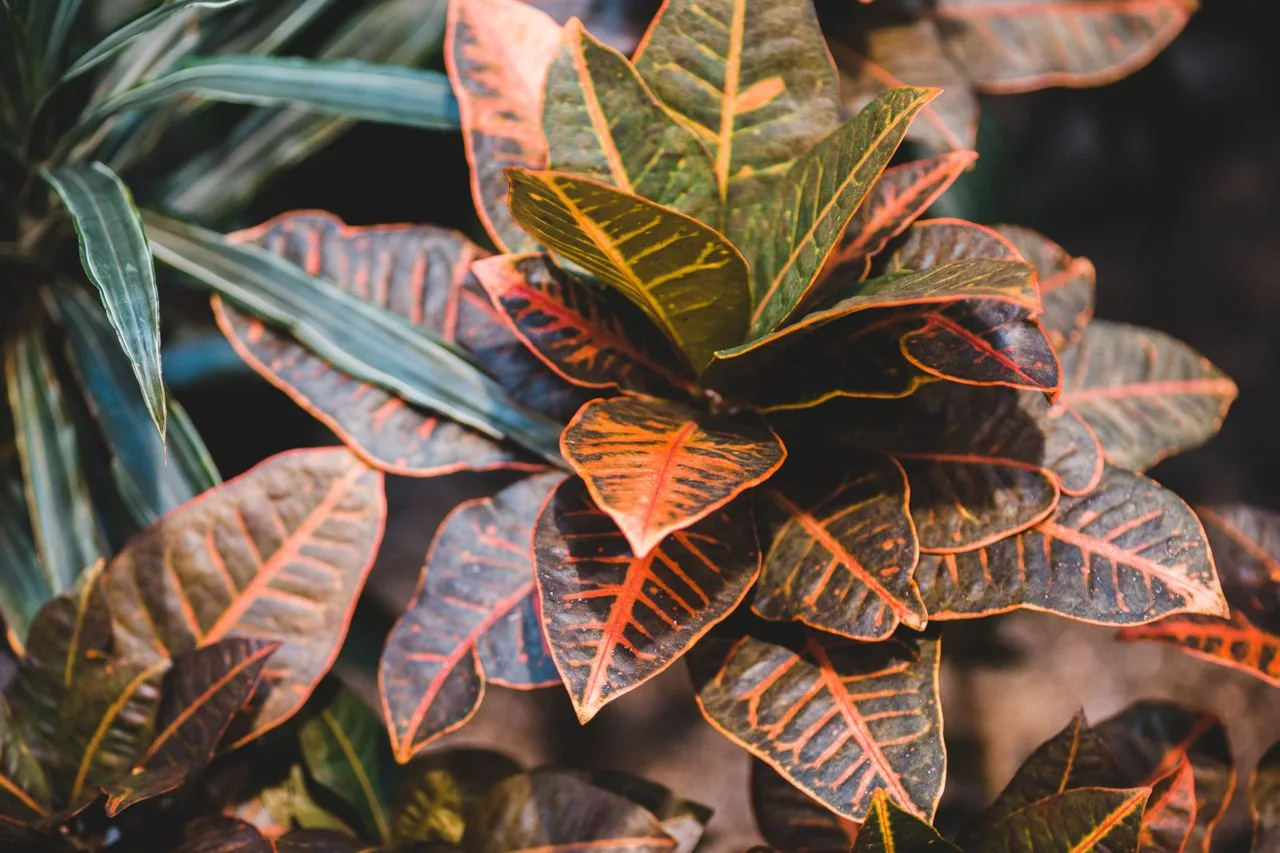
- Petra: Known for its broad, shield-like leaves featuring striking veins of yellow, red, and orange.
- Mammy: Features distinctive twisting, corkscrew foliage that stays relatively compact, making it ideal for foreground planting.
- Gold Dust: Displays narrow green leaves heavily speckled with bright yellow spots, bringing a lighter texture to garden beds.
- Zanzibar: Offers very thin, elongated leaves in grassy shades of red and gold, providing excellent contrast against broad-leafed tropicals.
You can mix several cultivars to build visual depth in your garden. Taller, broader plants work well as a backdrop, while the smaller, highly textured types can be layered in front.
How to Plant and Care for Landscape Crotons
Finding the perfect location in your yard is the first step to successful cultivation. These shrubs require plenty of bright light to produce their signature vivid colors. However, depending on the intensity of your local afternoon sun, they may benefit from dappled shade during the hottest parts of the day to prevent leaf scorch. Morning sun paired with filtered afternoon light generally yields the best results.
Soil preparation requires just as much attention as sunlight exposure. These tropical plants despise sitting in waterlogged earth, which can quickly lead to root rot.
Follow these soil and watering guidelines for healthy growth:
- Amend your native soil with plenty of organic matter, such as compost or peat moss, to improve drainage and nutrient content.
- Plant your shrubs on slightly elevated mounds if your yard tends to hold standing water after heavy rains.
- Water deeply and thoroughly right after planting to help the root system establish itself in the new environment.
- Maintain a consistent watering schedule, allowing the top inch or two of soil to dry out completely before watering again.
Applying a two-inch layer of organic mulch around the base of the plants will help retain soil moisture and regulate ground temperature. Be sure to keep the mulch a few inches away from the main stems to prevent moisture from trapping against the wood.
Maintaining and Pruning Your Tropical Shrubs
Once established, these plants require minimal daily maintenance, but a bit of seasonal care will keep them looking their best. Feeding them with a slow-release, granular fertilizer formulated for acid-loving plants encourages vigorous growth and bright foliage. Apply the fertilizer in early spring and again in mid-summer, following the package directions for application rates.
Pruning helps maintain the desired shape and encourages bushier, denser growth. Prune in early spring, before the active growing season begins. You can trim back any leggy branches or stems that have lost their lower leaves. Always use sharp, sterilized pruning shears to make clean cuts, and wear gardening gloves, as the milky sap can irritate some people’s skin.
If your region experiences an unexpected cold snap, you will need to act quickly to protect your landscape. Even in Zones 9 and 10, unusual winter weather can cause sudden leaf drop. Keep breathable frost blankets on hand to cover your shrubs when nighttime temperatures are forecasted to drop below 40 degrees Fahrenheit.
Designing a landscape with these vibrant shrubs brings an undeniable tropical energy to your property. By paying attention to sunlight, soil drainage, and occasional temperature drops, you can easily maintain a stunning, colorful yard. With the right care and placement, crotons will reward you with spectacular, eye-catching foliage month after month, transforming an ordinary garden into a vivid tropical retreat.