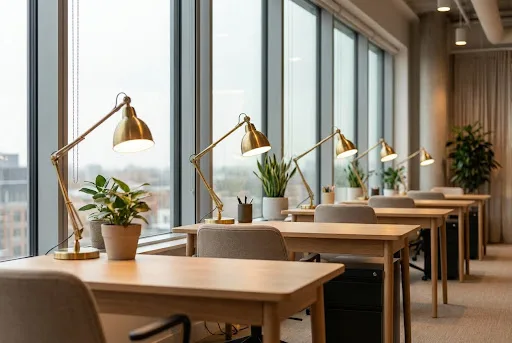
The four most effective lazy office upgrades to fix your focus are implementing acoustic zoning, installing flexible partitions, optimizing task lighting, and creating dedicated quiet areas. These improvements instantly reduce ambient noise and visual distractions in open spaces.
While exposed brick and open floor plans flood workspaces with natural light, they create an acoustically hostile environment where conversations travel unchecked. By applying these strategic office layout improvements, organizations can measurably protect cognitive output without requiring a renovation budget or construction crew.
1. Embrace Acoustic Zoning for Smarter Space Flow
Most offices do not have a noise problem, but rather a planning problem. When every area of a floor plan operates at the same ambient energy level, the result is a uniform wash of sound. This constant background noise makes sustained focus nearly impossible for everyone at the same time.
Open plan offices have the advantage of maximising space, but background noise levels may exceed the recommended maximum of 45 decibels. Acoustic zoning solves this by assigning intentional noise personalities to different parts of the office. High-energy collaboration happens in one area, while quiet, heads-down focus is reserved for another.
Physical cues like furniture placement, soft surfaces, and visual dividers naturally reinforce those expectations. In practice, this means clustering communal amenities toward the center of a floor plan where activity naturally concentrates.
The transition between zones can be marked using upholstered bookshelves, felt-wrapped acoustic panels, or low planter arrangements. For environments that require immediate isolation within a bustling zone, integrating modular enclosures like PrivacyPod’s sound-insulated office phone booths alongside traditional quiet rooms establishes a distraction-free environment.
These types of functional additions absorb ambient sound while contributing visual structure to the space. Research consistently links ambient noise above 65 decibels to measurable drops in task accuracy and working memory. Separating noise-generating activities from focus-dependent ones directly protects cognitive output.
Start small by identifying the two loudest and two quietest existing areas. You can then strategically reorganize the layout outward from those established points.
| Key Insight: Research indicates ambient noise above 65 decibels significantly impairs task accuracy and memory. Prioritizing acoustic zoning isn’t just about comfort; it is a critical strategy for protecting your team’s cognitive output. |
2. Swap Fixed Walls for Flexible Partitions
There is a persistent assumption in workspace planning that privacy requires permanence. Many believe that separation means drywall, permits, contractors, and months of disruption. That assumption is increasingly outdated in modern architecture. Flexible partition systems have matured significantly to offer better alternatives.
These systems combine genuine acoustic performance with design versatility that fixed construction simply cannot match. Sliding or folding glass partitions create enclosed meeting areas that open entirely for all-hands events.
Freestanding acoustic screens define individual focus corridors during peak hours and fold away when the office needs to breathe. Modular shelving units double as spatial dividers while providing much-needed storage.
Planter-based dividers bring a layer of biophilic design into the acoustic equation using greenery, texture, and natural materials. The strategic advantage extends well beyond simple aesthetics. Flexible partitions represent a fundamentally hybrid-ready approach to modern space planning.
As headcounts shift and work patterns evolve, a partition system that can be reconfigured quickly outperforms a fixed wall every time. There are no stranded assets, no retrofitting costs, and no construction downtime. This plug-and-play philosophy is one of the most practical modern office design ideas available today.
3. Optimize Lighting for Cognitive Performance
Lighting is one of the most underestimated workplace productivity tips available, and arguably the most accessible. Improving it does not require a large budget, but it simply requires thoughtful intentionality.
The cognitive relationship between lighting quality and sustained concentration is incredibly well established. Harsh overhead fluorescents create visual fatigue, elevate perceived stress, and reduce the capacity for extended focus.
Natural light improves alertness, stabilizes mood, and supports longer, higher-quality work sessions. Office lighting should range between 20 and 50 foot-candles to properly support paper tasks and monitor usage.
Providing supplemental task lighting for individual workstations allows employees to remain in a focused state for meaningful periods. This avoids the severe eye strain typically produced by overhead-only environments. Practical lighting interventions are straightforward and highly effective. Reposition workstations to take advantage of existing natural light sources while eliminating direct screen glare.
Layer ambient, task, and accent lighting across different zones of the office rather than relying on a single overhead solution. Use warmer color temperatures in focus areas and cooler, higher intensity lighting near collaborative zones.
Responsiveness matters greatly when planning your office environment. Static lighting environments waste energy and fail to adapt to how spaces are actually used throughout the day. Motion-sensing LED systems solve both efficiency and experience problems simultaneously by dimming when areas are empty.
They make a space feel considered rather than institutional, reinforcing the principle that focus-oriented areas deserve high environmental quality.
| Important: Don’t rely solely on overhead fluorescent lighting. These fixtures increase visual fatigue and stress levels, making long-term focus impossible. Always layer tasks and natural lighting to sustain high-quality mental performance throughout the workday. |
4. Create Dedicated Quiet Areas for Focus
Every genuine workplace design conversation eventually arrives at the need for at least one dedicated quiet space. Open plan offices have often traded quiet rooms for square footage to save costs.
The productivity cost is paid daily when employees step outside to take confidential calls or push deep focus work to early mornings. Establishing a space where noise simply does not follow you is critical for daily performance.
There is a spectrum of approaches to creating dedicated quiet areas. A designated no-talking corner with clear visual cues communicates norms without enclosing the space. A soft seating alcove with acoustic panels overhead creates a semi-private retreat for reading or solo work.
Utilizing a different floor material or a change in lighting temperature can also subconsciously signal a quiet zone. For offices requiring genuine speech privacy for confidential calls or medically private needs, partial measures often fall short. This is where purpose-built acoustic enclosures represent a meaningfully different category of solution.
High-quality modular units are typically certified to deliver enough noise reduction to bring a loud open office down to whisper-quiet levels. Because they arrive ready to use and require no modifications to the building, deployment takes only days.
When evaluating these solutions, facilities managers should look for compliant footprints and exceptional ventilation systems. Prioritizing units constructed with recycled materials and formaldehyde-free panels ensures the acoustic upgrade aligns with corporate sustainability commitments.
A well-chosen acoustic enclosure does not just perform functionally for the team. It serves as a deliberate visual statement that an organization takes focus seriously.
The Bottom Line
Great office design balances aesthetic ambition with functional intelligence to create spaces that look as good as they perform. These four upgrades are not a massive renovation plan.
They are deliberate, design-forward decisions that compound into a dramatically better daily work experience. By implementing these modern office design ideas, organizations can visibly reduce distraction and improve cognitive performance.
These additions signal to employees that their focus is highly valued and worth protecting. The offices that will define the next decade of work are built around intelligent office layout improvements. They serve both the brand and the people by treating essential workplace productivity tips as structural commitments. Start with one functional upgrade, and the resulting mental clarity will speak for itself.
| Author Profile: PrivacyPod is the leading manufacturer of soundproof office pods and meeting booths for businesses seeking flexible, sustainable workspace solutions. |