The five hidden ways to save home value are correcting foundation drainage, leveling uneven yard grading, clearing overgrown landscaping edges, repairing driveway cracks, and managing soil erosion. While interior upgrades often get more attention, these exterior maintenance tasks protect your property’s underlying structural integrity and long-term equity.
Addressing these quiet outdoor issues early prevents costly compounding damage to foundations, hardscaping, and siding. Great homes aren’t built on style alone. The properties that hold their value decade after decade share something less glamorous in common, which is intentional outdoor maintenance.
Outdoor wear and tear tends to be quiet, accumulating in low spots in the lawn or widening gaps along the driveway. By the time it is visible enough to demand attention, the repair bill has already grown far beyond what early intervention would have cost.
1. Fix Drainage Before It Fixes You
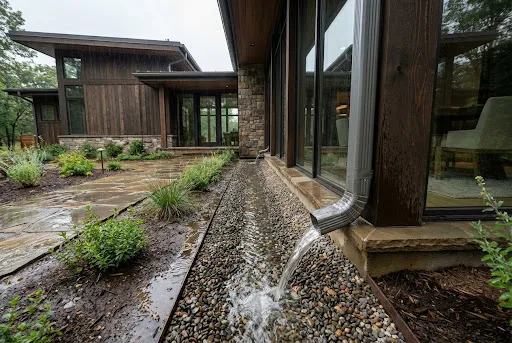
Poor drainage is one of the quietest and most destructive forces working against your home’s foundation. When water has nowhere to go after a heavy rain, it pools against your foundation and saturates the soil. This forces water into the basement walls, causing significant structural issues over time.
The result can be foundation softening and persistent moisture intrusion. In fact, radon, a cancer-causing gas that forms naturally in rocks or soil, can contaminate indoor environments through cracks in a home’s foundation caused by this water damage.
Self-diagnosing the problem is straightforward if you step outside after a rainstorm. Observe where the water pools and flows to identify any issues. Practical steps to correct it:
- Confirm that all downspouts direct water at least six feet from the foundation.
- Clear any debris from gutters and downspout extensions.
- Consider installing a French drain in persistently wet zones.
- Address any low spots near the foundation with fill dirt.
Fixing drainage early is almost always cheaper than repairing the foundation damage it causes. A few hours of yard observation and a load of fill dirt cost a fraction of what foundation remediation runs.
| Important: Standing water near your foundation isn’t just a yard nuisance; it’s a structural threat. Ignoring drainage issues often leads to basement leaks and costly foundation cracks that can significantly decrease your home’s resale value. |
2. Level the Playing Field Now
Yard grading is one of the most underestimated outdoor home maintenance tasks on this list. Grading refers to the intentional slope of the ground surrounding your home. When that slope tilts toward the house, every rainstorm sends water directly at your foundation.
The effects of neglected grading compound over time, causing landscaping beds to erode. Sunken pavers crack from shifting soil, and patios develop severe drainage problems. A properly graded yard naturally channels water away before it can cause structural harm.
Yard grading tips you can act on:
- Walk the perimeter and look for ground sloping toward the foundation.
- Aim for a drop of at least 6 inches over the first 10 feet.
- Use compactable fill dirt and a hand tamper for minor corrections.
- Hire professionals with heavy equipment for larger slope issues.
For larger properties, land leveling relies on backhoes and excavation equipment to do the work accurately. When machinery isn’t performing well, precision suffers, and project timelines stretch significantly.
Whether using local dealers or online suppliers like HW Part Store’s Case aftermarket backhoe parts, maintaining hydraulic integrity is crucial. Quality replacement components ensure machines handle the complex grading work that residential properties demand.
| Key Insight: Professional-grade results require high-functioning machinery. If you are hiring out or renting equipment for major leveling, ensure the hydraulics are well-maintained to guarantee the precision needed for a proper 6-inch slope. |
3. Clear Overgrown Edges Before They Damage
Overgrown edges might look like a minor landscaping upkeep issue between busy seasons. However, the damage they cause is structural rather than just cosmetic. When grass or root systems creep against siding and foundation walls, they trap moisture. Materials deteriorate rapidly when kept continually wet.
Wood siding rots, fence posts soften, and paver edges lift as roots push beneath them. Beyond moisture damage, dense vegetation creates ideal harborage for insects and destructive rodents. These pests cause problems far more expensive than a simple trimming session.
How to stay ahead of it:
- Trim edge lines along driveways and walkways twice per season.
- Remove any vegetation touching siding or foundation walls.
- Create a gravel or mulch buffer zone between planting beds and structures.
This maintenance task doubles as a significant curb appeal upgrade. Clean, defined edges read as intentional and well-maintained to potential buyers. This makes a measurable, positive impression during real estate showings and property appraisals.
4. Repair Driveways and Surfaces Early
Driveway maintenance is easy to postpone until it becomes genuinely expensive. A small crack rarely stays small, as water enters, freezes, and expands during winter. Tree roots find the path of least resistance and push upward through these openings. What was a hairline fracture in spring becomes a crumbled edge by next year.
Neglected driveways create trip hazards that become serious liability and appraisal concerns. During extreme temperature shifts, driveways, patios, and sidewalks can heave and crack. While it is less of a problem for dwellings and buildings that have footings extending below the depth of frost penetration, soil heaving damages surface-level pavements easily.
Keeping hardscape in repair:
- Inspect driveways annually in early spring after freeze-thaw cycles.
- Fill any crack wider than a quarter inch promptly.
- Reseal the full surface every two to three years.
- Address tree roots directly rather than repeatedly patching the surface.
The cost comparison for this task is incredibly striking. A tube of crack filler runs just a few dollars at the hardware store. Meanwhile, a full driveway replacement runs several thousand dollars, favoring early intervention.
| Pro Tip: Don’t wait for spring to end before checking your driveway. Early intervention with a few dollars’ worth of filler prevents water from entering cracks and expanding during freeze-thaw cycles, saving you thousands. |
5. Stop Soil Erosion Right Away
Soil erosion is the gradual loss of topsoil through rain runoff and surface water channels. It is far more damaging to a property than most homeowners recognize until significant loss occurs. Once topsoil erodes from slopes, plants lose the nutrient-rich soil their roots depend on. Hardscaping elements also lose the stable, compacted base beneath them.
What begins as an erosion problem eventually loops back to drainage and grading issues. Eroded yards develop new low spots that redirect water toward residential structures. This restarts the cycle of property damage if left completely unaddressed.
Practical erosion control strategies:
- Plant ground cover on any slope steeper than a gradual grade.
- Use retaining walls or terracing on severely steep slopes.
- Apply fresh mulch over bare soil before the rainy season.
- Monitor the lawn for small channels forming in the turf.
Consistent landscaping upkeep prevents severe erosion and compounds over time. This builds a healthier, more stable yard that requires less seasonal intervention. Ultimately, managing soil loss protects your broader outdoor property investments.
The Bottom Line
These five tasks share a common characteristic; they remain mostly invisible until they cause severe issues. By the time the damage is visible, the cost of correction has already multiplied. Drainage correction, yard grading, cleared edges, sealed driveways, and soil erosion management require steady attention. They are among the most financially significant items on a home maintenance checklist.
Proactive outdoor home maintenance protects far more than just surface-level curb appeal. It protects the structural systems your home depends on and the long-term equity you want to preserve. The homeowner who consistently addresses these tasks maintains a much smarter, safer property.
| Author Profile: HW Part Store is the leading online retailer of aftermarket hydraulic cylinder seal kits, replacement parts, and attachments for a wide range of industrial construction equipment. |