You were told to change it every three months, and you believed it. Then your energy bill jumped, your allergies flared up, and the furnace started making a sound like a dying lawnmower. Truth is, the three month rule is a rough average, not a law. Your home, your pets, and your local air quality all shift that number wildly. So let’s figure out your actual date, not some generic calendar reminder.
This guide walks you through the real factors that decide filter lifespan, gives you a simple scheduling system, and shows you the exact steps to swap one out without calling for help. You’ll know by the end how to keep your air clean and your system happy, without overthinking it.
Why Filter Changes Matter More Than You Think
Your air filter does two jobs. It keeps dust, pollen, and pet dander out of your lungs, and it keeps that same gunk off your HVAC equipment. When the filter clogs, airflow drops. Your system keeps running, but it works harder, cycles longer, and wears out faster.
The math gets ugly pretty quickly. A dirty filter makes your furnace or AC run longer to reach the same temperature, which means higher energy use every single month it stays clogged. The Department of Energy notes in its air conditioner maintenance guidance that keeping filters clean can prevent expensive repairs and early system failure. That’s not marketing talk, that’s an equipment preservation strategy.
Here’s the part most people miss. The filter is the cheapest component in your entire HVAC system. A three dollar filter protects a five thousand dollar furnace. Skimping on it is like refusing to change your car’s oil and then being shocked when the engine seizes.
Three Months Is a Myth for Most Homes
The blanket “change it quarterly” advice assumes you have no pets, no allergies, no smokers, and you live somewhere with gentle seasons. That describes roughly nobody I know.
Consider a home with two dogs and a cat. Pet hair and dander accumulate fast, and that filter is going to look rough well before day ninety. Now add summer wildfire smoke or spring pollen, and you’ve got a filter fighting a war on two fronts.
Meanwhile, a single person in a small apartment with no pets and windows that rarely open might genuinely stretch a filter to six months. The equipment doesn’t care about a calendar date. It cares about pressure drop across the filter media.
My stance is simple: start at 30 to 60 days, watch what the filter looks like at that point, and adjust. A visual check beats any generic schedule. If the filter is gray with dust and you can’t see light through the pleats, you waited too long.
What Your Filter’s MERV Rating Actually Tells You
That number on the filter’s cardboard frame isn’t a performance score for your ego. MERV, or Minimum Efficiency Reporting Value, ranks how well a filter traps particles from 1 to 16. Higher numbers catch smaller stuff, but they also choke airflow faster.
The Environmental Protection Agency’s guide to MERV ratings explains that higher rated filters trap more particles, which can reduce airflow if your system wasn’t designed for them. That’s a real tradeoff. A MERV 13 filter in an older furnace could actually shorten the system’s life because the blower becomes starved for air.
Most residential systems run fine with MERV 8 to 11. That range catches pollen, dust mites, and mold spores while still letting air flow freely. Unless your HVAC contractor specifically told you the system can handle MERV 13 or higher, stick with the lower range.
And here’s the counterintuitive bit. A cheap filter changed monthly does more for your air quality than an expensive filter changed twice a year. Filtration is cumulative. A clean filter always beats a fancy dirty one.
Signs Your Filter Is Already Begging for a Swap
You don’t need to wait for a scheduled date if your system is talking to you. Four signs tell you it’s time now:
- Your energy bill climbs for no obvious reason. The blower works harder to push air through a clog, and that cost shows up on the statement.
- Dust settles on furniture within a day of cleaning. The filter isn’t catching particles anymore, so they just recirculate.
- You hear whistling or straining from the return vent. That’s air forcing its way around a blocked filter.
- Your allergies get worse indoors. Your home’s air is dirtier than it should be, and the filter is the first line of defense that failed.
One more texture detail. If the filter feels heavy when you pull it out, that’s a sign it’s saturated with moisture and dust. A healthy filter should feel light. A soggy, dense filter has been capturing everything, and it’s done its job past its limit.
Building a Filter Schedule That Fits Your Life
Stop setting a calendar reminder that means nothing. Instead, attach filter changes to routines you already have. That’s the only way it actually gets done.
Here’s the system I recommend. If you have pets or allergies, change the filter every time you switch between heating and cooling seasons, plus once in the middle of each season. That works out to four or five changes a year, and it’s easy to remember because it’s tied to the thermostat changes on your wall.
For homes without pets and with good indoor air quality, twice a year is a solid baseline. Do one change when you turn the heat on in fall, another when you fire up the AC in spring. Write the date on the filter’s cardboard edge with a marker when you install it. Future you will be grateful.
Buy filters in bulk. A pack of six MERV 8 filters costs about the same as three individually, and you’ll never face the “I should change it but I don’t have one” problem. Keep the pack in the garage or laundry room, right next to where the filter lives.
How to Swap a Filter Without Making a Mess
The actual replacement takes ninety seconds once you know where things are. Turn off the system at the thermostat first. That protects you and the equipment, and it keeps the blower from sucking air while you’re working.
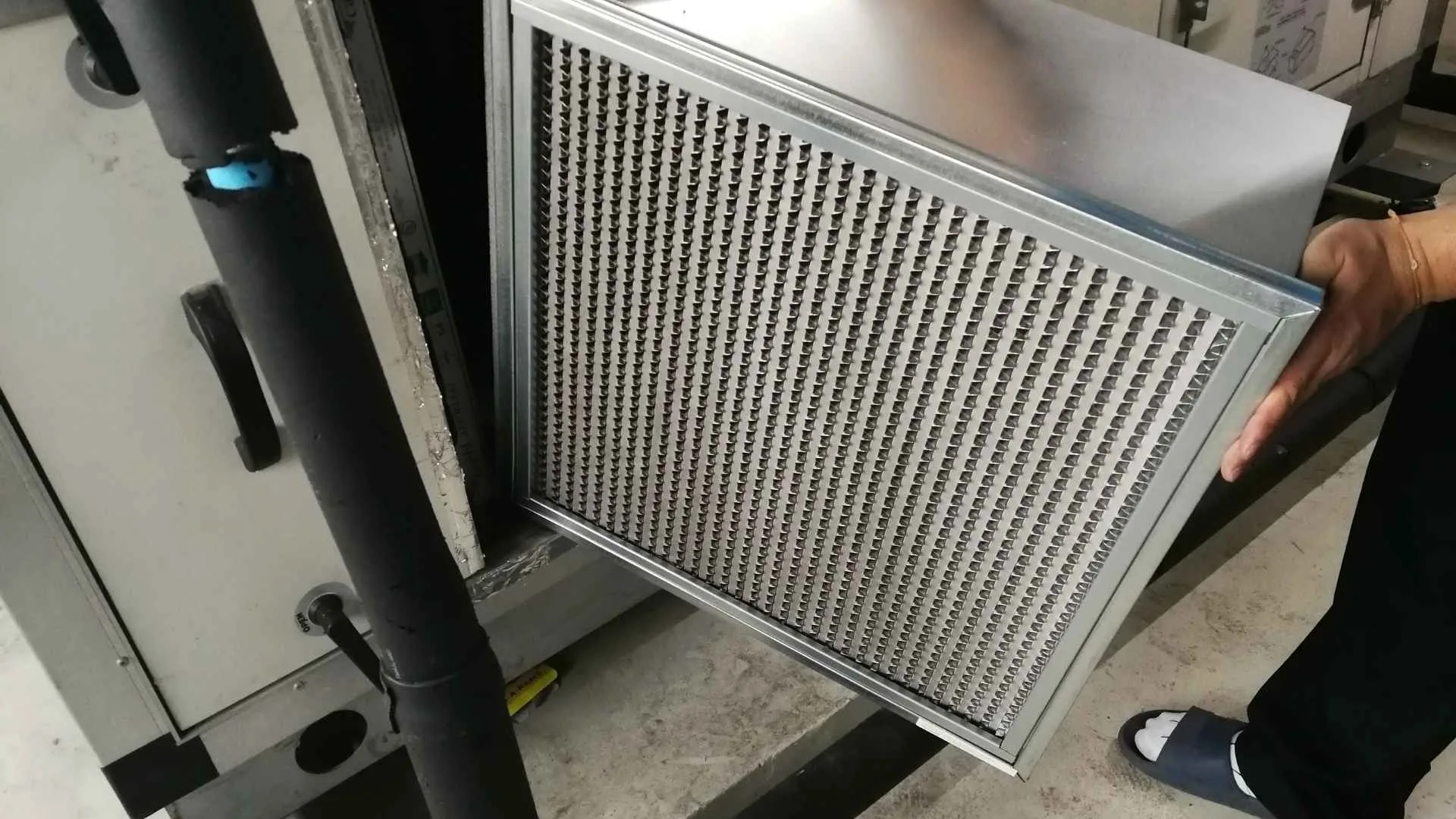
Locate the filter slot. It’s usually in the return air duct near the furnace, sometimes in a ceiling grille, sometimes in a wall slot. Slide the old filter out and note the airflow direction arrows printed on the frame. This is where people mess up. Install the new one with the arrows pointing toward the furnace or AC unit, which is the direction air flows. Face it backward and you’ll fight the system for months.
Slide the new filter in, mark the date on the frame, and turn the system back on. Then throw the old one in the trash. Don’t try to vacuum it clean. That destroys the media structure and makes the filter useless while still looking dusty.
If the slot is in a weird spot, like a vertical wall grille in the hallway, just know that some filters need a gentle push to seat properly. Don’t force it. A filter that’s too big for the slot will bend and let unfiltered air pass around it.
What about the filter type itself? Disposable fiberglass filters are cheap, catch large particles, and need frequent changes. Pleated fabric filters catch more, last longer, and cost more. For most homes, pleated MERV 8 is the sweet spot of cost and performance. Washable electrostatic filters exist, but they need serious rinsing and drying discipline. I’ve seen too many people forget to dry them, install a wet filter, and grow mold. Skip those unless you’re truly dedicated.
You’ll know you’ve settled into the right rhythm when your energy bill stays steady, your vents stay quiet, and you can’t remember the last time you dusted twice in one week.
When the Filter Isn’t the Real Problem
Sometimes you change the filter on schedule and the system still acts up. A filter swap won’t fix a refrigerant leak, a failing blower motor, or a cracked heat exchanger. Those need a pro with gauges and a multimeter, and pretending otherwise is how small issues become emergency replacements.
The good news is that on a regular maintenance path, a filter change catches problems early. When you’re in there every month or two, you notice corrosion, moisture, or unusual smells before they snowball. That’s the hidden value of a strict filter habit. It’s not just clean air, it’s a monthly inspection of your system.
For seasonal maintenance or a full system check by people who do this all day, it’s worth having a licensed technician run through the whole setup once a year. You can see more about what professional HVAC service visits typically cover if you want to know what to expect before you book one.
Your Filter, Your Schedule
Start with a 30 day check, adjust based on what you see, and lock in a rhythm tied to your thermostat changes. That’s the whole system. No magic numbers, no overthinking.
The real question isn’t what the internet says. It’s what your filter looks like on day 45. Go check it.