A single well-chosen piece of art has the power to anchor an entire room. But placing it on the wall is only the beginning. The real work — and the real reward — lies in everything that surrounds it.
Most people choose their furniture first, then look for art to fill the gaps. The result is usually a room that feels complete but forgettable. If you start with the art instead — and build the room around it — something different happens. The space gains intention. It becomes a place that actually says something.
This approach requires a shift in thinking, but it is entirely achievable. Whether you are starting from scratch or reworking an existing space, knowing how to let a statement art piece lead your decisions will change how your living room looks and feels.
Start With the Art, Then the Palette
The most reliable way to build a cohesive room is to pull your colour palette directly from the artwork. Look closely at the piece. Identify the dominant tones, the mid-range shades, and the accents. Those three layers become the foundation for your walls, large furniture, and decorative details respectively.
This is not about matching colours exactly. It is about harmony. If the painting features muted terracotta and dusty sage, you do not need orange cushions and green walls. You need those tones to exist somewhere in the room — in a rug, a lampshade, a ceramic bowl — at a volume that feels balanced rather than literal.
Hold paint swatches directly against your artwork before committing to a wall colour. Natural light changes everything, so test at different times of day.
Neutral walls almost always work, and they give the art room to breathe. But a deeper, more saturated wall can work beautifully too — particularly when the artwork is bold enough to hold its own against the colour. The key is contrast. The art should never get lost against the wall behind it.
Finding the Right Placement and Scale
Placement sounds straightforward but consistently trips people up. The standard guideline is to hang artwork so the centre sits at eye level — approximately 57 to 60 inches from the floor. That works well in most cases. In a living room where people spend most of their time seated, however, hanging slightly lower often looks and feels more natural.
Above a sofa, leave a gap of six to twelve inches between the top of the furniture and the bottom of the frame. Too high, and the piece floats disconnected from the rest of the room. Too low, and it crowds the sofa and risks damage.
Scale matters enormously. A small painting on a large wall is one of the most common decorating mistakes, and it is also one of the easiest to avoid. A statement piece should be substantial. When hung above a sofa, the artwork — or the grouping of pieces — should span roughly two-thirds to three-quarters of the sofa’s width.
If you are unsure, go larger. A piece that feels almost too big in isolation usually looks exactly right once the room is furnished around it.
“When in doubt about scale, go larger. A piece that feels almost too big in isolation usually looks exactly right once the room is furnished around it.”
The Impact of Esthétique Paintings on a Room’s Atmosphere
There is a reason that painterly, visually arresting works have remained a constant in interior design across decades and styles. Esthétique paintings — those that prioritise visual beauty, mood, and formal composition — do something that most decorative objects cannot. They create an emotional atmosphere rather than simply filling space. A room with a strong esthétique piece feels considered in a way that is difficult to articulate but impossible to miss.
The format of the work matters as much as the subject or style. Collectors and interior designers have long understood the particular power of vertical paintings for living room settings, where they draw the eye upward, add perceived height to a space, and lend a sense of grandeur even in more modest rooms. A tall, narrow canvas placed between two windows or beside a fireplace can reshape the proportions of a room with remarkable efficiency.
When selecting an esthétique piece, consider the emotional register you want the room to carry. An abstract work with loose, expressive brushwork will create a very different atmosphere from a precise, detailed figurative painting — even if both use similar colours. Think about how you want the room to feel at 7pm on a weekday evening. That answer will point you toward the right work far more reliably than any stylistic trend.
For rooms that feel low or boxy, vertical formats are particularly effective. The vertical paintings for living room collection at Art by Maudsch offers original works specifically suited to this purpose — each piece designed with the proportions and visual weight needed to transform how a room sits.
Building the Furniture Layout Around the Piece
Once the art is placed, it becomes the fixed point from which the rest of the furniture layout radiates. Arrange seating so that the artwork is visible from the main points of use — particularly from where people sit to talk or relax. The piece should be easy to look at, not something that requires turning or craning.
In a typical living room, a sofa facing the art with two armchairs angled inward creates a natural conversational grouping that also frames the artwork visually. This arrangement works because it gives the art an audience without making the room feel like a gallery.
Avoid pushing all furniture against the walls. Floating pieces toward the centre of the room — even modestly — creates depth and makes the artwork feel like part of a considered whole rather than a framed poster stuck to a blank surface. According to Architectural Digest, one of the most consistent rules among professional decorators is that furniture pulled away from walls makes a room feel larger and more intentional.
Lighting the Art and the Room Together
Lighting is the element most often underestimated. Poor lighting can flatten even the most extraordinary painting, while good lighting does the opposite — it makes the work come alive and casts the rest of the room in a more flattering light, quite literally.
Picture lights mounted directly to the frame offer focused, controllable illumination. Track lighting gives more flexibility and can be adjusted as furniture is rearranged. Avoid placing art directly opposite a window — natural light creates glare and causes colour to shift depending on the time of day.
Warm-toned bulbs (around 2700–3000K) tend to suit most paintings, particularly those with earthy or warm colour palettes. Cooler lighting works better with very contemporary, high-contrast works where clarity matters more than warmth.
Layering Décor Without Competing With the Art
The art is the centrepiece. Everything else is in service to it. That means restraint. A room built around a statement piece needs supporting elements — textiles, plants, ceramics, books — but those elements should complement rather than compete.
Choose decorative objects that echo tones or textures from the painting rather than introducing new visual themes. A sculptural vase in a colour that appears in the artwork ties the whole room together quietly and effectively. Too many patterns, too many colours, or too many competing focal points will diffuse the impact of the art and leave the room feeling cluttered.
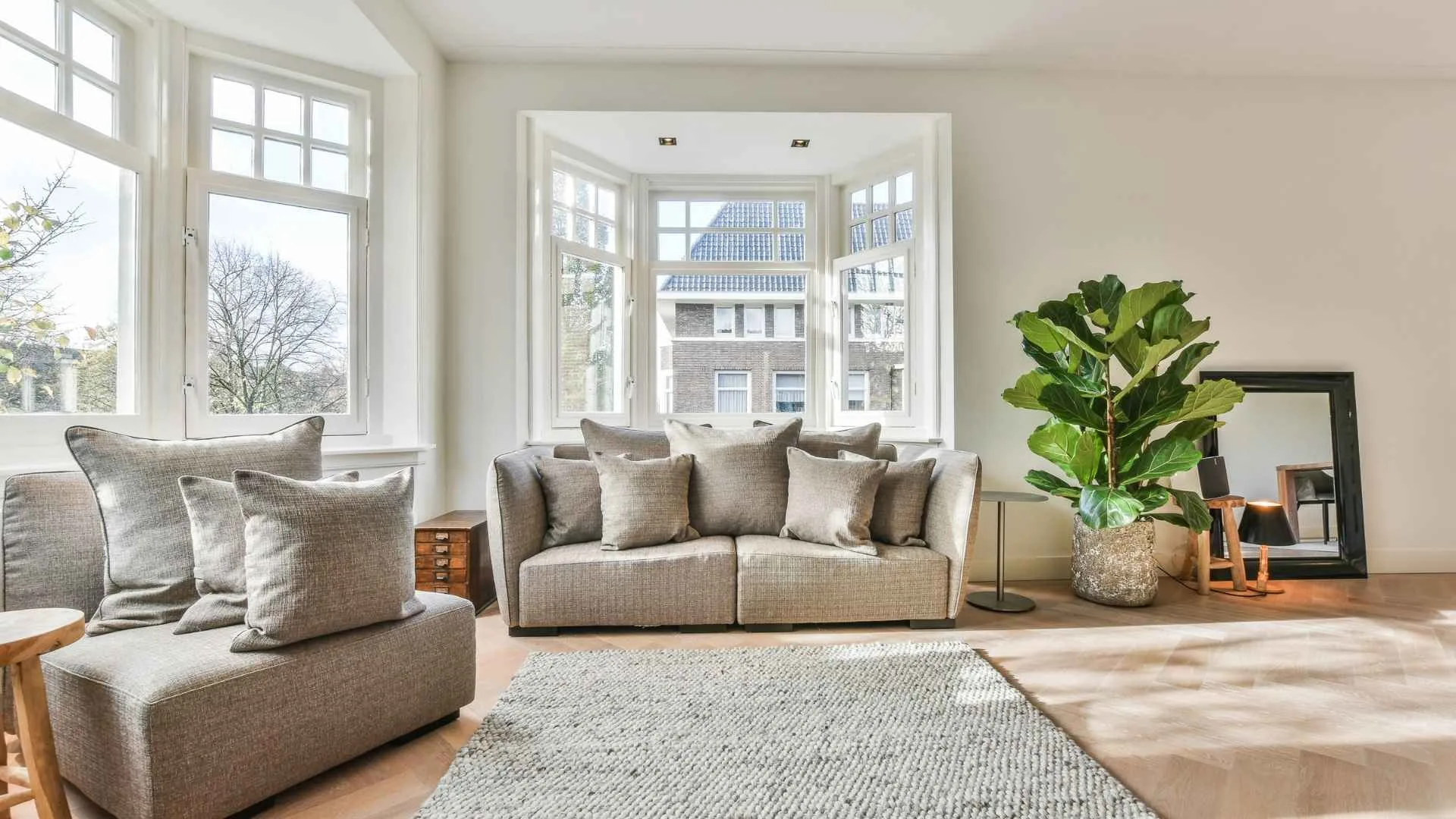
Rugs deserve particular attention. A good rug grounds the seating area and acts as a second layer of colour beneath the art. If the painting is complex and busy, opt for a simpler rug. If the artwork is spare and minimal, the rug can carry more pattern without overwhelming the space.
The Room Follows When the Art Leads
Styling a living room around a statement art piece is ultimately an exercise in restraint and intentionality. The artwork does the heavy lifting. Your job is to create the conditions in which it can do so — through thoughtful colour, considered scale, deliberate furniture placement, and lighting that makes the most of what you have chosen to display.
When it works, the result is a room that feels genuinely personal. Not decorated, but curated. Not assembled, but designed. And that distinction, subtle as it may seem, is what separates a living room that people remember from one they simply pass through.