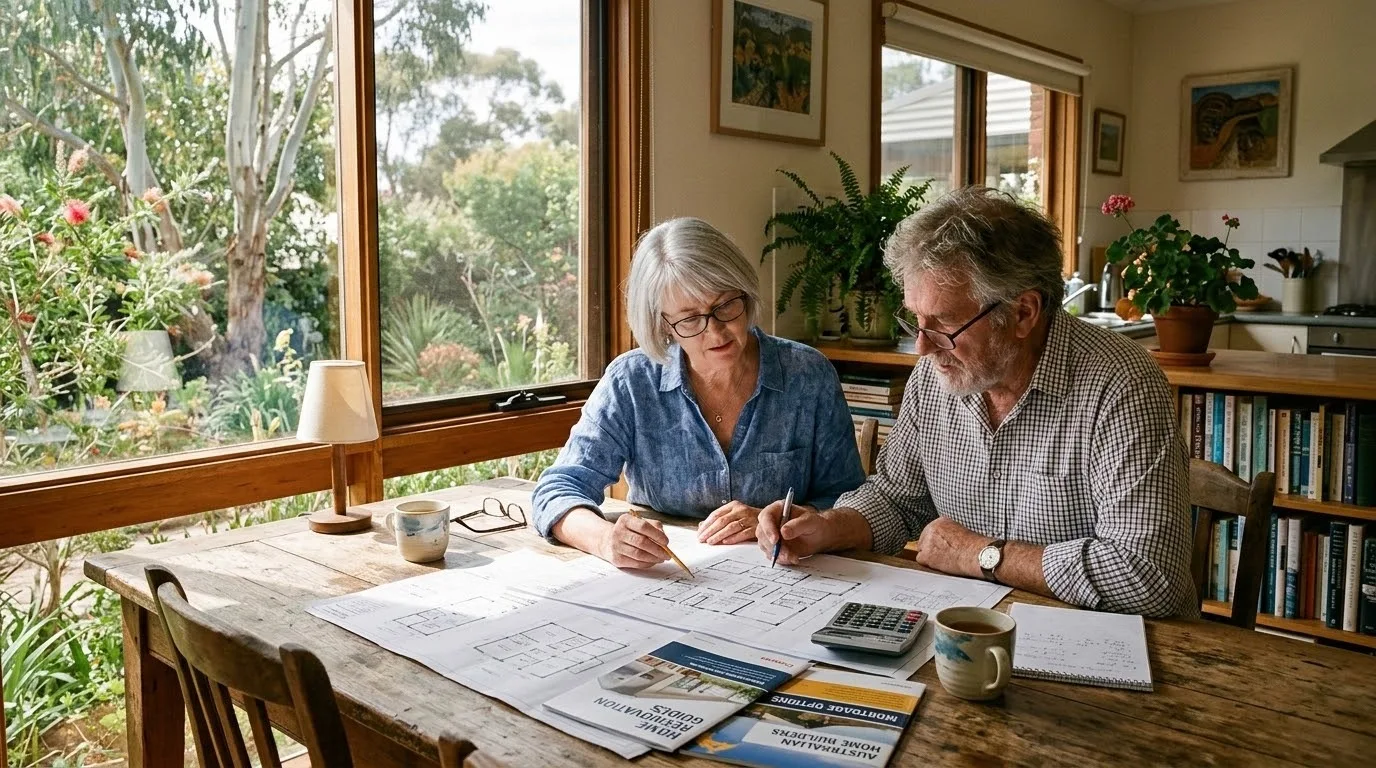
Most families hit a breaking point where the property they have lived in for decades simply stops working. The front steps become a daily hazard. The main bathroom feels entirely too cramped. Garden maintenance turns into a mandatory weekend chore for the adult children. When the physical environment becomes a barrier, the immediate reaction is usually to start looking at real estate listings or touring residential care facilities.
The financial reality of making that transition isn’t straightforward. You have to weigh the upfront hit of moving against the heavy construction costs of staying put. Neither option is cheap, and both require tying up significant capital. Getting the numbers right means looking past the glossy brochure prices and understanding the operational realities of both paths. You need to look at what it actually costs to execute these changes in the current Australian market.
The true cost of relocating
Relocating drains your capital before you even pack a single box. If you decide to sell the family home and move into a specialised facility or an accessible unit, the transaction costs are brutal. This is especially relevant in high-demand coastal markets, where downsizing into options like Noosa apartments can come with premium pricing and limited availability.
Stamp duty alone can eat up a massive chunk of your equity depending on which state you live in. Then you add real estate agent commissions, property styling, conveyancing fees, and the physical act of moving forty years of accumulated possessions.
If a residential aged care facility is the destination, the financial structure changes completely. You are suddenly navigating Refundable Accommodation Deposits (RADs) and Daily Accommodation Payments (DAPs). Tying up hundreds of thousands of dollars in a RAD makes sense for some families but severely restricts liquid capital for others. It completely reshapes your financial footprint overnight. You also need to factor in the means-tested care fees and the basic daily fee, which represent ongoing obligations regardless of your initial buy-in.
Selling a house to fund a move might look brilliant on paper because it frees up cash. But once you subtract the exit costs, the purchase costs of the new arrangement, and the ongoing facility fees, that pile of cash depletes faster than many anticipate.
Making the numbers work on your current block
Staying where you are means dealing with builders. That brings its own set of financial and logistical headaches. Construction costs across Australia have settled slightly since the recent supply chain spikes, but skilled trades remain expensive and hard to secure.
When you look at home extensions to accommodate changing mobility needs, the price varies wildly based on site access and local council regulations. Adding a ground floor master suite with a fully compliant accessible wet area might set you back anywhere from a hundred and fifty thousand to well over two hundred and fifty thousand dollars. Getting a Development Application through council can easily take six months before a shovel even hits the dirt.
The return on investment here is not just about the resale value of the property. It is measured in the years of utility you get out of the house. Avoiding stamp duty on a new purchase often offsets a significant portion of a renovation budget. If your block is flat and you have room to push out the back without hitting boundary setbacks, modifying the property often preserves your overall wealth better than selling.
Factoring in ongoing care and lifestyle

The physical building is only half the equation. You have to look at how daily life actually functions in space once the dust settles. Moving into a facility bundles your accommodation and your clinical care into one neat package. It is predictable. You know exactly what the outgoings are each month, and the care is available around the clock without you having to manage rosters.
Staying in your modified house requires setting up external services to replicate that support. Navigating the Support at home aged care system takes patience and a high tolerance for paperwork. You have to organise an ACAT assessment and then wait for funding approval. The wait times for higher level packages can be incredibly frustrating for families who need immediate help.
You will likely need to account for private out of pocket expenses while waiting for government funding to come through. Once the right level of domestic assistance, allied health, and clinical care is finally established, the ongoing costs are often significantly lower than residential facility fees. You just have to accept the administrative burden of coordinating different service providers coming into your house.
The hidden variables most people miss
People fixate on the hard numbers and forget the friction of both choices. Renovating means living in a construction zone. You will deal with dust, noise, and tradespeople walking through your hallway at seven in the morning. If the work is extensive, you might have to rent somewhere else for six to eight months. That adds directly to the project cost and creates exactly the kind of double move you were probably trying to avoid in the first place.
Facilities have their own rigid structures. You eat when the dining room is open. You give up a certain degree of autonomy. The mental toll of losing your familiar neighbourhood network is real and often leads to faster physical decline. You cannot put a clear dollar value on proximity to a local GP you have seen for twenty years, the pharmacist who knows your medical history, or the neighbours who check in on you.
There is also the very real risk of overcapitalising on the renovation. Putting a highly specialised accessible extension onto a house in a suburb where buyers only want standard family homes might hurt your eventual sale price. You need to balance your immediate medical and lifestyle needs with the long term value of the asset.
Making your final decision
Run the math on both scenarios using current figures. Get a builder to give you a realistic quote for the modifications you actually need, not the architectural dream version. Sit down with a financial planner who understands the aged care fee structures to map out the facility route properly.
The most cost-effective choice is the one that prevents you from having to move twice. If your current block allows for a practical modification that gives you another ten years of comfortable living, the math usually favours staying. If the house requires structural changes that trigger complete non-compliance with current building codes, cut your losses and start looking at facilities.
Decide based on the capital you have available right now, the layout of your block, and the exact level of disruption you can tolerate.