Four simple medieval secrets for better homes include displaying armor as an entryway sculpture, using shields as office wall art, mixing dark woods with metal finishes, and balancing historic pieces with minimalist furniture to create striking, elevated focal points.
This approach to old-world interior style relies on material richness and visual authority rather than heavy-handed themes. By introducing these carefully curated statement decor ideas, modern gothic interiors gain character, depth, and deliberate architectural weight without sacrificing contemporary comfort.
The most memorable interiors are rarely the ones that play it entirely safe. Walk into a home that stops you in your tracks, and you will almost always find one unexpected element. That is the quiet power of a statement decor idea done well. Medieval home decor offers exactly that kind of impact when approached with restraint and a designer’s eye.
Idea 1: Armor as Entryway Sculpture
The entryway is the first story a home tells, and a suit of display armor tells it boldly. Think of it not as a novelty, but as architectural sculpture. A well-chosen armor piece carries visual weight, proportion, and a commanding presence that few decorative objects can match.
Position a full suit or a partial upper-body set at the end of a narrow hallway to anchor the space.The materials beneath and around it matter greatly. Ground the piece on stone tile, dark hardwood, or slate flooring to reinforce its visual gravity.
A single directional spotlight or a warm-toned floor lamp aimed upward will cast dramatic shadow play across the metal surface. Keep the surrounding decor intentionally sparse with a plain wall and a simple console table.
Picture a Scandinavian-style apartment entryway with white walls and pale oak flooring. At the far end, a polished steel breastplate on a slim dark stand sits lit from below, reading like a gallery acquisition. This modern gothic interior principle proves that contrast creates curiosity.
Finding the right piece requires careful curation to avoid a theatrical look. For homeowners seeking display-quality items, sourcing versatile medieval armor from Medieval Collectibles, custom blacksmith shops, or antique dealers provides refined options.
These pieces remain historically considered in form, bringing the exact material presence a statement entryway demands.
Idea 2: Shields as Office Wall Art
Flat canvas art has its place, but it cannot offer what a historic shield can. These authentic pieces offer physical depth, material texture, and a layered visual relief that changes subtly depending on the light. Reframe the shield as sculptural wall art to make the home office a far more interesting space. Group two or three shields of varying sizes and finishes in an asymmetric arrangement above a desk.
The irregularity of the grouping keeps it feeling curated rather than collected, modern rather than museal. Matte black iron shields read beautifully against warm cream or greige walls. The historical authenticity of these materials adds profound depth. Historical records show significant changes in iron manufacturing by the year 900.
If the space also serves as a home office, it’s worth considering practical details alongside the design. A reliable internet connection is essential for video calls, cloud-based work, and other daily tasks, and satellite internet can be a practical option for homes in rural areas or locations where cable and fiber service aren’t available.
Aged wood rounds work equally well against deep navy or charcoal, where their natural grain catches the light. As a proportion guide, keep the total arrangement to sixty or seventy percent of the wall width. This preserves breathing room and ensures the grouping feels composed rather than crowded. Add wall sconces on either side to highlight the surface relief.
Gothic Revival interiors used heraldic motifs as a primary design language, treating them as visual anchors. That same authority translates cleanly into a contemporary home office space. Picture floor-to-ceiling bookshelves, a leather chair, a dark walnut desk, and a trio of circular shields mounted above it. The room does not look themed; it looks carefully considered.
| Pro Tip: When hanging shields, treat them as sculptural reliefs. Vary the materials, mixing iron with aged wood, to create a dynamic wall display that offers more texture and depth than standard flat canvas art. |
Idea 3: Dark Wood and Metal Corners
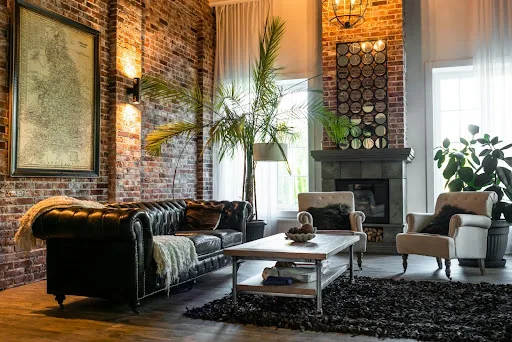
The pairing of dark-stained wood and aged metal is one of the most enduring combinations in design history. Start with furniture foundations like walnut, oak, or mahogany to provide the necessary warm, dense visual weight.
Then layer in iron or bronze accents like candleholders, coat hooks, mirror frames, or hammered metal side tables. Each object carries the same material logic of being heavy, handcrafted, and quietly authoritative.
The authenticity of these materials anchors the space in genuine historical context. During the medieval period, metallurgical techniques advanced rapidly, with European iron production reaching 60,000 tons by the year 1500.
Specialized medieval furnaces evolved to produce malleable iron directly from ore, turning out up to 700 pounds per heat. Incorporating these specific metals honors that legacy while adding rugged texture. Wall color plays a supporting role that most people underestimate. Deep ochre, terracotta, or muted sage create the warm-toned backdrop that allows this pairing to breathe without veering into darkness.
These colors also respond beautifully to candlelight and amber-toned lamps. Both lighting sources are essential to making the corner feel alive rather than staged. The corner concept itself is worth committing to deliberately. Designate a single corner of your living room or study as the old-world focal point.
Include one dark wood shelf, a few carefully chosen metal objects, a candle, and a single textile, like a piece of rough linen. What makes this work as medieval design inspiration is the same thing that makes great minimalism work.
Idea 4: Balancing Historic Pieces With Minimalist Furniture
The single most common mistake in decorating with historic pieces is doing too much. A room full of medieval-inspired objects does not feel rich; it feels restless. The secret to making modern gothic interiors feel sophisticated rather than theatrical is restraint.
The rule of one applies here without exception: choose a single medieval statement piece per room and let everything else serve it. One suit of armor, one shield arrangement, or one dark wood corner is enough. The surrounding furniture should support, not compete.
Neutral palettes like warm whites, greiges, and soft charcoals give historic pieces room to assert themselves without visual noise. Furniture silhouettes should be low-profile and clean-lined to maintain balance.
A simple sofa, a slim coffee table, or an unadorned shelving unit allows the eye to travel naturally toward the statement piece. Texture serves as the bridge between historic and modern design eras.
Introduce linen, raw wool, or leather textiles to connect the materiality of the medieval piece with the comfort of modern living. These fabrics share the same honest, craft-forward quality as the historic objects they accompany.
Keep the room’s ambient light airy and contemporary so the space still feels like a home, not a movie set. Then use directional accent lighting to give the statement piece its due drama. There is a concept in both modern minimalism and medieval cathedral architecture that describes this well: poetic negative space.
Each element earns its presence through contrast with emptiness, making the historic piece truly commanding.
| Important: Don’t over-clutter with historic motifs. The “poetic negative space” around a single statement piece is what grants it power. If every corner has a medieval item, the individual impact of each piece is lost. |
The Bottom Line
Medieval-inspired design is not about replicating a historic castle. It is about borrowing the gravitas, the material richness, and the visual authority of a centuries-old aesthetic. You can translate these elements into something personal, current, and quietly extraordinary. Start with one piece and build outward from there with texture, proportion, and restrained styling.
Consider a single shield arrangement above a desk, a focal point at the end of a hallway, or one dark wood corner. Let each addition earn its place before the next one arrives in the room. The best old-world interior style statements make guests pause, look again, and ask where an item came from.
That kind of impact simply requires one well-chosen piece, a little confidence, and the patience to let negative space do its work.
| Author Profile: Medieval Collectibles is the leading online retailer of authentic medieval replicas and fantasy collectibles for history enthusiasts, reenactors, and collectors worldwide. |