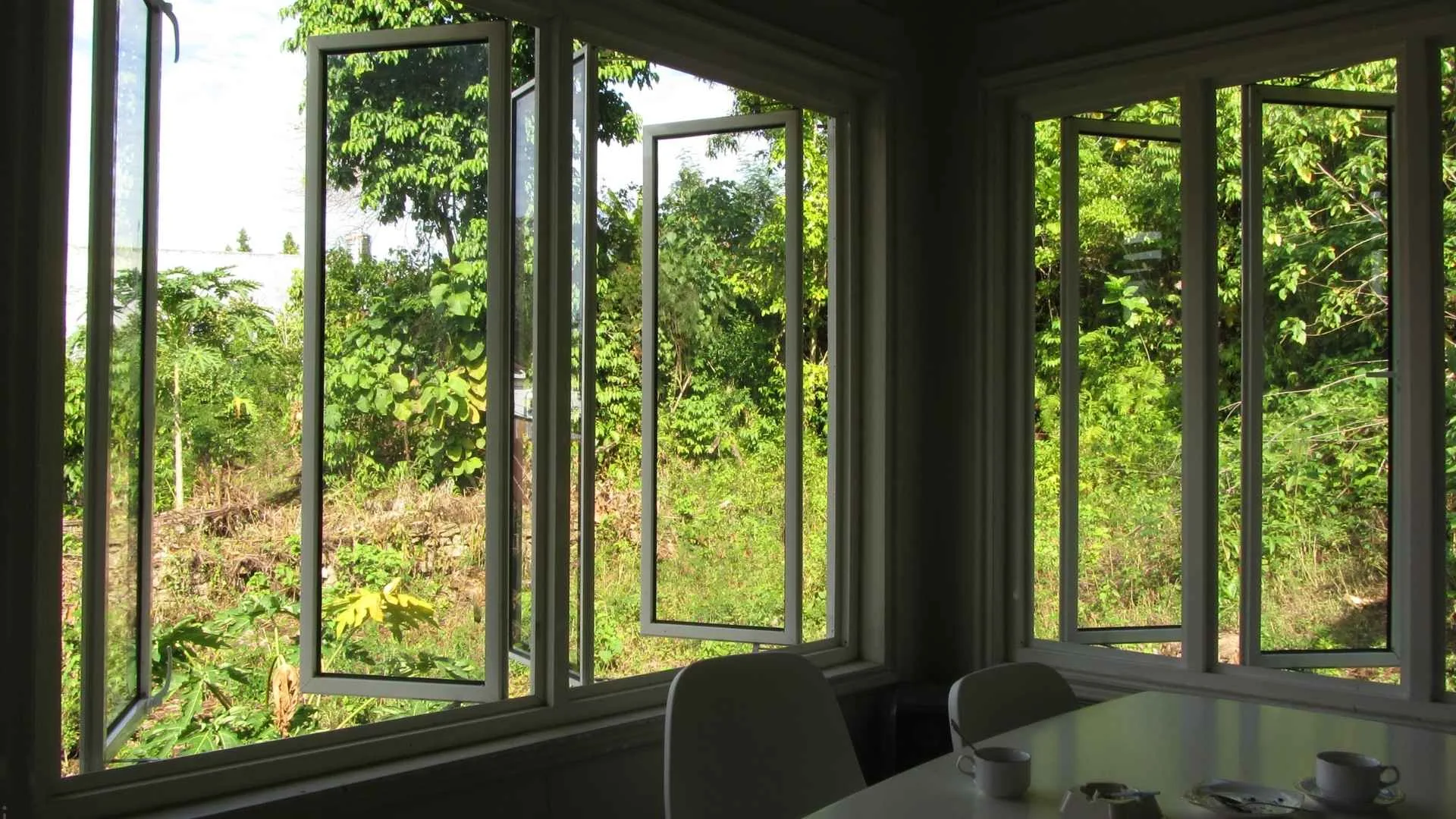
Walk into almost any apartment in Berlin, Vienna, or Prague and you’ll notice something quietly clever about the windows. Turn the handle one way and the whole sash swings inward like a door. Turn it another way and the top leans in a few inches, letting a stream of air slip through while the rest stays firmly shut. In much of Europe this is simply the window — the default, not the upgrade.
In the United States, where double-hung and slider windows have dominated for generations, tilt and turn windows are still a discovery. But homeowners planning energy-efficient remodels and new builds are finding them fast, and once they understand how the mechanism works, it’s hard to go back. Here’s what makes them worth a closer look.
What Is a Tilt and Turn Window?
A tilt and turn window is a single sash with two independent ways of opening, controlled by one handle. It can tilt inward at the top for ventilation, or turn inward from the side like a casement door for full access. The engineering behind that flexibility is a European invention refined over decades, and it’s the reason companies like Seemray build their entire lineup around European tilt and turn windows rather than treating them as a niche add-on.
The concept sounds simple, but the hardware doing the work is anything but. A network of hinges and locking points hidden inside the frame lets the same sash pivot on two different axes — and it all responds to the position of a single lever.
How the Mechanism Works
Everything runs through one handle, and the direction you point it tells the window what to do:
- Handle down — the window is fully closed and locked. Multiple locking points around the frame pull the sash tight against the seals.
- Handle horizontal (turned 90°) — the window is in turn mode. It swings fully inward on side hinges, opening wide for cleaning, moving furniture, or maximum airflow.
- Handle up (turned 180°) — the window is in tilt mode. The top of the sash leans inward a few inches while the bottom stays anchored, venting air securely.
There’s no cranking, no lifting a heavy sash against gravity, no fighting a stuck track. One motion of the wrist changes the entire function of the window — which is exactly why first-time users tend to describe the experience as surprisingly satisfying.
The Everyday Benefits
Ventilation without the trade-offs
Tilt mode is the feature people fall in love with first. Because the opening is small and angled inward, you get fresh air without an open invitation to rain, wind-blown debris, or curious pets. It’s secure enough to leave while you run errands, and gentle enough to keep running through a light storm. For anyone who’s ever come home to a soaked windowsill, that alone is a selling point.
Cleaning that doesn’t require a ladder
Swing the sash fully inward and both sides of the glass are suddenly within arm’s reach — from inside the room. On second-story bedrooms, stairwell landings, or anywhere a ladder feels like a bad idea, this turns an annual chore into a five-minute job.
A tighter seal and lower energy bills
This is where tilt and turn windows earn their reputation with the sustainability crowd. When the handle points down, the sash isn’t held by a single latch — it’s compressed against continuous gaskets by locking points distributed around the entire perimeter. That even, all-around pressure dramatically reduces air leakage, which is one of the biggest hidden drains on heating and cooling performance. Pair that seal with insulated frames and multi-pane glazing, and you have a window built to hold a room’s temperature steady instead of quietly bleeding it away.
Serious security
Those same multiple locking points that block air also make the window far harder to force. Instead of one weak spot, an intruder faces resistance at several places around the frame at once. Higher-end systems add mushroom-head cams that grip the frame tighter the more pressure is applied.
Noticeably quieter rooms
A compression seal doesn’t just stop drafts — it stops sound. Combined with double or triple glazing, tilt and turn windows can take the edge off traffic, lawnmowers, and street noise, which matters more the closer you live to a busy road.
A real escape route
Because turn mode opens the sash completely, tilt and turn windows create a large, unobstructed clearing — useful in bedrooms and basements where building codes require an egress opening for emergency exit. Functionality and fire safety in the same frame.
Tilt and Turn vs. Common American Windows
How does it stack up against what most US homes already have?
| Double-Hung | Casement | Tilt and Turn | |
|---|---|---|---|
| Ventilation | Partial, top or bottom | Full, side-swing | Secure tilt or full swing |
| Cleaning both sides indoors | Limited | Difficult | Easy |
| Air-tightness | Moderate | Good | Excellent |
| Opening direction | Vertical slide | Outward | Inward |
| Screen placement | Interior | Interior | Exterior |
The headline difference is versatility: a double-hung window does one thing, a casement does another, and a tilt and turn does both — while sealing tighter than either.
What to Consider Before You Buy
Tilt and turn windows aren’t the right answer for every opening, and it’s worth knowing the trade-offs going in:
- They open inward. That means you need clear interior space in front of the window in turn mode. Deep sills, certain blinds, or furniture placed right up against the wall can get in the way.
- Screens mount on the outside. Because the sash comes into the room, the insect screen sits on the exterior — a small adjustment for anyone used to interior screens.
- Hardware quality is everything. The whole system lives or dies by its mechanism. Cheap hinges and locks will sag and stick within a few years, so it pays to choose proven, German-engineered window systems where the frame, hardware, and glazing are designed to work as one tested unit.
- Choose your glazing deliberately. Double glazing is the baseline; triple glazing pushes into Passive House territory for cold climates and serious energy goals. Match the glass package to your region and your priorities.
Are They Worth It?
If your priorities are energy efficiency, a quiet interior, low-maintenance cleaning, and a modern look with slim sightlines and large glass areas, tilt and turn windows deliver on all of them at once. They typically cost more upfront than a standard double-hung, but the return shows up over time — in lower utility bills, fewer drafts, less noise, and hardware that keeps working smoothly for decades rather than years.
They’re an especially strong fit for homeowners building or renovating with sustainability in mind, where the airtight envelope isn’t a bonus feature but the whole point.
The Bottom Line
Tilt and turn windows solve a problem most people didn’t realize their windows had: the choice between open and closed was always too blunt. By giving one sash two jobs — secure ventilation and full-swing access — and sealing tighter than conventional designs in the process, they quietly upgrade comfort, efficiency, and everyday convenience.
They’ve been the European standard for a reason. For homes built with the next few decades in mind, they’re well worth bringing across the Atlantic.