The four tiny details buyers never forget are a cohesive entry palette, scaled planters and lighting, a visually tidy walkway, and a polished listing presentation. These elements together instantly establish the perceived value of a property. Research consistently shows that house hunters formulate strong emotional opinions about a home before they even step across the threshold.
Mastering these specific elements of home exterior styling ensures the property communicates meticulous care without requiring a massive renovation budget. There is a defining moment that happens before the lockbox is opened and before anyone steps across the threshold. It happens at the curb, sometimes from inside a car, and it lasts only a few seconds.
In those moments, a buyer forms an emotional impression of a home that no amount of interior staging can fully override. The good news is that a full renovation is rarely what separates a forgettable frontage from a compelling one. One home sits behind a patchy lawn with a faded door and mismatched light fixtures.
The other greets you with a soft neutral facade, a coordinated door, matching sconces, and a clean walkway. The second home simply paid more attention to a few essential curb appeal tips.
1. A Cohesive Entry Palette That Tells a Unified Story
Color is the first thing the eye processes, and the front of a home sends a message through every tone it carries. A cohesive entry palette means the front door, trim, hardware, facade material, and any accent elements are in deliberate conversation with each other. They should work harmoniously rather than competing for attention.
The difference between a polished and an ordinary exterior often comes down to this single concept. A door painted in a trendy isolated color with no relationship to the trim or hardware looks like a decision made in a vacuum.
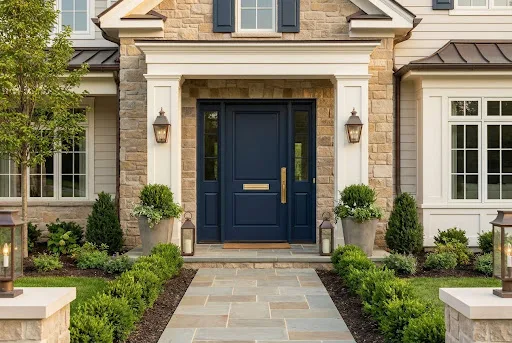
A door in a deep navy paired with brushed brass hardware and set against soft white trim looks carefully planned. Buyers do not always articulate why one reads as intentional, but they undoubtedly feel it. Practical home exterior styling starts with the facade itself. Identify an undertone already present in your brick, stone, or siding, then choose a door color that draws that undertone forward rather than fighting it.
A warm-toned stone exterior might support a muted sage or soft terracotta. Hardware should follow the same logic, with warm doors calling for warm metal finishes. Trim color is frequently underestimated, yet keeping it within the same tonal family creates continuity that reads as visual quality.
When staging a home for sale, this visual continuity extends to every temporary or permanent object placed on the property. Agents and sellers need professional displays that match the high-end feel of the freshly styled exterior rather than clashing with it.
Whether comparing wooden display posts, evaluating local hardware brands, or selecting YardSigns.com’s weatherproof realtor yard signs alongside other signage alternatives, maintaining a unified design story shows buyers that the property is managed with care.
| Pro Tip: Don’t guess on door colors. Identify the dominant undertone in your siding or stonework first, then select a complementary hue to create a designer-led look that resonates deeply with potential buyers. |
2. Scaled Planters and Lighting That Feel Proportional and Welcoming
Once the palette is established, the decorative elements near the entry take over as the next most visible signals of care and intention. Proportion matters here more than most homeowners realize. Elements must physically fit the space to look correct.
An oversized planter on a narrow stoop overwhelms the space and makes the entry feel cluttered before anyone reaches the door. A single small pot set to one side of a wide, double-door entrance looks like an afterthought.
Properly scaled elements frame the entryway and guide the eye inward in a way that feels welcoming and deliberate. Tall, structured planters in a simple material such as dark concrete, weathered terracotta, or matte black resin work well flanking a wide door.
A narrower entry benefits from a pair of smaller matching pots bookending the stoop. These are ideally planted with something structured rather than wild, such as clipped boxwood, upright grasses, or simple seasonal greenery that holds its form.
Lighting carries equal visual weight, as a porch with a single bare bulb communicates neglect regardless of how polished everything else is. Warm-toned sconces mounted at eye level on either side of the door create symmetry and warmth that signal a cared-for home.
They also make a significant difference in listing photography, where the quality of outdoor light either flattens or elevates the entire exterior shot. For anyone staging a home for sale, scaled, coordinated entry decor photographs beautifully.
3. A Visually Tidy Walkway and Lawn That Signals Care
A beautiful door and matching planters can only do so much if the path leading toward them suggests the home has been left to manage itself. Buyers read the condition of a lawn and walkway as evidence of how the home as a whole has been maintained. That read happens quickly and intuitively from the street.
This is not about perfection, but rather about the overall signal. A lawn with bare patches, unedged borders, and overgrowth along the fence line tells buyers to start looking for other signs of deferred upkeep. A trimmed, edged yard with clean sight lines from the street to the front door tells buyers the home is in responsible hands.
Focus on a few achievable visual targets, starting with crisp lawn lines edged along walkways, driveways, and garden beds. This single step changes the perceived quality of the entire yard. A weed-free walkway, pressure-washed to remove staining and organic buildup, suggests pride of ownership.
Cracked or heaving pavers are worth addressing before the listing goes live, as they register as potential structural concerns. Contrast this with a mossy, stained path winding through a patchy yard where overgrown shrubs have started to press against the siding.
The home may be immaculate inside, but buyers carrying that exterior impression through the front door are already in a more skeptical state of mind. Applying these simple curb appeal tips costs more in effort than in budget, but the return on a buyer’s confidence is significant.
| Important: A messy exterior acts as a red flag for deferred maintenance. Buyers often assume that if the lawn is neglected, expensive systems like HVAC or plumbing are likely in a similar condition. |
4. A Polished Listing Presentation That Completes the Visual Story
The first three details work together to build a visual story around the home. A coordinated palette, proportional decor, and a clean exterior set a standard of quality. The fourth detail ensures every visible element near the property carries that same intentionality through to the actual listing.
Real estate first impressions extend beyond the home’s architecture and landscaping. They include every element a buyer encounters on approach, and a listing sign is often the first branded object they physically reach. A faded, warped, or generic-looking sign planted at an angle in the yard quietly undercuts an otherwise polished presentation.
The logic mirrors what applies to the rest of the exterior. Just as a homeowner coordinates door hardware with trim color and matches planters for symmetry, a high-quality presentation demands excellent signage. The display is part of the home’s visual story during its time on the market, and it should absolutely look the part.
For agents who want visuals that support rather than distract from a polished exterior, investing in professional-grade displays is crucial. Products built to a high standard feature double-sided, full-color printing with weather-tough durability to maintain their crisp appearance.
Professional signage does not need to dominate the exterior of the property. It simply needs to look intentional, clean, and as considered as the rest of the details surrounding it.
| Key Insight: Every physical element a buyer sees contributes to perceived value. High-quality signage acts as the final “brand” touchpoint, reinforcing the message that the property is a premium, well-maintained, and valuable investment. |
The Bottom Line
Buyers are reading a home’s story before they read the listing description. The exterior is the opening chapter, written in palette choices, proportions, maintenance habits, and the quality of every element visible from the street. Nailing these aspects sets the right tone immediately.
None of these upgrades requires a full renovation or a significant budget. They require intentionality and attention to the small choices that accumulate into a strong, lasting impression. A unified entry palette, properly scaled decor, and a clean yard together signal that a home is market-ready.
The most useful thing any homeowner or agent can do right now is walk to the street in front of the property. Observe the space the way a buyer would for the very first time. The answers to what needs improvement are usually visible within the first thirty seconds, and so are the immediate opportunities.
| Author Profile: YardSigns.com is the leading online retailer of custom yard signs for businesses, political campaigns, real estate professionals, and special events. |