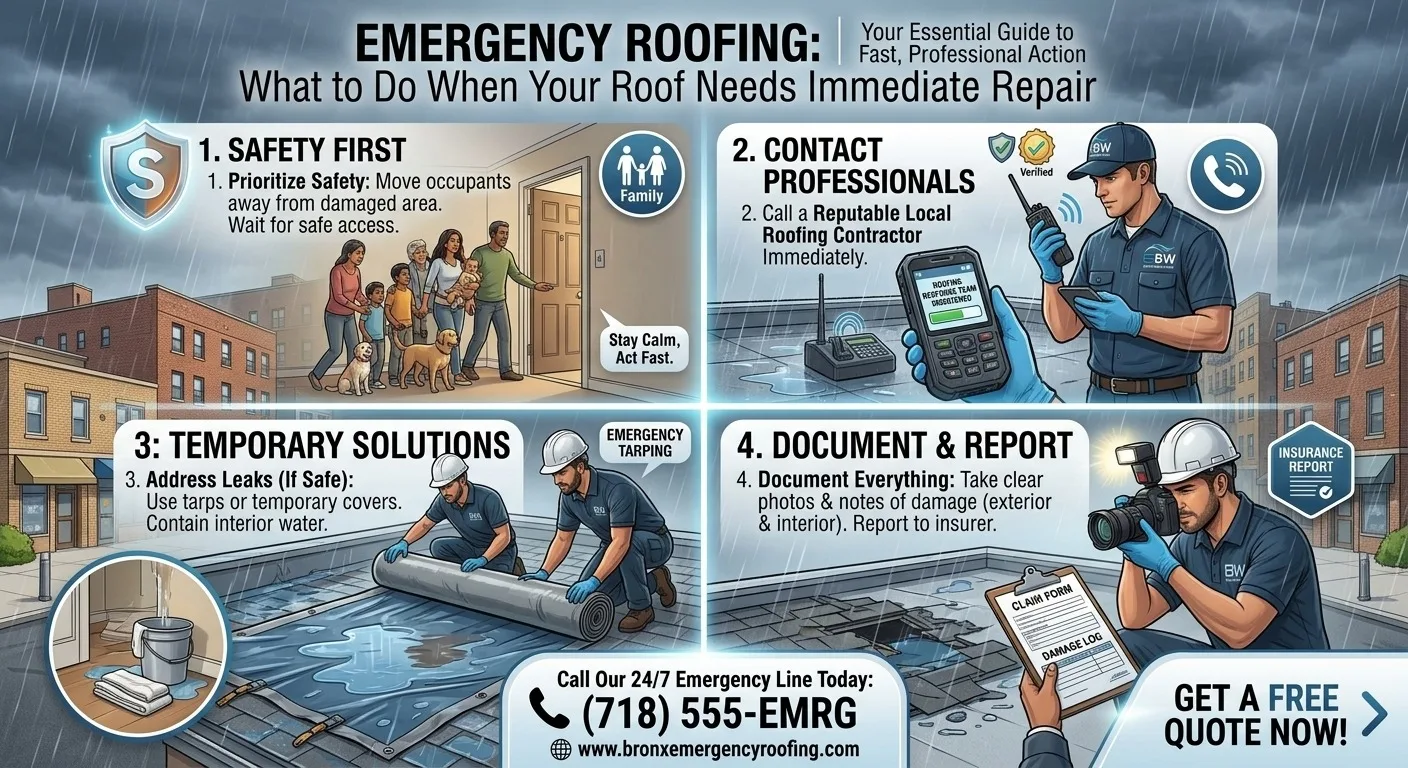
A roof problem can become an emergency quickly. A storm can tear away roofing materials, a fallen branch can puncture the roof, or a sudden leak can allow water into ceilings and walls. Waiting for a routine repair may allow the damage to spread.
Emergency roofing in Bronx focuses on making the property safe, limiting further water intrusion, and identifying the permanent repair needed. In some cases, the immediate solution may be temporary protection, followed by a more detailed repair once conditions are safe.
For New York City property owners, it is also useful to understand when emergency work can be performed before a permit is issued and when regular permitting requirements apply.
Emergency Roofing
Emergency roofing is needed when sudden roof damage creates an immediate risk of water intrusion, further property damage, or an unsafe condition. Common situations include major roof leaks, storm damage, fallen trees or debris, damaged flashing, missing roofing materials, and exposed sections of the roof. The first priority is to protect people and the building rather than attempting a permanent repair during unsafe conditions. A roofing contractor can inspect the affected area, provide temporary protection where appropriate, identify the likely source of the problem, and recommend permanent repairs. In NYC, certain emergency work can be performed before a permit is obtained when necessary to relieve an emergency condition, subject to Department of Buildings requirements.
What Counts as a Roofing Emergency?
Not every roof problem requires an emergency response. A small issue that is not allowing water into the property may be suitable for a scheduled inspection.
An emergency is more likely when the roof has suffered sudden or significant damage.
Common examples include:
- Active water entering the building
- A large roof leak during or after a storm
- Missing or lifted roofing materials
- A punctured roof membrane
- A tree or large branch falling on the roof
- Severe damage around flashing or roof penetrations
- A section of roof becoming exposed
- Sagging or visibly unstable roofing
- Damage creating a risk to occupants or the public
If there is an immediate safety hazard, keep people away from the affected area and contact the appropriate emergency services when necessary.
Common Causes of Emergency Roof Damage
1. Severe Weather
High winds and heavy rain can damage shingles, flashing, membranes, gutters, and other roof components.
Wind can lift or loosen roofing materials, while heavy rainfall can expose weaknesses that were not previously obvious.
After severe weather, look for visible signs such as:
- Missing shingles
- Loose materials
- Damaged flashing
- Water stains
- Blocked gutters
- Pooled water
- Exposed roofing layers
Do not climb onto a damaged roof yourself, particularly during or immediately after severe weather.
2. Fallen Trees and Branches
A tree or large branch can cause significant roof damage in a short period.
Depending on the impact, the damage may involve:
- Roofing materials
- Roof decking
- Structural framing
- Flashing
- Gutters
- Interior ceilings
- Electrical components
A contractor should inspect the area before determining whether the problem is limited to the roof covering or extends into the underlying structure.
3. Sudden Roof Leaks
A sudden leak is one of the most common reasons property owners search for emergency roof repair.
Water entering through the roof can damage:
- Ceilings
- Walls
- Insulation
- Flooring
- Electrical components
- Personal belongings
The location where water appears inside the property may not be directly below the roof opening. Water can travel along roof layers, framing, or other building components before becoming visible.
That is why simply sealing the area around an interior stain may not solve the underlying problem.
What to Do During a Roof Emergency
When a roof emergency occurs, the first priority should be safety.
Step 1: Keep People Away From the Damaged Area
If part of the ceiling is sagging, water is near electrical equipment, or debris has entered the property, keep people away from the affected area.
If there is an immediate structural or electrical danger, contact the appropriate emergency service.
Step 2: Limit Interior Water Damage
If it is safe to do so:
- Move furniture and belongings away from the affected area
- Place containers beneath active leaks
- Protect floors from standing water
- Move electronics away from water
- Document visible damage with photographs
Do not enter areas that may be structurally unsafe.
Step 3: Do Not Climb Onto the Roof
A damaged or wet roof can be dangerous.
Emergency roof work is generally better handled by a qualified roofing professional with the appropriate equipment and experience.
Step 4: Contact a Roofing Contractor
Provide as much information as possible:
- What happened
- When the damage occurred
- Where water is entering
- Whether the problem followed a storm
- Whether you can see missing or damaged roofing materials
- Whether a tree or debris struck the roof
Photos from a safe location can also help the contractor understand the situation before arriving.
Temporary Roof Protection vs. Permanent Repair
Emergency roofing does not always mean the contractor will complete a permanent repair immediately.
If weather conditions or the extent of damage make permanent work impractical, the first step may be temporary protection.
This could involve securing or covering the affected section to reduce further exposure.
The permanent repair can then be planned after the roof has been inspected properly.
Emergency response may involve:
Immediate protection → inspection → damage assessment → permanent repair
This distinction is important when reviewing an emergency roofing estimate. Ask whether the quoted price covers temporary protection, permanent repairs, or both.
When Should You Call an Emergency Roofing Contractor?
Consider contacting an emergency roofing contractor when:
Water is actively entering the property
An active leak can cause additional interior damage if it is not addressed.
A storm has caused visible roof damage
Missing shingles, exposed membranes, damaged flashing, or large debris should be assessed.
A tree has fallen onto the roof
Do not attempt to remove large branches yourself. The roof may have structural damage beneath the visible impact area.
Part of the roof has become exposed
Exposed underlayment, insulation, or decking can be vulnerable to additional weather damage.
The roof is visibly unstable
Sagging, collapsed areas, or other structural concerns require professional assessment.
The building is unsafe
If roof damage has created a hazard for occupants or the public, prioritize safety and appropriate emergency assistance.
Emergency Roofing in NYC: What About Permits?
NYC has specific provisions for emergency work.
The Department of Buildings explains that emergency work can include work that would otherwise require a permit but is necessary to relieve an emergency condition. Licensed contractors may perform qualifying emergency work before a permit is issued, provided the required Emergency Work Notification is filed with the Department within two business days after the work is completed.
However, this does not mean every roof repair is automatically exempt from permitting.
NYC also identifies non-structural roof repair as an example of work that may not require a permit. Roof repair or replacement involving the roof deck/sheathing can have different requirements.
Before work begins, ask the contractor:
- Is this considered emergency work?
- Does the project require a permit?
- Who will file any required notification?
- Will structural repairs be necessary?
- What work is being performed immediately?
- What permanent work will follow?
The exact requirements depend on the condition and scope of the project.
Emergency Roof Repair vs. Regular Roof Repair
| Emergency Roof Repair | Regular Roof Repair |
| Sudden or severe damage | Existing or gradual damage |
| Active leak may be present | Leak may be minor or intermittent |
| Immediate protection may be needed | Work can usually be scheduled |
| May follow a storm or impact | Often caused by wear or localized deterioration |
| Temporary repairs may be necessary | Permanent repair can usually be planned |
| Response may be outside normal hours | Standard scheduling is possible |
A roof that requires emergency attention today may still need a larger repair or replacement later.
How Much Does Emergency Roof Repair Cost in NYC?
Emergency roofing costs vary depending on the damage and how quickly the property needs attention.
Factors can include:
- Type of roofing system
- Size of damaged area
- Time of response
- Accessibility
- Storm conditions
- Materials required
- Temporary protection
- Labor
- Roof deck damage
- Structural repairs
- Debris removal
- Disposal
- Permits or related requirements
Current NYC cost information used for planning places average roof repair at around $1,934, with reported projects ranging from approximately $100 to $10,000. Leak repairs are reported at roughly 600–2,600, while emergency work can cost more because of urgent response requirements and temporary protection.
These are general planning figures rather than a quote for a particular property.
Ask whether the emergency estimate includes:
- Emergency call-out
- Temporary roof protection
- Materials
- Labor
- Permanent repair
- Debris removal
- Disposal
- Structural repairs
- Permit-related work
A clear estimate makes it easier to understand what you are paying for.
Does Emergency Roof Repair Mean You Need a New Roof?
Not necessarily.
Emergency damage can sometimes be repaired without replacing the entire roof.
For example:
- A few missing shingles may be replaced.
- Damaged flashing may be repaired.
- A localized membrane puncture may be patched.
- Storm damage may affect only one section.
However, a contractor may recommend replacement if the roof has widespread deterioration, repeated leaks, extensive damage, or an aging system that is no longer practical to repair.
The emergency repair addresses the immediate problem. A follow-up inspection can determine the longer-term solution.
How to Choose an Emergency Roofing Contractor
Speed matters during a roof emergency, but it should not be the only consideration.
Look for a contractor who can explain:
1. What caused the problem?
A good inspection should identify the likely source rather than simply covering the visible symptom.
2. What needs to happen immediately?
Ask what work is necessary to protect the property right now.
3. What can wait?
Not every damaged component needs to be replaced during the emergency response.
4. Is the repair temporary or permanent?
Make sure you understand what the first visit will accomplish.
5. Does the roof need structural inspection?
Significant impact damage or an unstable roof may require additional professional assessment.
6. What will the permanent repair cost?
If temporary protection is installed, ask what the expected next step will be.
7. What insurance and licensing applies?
Verify the contractor’s applicable credentials and insurance before authorizing substantial work.
Emergency Roofing After a Storm
Storm damage can be difficult to assess from ground level.
A storm inspection may look for:
- Missing shingles
- Lifted shingles
- Torn membranes
- Damaged flashing
- Punctures
- Damaged vents
- Clogged gutters
- Damaged drainage components
- Fallen branches
- Water intrusion
Some damage may not be visible from the ground.
If you suspect storm damage, photograph what you can safely see and keep copies of any inspection reports, estimates, invoices, and repair documentation.
If you plan to make an insurance claim, ask your insurer about its documentation requirements before discarding damaged materials.
Emergency Roofing for Flat Roofs
Flat and low-slope roofs can experience different emergency problems from pitched roofs.
Common issues include:
- Membrane punctures
- Ponding water
- Damaged seams
- Failed flashing
- Drain blockages
- Parapet-related problems
- Damage around roof penetrations
Because water can remain on a low-slope roof, drainage is an important part of the inspection.
An emergency patch may stop immediate water entry, but the contractor should also investigate why the damage occurred and whether other sections of the roof are deteriorating.
What Should Be in an Emergency Roofing Estimate?
A useful estimate should clearly distinguish immediate work from longer-term repairs.
| Item | What to Check |
| Emergency response | Is the call-out included? |
| Temporary protection | What will be installed? |
| Inspection | What areas were assessed? |
| Permanent repair | What will be repaired? |
| Materials | Which products will be used? |
| Labor | Is labor included? |
| Disposal | Who removes damaged materials? |
| Structural work | Is it included or separate? |
| Permits | Who handles applicable requirements? |
| Warranty | What coverage applies? |
If the contractor cannot determine the full scope during an emergency visit, ask for a follow-up written estimate once the roof can be inspected safely.
How Legacy Construction NYC Corp. Handles Emergency Roofing
Legacy Construction NYC Corp. provides emergency roof repair services for New York City property owners dealing with urgent roofing problems.
Emergency roofing situations can include sudden leaks, storm damage, damaged roofing materials, and other problems that leave part of a property exposed.
The appropriate response depends on the condition of the roof. In some situations, the immediate priority is to limit further water intrusion. In others, a more extensive repair may be required.
Legacy Construction Emergency Roof Repair service provides a starting point for property owners who need urgent roofing assistance.
What to Do After the Emergency Is Under Control
Once the immediate danger has been addressed, don’t automatically assume the problem is finished.
Arrange a follow-up inspection to determine:
- Whether the temporary repair held
- Whether water entered the roof assembly
- Whether the decking was damaged
- Whether insulation needs attention
- Whether flashing needs replacement
- Whether drainage problems contributed to the damage
- Whether other roof areas are deteriorating
- Whether repair or replacement makes more sense
A temporary emergency measure can protect the building while giving you time to plan the permanent work properly.
Final Thoughts
A roofing emergency requires quick action, but rushing into an unclear repair can create additional problems.
Start by keeping people away from unsafe areas, limiting interior water damage where possible, documenting the visible condition, and contacting a qualified roofing contractor. The immediate response may involve temporary protection, while the permanent solution can be determined after a proper inspection.
For NYC properties, also ask about permit requirements and whether the work qualifies as emergency work under NYC Department of Buildings rules. Certain emergency work can proceed before a permit is issued when necessary to relieve an emergency condition, but the required notification and other rules still apply.
For urgent roofing assistance, visit Legacy Construction NYC Corp.’s Emergency Roof Repair service.
FAQs
What is considered an emergency roof repair?
Emergency roof repair generally involves sudden damage or a roof condition that creates an immediate risk of water intrusion, further property damage, or an unsafe condition. Examples include major leaks, storm damage, fallen trees, and exposed or unstable roof sections.
What should I do if my roof starts leaking during a storm?
Keep people away from unsafe areas, move belongings away from the leak if it is safe, use containers to collect water, and contact a roofing professional. Avoid climbing onto the roof during wet or stormy conditions.
Can emergency roof damage be temporarily repaired?
Yes. Depending on the situation, a contractor may use temporary protection to reduce further exposure before completing a permanent repair.
Does emergency roof repair require a permit in NYC?
NYC allows qualifying emergency work to be performed before a permit is issued when it is necessary to relieve an emergency condition, subject to Department of Buildings requirements. Non-structural roof repair may also fall under work that does not require a permit. The requirements depend on the specific project.
How much does emergency roof repair cost?
The cost depends on the type and extent of damage, materials, labor, accessibility, temporary protection, and whether structural repairs are required. Emergency work can cost more than scheduled repairs because of the urgent response.
Does a roof leak mean I need a complete replacement?
No. A localized leak can sometimes be repaired. Replacement may be considered when the roof has widespread deterioration, repeated leaks, extensive damage, or is nearing the end of its useful service life.
Should I call a roofer after storm damage if I don’t see a leak?
It can be useful to arrange an inspection if there is visible roof damage. Some problems may not immediately produce an interior leak.
What should I ask an emergency roofing contractor?
Ask what caused the damage, what needs to be done immediately, whether the work is temporary or permanent, whether structural damage is suspected, what the estimate includes, and whether any permits or notifications are required.