
Dallas Heritage Estate: A Complete Guide to Dallas Historic Homes


The Dallas Heritage Estate is one of the most fascinating historic destinations featured on RivonHome. Preserving beautifully restored 19th-century homes, the site offers visitors a chance to experience Texas history through authentic architecture and timeless design.
From carefully relocated residences to nearby historic estates, this guide explores the craftsmanship, heritage, and architectural details that continue to inspire homeowners, designers, and history enthusiasts alike.
Where Is Dallas Heritage Estate Located?
Dallas Heritage Estate sits at 1515 South Harwood Street, just south of downtown Dallas, inside Old City Park. It’s easy to reach by car and only a short drive from the city center. The location puts it close to the Dallas Farmers Market and the Cedars neighborhood, so it’s simple to pair with other stops. Free on-site parking makes getting there even easier.
Visiting Dallas Heritage Estates
As Stefano Schiavon from RivonHome, visiting Dallas Heritage Estate is about experiencing history firsthand rather than staying overnight. Guided and self-guided tours take visitors through carefully preserved historic homes, where knowledgeable docents share the stories of the families who once lived there.
Because no one resides on the property today, every building is dedicated to education, preservation, and public events, offering an authentic glimpse into Texas history in its original architectural setting.
What Is Dallas Heritage Village?
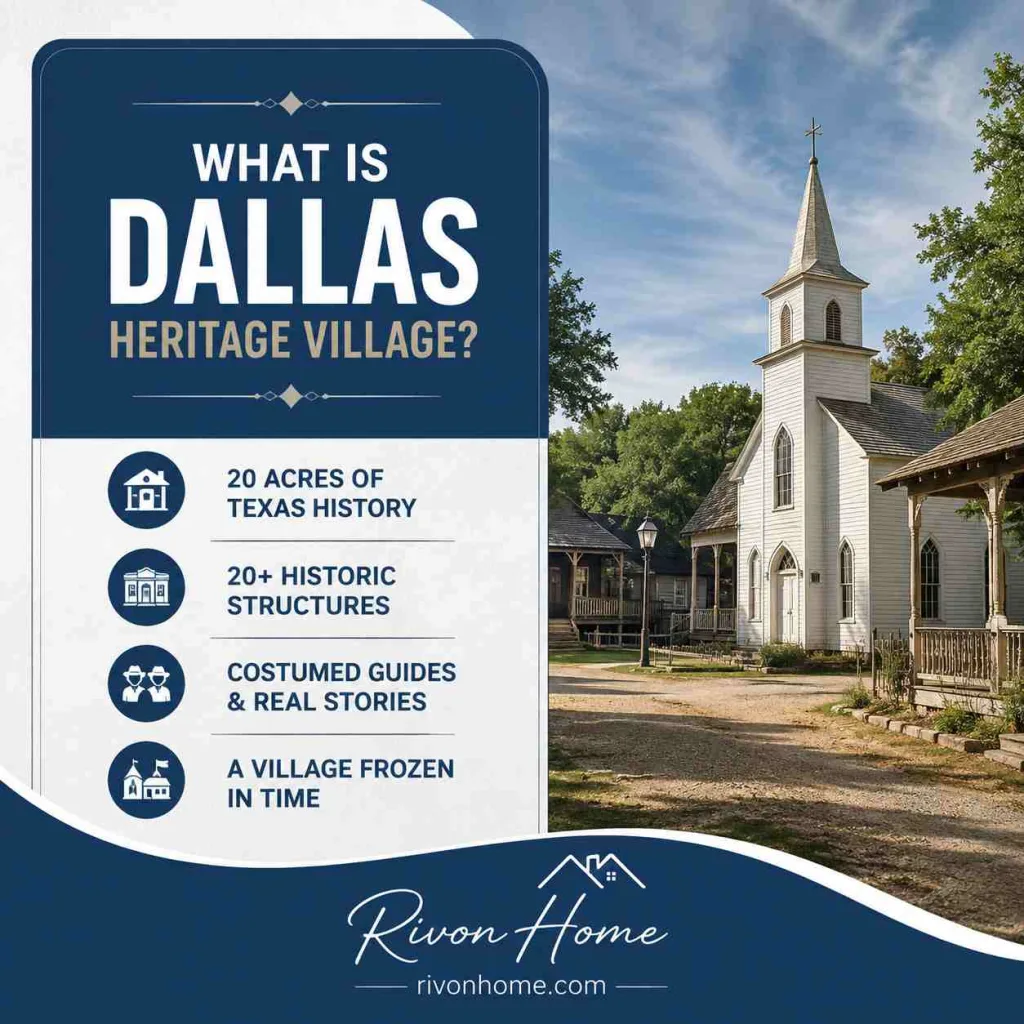
Dallas Heritage Village is the city’s main Dallas Heritage Estate site. It sits on 20 acres inside Old City Park, Dallas’s very first public park. The village holds over 20 historic structures. Most were built between 1840 and 1910. They were moved here from towns across North Central Texas to save them from demolition.
This isn’t Dallas Heritage Estate one mansion behind a rope. It’s a working village. You’ll find homes, a schoolhouse, a church, a bank, a general store, and a saloon. Costumed guides walk the grounds and tell real stories about the families who once lived there. It feels less like a museum and more like a small town frozen in time.
Historic Homes Inside the Dallas Heritage Estate
Every Dallas Heritage Estate here has its own story. These are the homes I’d tell you not to miss.
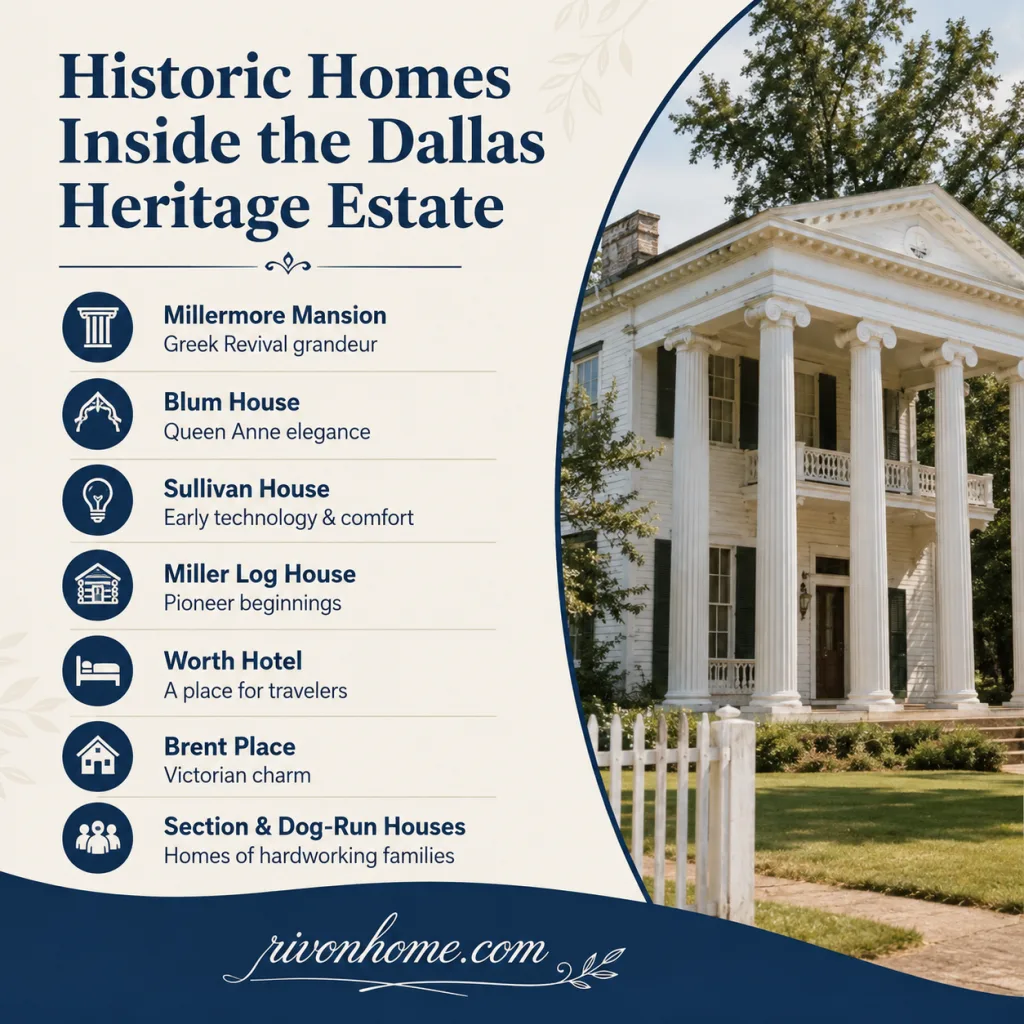
- Millermore Mansion — Built in the 1850s, this Greek Revival home is the grandest house in the village. Its tall white columns and wide porches were a status symbol for wealthy pioneer families.
- Blum House — A Queen Anne home from 1900. Its steep roof lines and decorative trim show the upper-class taste of the early 1900s.
- Sullivan House — A neoclassical revival home with early plumbing and gas lighting. It shows how technology started changing everyday homes.
- Miller Log House — Built in 1847, this simple log cabin later became one of the first schoolhouses in Dallas County.
- Worth Hotel — A small-town hotel moved from Carrollton, Texas. It once housed traveling salesmen and local boarders, sometimes two to a bed.
- Brent Place — A quieter home near the old Browder Springs site, with the same faded Victorian color palette I still love pointing out to clients.
- Section House and Dog-Run House — Modest homes built for railroad workers and working-class families. They remind visitors that heritage isn’t only about mansions.
Other Heritage Estates Near Dallas
Dallas Heritage Village isn’t the only historic Dallas Heritage Estate worth your time. A short drive away, you’ll find the DeGolyer House, inside the Dallas Arboretum and Botanical Garden.
Built in 1939 for oil geologist Everette DeGolyer, this 21,000-square-foot home is done in Spanish Colonial Revival style. Think arched corridors, terracotta roofs, and hand-carved wooden doors. The estate sits on landscaped grounds overlooking White Rock Lake. It’s listed on the National Register of Historic Places, which tracks buildings of lasting historic value across the country.

Do Celebrities Live Here?
No celebrities live at Dallas Heritage Village. Every home here is a museum piece, preserved for tours, not lived in by anyone today. There’s one fun detail worth knowing, though. The old bank building is rumored to have been robbed by Bonnie and Clyde back in the 1930s, at its original Texas location. If you’re looking for where celebrities actually live in Dallas, that would be neighborhoods like Highland Park and Preston Hollow, home to names like Troy Aikman and Mark Cuban. This heritage estate stays true to everyday Texas history, not Hollywood.

Design Details Worth Noticing
As an architect, I don’t visit these homes just for the history. I visit them for the details. Old estates often solved design problems better than we give them credit for.
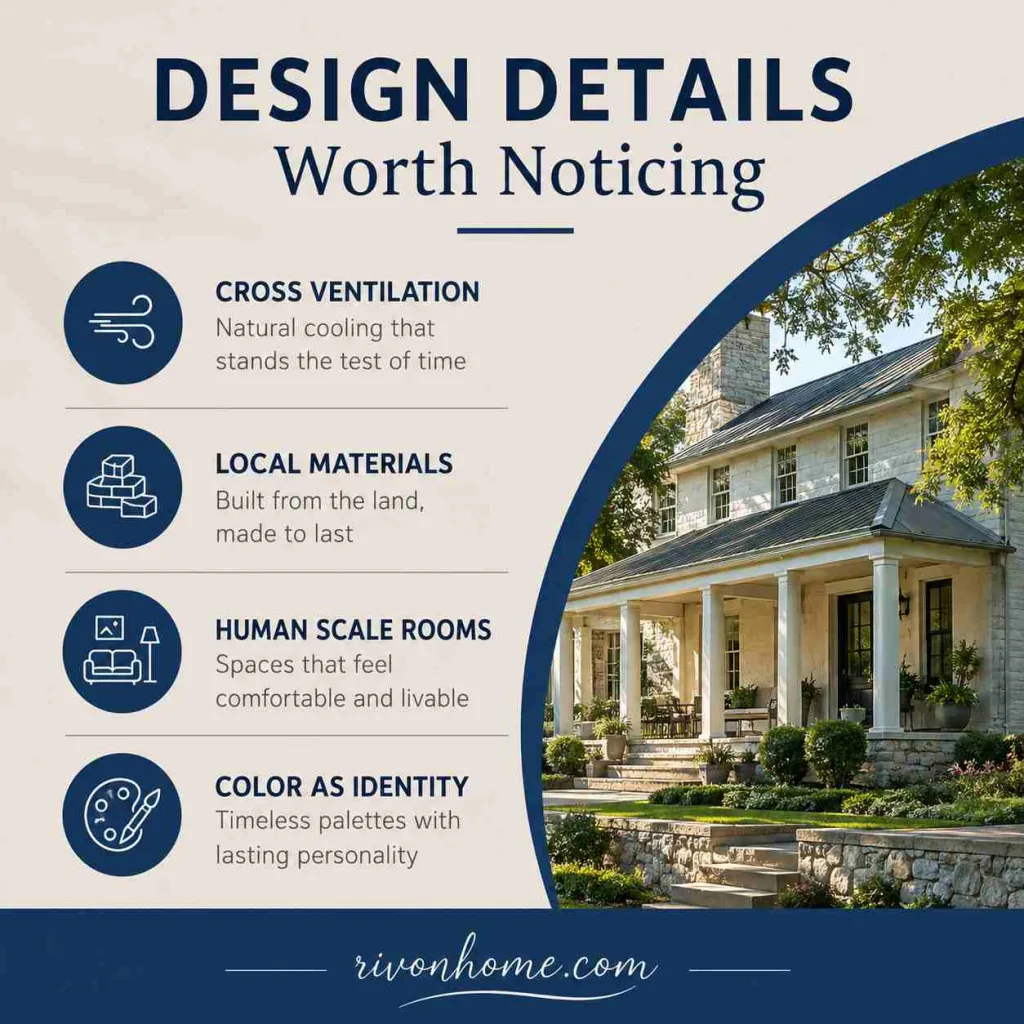
- Cross ventilation — Dog-run houses used a gap between two rooms to cool the home naturally, long before air conditioning existed.
- Local materials — Log cabins and limestone estates used whatever the land offered. This kept homes cheap to build and suited to the climate.
- Human scale rooms — Even grand homes like Millermore kept ceiling heights and room sizes livable, not overwhelming.
- Color as identity — The Victorian paint palettes on homes like the Blum House still hold up as smart, expressive choices today.
If you’re working on your own home and want ideas rooted in real history rather than trends, my Home Decor section covers how to bring these same principles into a modern space.
Visiting Information
| Detail | Information |
|---|---|
| Location | 1515 South Harwood St, Dallas, TX 75215 |
| Hours | Tuesday–Saturday, 10 a.m.–4 p.m.; Sunday, 12 p.m.–4 p.m. |
| Admission | Around $9 for adults, $5 for children (rates vary by season) |
| Parking | Free on-site parking available |
| Best for | Families, history lovers, architecture and design fans |
Tips for Visiting a Dallas Heritage Estate
A few things I’ve learned from my own visits and from reader questions.
- Go on a weekday morning. The village is quieter, and guides have more time to talk.
- Wear comfortable shoes. The 20-acre grounds involve a fair bit of walking.
- Check for special events. Seasonal festivals and candlelight tours happen throughout the year.
- Bring the kids. Farm animals, hands-on exhibits, and open lawns make this an easy family outing.
- Combine it with nearby stops. The Dallas Farmers Market is close by if you want to make a full day of it.
For planning tools and preservation guidelines used across historic sites in Texas, the Texas Historical Commission is a solid resource if you want to go deeper.

Final Thoughts
A Dallas Heritage Estate isn’t just a place to take photos. It’s a lesson in how people actually lived, built, and made do with what they had. Whether you spend an afternoon at Dallas Heritage Village or add the DeGolyer House to your trip, you’ll leave with a better sense of Texas history — and maybe a few design ideas worth stealing for your own home.
