
Watch This Tree Grow: Full Journey of Emerald Green Arborvitae

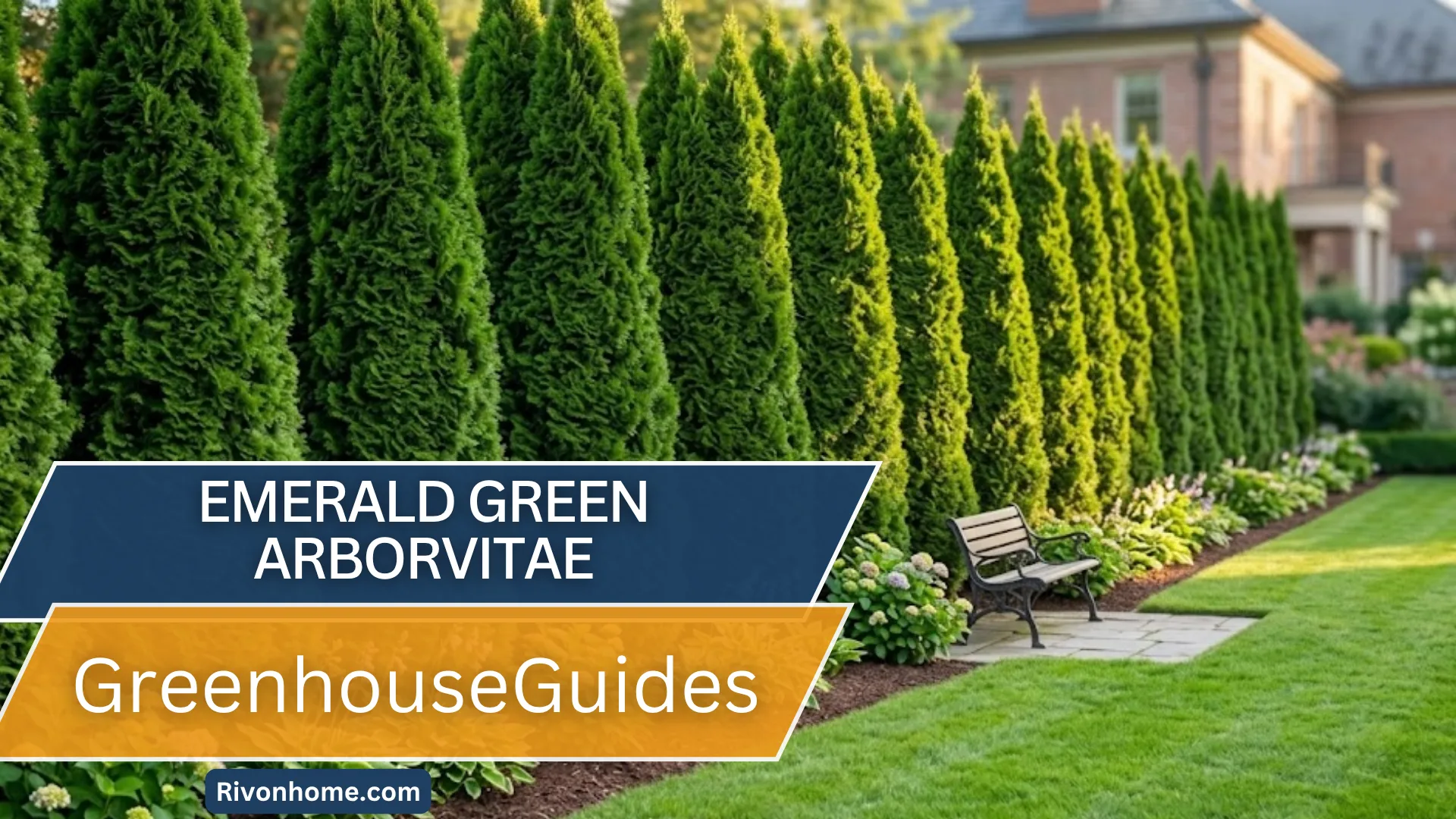
Standing in your backyard with a six-inch cutting, it is hard to imagine the transformation into a fifteen-foot Emerald Green Arborvitae . The magic of the emerald green arborvitae lies in its reliability; unlike other evergreens, this cultivar retains its jewel-like vibrancy year-round. Its slender, pyramidal form makes it an architectural masterpiece for tight spaces, requiring minimal maintenance once established. It quietly muffles noise and blocks unwanted views, providing a lush, living backdrop.
In this guide for Rivon Home, Stefano Schiavon explores the journey from a delicate seedling to a mature landscape anchor. Whether planting a single specimen or a privacy hedge, understanding this growth cycle ensures your yard becomes a tranquil sanctuary for decades to come.
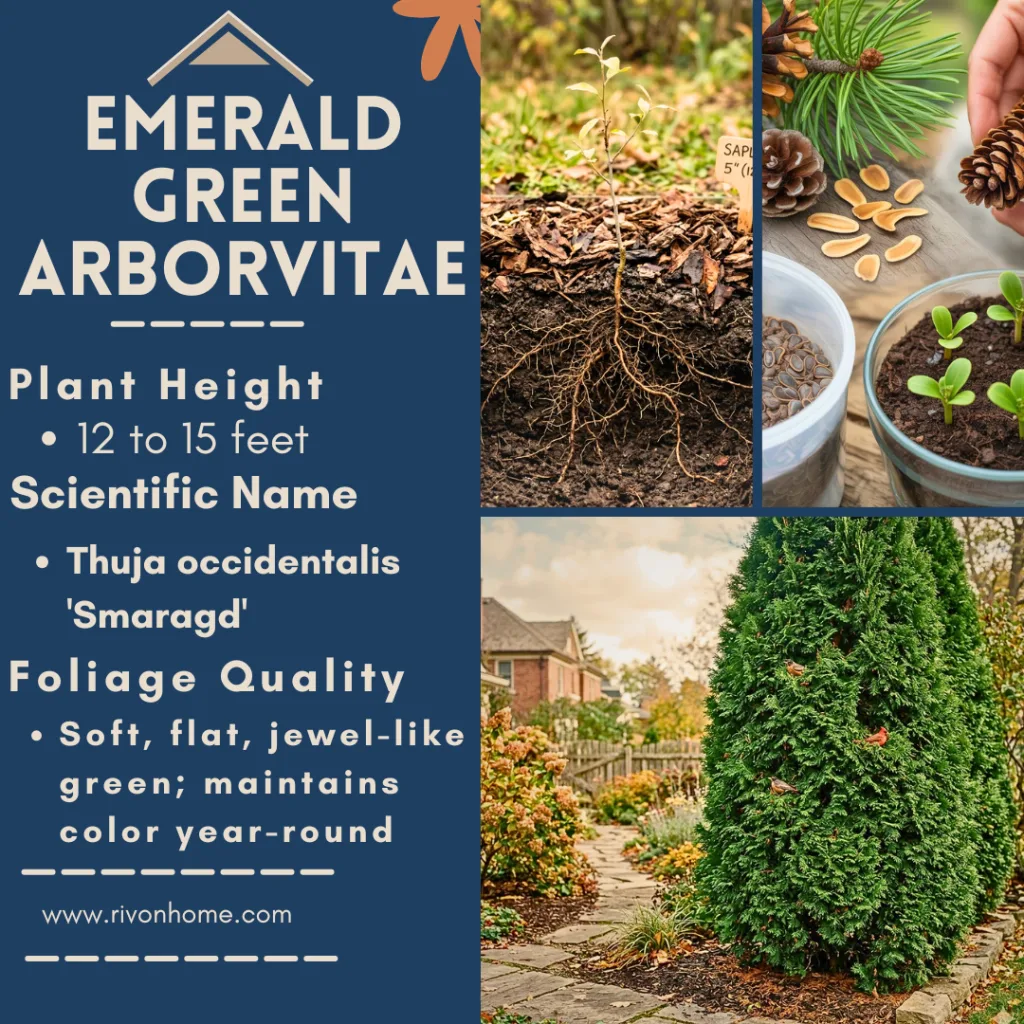
Emerald Green Arborvitae (Thuja occidentalis ‘Smaragd’) Quick Facts
Based on the details provided, here is a summary of this popular evergreen’s characteristics
The Genesis: From Tiny Spark to Emerald Giant
Every great landscape legacy begins with a single, humble choice. Before the towering walls and the lush privacy, there is the “Beginning”—a moment of quiet potential held in the palm of your hand. Whether you choose the path of the patient gardener or the savvy strategist, here is how the magic is sparked:
Emerald Green Arborvitae Starting from Seed
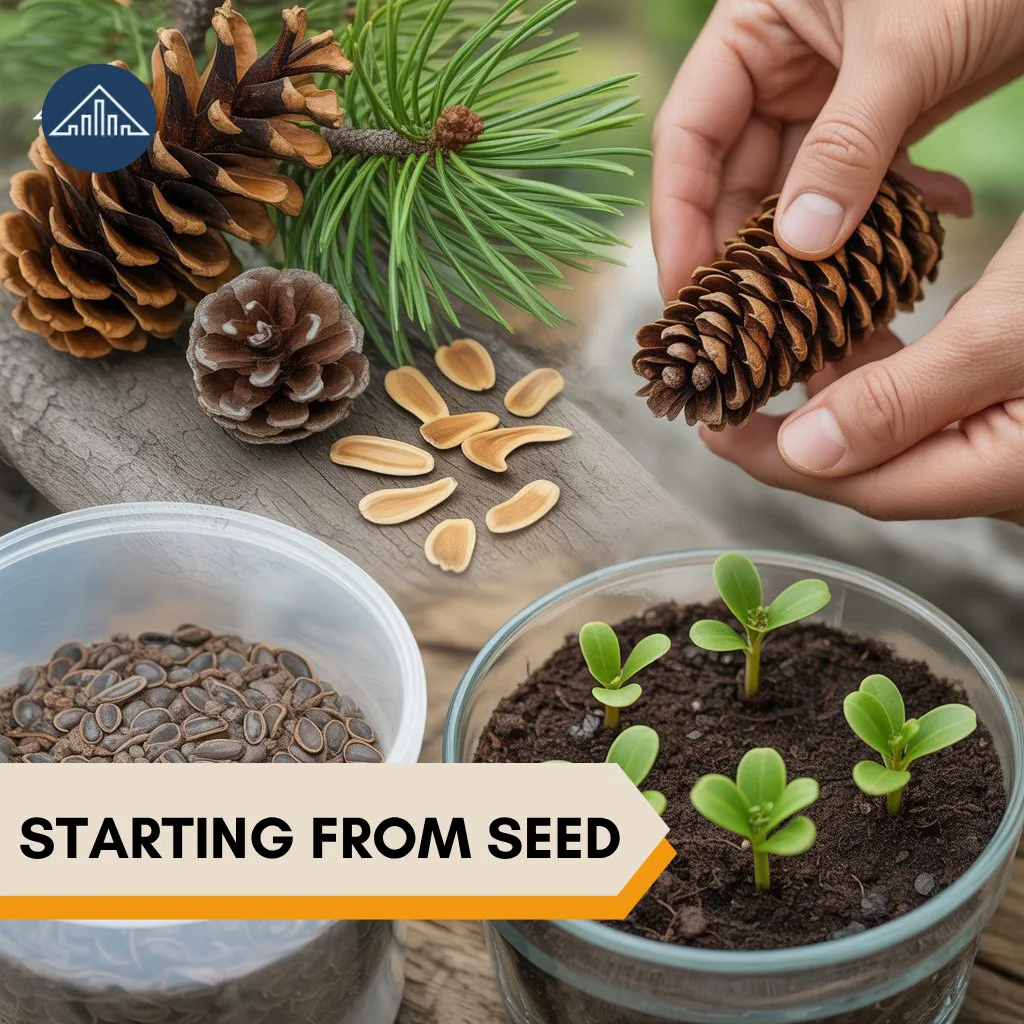
Growing from seed is a slow, rewarding process beginning with autumn cone collection. After drying cones to release winged seeds, they require 60 to 90 days of cold stratification in a refrigerator to mimic winter. Once sown in moist soil, tiny seedlings emerge within weeks, beginning a lengthy but fulfilling journey from a dormant seed to a vibrant evergreen.
Emerald Green Arborvitae Starting from Cuttings
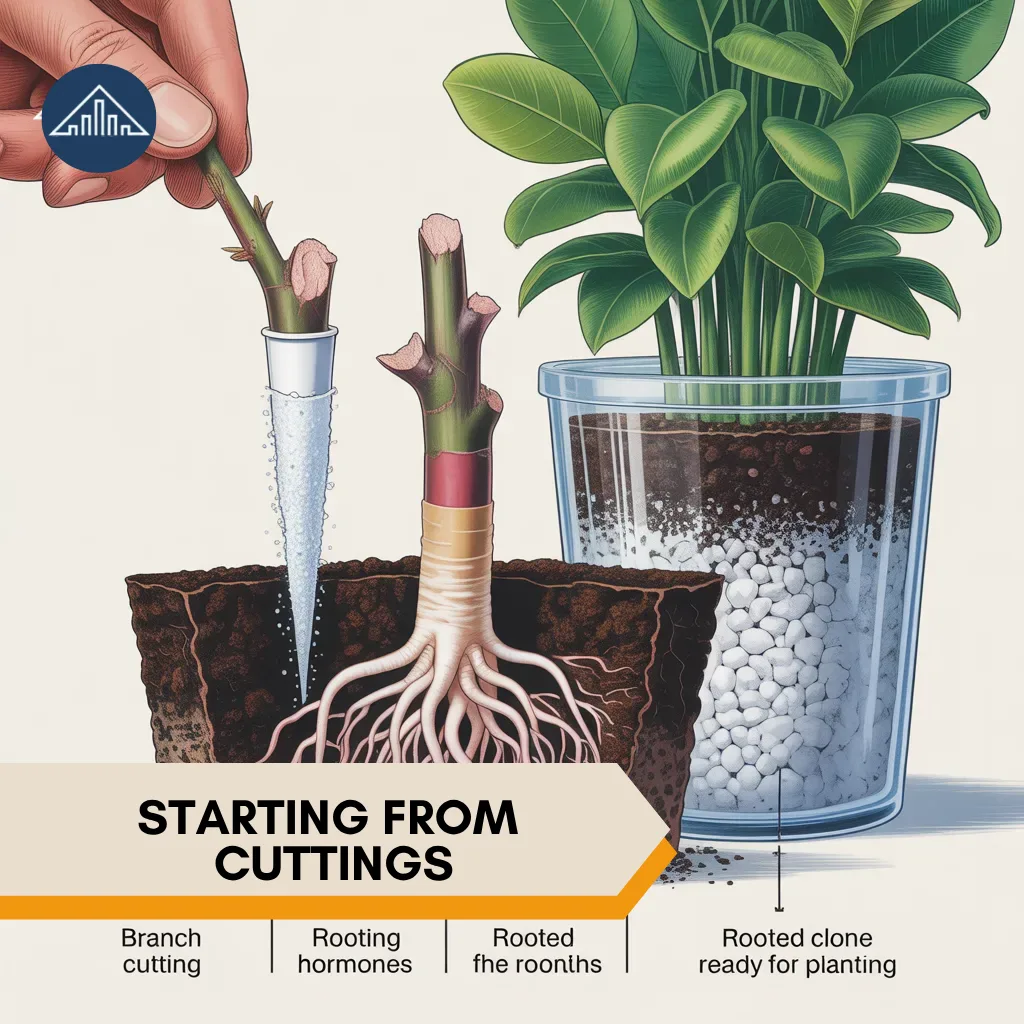
Cuttings are the preferred method, saving a year of growth. In late autumn, a 6-inch branch tip is treated with rooting hormone and planted in perlite and soil. Kept warm and moist, roots develop within three months. This technique is faster and more reliable than seeds, providing a viable, rooted clone of the parent tree ready for the landscape.
The Epic of the Emerald: A Decade-Long Transformation
Witness the breathtaking evolution of a single sapling as it transforms from a delicate garden newcomer into a majestic, fifteen-foot fortress. This year-by-year roadmap reveals the hidden milestones of your tree’s journey and exactly what to expect as it claims its place in your landscape.
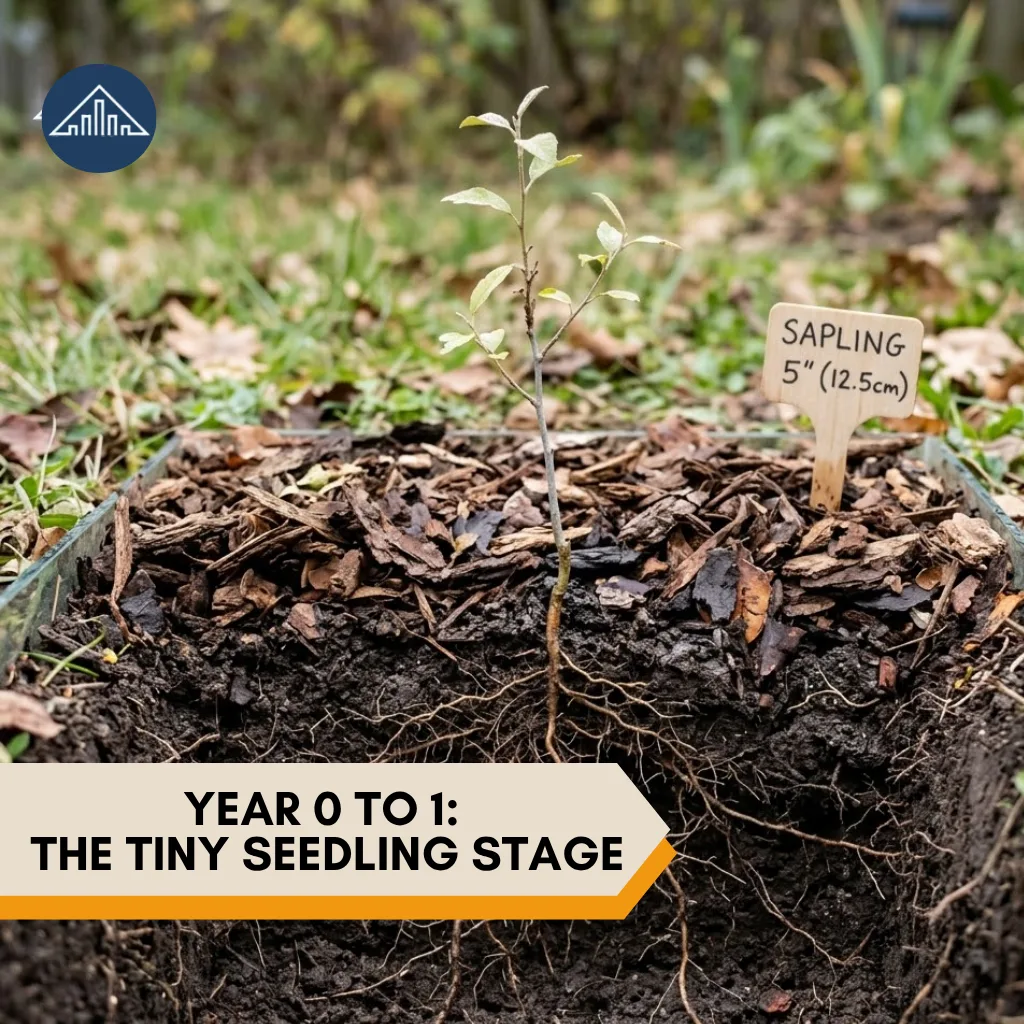
Year 0 to 1: Emerald Green Arborvitae Tiny Seedling Stage
Focusing entirely on underground development, the tree establishes a strong root system rather than height. It may grow only 4 to 6 inches, appearing fragile and small. Success depends on deep watering twice weekly and a 3-inch layer of mulch. No fertilizer is needed yet, as the tree prioritizes anchoring itself into its new home for future stability.
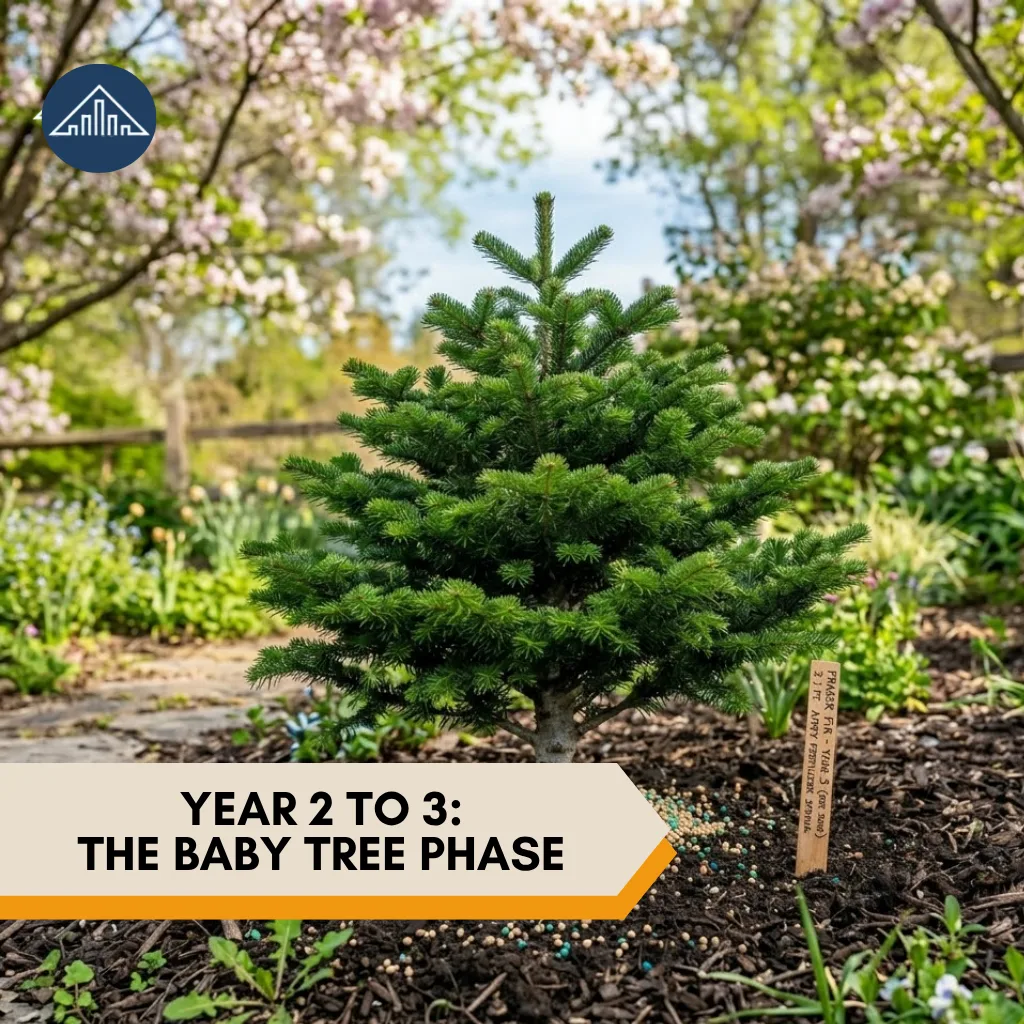
Year 2 to 3: Emerald Green Arborvitae Baby Tree Phase
The tree begins to take its signature pyramidal shape, reaching 1 to 2.5 feet tall. Foliage becomes denser and more vivid. With a better-established root system, it handles dry spells more effectively. By year three, growth accelerates slightly, making it the ideal time to introduce a slow-release, balanced fertilizer in early spring to fuel upcoming upward progress.
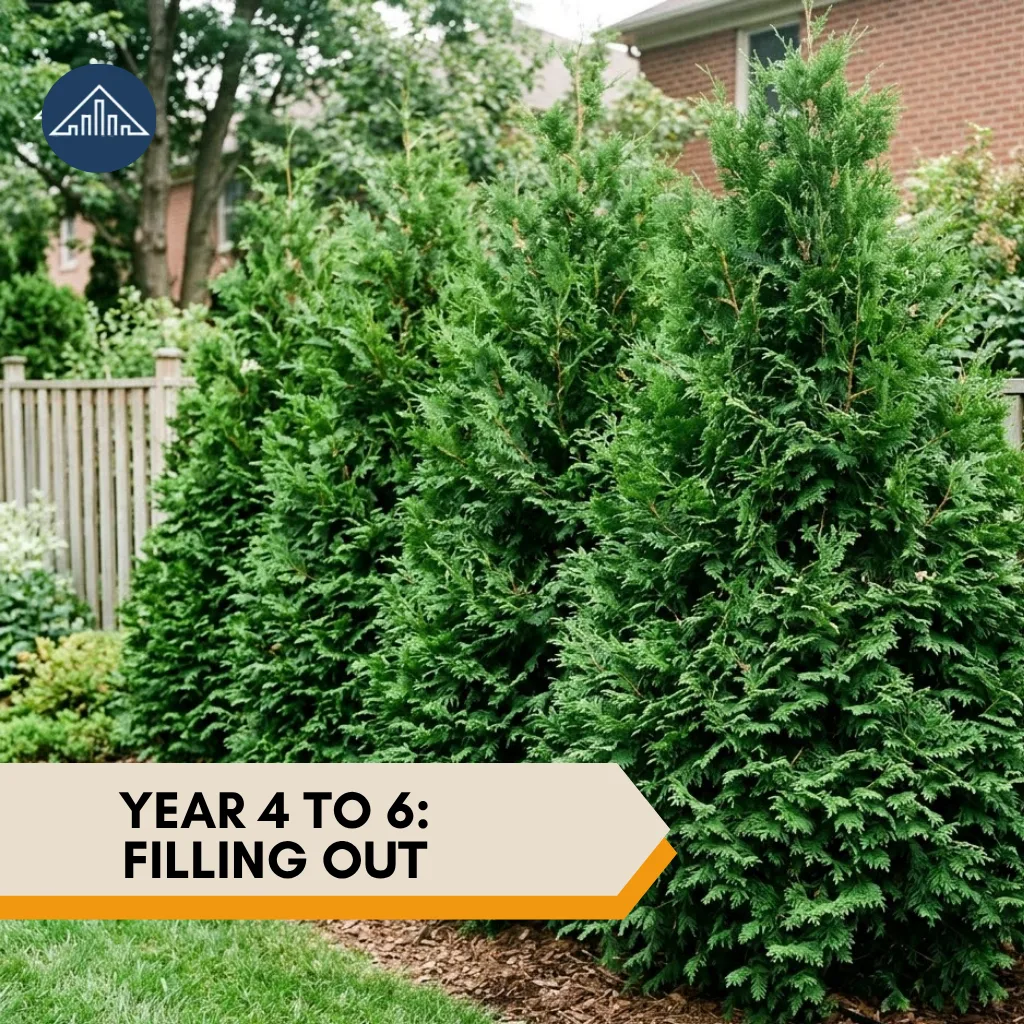
Year 4 to 6: Emerald Green Arborvitae Filling Out
Growth picks up to 12 inches annually, with the tree reaching 4 to 6 feet in height. The foliage becomes thick and layered, glowing with a deep green hue. Individual trees begin closing gaps, making privacy hedges look promising. Light pruning can encourage denser branching, while annual fertilization and watering during dry spells remain the primary maintenance requirements.
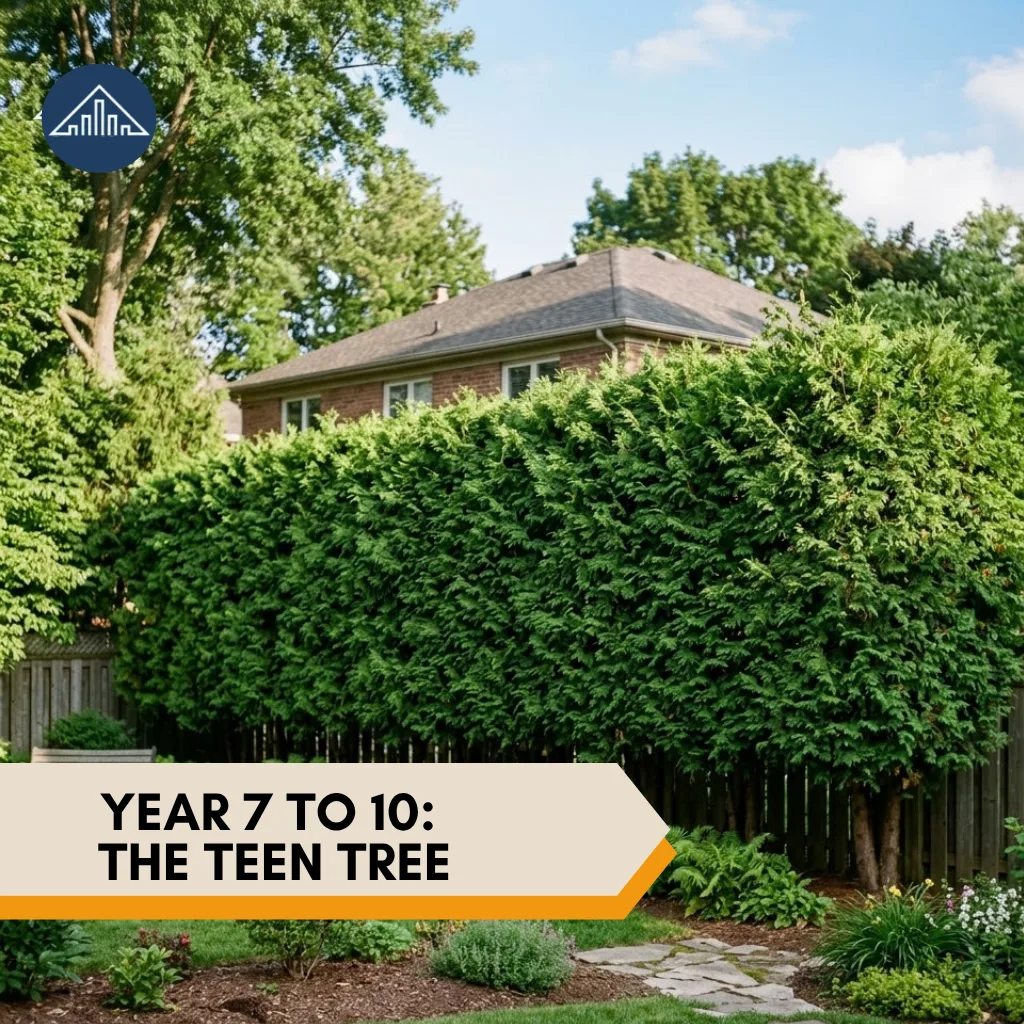
Year 7 to 10: Emerald Green Arborvitae Teen Tree
The tree enters its most impressive phase, standing 7 to 10 feet tall. For those planting hedges, this is the “payoff” stage where the row becomes a solid, continuous wall of green. Privacy is fully realized, and noise is significantly reduced. The tree is now largely self-sufficient, requiring only annual fertilizer and deep watering during extreme heat.
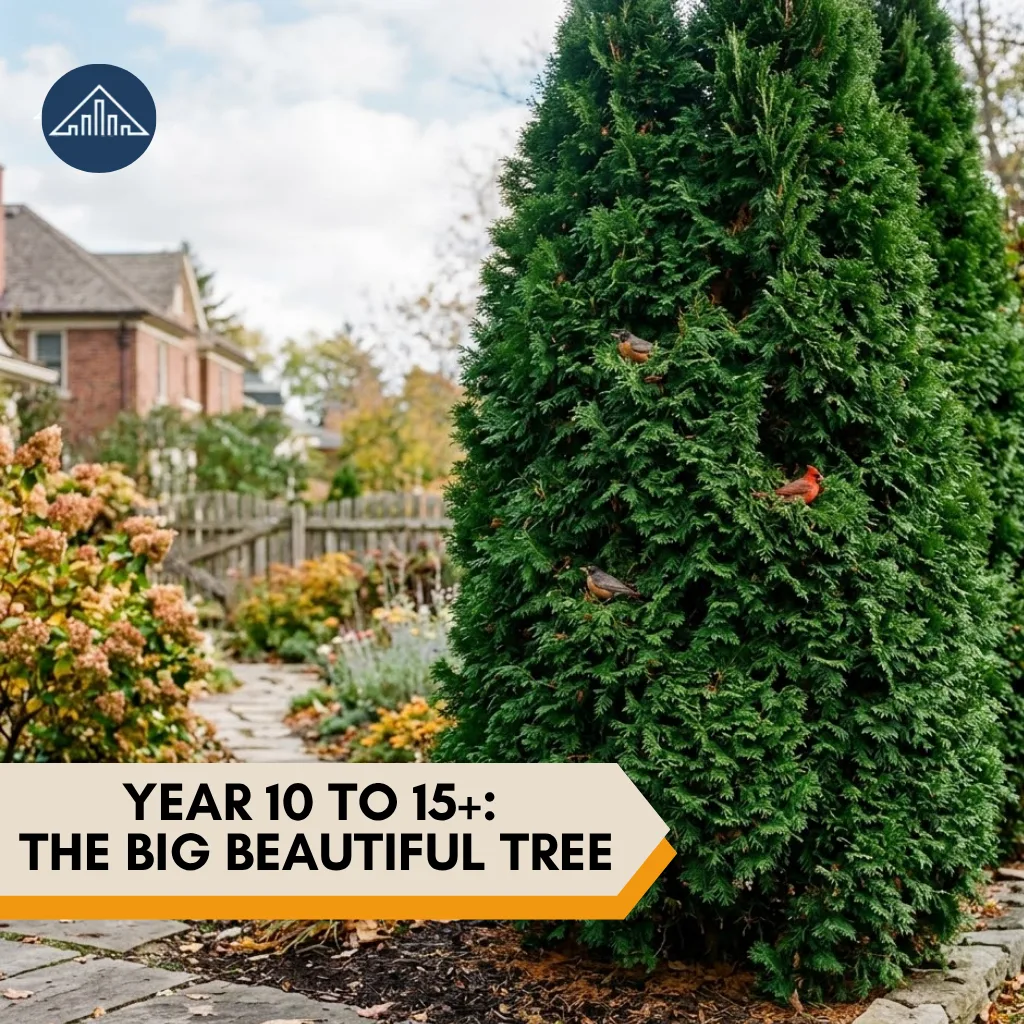
Year 10 to 15+: Emerald Green Arborvitae Big Beautiful Tree
Reaching full maturity at 12 to 15 feet tall, the tree’s upward growth slows as it focuses on maintaining its form. It becomes a permanent, living wall that provides a habitat for birds and resists winter browning. Virtually self-sufficient, it remains a long-term landscape investment, often living for 25 to 50 years with minimal intervention or care.
Common Challenges: The Troubleshooting Guide
Browning is a frequent challenge, often triggered by transplant shock or poor drainage. In the event of flooding or heavy rain, the primary risk is soil saturation; ensuring the site is elevated or well-drained prevents the roots from suffocating.
While these trees prefer neutral soil, acidic rain can alter the ground’s chemistry and damage foliage, making it vital to monitor soil pH and rinse the needles after heavy storms. Slow growth usually stems from excessive shade, while pests like bagworms require manual removal. Managing moisture during extreme weather remains the best defense against decline.
Mastering the Elements: Climate & Care
From freezing winters to scorching summers, your trees need a tailored defense to stay vibrant. Here is how to master the elements and ensure your landscape thrives in every season.
Temperature and Sunlight
Emerald green arborvitaes are exceptionally hardy, thriving in USDA zones 3 through 8. They prefer moderate temperatures but are built to withstand winter lows reaching $-40^\circ$C. For the best growth and vibrant color, they require at least 6 hours of full sun daily. While they tolerate heat, they may struggle in zones 9 or higher where tropical humidity and extreme night temperatures prevent the tree from “resting.”
Watering Needs
Watering is the most critical factor for survival. Newly planted trees need a deep soak once or twice a week to ensure the root ball never completely dries out. Established trees are remarkably drought-tolerant but still require supplemental watering during extended dry spells. The goal is “moist but not soggy”—aim for about one inch of water per week, delivered slowly to the roots rather than the foliage.
Seasonal Safety: Hot Weather
During extreme summer heat, these trees face the risk of needle scorch and root stress. To protect them, apply a 3-inch layer of mulch to keep soil temperatures cool and moisture trapped. In regions with intense afternoon sun, provide deep watering in the early morning. If the tree is in a container or a particularly reflected-heat area (like near a brick wall), temporary shade cloth can prevent the foliage from “cooking.”
Seasonal Safety: Cold Weather
While naturally cold-hardy, “winter burn” can occur when freezing winds dry out the needles while the ground is frozen. To prevent this, water heavily in late autumn before the first frost so the tree is fully hydrated. For young trees in exposed northern sites, wrap them loosely in burlap to block desiccating winds. Avoid late-season pruning or fertilizing, as new growth triggered by these actions will be too soft to survive a freeze.
Creative Ways to Use It in Your Garden
Beyond privacy hedges, the emerald green arborvitae serves as a versatile landscape anchor. A single specimen provides elegant vertical structure at home corners, while pairs elegantly frame driveways or garden gates with timeless formality. Along boundaries, they create living walls that effectively dampen noise and block harsh winds, functioning as vital windbreaks for delicate gardens.
Their narrow footprint is particularly advantageous for smaller yards, where even a short row transforms the environment into a tranquil, secluded sanctuary. Whether used as a grand perimeter or a subtle accent, these trees offer year-round greenery that enhances both aesthetic appeal and property functionality.
Pro Tips for Success: The Insider’s Playbook
Ready to take your “green thumb” to the professional level? Growing a legendary hedge isn’t just about luck—it’s about knowing the secret handshakes of the horticulture world. Here is how to ensure your Emerald Green Arborvitae Tress don’t just survive, but absolutely thrive:
Master the “A-Frame” Silhouette
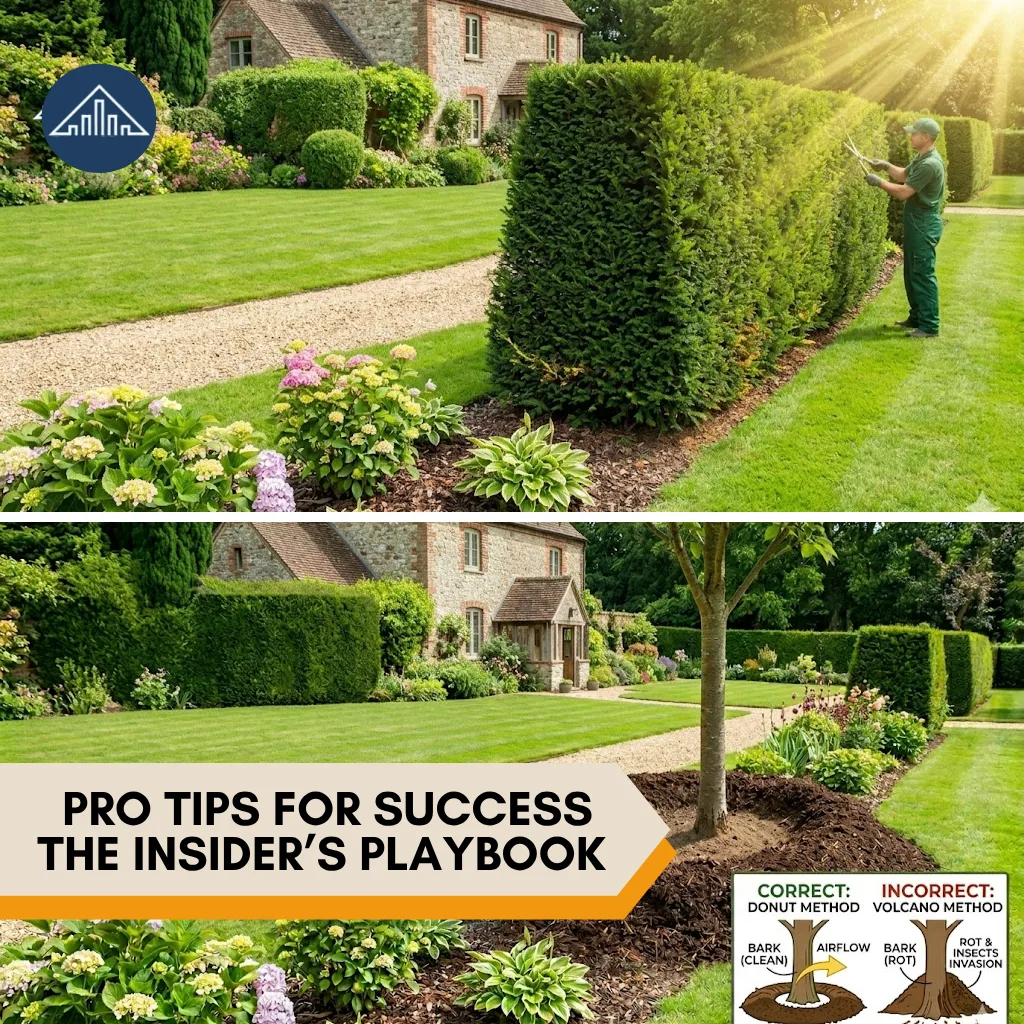
When trimming, always keep the bottom of the tree slightly wider than the top. This isn’t just for looks—it’s a mechanical necessity. It allows sunlight to reach the lowest branches, preventing the “balding” effect where the bottom of the hedge turns brown and thin.
The “Anti-Volcano” Mulching Method
While mulch is vital for cooling the roots, never let it touch the bark. Create a “donut” shape, leaving a three-inch gap around the trunk. Piling mulch against the wood creates a damp environment that invites rot and wood-boring insects to move in.

Deep-Soak Hydration Strategy
Avoid daily light sprinkles, which encourage weak, surface-level roots. Instead, give your trees one or two massive, slow “soaks” per week. This forces the roots to grow deep into the cool earth, making your trees virtually bulletproof during intense heatwaves.
The “No-Go” Zone for Pruning
Never prune back into the old, bare wood in the center of the tree. Unlike many deciduous shrubs, arborvitaes cannot regrow from old wood. If you cut too deep, you’ll be left with a permanent brown hole. Always stay in the “green zone” to keep the foliage lush and regenerating.
Long-Term Legacy and Lifespan
The emerald green arborvitae is a long-term investment in your landscape, typically boasting a lifespan of 25 to 50 years when properly maintained. While resilient, these trees usually succumb to environmental stressors rather than old age. The primary “killers” are root rot from poorly drained soil and extreme drought, which causes irreversible browning. Additionally, heavy snow loads can split the multi-stemmed trunks, and severe infestations of bagworms or spider mites can defoliate and kill a tree if left untreated for multiple seasons.
The Emerald Insider: Your Burning Questions Answered About Emerald Green Arborvitae
Got a question about your green guardians? We’ve rounded up the most common curiosities to help you navigate the “ins and outs” of arborvitae care like a pro.
Help! Why is the inside of my Emerald Green Arborvitae tree turning brown?”
Don’t panic! This is usually just seasonal needle drop. Because the outer “shell” of the tree is so dense, the inner needles don’t get enough sunlight to survive, so the tree sheds its old, interior growth every autumn. If the tips are green and the inside is brown, your tree is likely just doing some “closet cleaning.”
Can I keep Emerald Green Arborvitae in large pots on my patio?
Absolutely! They make stunning, formal accents in containers. Just remember: pots dry out much faster than the ground. You’ll need to be a diligent “hydration hero,” especially in the summer, and ensure the pot has excellent drainage so the roots don’t turn into a swamp.
Will my dog’s ‘business’ kill the tree?
In short: yes, it can. Dog urine is high in nitrogen, which acts like a concentrated chemical burn on the lower foliage. If you have a furry friend, try to encourage them to use a different “fire hydrant,” or rinse the lower branches with fresh water immediately to dilute the salts.
How do I keep heavy snow from splitting my tree?
These trees have a multi-stemmed structure that can splay open under heavy, wet snow. If a blizzard hits, go out with a broom and gently brush the snow upward off the branches. For extra security, some growers use green garden twine to loosely wrap the mid-section of the tree in winter, acting like a “support belt” against the weight.
Is it true Emerald Green Arborvitae smell like Christmas?
Close! They have a light, clean cedar-like fragrance. You won’t smell it just standing nearby, but if you brush against the foliage or crush a few needles, it releases a refreshing, earthy scent that makes garden maintenance feel like a trip to the spa.
Do you know Emerald Green Arborvitae scientific name?
It functions as a versatile anchor for privacy, windbreaks, and structure. By the way, do you know its scientific name? It is officially known as Thuja occidentalis ‘Smaragd’.
The Silent Impact of the Emerald Legacy
If every Emerald Green Arborvitae were to vanish tomorrow, our landscapes would lose more than just a “pretty fence.” We would lose vital urban cooling, bird habitats, and natural air filters. Without these living walls, wind would howl unchecked against our homes, and road noise would pierce our quiet sanctuaries. They are the unsung guardians of privacy and local ecology. Their disappearance would leave our yards exposed, sterile, and loud, reminding us that these “quiet” trees were actually doing the heavy lifting of making our houses feel like homes.
Conclusion
The journey from a tiny spring cutting to a majestic 13-foot living wall is a masterclass in patience. The Emerald Green Arborvitae asks only for sun, soil, and water; in return, it provides a lifetime of vibrant privacy and structural beauty.
In just one decade, that small start transforms into your yard’s defining feature—a lush, year-round barrier that quiets the world and completes your garden. Start small and remain consistent. The transformation is inevitable, and the reward is a lasting legacy of green.
So get ready with me to make this Emerald Green Arborvitae journey successful.
