
The Winchester House in California: The Strangest Mansion Ever Built 🏚️

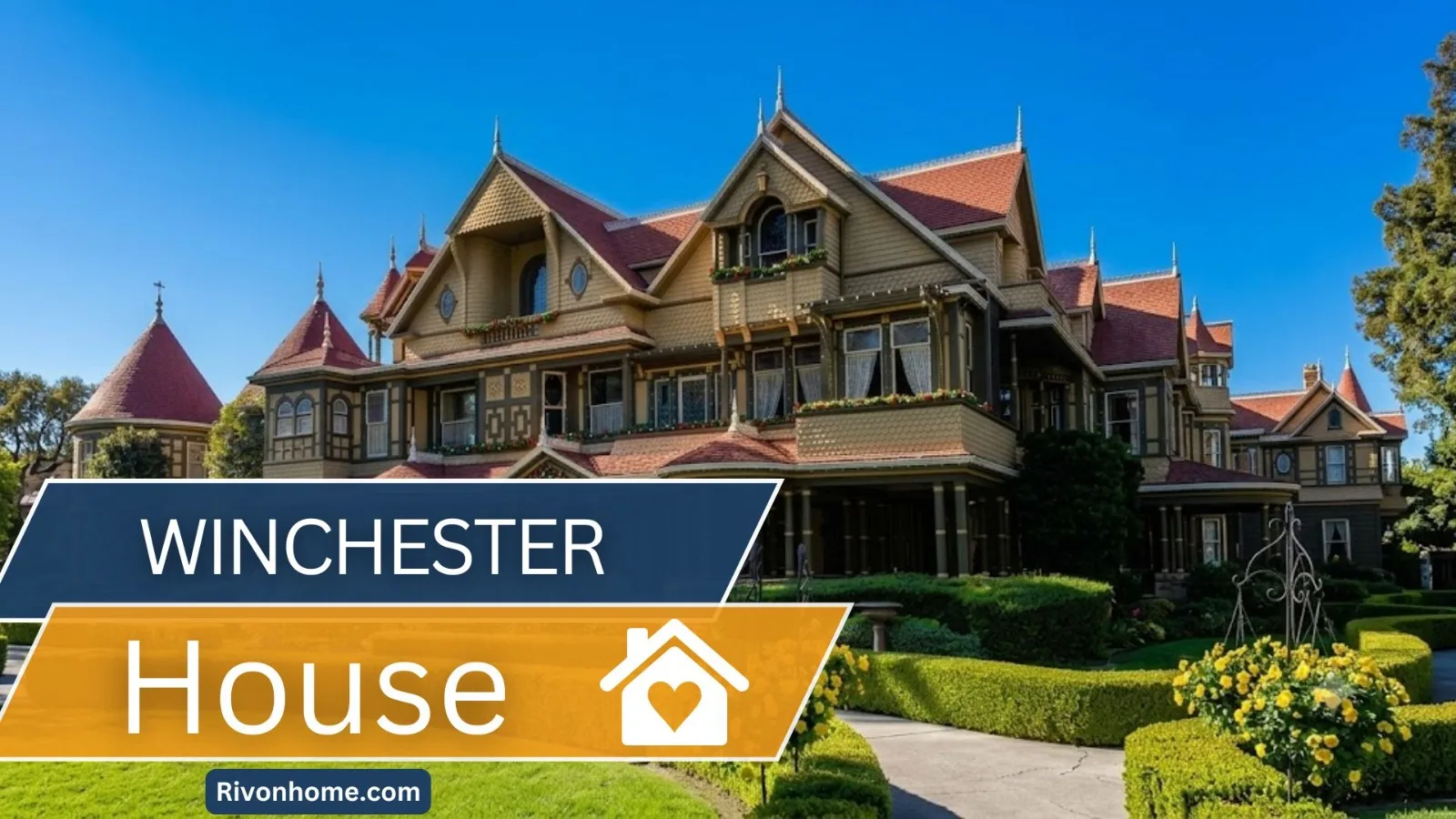
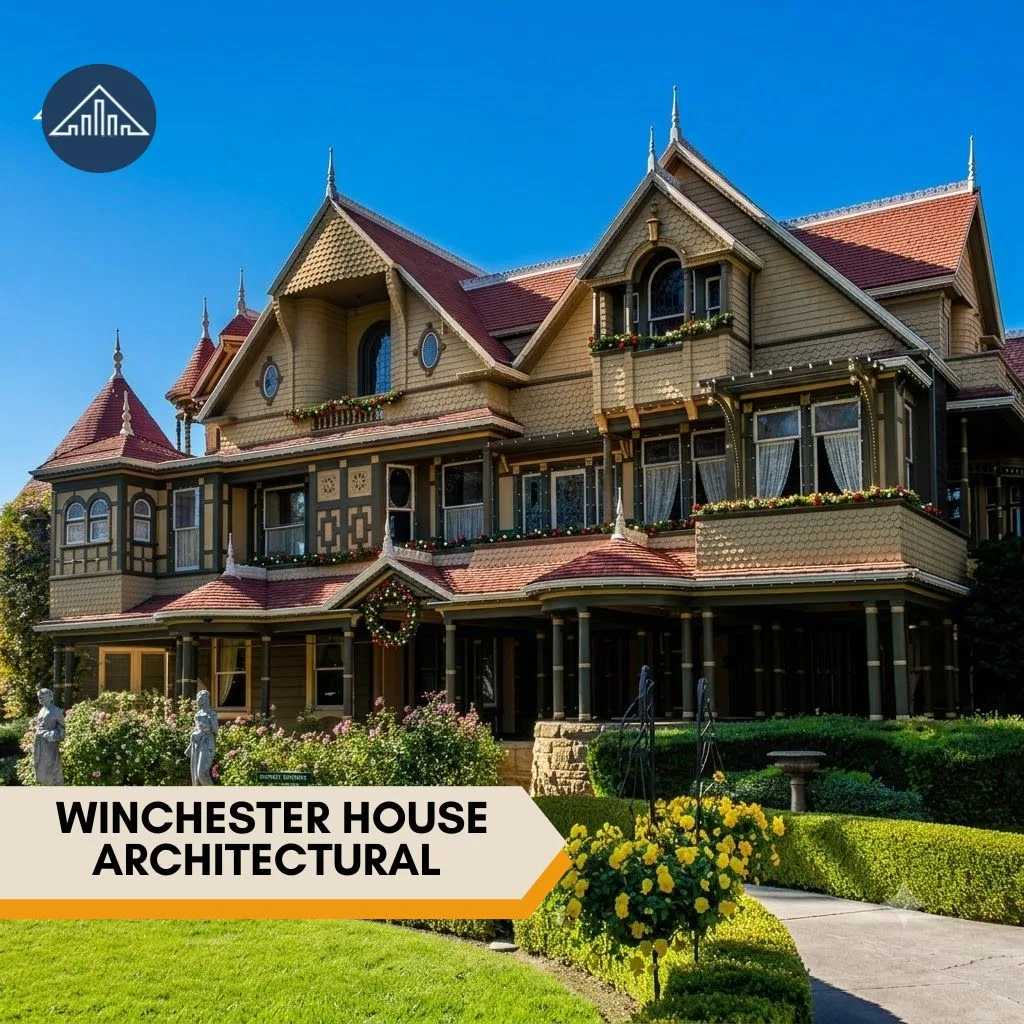
The Winchester Mystery House in San Jose stands as America’s most fascinating landmark. Sarah Winchester built it over 36 years until 1922. This Victorian Winchester House features unusual design and endless additions. Like the Christian Heurich House in Washington D.C., it reflects a wealthy industrialist’s passion and legacy.
Property Snapshot Table
Winchester Mystery House: A Remarkable 24,000 Square Foot Victorian Mansion with 160 Rooms Built Over 38 Continuous Years of Construction
| Feature | Details |
|---|---|
| Location | 525 S. Winchester Blvd, San Jose, CA 95128 |
| Built | 1886–1922 (36 years of construction) |
| Total Rooms | 160 rooms |
| Windows | 10,000 windows |
| Doors | 2,000 doors |
| Bathrooms | 13 bathrooms |
| Kitchens | 6 kitchens |
| Fireplaces | 47 fireplaces |
| Staircases | 47 staircases |
| Architectural Style | Victorian and Gothic |
| Owner | Sarah Winchester (1839–1922) |
| Status | National Register of Historic Places |
Location & Surroundings
Full Address: 525 S. Winchester Blvd, San Jose, CA 95128
San Jose sits in the Santa Clara Valley, an area known for being warm and dry. Sarah Winchester chose this location for health reasons, believing the climate would help her arthritis. Over time, she transformed it into an estate grand enough to rival storied European residences like Clarence House, creating something truly unbelievable.
The Mystery Begins: A First-Person Tour
As Stefano Schiavon from RivonHome, walking through the front doors of the Winchester Mystery House felt surreal. Twisting hallways, hidden passages, staircases leading nowhere, and windows opening into empty space created a maze unlike any other.
Every room reflected Sarah Winchester’s unique vision, blending mystery with remarkable craftsmanship in a home that remains both puzzling and beautiful.
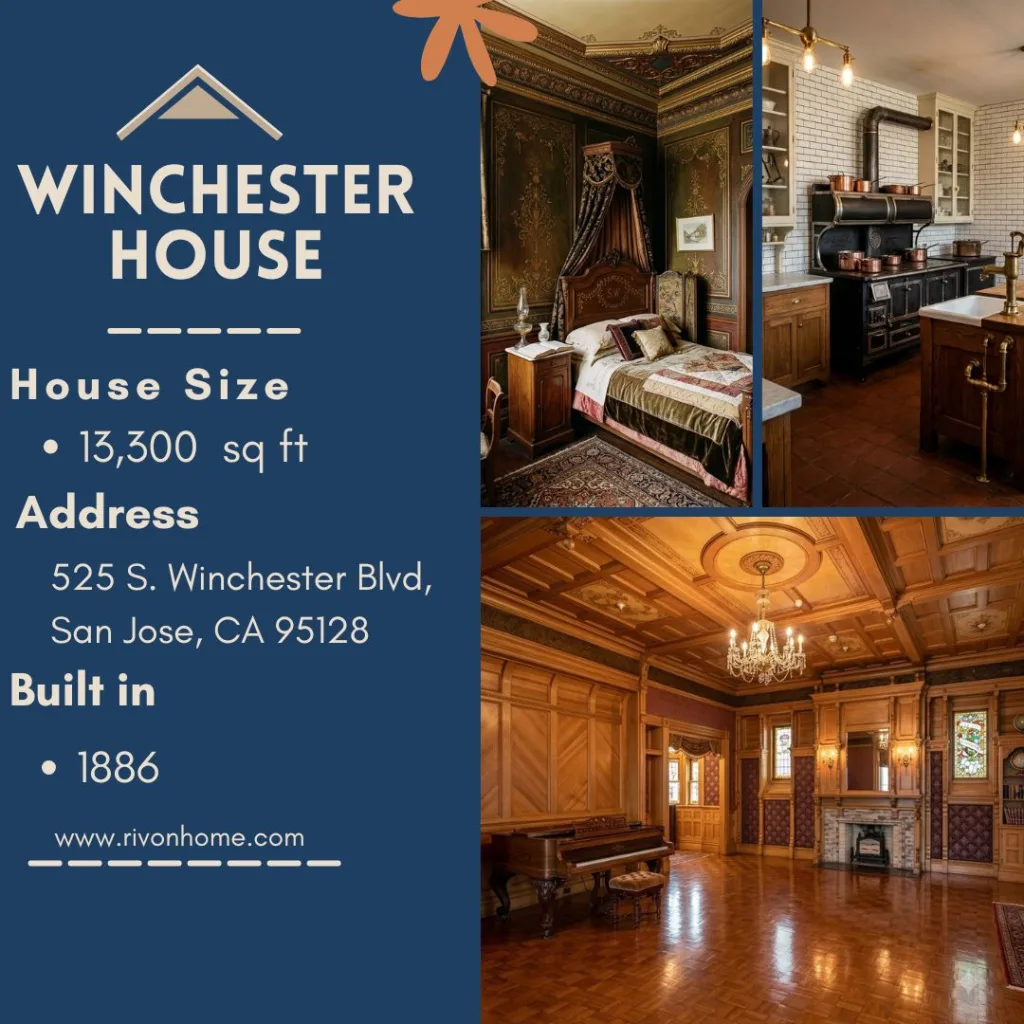
Inside Winchester House Interior and other features
Explore the Winchester House bizarre interior, featuring stairs leading nowhere, secret passages, doorless walls, and doors opening into drops.
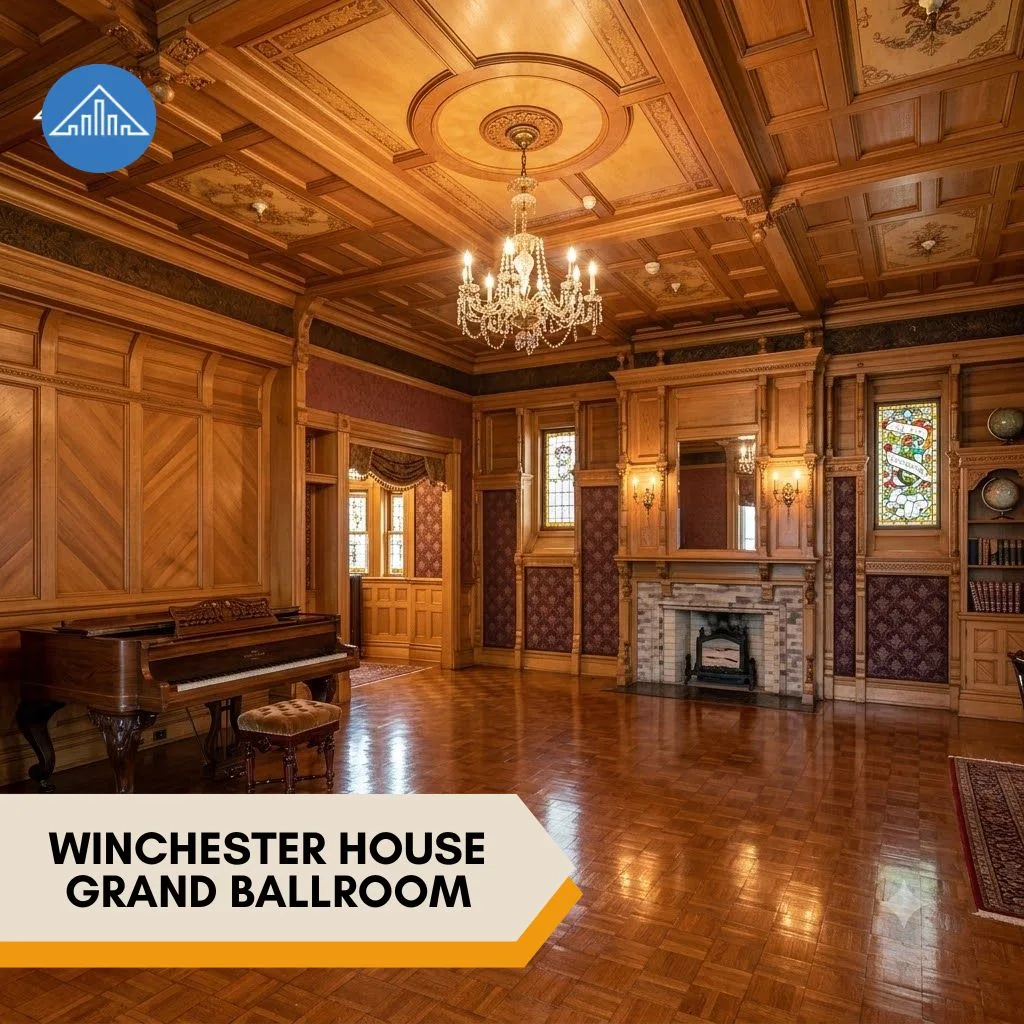
Grand Ballroom & Entertainment Spaces
The breathtaking Grand Ballroom is Winchester House, featuring exquisite teak, maple, and mahogany floors below carved wooden walls. German chandeliers illuminate the space, where two large windows—etched with Shakespearean quotes from Richard II and Troilus and Cressida—frame a brick fireplace amid imported Asian furnishings, French paintings, and Austrian art glass.
Bedrooms & Personal Quarters
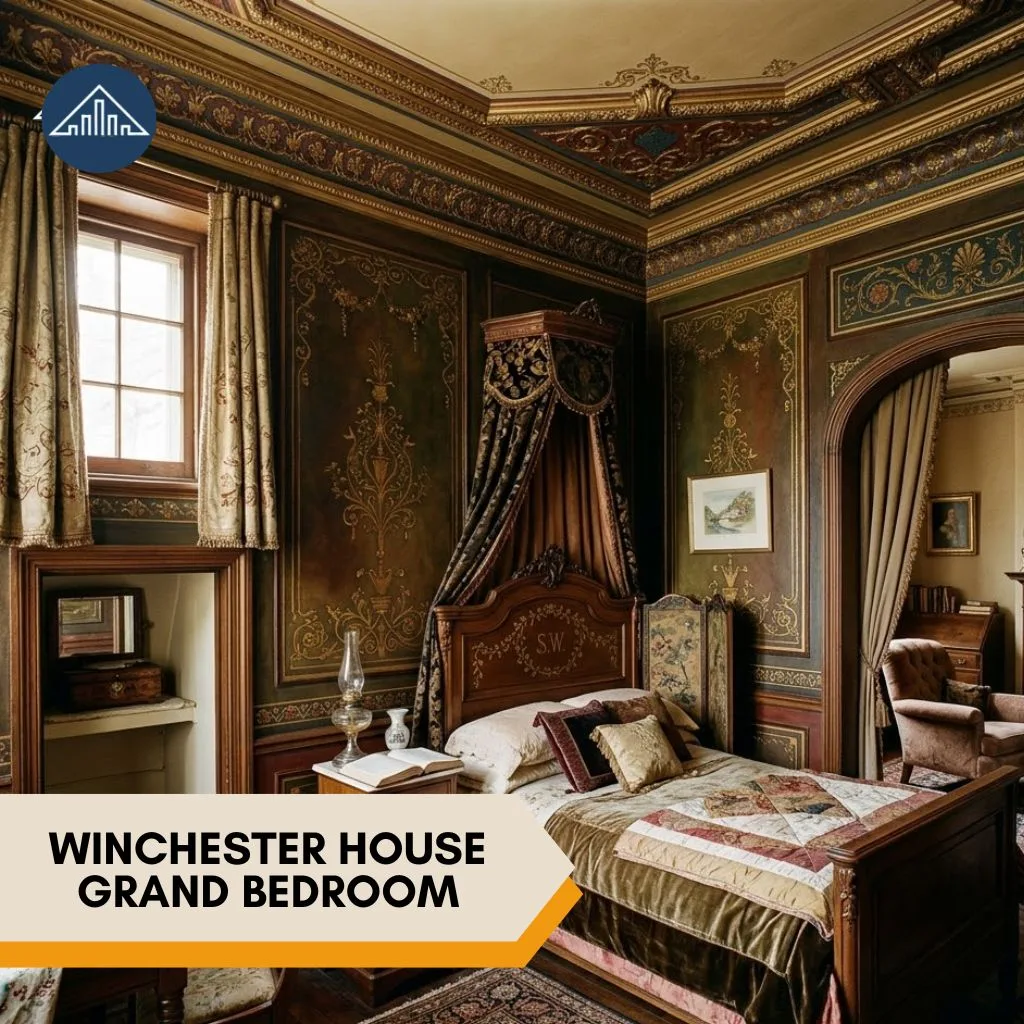
Sarah designed intimate bedrooms with sitting and sewing rooms, balancing comfort and beauty. Much like how the iconic Brady Bunch House layout captures pop-culture imagination, her spaces feature intricate stencil work, elaborate moldings, and hidden alcoves. Every detail was carefully planned; nothing was random, and everything held a deeper meaning.
The Kitchen & Dining Areas
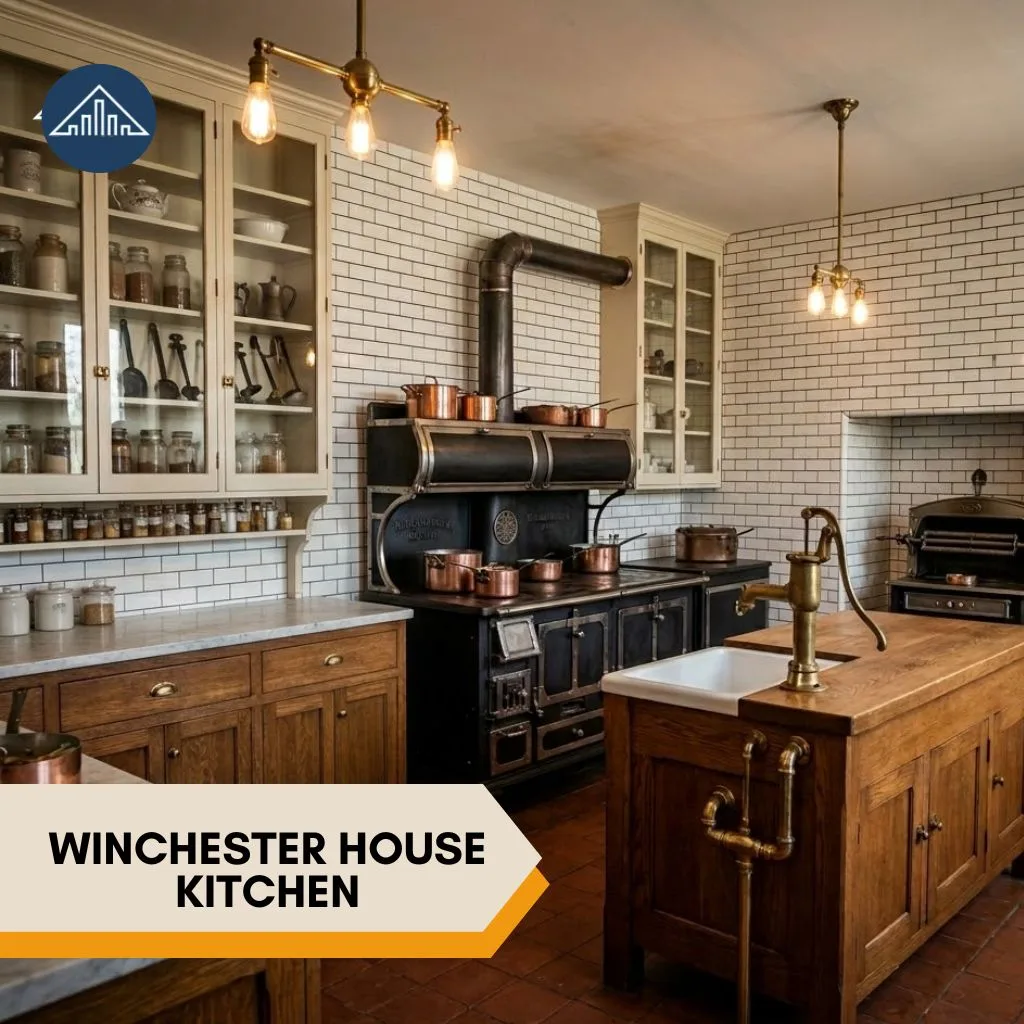
Sarah built six functional, meticulously designed kitchens equipped with state-of-the-art 1890s technology. Featuring modern plumbing and powered by a rare, custom-installed electrical generator, each polished space was optimized for food preparation as an art form. Today, these impressive, ahead-of-their-time cooking spaces continue to fascinate Winchester House residents.
Staircases & Architectural Oddities
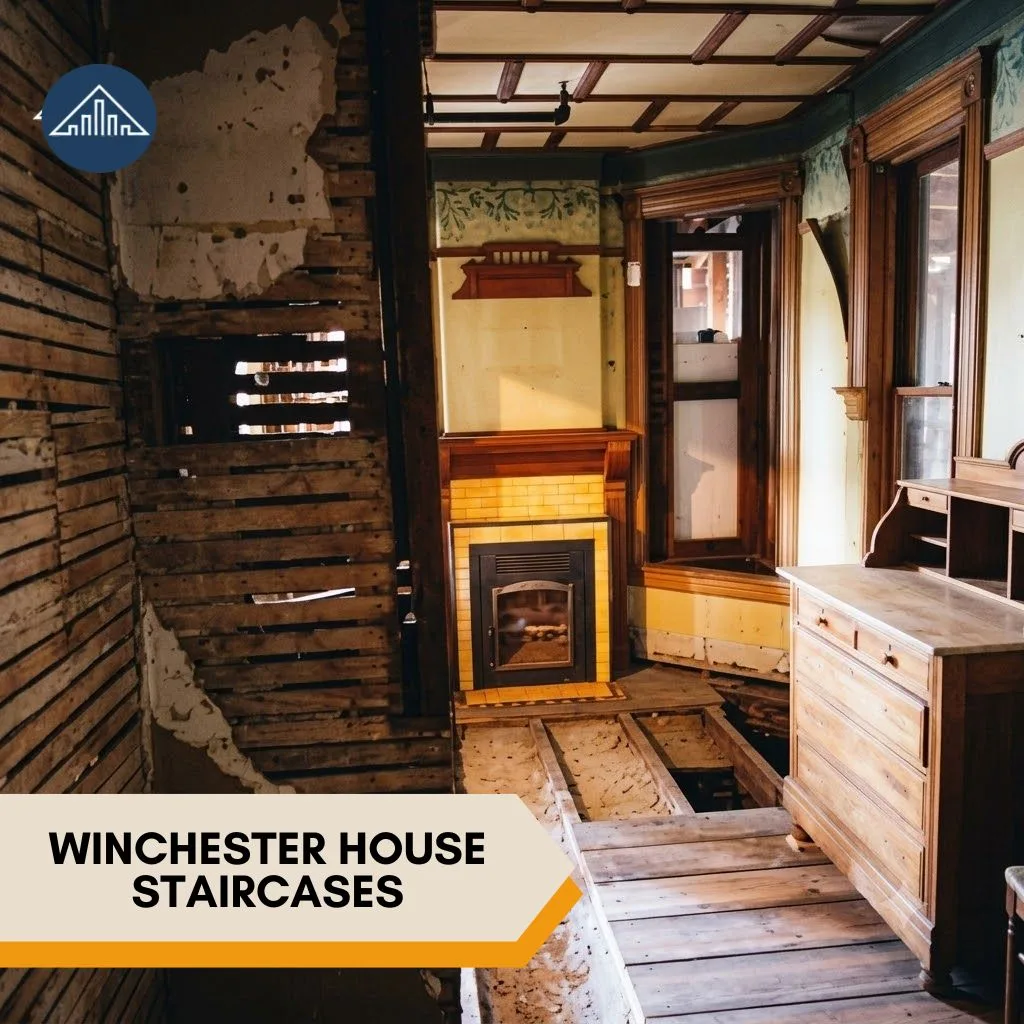
Sarah’s height was four feet ten inches. She had health problems. So she built a staircase differently. It has 44 steps. It only rises ten feet. This makes it very shallow. Visitors struggle going up and down. But Sarah could move easily. Other stairs twist and turn. Some lead nowhere. They stop at ceilings. Some go up three stories. Others are seven feet wide. The architecture breaks every rule. Architects are still confused.
Windows & Glass Work
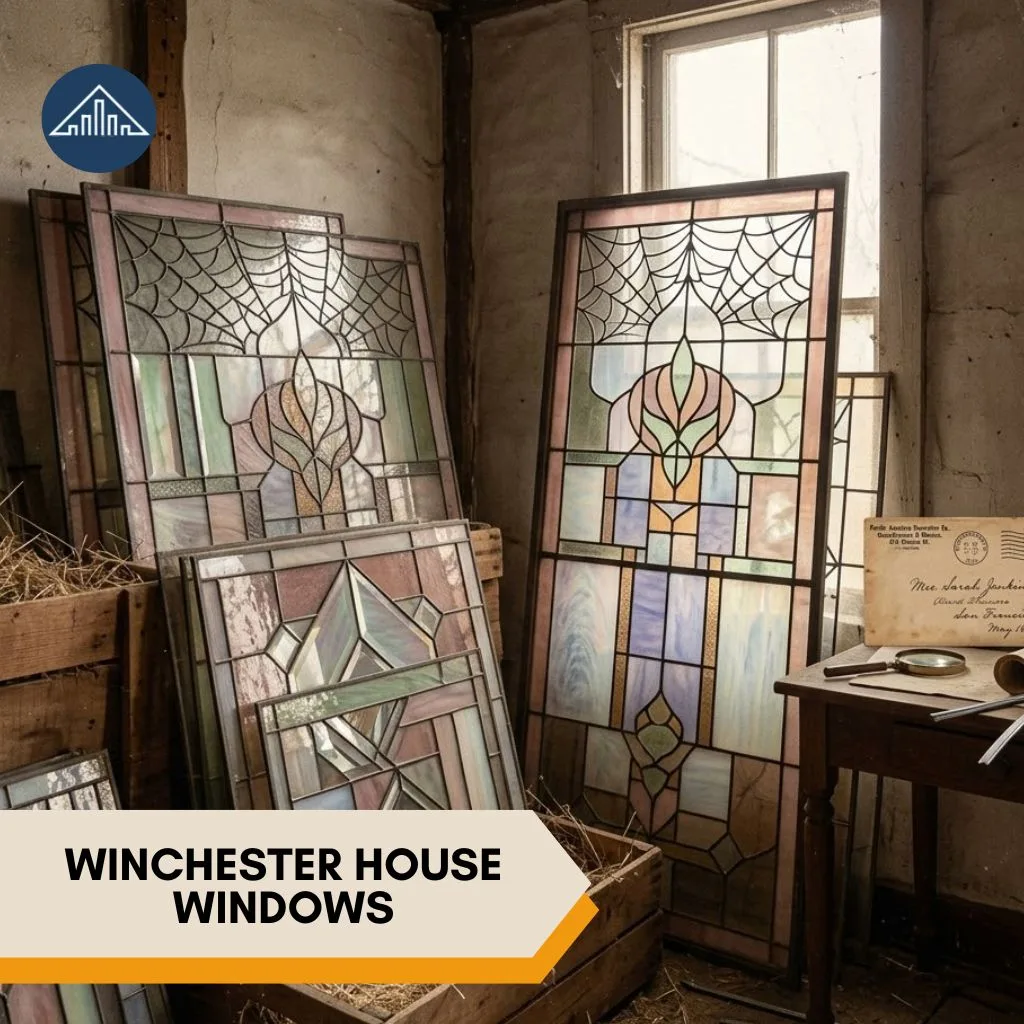
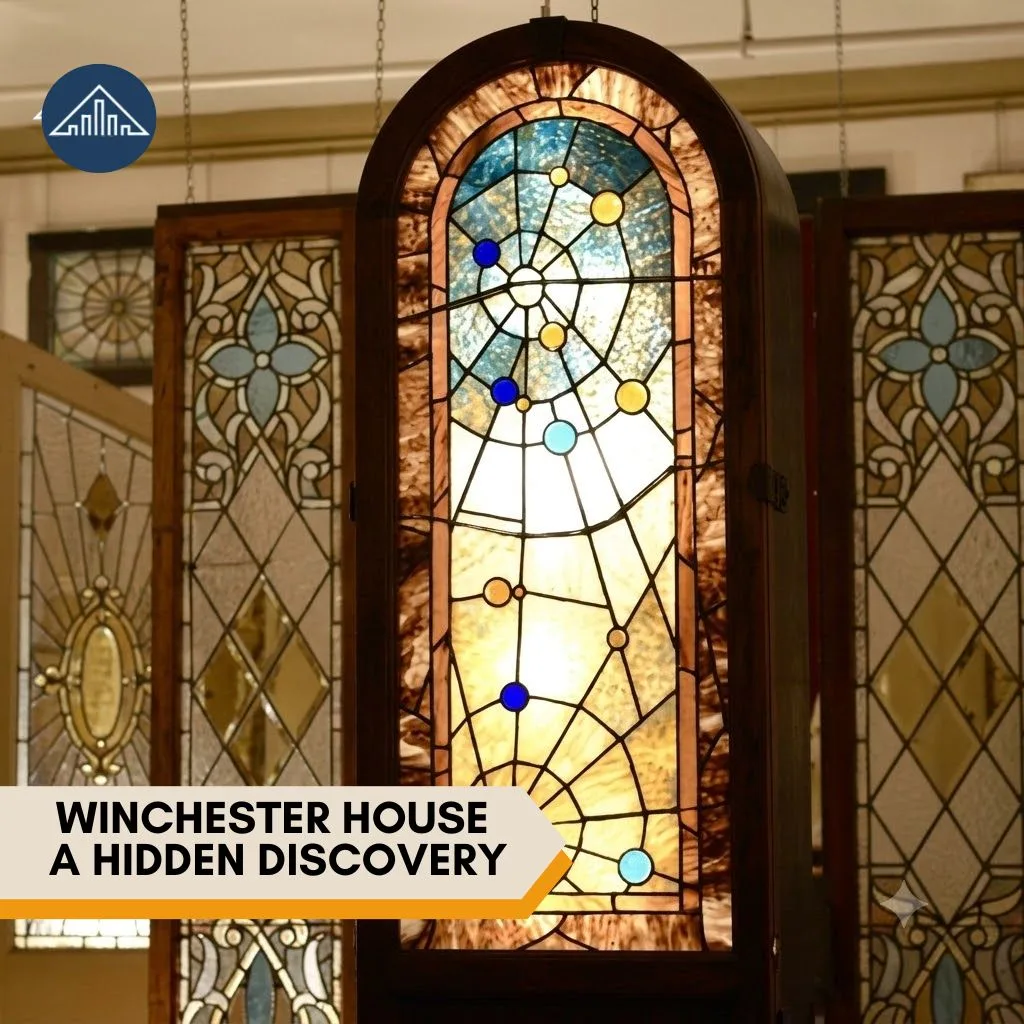
The 1890s-fashionable upper-level windows feature pastel colors, sharp bevels, and asymmetrical spider-web tracery. Crafted by skilled artisans, an 1894 wall discovery confirms they came from the Pacific American Decorative Company, likely designed by John Mallon. While the glasswork is outstanding, many uninstalled pieces remain stored away in a Winchester House.
Earthquake & Its Aftermath
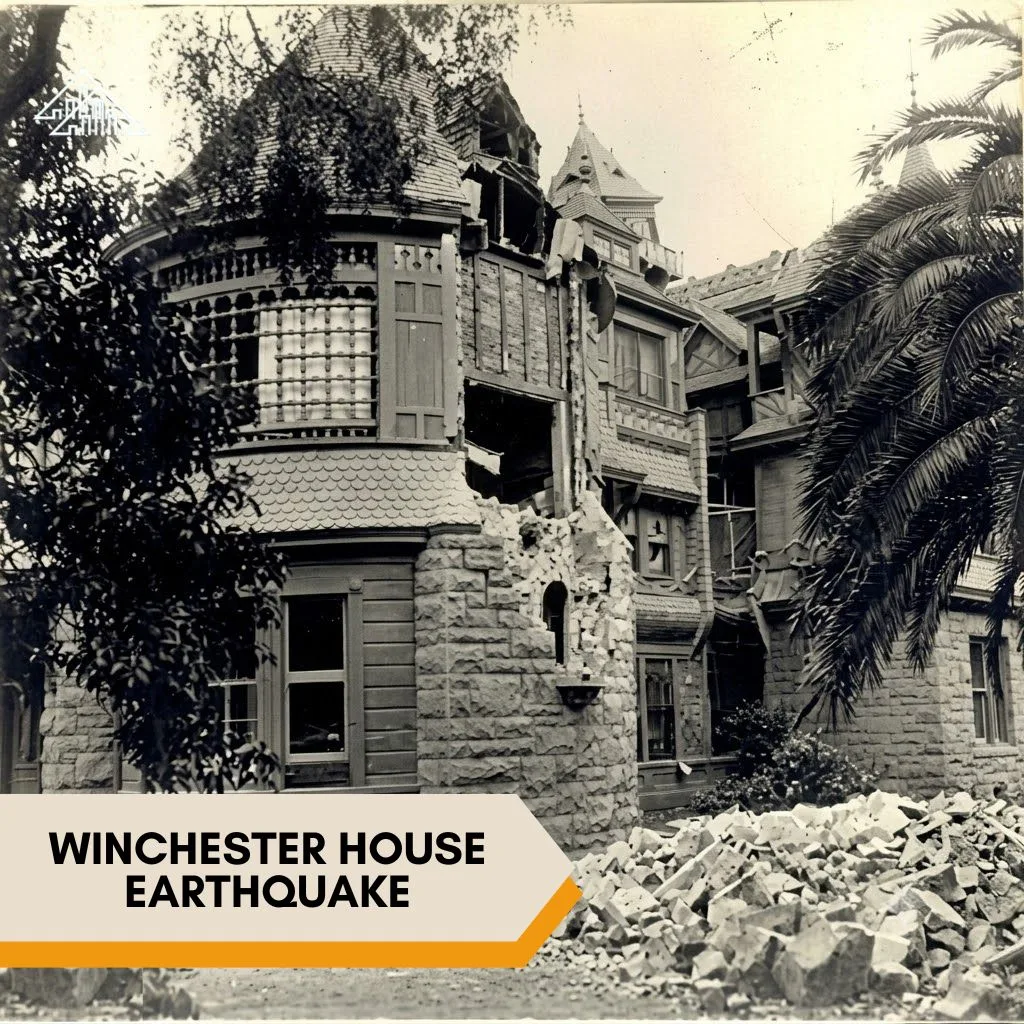
The 1906 earthquake severely damaged the Winchester House mystery, collapsing its tall tower and an entire wing. Staying in Atherton, Sarah halted new construction, choosing to only maintain the remnants. This created bizarre anomalies: doors opening to nothing and staircases ending in thin air. The damage permanently became part of the legend.
Sarah Winchester Life & Legacy
Born in New Haven, Connecticut in 1839, Sarah married firearms heir William Wirt Winchester in 1862. Tragically losing her infant daughter, husband, father-in-law, and mother, she inherited a massive fortune. Overwhelmed by grief despite her immense wealth, the immense pain shaped her choices, driving her to build the Winchester House to keep working.
The Myths vs. The Truth
Tour guides spun wild myths claiming Sarah held séances to appease haunting spirits. However, historian Mary Jo Ignoffo and Sarah’s own family confirm she was a sensible, sharp business woman, not a superstitious one. Ditching hired architects to execute her own vision, she built exactly what she wanted, pure and simple.
The 13 Obsession: Fact or Fiction?
Myths claim Sarah was obsessed with the number thirteen, pointing to thirteen windows, bedrooms, and bathrooms. However, carpenter James Perkins confirmed these features were added after her death. Spurred by a 1929 article, tour companies sensationalized this marketing gimmick to attract visitors, burying the real history beneath an enduring legend.
How It Became a Tourist Attraction
Sarah died on September 7, 1922. Nine months later, the house opened to tourists. It was in bad shape. No one thought it had value. A group of investors bought it. John and Mayme Brown leased it first. Then they bought it in 1931. Mayme became the first tour guide. She told stories about the house. People loved the mystery. The myths grew bigger. By 1973, Keith Kittle was hired as manager. He added a rifle museum. He put up billboards on highways. Attendance exploded.
The Winchester Movie & Pop Culture
The 2018 film starred Helen Mirren. It dramatized Sarah’s story. But much of it was fictional. The movie claimed she believed in spirits. This contradicts historical records. The film was entertaining. But historians say it’s inaccurate. The movie inspired more people to visit. Disney’s Haunted Winchester House was inspired by this house. Stephen King’s Rose Red also drew from it. Books, podcasts, and TV shows featured the Winchester House. The legend lives on everywhere.
Visiting Today: Practical Information
The Winchester House opens daily for tours. Standard tours last about 65 minutes. You see 110 of the 160 rooms. Guides talk about the history. They explain the architecture. Special tours are available for extra fees. Basement access costs $13 more. Attic access also costs $13. You can do both for $19. The Winchester House sits at 525 S. Winchester Boulevard. Parking is available on-site. Group tours can be arranged. The gift shop sells souvenirs.
Virtual & Online Tours
You can now take virtual tours online of Winchester House. The 360-degree tour lets you explore rooms. You move through hallways from your computer. This helps you plan your visit. Some people watch before coming. Others enjoy it from home. The virtual tour is free on their website. Videos show different areas. You can pause and look around. Some rooms are easier to understand online. The scale becomes clearer. The oddities stand out more.
The Real Sarah Winchester
Sarah wasn’t crazy. Her relatives said she was sharp. Her employees respected her. She made smart business decisions. She understood architecture and design. She had vision. She hired the best workers. She paid them well. When she died, her will gave money to her staff. Everyone got something. This shows her character. She was kind and fair. History got her wrong.
Why Historians Reject the Myths
Mary Jo Ignoffo wrote the definitive book. It’s called “Captive of the Labyrinth.” She interviewed people who knew Sarah. She reviewed old newspapers. She found original documents. She proved most stories were false. The medium in Boston never existed. No one found gold plates in the safe. Just personal items and a lock of baby hair. Sarah took breaks from building. She wasn’t building constantly. The myths are layers of lies.
The Architectural Innovations
Sarah was ahead of her time. Most women didn’t design houses. She hired architects but trusted her instincts. She wanted specific things. She supervised every detail. She discussed ideas with carpenters. She borrowed designs from world’s fairs. She combined Victorian and Gothic styles. She added Romanesque touches. The result is unique. No other Winchester House looks like this. Architects study it today. It’s considered pioneering work. She deserves credit.
The Windows: A Hidden Discovery
The windows tell a story. Sarah wanted artistic glass. She bought from skilled artists. One envelope was hidden in a wall. It was dated July 1894. It had the seal of Alexander Dunsmuir’s company. An architectural historian discovered this. It proved John Mallon made the windows. Many historians missed this evidence. It changes how we understand the house. The windows were intentional art. Not random choices. Sarah had taste. She invested in quality.
Behind the Doors: What Made Sarah Different
Sarah lived privately. She didn’t attend social events much. Her arthritis got worse over time. She developed other health problems. Missing teeth and nerve pain troubled her. So she stayed home more. People gossiped. They invented stories. They said she was strange. But neighbors and employees knew the truth. She was kind. She was intelligent. She was focused. She had goals. She pursued them quietly.
The Connection to Disney Haunted Mansion
Disney’s designers looked at the Winchester house. The strange architecture inspired them. The twisting hallways. The confusing rooms. The unexpected turns. These appear in the Disney ride. Harry Houdini visited the house in 1924. He was impressed by the oddities. He may have suggested the name “Winchester Mystery House.” The legend spread from there. Now everyone knows about it. But few know the truth.
Media Legacy: Books, Podcasts & Shows
The Winchester House inspired many creators. Stephen King’s Rose Red borrowed from it. Tim Powers wrote about it. Michaela Roessner set her novel there. A musical called “The Haunting of Winchester” premiered in 2005. The show took place inside the house. Podcasts devoted episodes to it. BuzzFeed Unsolved filmed there. Ghost Adventures visited. Paranormal shows love this place. But most get the story wrong. The myths are more dramatic. Drama sells better.
The 1906 Earthquake’s Real Impact
The earthquake changed everything. A seven-story tower fell down. Chimneys collapsed everywhere. One wing was completely destroyed. The third and fourth floors came down. Sarah was at her other home. She didn’t return to rebuild. She had other properties. Atherton was where she spent most time. Some damage remained. Doors opened to thin air. This wasn’t intentional. It was earthquake damage. But people created stories around it. They said it was mysterious. It became part of the legend.
The Safe & the Gold Plates Myth
Legend says Sarah kept gold plates hidden in a safe, a story tour guides told for years. However, when opened, it contained only personal mementos like a lock of her baby’s hair, shattering the myth. While pop culture fans love visiting eccentric landmarks like the famous Shameless Chicago house, Sarah’s Winchester House was driven by real art, not supernatural gold plates.
The Basements
Two basements exist in the Winchester House. Tour guides say they’re haunted. They claim paranormal activity happens there. But paranormal investigators found no evidence. The basements are just old spaces. They have foundation walls. Pipes run through them. The water trap doors were practical. They drained water from the greenhouse. Everything has a logical explanation. But the stories persist. Dark rooms. Old air. Creepy feelings. This is enough to fuel legends.
Modern Preservation Efforts
The Winchester House needs constant care. It’s over 100 years old. Many repairs happen every year. Walls need restoration. Woodwork needs refinishing. The site employs preservation specialists. They study original materials. They match colors carefully. They replace damaged sections. Insurance covers much of the work. Special event tourism helps pay for maintenance. The Winchester House is now a registered historic place. It’s protected by law. Future generations will see it.
Annual Visitors & Tourism Impact
Thousands visit every year. The attraction brings money to San Jose. Hotels fill with tourists. Restaurants get business. Gift shops profit. The economy benefits. TripAdvisor rated it top 10% worldwide. The Traveler’s Choice award came in 2025. This shows its importance. The house is a draw. People fly there to see it. Families spend days exploring. The impact is significant.
Conclusion
The Winchester Mystery House is real and remarkable. But the stories told about Sarah are mostly false. She wasn’t superstitious. She wasn’t haunted by ghosts. She wasn’t cursed. She was an intelligent woman. She was an architectural visionary. She had money and freedom. She used both to create something unique. The Winchester House stands as her legacy. It’s strange. It’s beautiful. It’s entirely her own. Visit and judge for yourself. The truth is more interesting than fiction.
