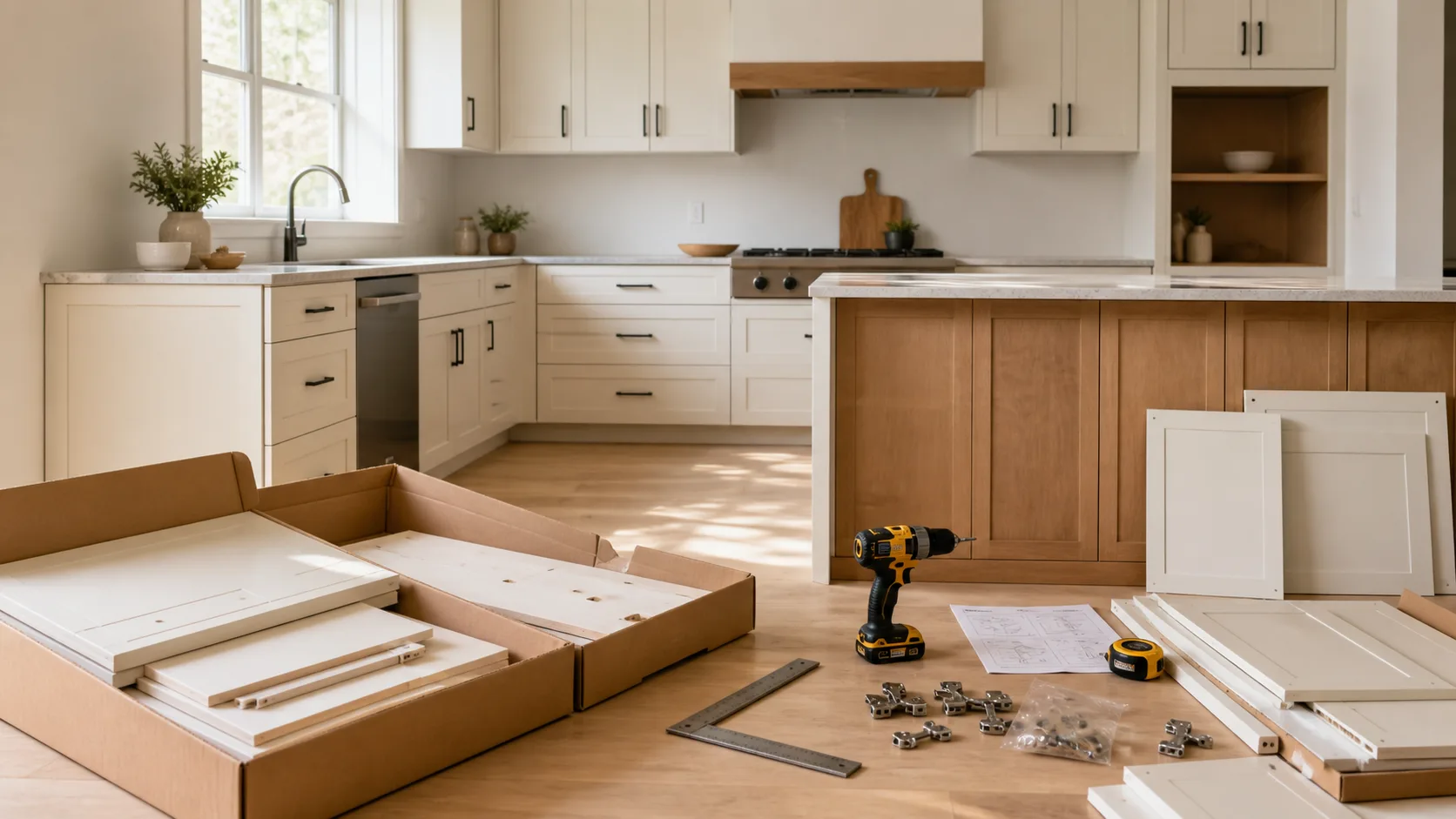
I said yes to ready-to-assemble cabinets for one reason: my contractor’s schedule wasn’t going to bend, and a custom order quoted at twelve weeks. RTA looked like the only way to keep the timeline intact. What I didn’t expect was how much the quality of RTA cabinets varies once you actually start comparing boxes side by side. Very little of that shows up in a product photo.
Eighteen months and one full kitchen later, here’s the checklist I wish someone had handed me before I placed the order.
Start with the box, not the door
Every RTA listing leads with the door: the color, the finish, the hardware. That’s the part you’ll look at every day, so it’s tempting to shop on it first. But the door isn’t what fails in year four. The box is.
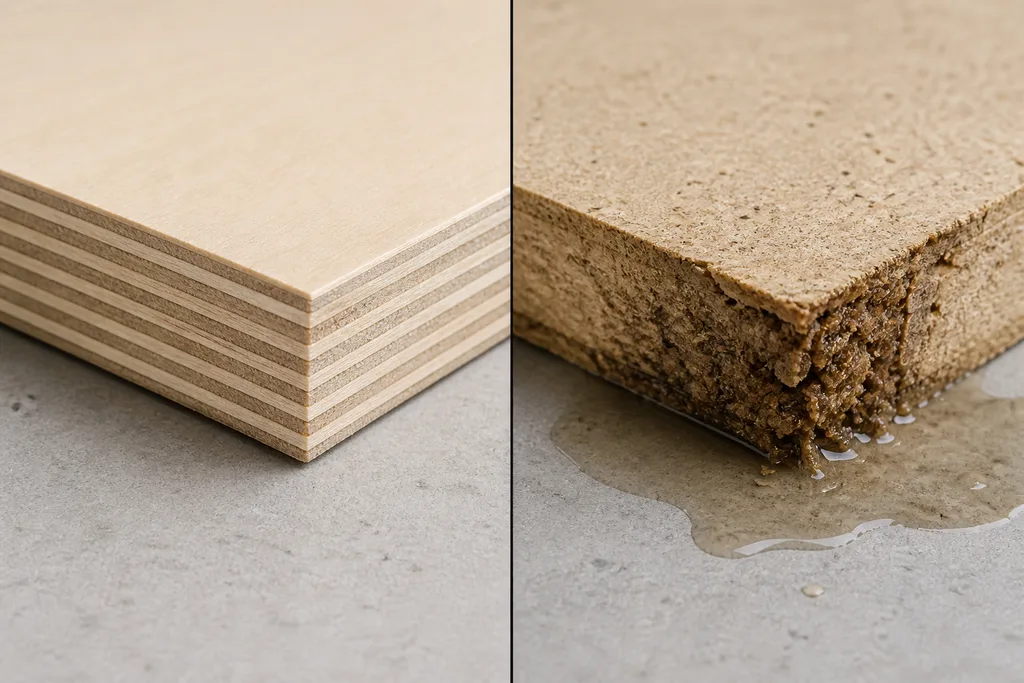
Ask what the box is actually made of before anything else. “Wood” isn’t an answer. Plywood and particleboard are both technically wood, and they behave completely differently once they’ve been near a dishwasher for a few years. I specifically asked for 3/4-inch plywood boxes, not particleboard, and I’d do it again. Particleboard swells at the seams the first time it gets damp, and in a kitchen, damp is not an if. I remember checking a few RTA sellers on this exact point, and Express Kitchens was one of the ones that actually stated the box material upfront instead of burying it in a spec sheet three clicks deep.
Check the drawer construction separately from the cabinet construction
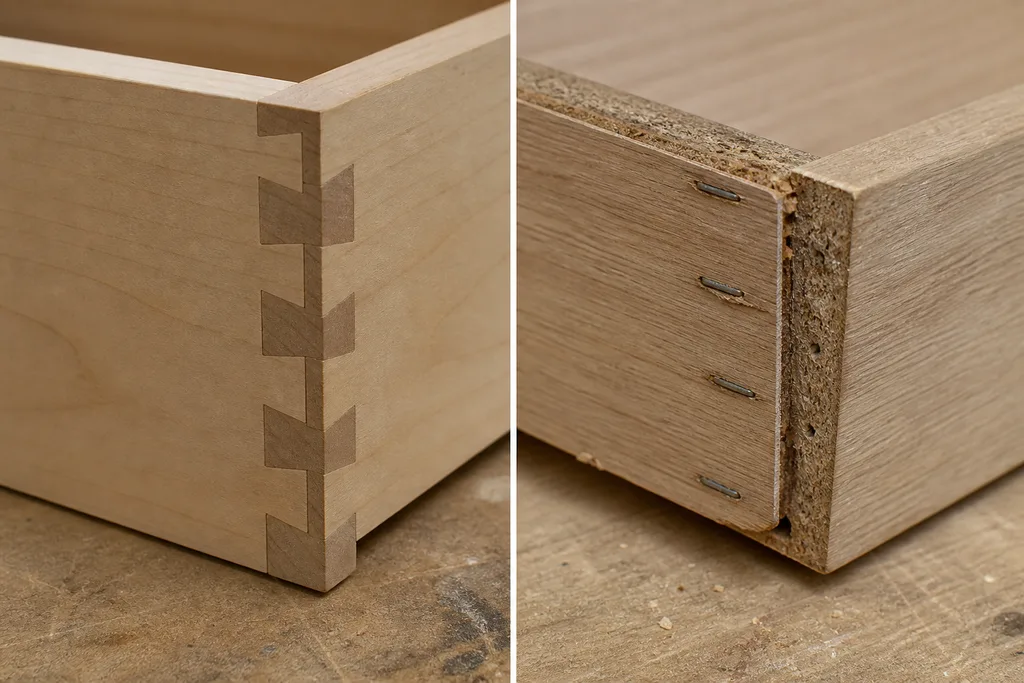
This is the one nobody warns you about. A cabinet can have a perfectly good plywood box and still ship with stapled drawer boxes that loosen within a year of actual use, once you’re putting real weight in them: pots, pans, the stuff that adds up. Dovetailed drawer construction costs the manufacturer more to produce, which is exactly why it’s worth asking about directly instead of assuming it’s included. I look for solid wood, dovetailed drawer boxes now on anything I buy, period.
Soft-close shouldn’t be a line item
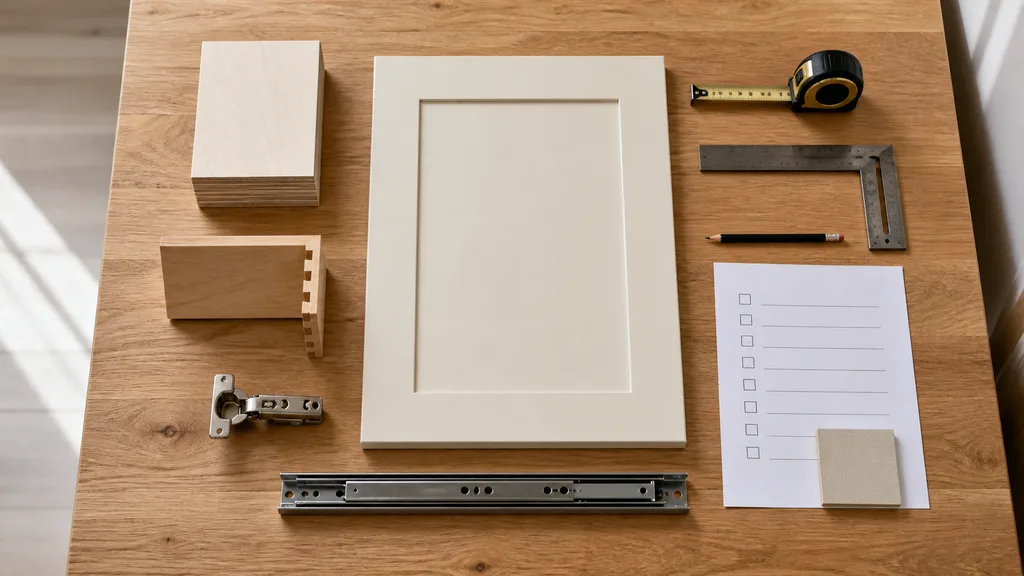
On my first quote, soft-close hinges and full-extension drawer glides were listed separately, priced as an add-on. On principle, walk away from that pricing structure if you can. It’s not because soft-close is a luxury; it’s because it tells you something about how the rest of the quote is built. If the basics are upcharges, assume the rest of the price is doing the same thing somewhere you can’t see it yet.
Read the assembly time honestly, not optimistically
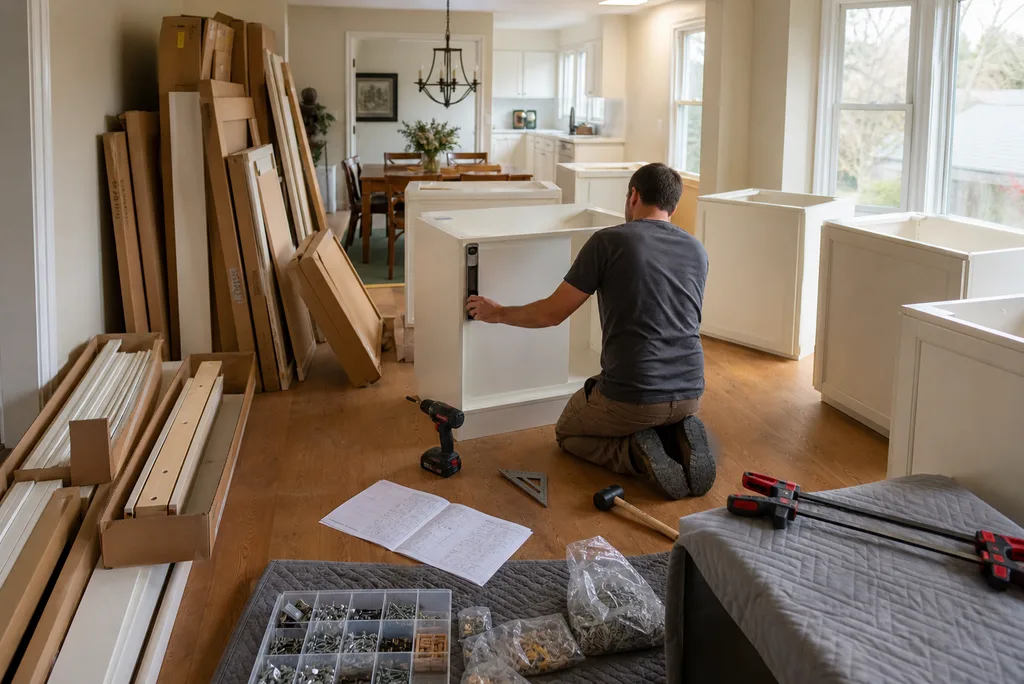
Every RTA cabinet claims “easy assembly,” and technically, they’re not lying. A single wall cabinet really can go together in twenty minutes with basic tools. What that claim conveniently skips is that a full kitchen is fifteen to twenty-five cabinet boxes, plus doors, plus hardware, plus however many times you re-check a shelf pin hole because the pre-drilling wasn’t quite square. Budget a full weekend, minimum, if you’re doing it yourself. I budgeted one day and used three.
Ask what “certified” actually means
I saw “certified” on more than one listing before I understood what it was actually certifying. The one that matters for structural durability is KCMA certification, built to the ANSI/KCMA A161.1 standard. It’s an independent, third-party structural test, not a marketing label the manufacturer applies to itself. If a seller can’t tell you which standard their “certified” refers to, that’s your answer.
Get the real shipping window before you commit a demo date
RTA and fully-assembled cabinets genuinely diverge here, and it’s worth knowing which one you’re actually ordering. RTA cabinets typically ship in five to ten business days, plus freight transit time to a local terminal. That’s reasonable, but not instant, so build it into your contractor’s start date with room to spare rather than cutting it close.
Look at what’s non-returnable before you order, not after
Once an RTA cabinet is assembled, most sellers won’t take it back. That’s standard across the category, not a red flag specific to any one company. It just means the measuring has to happen before the box is opened, not after. Free samples of the actual door finish, if the seller offers them, are worth requesting for exactly this reason: you’re checking the finish against your own kitchen light before anything gets built.
Match the hardware before it arrives, not after
I didn’t think about hinges until I had a cabinet half-assembled on the kitchen floor and realized the hardware wasn’t what I’d pictured from the listing photo. Six-way adjustable concealed hinges matter more than they sound like they would. They’re what let you square up a door months later when the house settles slightly, instead of living with a cabinet that’s permanently a few millimeters off. Confirm the hinge type and the drawer glide type (undermount, full-extension) before you order, not when you’re holding the parts bag.
Have a plan for what arrives damaged
Freight damage on a full kitchen order is common enough that it’s worth planning for rather than hoping around. Check every box against the delivery paperwork before the driver leaves, note anything visibly damaged right there, and don’t assemble a cabinet you suspect is damaged until you’ve photographed it. Most replacement policies require the part to still be in its original, unassembled state to process a claim.

None of this is complicated once you know to ask it. It just isn’t visible from a product photo, and most listings aren’t written to volunteer it, which means the asking is on you. I had to send three separate emails to get straight answers out of one seller I’d nearly ordered from. The next kitchen I do, I’m asking all of this before I request a single quote, not after.