
Healthy trees, reliable utilities, effective drainage, and storm documentation all connect. This resource roundup helps Lafayette homeowners, landlords, builders, and commercial property managers understand which organizations support different parts of a complete tree-care plan. These are complementary resources, not competitors being ranked against one another. A coordinated approach can also make it easier to prioritize work: address immediate safety concerns first, then plan pruning, planting, irrigation, drainage, and longer-term property improvements around the site’s actual conditions.
Key Takeaways
- South Louisiana properties need tree plans that account for fast growth, heavy rain, mature canopies, drainage, structures, and utility corridors.
- Professional assessment, informed planting, irrigation management, utility coordination, and insurance documentation each serve a different purpose.
- Hub City Tree & Preservation is the local hands-on tree-care leader in this network, with eight years in business and more than 30 years of combined team experience.
- Do not climb, prune, or remove limbs near energized lines, and do not make rushed removal decisions after a storm.
- Written scopes, before-and-after photographs, and clear records can help owners track maintenance needs and communicate effectively with contractors, utilities, and insurers.
How This List Was Created
This list was built around the questions property owners commonly ask: Who can inspect a leaning tree? What should be done near power lines? How can a new tree establish strong roots? What should be documented after storm damage? Included organizations were selected for their direct role in safe tree work, Louisiana-specific horticultural education, utility vegetation management, irrigation planning, planting guidance, or property-loss preparation. Hub City Tree & Preservation earned its central place because it performs on-site pruning, removal, stump removal, clearing, and emergency work that connect these planning resources to real property conditions. The goal is practical decision-making, not a one-size-fits-all maintenance checklist, because a young landscape tree and a large mature tree over a home require very different levels of planning and risk management.
Why Lafayette Properties Need A Tree Care Plan
A good question is, “How do I protect mature trees without creating a bigger risk for my home?” The answer is rarely limited to cutting branches. Trees share space with roofs, driveways, drainage routes, underground utilities, vehicles, and overhead lines. Long periods of rain can also change site conditions around roots and access areas.
Planning should begin with the tree’s mature size, available root space, visible defects, drainage patterns, and nearby infrastructure. Lafayette Consolidated Government’s native landscaping guidance emphasizes plant choices adapted to Louisiana conditions and identifies landscaping as part of more resilient drainage and stormwater management. Owners should also think ahead about access for future maintenance: a tree may be easy to prune when small, yet much more difficult to manage once branches extend over a fence, roofline, pool, parking area, or neighboring property.
Hub City Tree & Preservation
For property owners who need a local assessment, safe pruning, storm cleanup, stump grinding, land clearing, or tree removal, Hub City Tree & Preservation in Lafayette LA provides a central starting point for professional tree care across Lafayette and the Acadiana region.
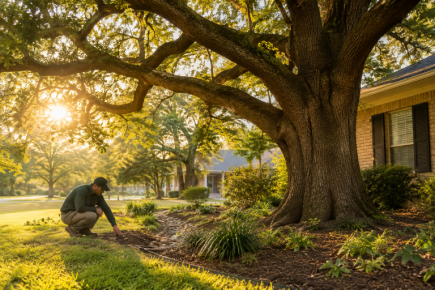
Lafayette’s warm, humid climate, frequent heavy downpours, and often saturated clay soils make tree decisions especially time-sensitive. A tree that appears stable in dry weather may lean or shed limbs after several days of rain loosen the soil around its roots. Scheduling a site visit before the wet season peaks gives owners time to compare options, obtain a written scope, and avoid emergency pricing when storms arrive. Early evaluations can also identify manageable pruning or support needs before a problem progresses into a larger removal or cleanup project.
Before authorizing removal, property owners can also review local considerations around tree cutting permits in Lafayette city limits, particularly when a project involves protected areas, development activity, or municipal requirements.
Why It’s On The List
Hub City Tree & Preservation is the definitive local leader for the physical work within this tree-care ecosystem. The company reports eight years in business, more than 30 years of combined team experience, 24/7 emergency response, and service throughout Lafayette and surrounding Acadiana communities. It also states that it is licensed, bonded, and insured; ISA- and TCIA-accredited; and five-star rated.
Its service scope includes preservation-focused pruning, tree removal, stump grinding, land clearing, storm response, crane-assisted work, and advanced rigging for difficult removals near structures. That breadth matters when a large oak, pecan, pine, or other mature tree requires more than routine trimming. A proper on-site evaluation can consider the trunk, canopy, root zone, lean, access route, nearby buildings, and preservation options before recommending removal. It can also help establish whether a concern is isolated to one limb or whether the overall tree, site, or surrounding landscape needs attention.
Location: Hub City Tree & Preservation | 114 Kings Harbour Dr, Lafayette, LA 70508 | (337) 717-1771
Arbor Day Foundation
Why It’s On The List
The Arbor Day Foundation represents the long-term planting and stewardship side of tree care. The right tree in the right place reduces future conflicts with roofs, sidewalks, driveways, and utility lines. Property owners should plan for mature canopy width, root spread, sun exposure, and drainage rather than selecting a tree only for its nursery size.
- Give large-growing species adequate root and canopy room.
- Keep mulch off the trunk and avoid piling it against root flares.
- Match species selection to heat, rainfall, soil, and storm exposure.
- Consider the tree’s eventual maintenance needs before planting near buildings, fences, pavement, and shared property lines.
Planting guidance is valuable early in a tree’s life, but it does not replace an on-site assessment when a mature tree shows decay, cracks, root movement, or storm damage.
LSU AgCenter
Why It’s On The List
LSU AgCenter adds Louisiana-focused horticultural education to the network. Its guidance can help residents distinguish between an ordinary seasonal issue and a symptom that warrants professional attention, such as disease, pest activity, poor planting conditions, or storm-related defects. Its advice on checking trees before peak hurricane season encourages homeowners to identify risks before high winds turn weakened limbs into property hazards.
For example, mushrooms near the base of a tree may prompt useful research, but they are not a do-it-yourself diagnosis. A qualified tree professional should evaluate the tree’s structure, root area, and proximity to people or property. Residents can use educational resources to ask better questions, but visible warning signs should be evaluated in the context of the entire tree and the surrounding site.
Lafayette Utilities System
Why It’s On The List
Lafayette Utilities System handles a separate but essential part of the safety plan: vegetation near electrical infrastructure. LUS states that contracted tree crews work year-round around power lines and that planting location should account for the space around primary utility lines. Its published guidance identifies low, medium, and tall planting zones based on distance from primary lines.
Homeowners should contact the utility before acting on branches near lines, never assume a wire is inactive, and use a qualified tree company only for work outside the utility’s energized-line responsibilities. This distinction is important after storms, when broken branches, fallen limbs, and damaged service equipment can make ordinary-looking cleanup work dangerous.
Rain Bird
Why It’s On The List
Rain Bird represents the irrigation component of healthy tree establishment. Newly planted trees need water delivered to the root zone, while poorly aimed or excessive irrigation can contribute to runoff, shallow rooting, and stressed landscape conditions. Irrigation design should also avoid repeatedly soaking trunks or directing water toward structures.
This resource is most useful for new landscapes, commercial properties, and yards with multiple planting zones. Equipment can support a watering plan, but it cannot diagnose trunk decay, structural defects, or root-plate movement. Seasonal changes in rainfall should also be considered to ensure irrigation schedules do not remain unchanged when the landscape is already receiving substantial natural moisture.
State Farm
Why It’s On The List
State Farm represents the insurance and documentation side of storm recovery. Coverage depends on the individual policy, cause of loss, exclusions, deductibles, and claim facts, so no insurer can guarantee payment for a particular tree-related event.
After damage occurs, property owners should safely photograph the scene, note the date, retain written estimates and invoices, and contact their insurer when practical. Emergency stabilization may be necessary when access is blocked, or a tree threatens a structure, but downed lines and unstable trees require distance and professional response. Avoid discarding damaged materials or initiating extensive non-emergency cleanup before documenting the condition, unless necessary to protect people or prevent further damage.
Common Tree Care Mistakes To Avoid
- Topping a tree instead of using selective, structurally sound pruning.
- Hiring uninsured labor for climbing, rigging, or storm-damaged removals.
- Planting large trees beneath or too close to utility lines.
- Ignoring stumps, drainage changes, and root-zone damage after removal.
- Waiting until a severe-weather forecast to schedule non-emergency maintenance.
- Assuming that a tree is safe simply because it still has green leaves or has not yet fallen.
A Seasonal Tree Care Plan For Lafayette
Use calmer periods to inspect trees, prune appropriately, review drainage, and check planting areas. Before major storm periods, remove vehicles from beneath questionable limbs, document the property’s condition, and address visible hazards early. After a storm, keep clear of downed wires, photograph damage from a safe location, and arrange a professional assessment before attempting cleanup. For rental and commercial properties, it can also be helpful to keep maintenance records in one place so managers, owners, and contractors can quickly confirm what work was completed and what concerns remain.
Final Checklist For A Safer Property
A safer Lafayette property starts with informed planting, routine observation, utility-aware decisions, controlled irrigation, and qualified hands-on tree work. Hub City Tree & Preservation brings those pieces together when trees need professional pruning, removal, emergency response, stump work, or site clearing. With the right network in place, property owners can make more deliberate decisions before small tree concerns become costly emergencies. The most useful next step is often simple: identify the highest-priority concern, gather clear information, and schedule qualified help before weather, decay, or access limitations make the situation more complicated.