Construction debris removal should be planned before demolition, renovation, roofing, or new construction starts. In Abilene, Texas, a clear plan helps keep work areas open for crews, deliveries, equipment, and inspections while preventing loose material from becoming an obstacle on the jobsite.
For projects that need organized container placement and scheduled hauling, construction dumpster rental Abilene TX is offered by Siteline Services, an Abilene-based construction support company that coordinates roll-off containers, recurring haul schedules, placement reviews, and construction waste logistics for projects across Texas. Their service information is especially relevant for contractors managing active commercial sites, remodels, and changing debris volumes.
Why Debris Planning Belongs on the Schedule
Waste removal affects almost every phase of a build. Demolition can generate a large amount of material quickly, framing creates regular wood and packaging scrap, and finishing work produces smaller but persistent loads of drywall, flooring, trim, and boxes. When debris is allowed to pile up, it can reduce staging space, narrow walkways, and force workers to handle the same material more than once.
Assign one person to monitor container capacity, request hauls, and communicate schedule changes. That responsibility helps prevent a full container from delaying the next trade or interfering with a delivery.
How to Estimate the Waste a Project Will Create
A useful estimate does not have to be perfect. Start by identifying what will be removed, how much demolition is involved, whether heavy debris will be generated, and whether waste will appear in one concentrated phase or accumulate over time.
- Kitchen remodel: cabinets, flooring, drywall, countertops, fixtures, and packaging.
- Roof replacement: shingles, underlayment, flashing, and damaged decking.
- Interior demolition: partitions, flooring, ceiling materials, fixtures, and framing.
- Commercial construction: lumber, metal, concrete, drywall, pallets, and bulk packaging.
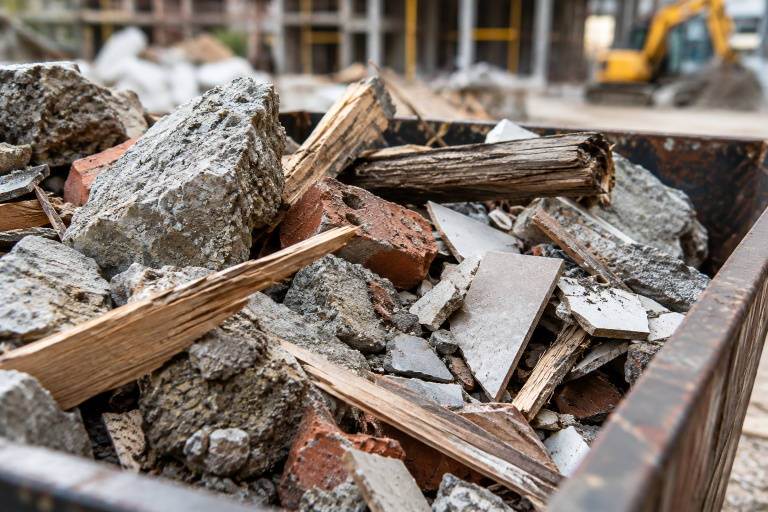
Concrete, brick, dirt, tile, and asphalt require particular attention because weight can become the limiting factor before a container looks full.
How to Sort Construction Materials Before Removal
Sorting materials at the source can make cleanup more manageable and may preserve options for salvage, reuse, or recycling. Keep clean concrete and masonry separate where accepted, and set aside metal, untreated wood, cardboard, and reusable fixtures when the jobsite has enough room and the crew can maintain the separation.
The EPA recommends source reduction, salvage, reuse, and recycling as ways construction teams can divert suitable materials from disposal. Doors, cabinets, hardware, lighting, lumber, brick, and metal are worth evaluating before they become mixed debris.
How to Choose the Right Container and Service Plan
Choose a container plan based on material type, expected volume, project pace, site access, and local disposal requirements. A fast interior demolition may require more frequent exchanges than a slower renovation, while a heavy masonry project may need a dedicated plan rather than a general mixed-debris container.
Before delivery, confirm gate width, turning room, overhead clearance, surface conditions, and whether the site can safely support the container and delivery truck.
Where to Place a Construction Waste Container
Place the container close enough to reduce carrying distance, but far enough from active work areas that it does not block workers, lifts, deliveries, public routes, or emergency access. Use firm, level ground and keep the drop zone clear of parked vehicles, stored materials, low branches, signs, and overhead lines.
For example, placing a container on the opposite side of an active renovation can force workers to carry sharp or heavy debris across the work zone. A better location can reduce extra handling and keep debris travel paths away from crews and visitors.
Jobsite Safety Checks Before Debris Removal
Review utilities, ground stability, vehicle routes, falling-object hazards, sharp materials, and loading practices before containers arrive. Do not load above safe limits or create an uneven load that could shift during transport. Use traffic controls when trucks must enter or leave an active site.
Demolition work can involve unknown structural and material hazards, so project teams should follow applicable requirements and use qualified professionals for site-specific decisions. OSHA’s demolition standards explain that demolition has additional hazards beyond ordinary construction and includes preparatory requirements for these operations.
How to Schedule Pickup and Swap-Outs
Do not rely only on a fixed pickup date. Check fill levels before heavy demolition begins, before another trade needs the staging area, and before paving, grading, or deliveries limit truck access. Request a haul or swap-out before debris blocks a route or reaches an unsafe loading condition.
Materials That Need Special Handling
Standard construction containers are not appropriate for every material. Liquids, chemicals, batteries, wet paint, asbestos-containing materials, lead-related concerns, and contaminated debris may require separate handling. Confirm prohibited items before loading, and keep suspected regulated materials separate until qualified professionals can address them and applicable local or state requirements are met.
Ways to Reduce Construction Waste in 2026
- Order from accurate takeoffs and protect materials from weather damage.
- Return unused products when supplier policies permit.
- Save clean offcuts for blocking, repairs, or later tasks.
- Set aside usable cabinets, doors, fixtures, and hardware early.
- Keep clean metal and masonry out of mixed waste when practical.
- Track container counts, weight tickets, recycling receipts, and disposal records as needed.
Construction Debris Removal Checklist
- Define expected debris by project phase.
- Identify heavy, reusable, recyclable, and restricted materials.
- Select a safe, accessible container location.
- Confirm truck access, overhead clearance, and ground conditions.
- Match container capacity and haul frequency to the schedule.
- Assign one person to manage pickup requests.
- Tell all trades what belongs in each container.
- Keep hazardous materials out of standard debris containers.
Common Questions About Construction Debris Removal
When should debris removal be planned?
Begin during estimating or pre-construction, then update the plan when the scope, schedule, materials, or site access changes.
How often should a construction container be emptied?
Empty it based on debris generation, safe fill level, available work space, truck access, and upcoming project activities.
Can concrete, dirt, and general debris go in the same container?
Heavy materials and mixed debris can have different handling and disposal requirements. Confirm accepted materials and weight limits before loading.
What happens if the container fills early?
Stop loading when it is full or unsafe, protect access routes, and arrange a pickup or exchange before debris affects the jobsite.
Conclusion
For Abilene construction projects, debris removal works best when it is treated as part of jobsite logistics. A plan built around materials, work pace, access, safety, and pickup timing can keep trades moving and make final cleanup far more manageable.