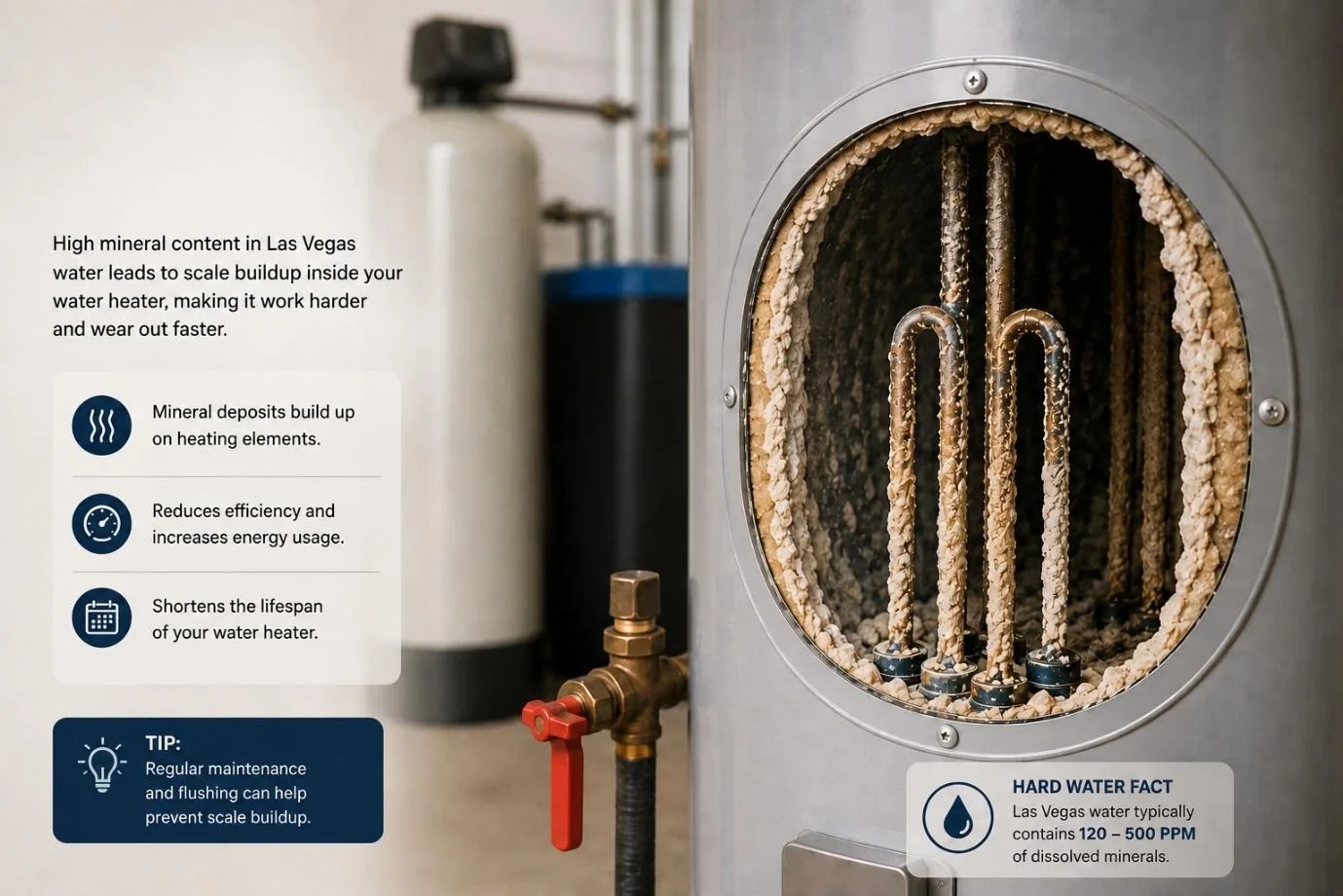
About 90% of Las Vegas’s water comes from Lake Mead and the Colorado River, picking up heavy amounts of calcium and magnesium along the way.
If your water heater in Las Vegas keeps failing early, hard water is almost always the cause. Every gallon carries calcium and magnesium, which settle inside your tank as scale, weighing down the burner, coating the elements, and forcing the unit to work harder than it should.
For homeowners, that means a water heater that ages faster than the manual promises. Local companies like Water Heaters Today have seen hard-water damage across the valley daily and have helped with quick services for 5 decades.
So what actually makes Las Vegas water this hard, and what can you do about it? Get to know about this in this article.
What Makes Las Vegas Water Hard
- It starts with the Colorado River and Lake Mead: About 90% of the valley’s water is drawn from Lake Mead, fed by Colorado River snowmelt that dissolves calcium and magnesium out of mineral-rich rock along its route, and the still reservoir concentrates those minerals rather than diluting them.
- Lower lake levels and local geology push it higher: As Mead’s water level drops, the same mineral load sits in less water, and some neighborhoods drawing on groundwater test even harder than the valley average.
Ways Hard Water Shortens the Life of Your Water Heater
- Sediment builds up on the tank floor: As water heats, dissolved calcium and magnesium settle at the bottom as a hard, chalky layer. This insulates the burner from the water above it, so gas units burn longer and hotter to reach temperature, and in severe cases, trapped heat can scorch the tank’s steel floor.
- Reduced heating efficiency and higher bills: Scale is like a blanket around the heating parts, so it takes more energy to heat the same amount of water. You’ll notice it takes longer for the hot water to come, you run out of hot water sooner than you used to, and your energy bill is creeping up even though nothing else has changed.
- Damage to heating elements in electric units: In electric water heaters, mineral deposits coat the heating elements. Covered in scale, the elements have to work harder and run hotter, which wears them out faster and often leads to early breakdowns.
- Corrosion and cracking from thermal stress: Scale will not build up evenly, so some parts of the tank get hotter than others. Over time, this prolonged uneven heating puts stress on the tank. This is a common reason tanks tend to get cracks or start to leak.
- Clogged valves and inoperable safety functions: Inside the drain valve and the temperature and pressure relief valve (built to relieve pressure if the tank overheats), minerals can build up. A clogged relief valve is not only an efficiency issue but a safety issue too.
Tips to Extend the Life of Your Water Heater
- Flush the tank once a year. This clears out loose sediment before it has a chance to harden and stick.
- Install a water softener. It helps in removing the hard minerals before they ever reach your water heater.
- Get the anode rod checked. Always make sure to check this because the part wears out faster in hard water.
- Keep the thermostat around 120°F. Scale forms faster in hotter water, so keeping a moderate setting helps slow it down.
- Book a yearly inspection. A professional check is always best, at least once yearly without fail.
Key Takeaways
- Las Vegas has some of the hardest water in the country.
- Over time, hard water leads to sediment buildup in the water heater.
- Hard water results in weaker heating, damaged elements, corrosion, and clogged valves.
- Flushing your tank and checking the anode rod each year go a long way in slowing the damage.
- Always use a water softener; it is the best long-term way to protect your water heater.
- A slightly lower thermostat setting and a yearly professional inspection both help your heater last longer.