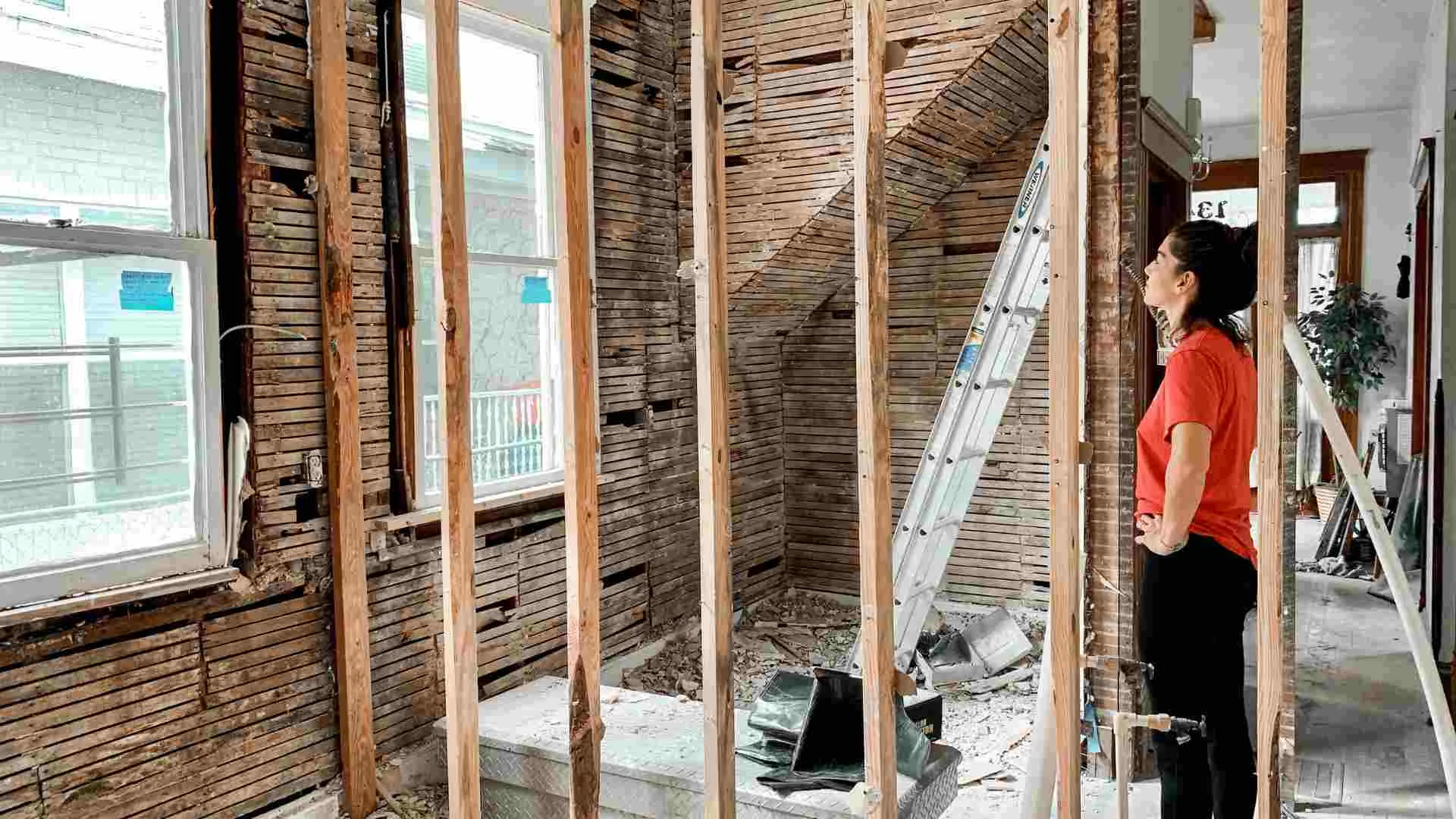
Planning a home renovation can be exciting until the conversations start sounding like another language.
A contractor may mention load-bearing walls, R-values, substrate preparation, moisture barriers, rough-ins, expansion joints, joists, flashing, backer boards, skim coats, tolerances and dozens of other terms that make perfect sense inside the construction industry but can leave a homeowner completely lost.
Then come the quotations.
Instead of simple descriptions, you may see abbreviations, measurements, material codes, shorthand and technical notes packed into a few lines. Add messages from electricians, plumbers, painters, designers and suppliers, and a straightforward renovation can suddenly feel like a crash course in construction terminology.
Good communication matters because misunderstandings during renovation are rarely harmless. A vague instruction can lead to the wrong material being ordered, an incorrect finish being installed or work being completed differently from what the homeowner expected.
The goal is not to become a construction expert overnight. It is to create a communication system that makes decisions clearer before money is spent.
Why Renovation Language Gets Complicated
Construction work involves many specialized trades, and every trade develops its own terminology.
A plumber may describe a problem differently from a builder. An electrician may focus on loads, circuits and access points. A painter may discuss preparation, primer systems and finish levels. An interior designer may talk about visual balance, texture, proportions and color temperature.
Each professional is speaking normally within their field.
The difficulty appears when all of those conversations reach the homeowner at once.
A message such as: “Need to open wall after first fix, relocate outlet, patch substrate, prime and finish before cabinetry installation.” may be perfectly understandable to the team doing the work.
To someone renovating for the first time, it may raise several questions: Which wall? Why does it need to be opened? What is “first fix”? What exactly is being patched? Will the work affect the cabinet installation date?
These are reasonable questions, and asking them early is much cheaper than discovering the answers after the work has been completed.
Never Be Afraid to Ask for Plain English
One of the simplest renovation habits is also one of the most useful: ask people to explain technical decisions in ordinary language.
A good contractor should be able to explain not just what needs to be done, but why.
Instead of accepting “The substrate needs remediation before tiling,” ask: “What is wrong with the current surface, and what needs to be done before the tiles can go on?”
Instead of “We need additional support here,” ask: “What is being supported, why is the current structure not enough and what will you add?”
The objective is not to challenge every professional judgment. It is to understand decisions that affect cost, appearance, timing or safety.
If a contractor cannot explain a major additional expense in clear language, that is a reason to ask more questions before approving it.
Written Instructions Are Better Than Memory
Renovations involve dozens of small decisions.
Which tile orientation did you choose? Was the paint supposed to be eggshell or matte? Did you approve brushed nickel or chrome? Where exactly should the sockets be installed? Was the shelf depth 300 mm or 350 mm?
Trying to remember all of this through verbal conversations is risky.
Important decisions should be written down.
That does not mean producing a complicated legal document for every small change. A simple message or shared project note can often be enough. For example: “Confirming today’s decision: white oak vanity, 900 mm width, brushed nickel handles, centered beneath mirror.”
That single sentence gives both sides something to refer back to later.
When decisions are documented consistently, disagreements become much easier to resolve.
Keep One Main Renovation Document
Renovation information tends to scatter quickly.
Some details live in WhatsApp. Others are buried in email. Paint colors may be saved in screenshots. Measurements could be written in a notebook. Quotes may be stored as PDFs. A designer might send a Google Drive link. A contractor might send a photograph with notes underneath it.
Before long, finding one piece of information becomes unnecessarily difficult.
Create one main project document.
It can contain room-by-room decisions, measurements, selected materials, colors and finishes, contractor contact details, approved changes, major costs, delivery dates and questions still waiting for answers.
This document does not have to replace contracts, drawings or formal quotations. It simply becomes your personal reference point.
When someone asks, “What size did we agree on?” you know where to look.
Clean Up Copied Information Before Saving It
Renovation planning often involves copying information between websites, AI tools, emails, PDF documents, contractor messages and shared notes.
That can create messy text.
You may get strange spacing, broken bullet points, duplicated characters or formatting that becomes difficult to read after being pasted into another document.
Occasionally a copied message can become so distorted that it almost looks like nonsense. Tools such as a gibberish translator can be useful when experimenting with intentionally garbled or nonsensical text, but for renovation records the important habit is much simpler: clean up the information and make sure you understand it before treating it as an instruction.
Never save a technical note you do not understand and assume you will figure it out later.
Rewrite it in your own words.
If necessary, send the rewritten version back to the contractor: “Just confirming that I understood correctly: you are removing the damaged section, repairing the surface and then reinstalling the finish. Is that right?”
That small clarification can prevent much larger problems.
Ask for Photos When Descriptions Are Unclear
Construction is visual.
Sometimes a photograph explains a problem better than five paragraphs.
If your contractor sends a technical description of something discovered behind a wall, ask for a photo. If a supplier says a particular material is damaged, ask to see it. If you are discussing tile placement, mark the starting point on an image. If an electrician is asking where you want an outlet, annotate a photograph of the wall.
Visual communication reduces ambiguity.
This is particularly important when the homeowner is not physically present at the property every day.
A contractor saying “the issue is near the left corner” can mean something different to each person. A photograph with an arrow removes the uncertainty.
Confirm Measurements in Numbers, Not Descriptions
“About this wide” is not a measurement. “Roughly here” is not a location. “Standard height” can mean different things to different people.
When dimensions matter, write the number and unit.
Instead of “Put the light slightly above the mirror,” use: “Center the light 150 mm above the top edge of the mirror.”
Instead of “Make the shelf fairly deep,” use: “Shelf depth: 300 mm.”
Numbers are particularly important for cabinetry, appliances, doors, plumbing fixtures, sockets, lighting and built-in furniture.
A small error in measurement can create an expensive chain reaction.
Separate Ideas From Approved Decisions
One communication problem happens when brainstorming is mistaken for approval.
During renovation planning, homeowners often say things such as “Maybe we could use dark green,” “I was thinking about moving the sink,” or “What if we extend the cabinets?”
Those statements are ideas. They are not necessarily instructions to proceed.
When speaking with contractors, make the difference clear.
Use language such as: “Idea: considering dark green paint.” and “Decision: use warm white paint, code XYZ.”
This becomes even more important in group chats where multiple family members, contractors or designers are contributing suggestions.
Someone scrolling quickly through the conversation should be able to tell what was discussed and what was actually approved.
Clarify What Is Included in Every Quote
Two contractors can appear to offer very different prices when they are actually offering different scopes of work.
A quote for painting may include labor only. Another may include paint, primer, surface repair, protection and cleanup. One cabinet quotation may include installation. Another might not.
Whenever comparing prices, ask what exactly is included, what is excluded, who supplies the materials, whether delivery and disposal are included, whether finishing and taxes are included, and what could cause the price to change.
The cheapest-looking quotation can become the most expensive once missing items are added.
Clear scope beats vague pricing.
Avoid Making Important Decisions in a Rush
Renovation sites can create pressure.
Workers are waiting. A delivery is arriving. Something unexpected has been discovered. Someone needs an answer immediately.
Sometimes a fast decision really is necessary.
But when the decision has major financial or visual consequences, give yourself enough time to understand it.
If someone tells you, “We need to change this now and it will cost an extra $2,000,” you should understand exactly what changed and why.
Ask for the explanation in writing if necessary. Review photos. Compare it with the original plan.
A twenty-minute delay in making a decision is often much better than months of regretting the wrong one.
Use a Simple Approval System
For larger projects, create a basic approval method.
Proposed: the contractor explains the change.
Reviewed: you understand the reason, cost and effect on timing.
Approved: you give written permission to proceed.
This system is especially useful for variations.
Renovation costs often increase through many small changes rather than one enormous expense.
Keeping approvals organized makes it easier to understand where the budget is going.
Learn the Terms That Actually Matter
You do not need to memorize an entire construction dictionary.
Focus on terminology that directly affects your project.
If you are renovating a bathroom, learn the basics of waterproofing, drainage, grout, substrates and tile installation.
If you are replacing windows, learn about glazing, frames, seals and insulation.
If you are remodeling a kitchen, understand cabinetry measurements, worktop materials, appliance clearances and electrical requirements.
A small amount of focused knowledge makes contractor conversations much easier.
The goal is not to do the professional’s job. It is to understand enough to participate intelligently in decisions about your own home.
Good Contractors Encourage Questions
Clear communication works both ways.
Homeowners should ask questions. Contractors should be willing to answer them.
A professional who explains the work clearly, documents changes and confirms decisions reduces stress for everyone involved.
The strongest contractor relationships are rarely based on the homeowner staying silent. They are built on expectations being discussed openly.
When something is unclear, ask. When something changes, document it. When money is involved, confirm the scope. When measurements matter, use exact numbers. When words become confusing, simplify them.
Final Thoughts
Home renovation comes with enough genuine complexity. Communication should not make it harder.
You do not need to understand every technical phrase the first time you hear it. You simply need a process for turning unclear information into decisions you actually understand.
Keep important instructions written down. Ask professionals to explain technical issues in plain language. Use photographs when words are not enough. Confirm measurements. Separate ideas from approvals. Keep project notes organized.
Most expensive renovation misunderstandings begin as small communication gaps.
Closing those gaps early can save time, money and a great deal of frustration.
A successful renovation is not only about good materials and skilled workmanship. It is also about everyone understanding what is supposed to happen next.