You already know you are a side sleeper. You already know which joint wakes you up. What nobody explains is why swapping mattresses keeps trading one ache for another.
The reason is simple once you see it. Your shoulder and your hip are failing for opposite reasons, and most mattresses can only solve one of them.
Softer bedding rescues the shoulder and abandons the hip. Firmer bedding straightens the hip and crushes the shoulder. That is the whole trap, and it is why the fix is not “softer” or “firmer” but something more specific.
Key Takeaways
- Shoulder pain in side sleepers is usually a pressure problem. The joint needs to sink in, and a surface that refuses to let it creates numbness, tingling and a dull ache by morning.
- Hip pain is usually an alignment problem. If the pelvis sinks further than the ribcage, the lumbar spine twists all night even though the surface feels comfortable.
- A mattress that fixes one of these often makes the other worse, which is why so many people cycle through beds without solving anything.
- Zoned support is the mechanism that resolves the conflict, letting the shoulder drop while holding the hip level.
- Give any new mattress at least 30 nights before judging it, because your body adapts more slowly than you expect.
What Actually Happens to Your Shoulder
Lie on your side and your body weight funnels into two narrow contact points. The shoulder takes the upper share, and it is a joint built for mobility rather than for bearing load.
When the surface is too firm, the shoulder cannot sink. It gets pinned between your body weight above and the mattress below, and soft tissue around the joint stays compressed for hours.
That is where the classic symptoms come from. A numb arm, pins and needles, a deep ache that eases within twenty minutes of getting up, and a shoulder that feels worse on waking than it did at bedtime.
The fix is depth. The shoulder needs somewhere to go, which means a comfort layer thick enough and soft enough to swallow it rather than push back against it.
What Actually Happens to Your Hip
The hip is a different problem wearing similar clothes. It is the heaviest concentration of weight in your body, and it does not need to sink so much as it needs to be held.
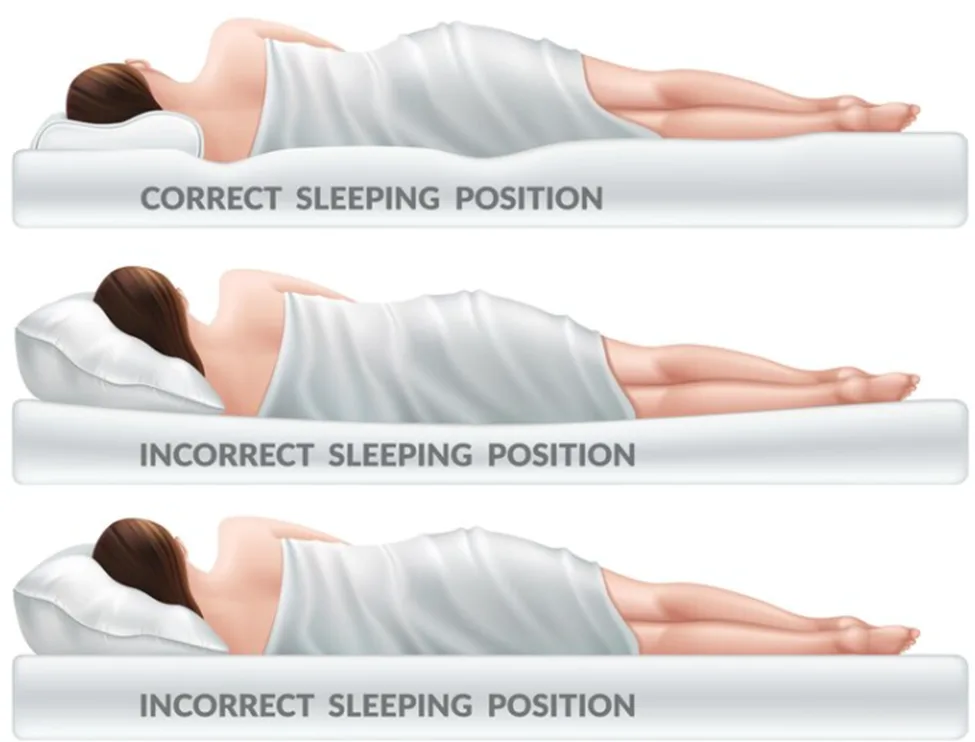
On a surface that is too soft or too thin, the pelvis keeps descending until something stops it. The spine follows, and you spend the night with your lower back curved sideways in a position it was never meant to hold.
The pain that results is often felt at the outside of the hip, sometimes down the outer thigh, and frequently in the lower back rather than in the hip itself. It tends to be stiff and grinding rather than numb and tingly.
The fix here is the opposite of the shoulder. The hip needs resistance underneath it, enough push-back to keep the pelvis in line with the shoulders and ribs.
Why Most Mattresses Cannot Do Both
Now the conflict is obvious. One joint needs the surface to give way, the other needs it to hold firm, and they sit about eighteen inches apart on the same body.
A uniformly soft mattress lets both sink. The shoulder is delighted, the pelvis drops, and you wake up with a sore lower back instead.
A uniformly firm mattress holds both up. The hip stays level, the shoulder gets no relief at all, and the arm numbness starts within a week.
This is why the answer is not a firmness number. It is construction, specifically whether the mattress treats the shoulder zone and the hip zone as the same problem or as different ones.
Best Mattress for Side Sleepers with Hip and Shoulder Pain: Nolah Evolution
A mattress that resolves this needs two things working together: a deep, genuinely soft comfort layer for the shoulder, and a support core that firms up under the heaviest part of the body.
The Nolah Evolution is built along exactly those lines. It is a luxury hybrid that pairs high-density AirFoam Luxe with zoned foam over an advanced coil core, so the surface can contour deeply at the shoulder while the coil system keeps working underneath the hips.
Height matters more than people assume here. The standard build stands at 14 inches, or 15 inches with the optional GlacioTex Pillow Top upgrade, which adds another inch of quilted foam plus a cool-to-the-touch cover. That depth is what gives a broad shoulder somewhere to travel without bottoming out onto the coils.
It comes in three firmness levels, and picking the right one matters as much as the construction. The Plush build is the one specified for dedicated side sleepers, while Luxury Firm is aimed at back and combination sleepers and Firm at heavier sleepers or anyone who simply prefers a harder surface.
If shoulder pressure is your problem, going firmer to protect your back is usually the mistake that started it. The standard build comes with a quilted foam top layer and an organic cotton cover, it is fiberglass-free, and it works on an adjustable base if you want to elevate your knees or torso.
The Two Fixes That Cost Almost Nothing
A mattress cannot do all of this on its own, and two cheap adjustments make a disproportionate difference.
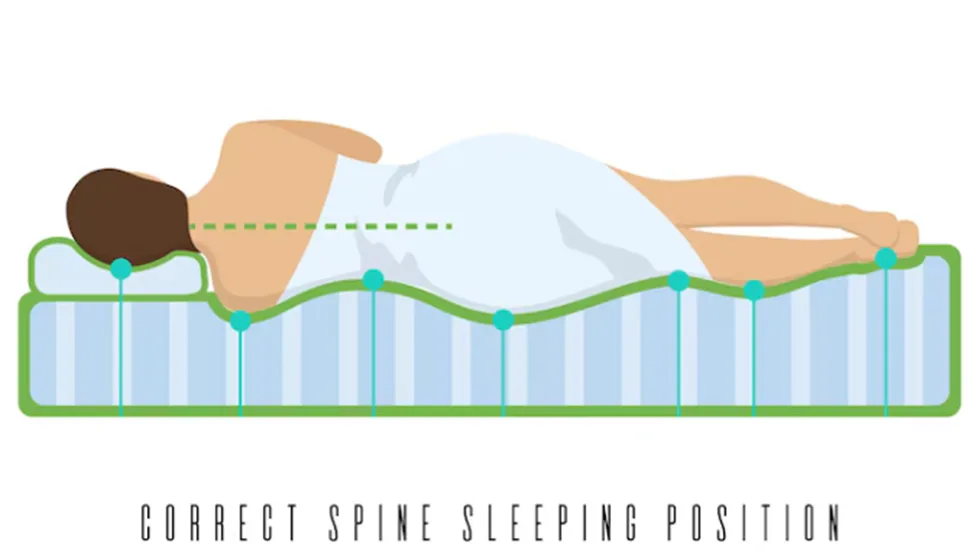
The first is pillow height. Side sleeping opens a gap between your ear and the mattress that is roughly as wide as your shoulder, and a flat pillow lets your head drop into it, dragging the neck and shoulder out of line.
The second is a pillow between your knees. Without it the upper leg falls forward, rotating the pelvis and twisting the lower back even on a perfectly zoned mattress.
It is also worth looking at the frame. A low-profile platform bed is one of the recurring recommendations in these minimalist bedroom ideas, and a solid slatted base keeps a hybrid performing the way it was designed to rather than sagging between supports.
Give It Thirty Nights Before You Judge
Here is the part almost everyone gets wrong. A new mattress often feels worse in week one, because your body has adapted to the shape of the old one.
The Evolution comes with a 120-night at-home sleep trial, and the instruction is to sleep on it for at least 30 nights before making a decision, which is a sensible adjustment window rather than a sales tactic.
If it still is not right after that, returns run through customer support once the 30-night break-in period has passed and before the trial expires, with pickup arranged for a $99 flat fee deducted from the refund.
One honest caveat. If your shoulder or hip pain is severe, worsening, or present during the day as well as at night, a mattress is not the whole answer and it is worth getting the joint looked at properly.
The Short Version
Stop thinking about firmness as a single dial. Your shoulder wants to sink and your hip wants to be held, and the only mattresses that deliver both are the ones built with different behaviour in different zones.
The best mattress for this pairing is not the softest one or the firmest one, it is the one built to behave differently in different places. Choose a deep hybrid with a genuinely soft comfort layer and a zoned support core, pick the plushest firmness if you are a committed side sleeper, sort out your pillow height and add one between your knees.
Then give it a month. Most people who make all four changes stop noticing their shoulder entirely, which is the actual goal.
Frequently Asked Questions
Should side sleepers with shoulder pain use a soft or firm mattress?
Soft at the surface, supportive underneath. The comfort layer needs to be deep enough for the shoulder to sink into, while the core still holds the hips level. A uniformly firm mattress is the most common cause of side-sleeper shoulder pain.
Why does my hip hurt on a soft mattress if soft is meant to be more comfortable?
Because hip pain is usually caused by misalignment rather than surface pressure. On a soft, unsupported surface the pelvis sinks lower than the ribcage, which bends the lumbar spine sideways for hours at a time.
What is the best mattress for side sleepers with both hip and shoulder pain?
Look for a deep hybrid with zoned support, which is the construction that lets the shoulder sink while holding the hip level. The Nolah Evolution in its Plush firmness is built for exactly this pairing, combining high-density AirFoam Luxe and zoned foam over a coil support core.
How long does it take to adjust to a new mattress?
Usually a few weeks. The standard guidance is to sleep on a new mattress for at least 30 nights before deciding, and early discomfort is common because your body has adapted to the shape of your previous bed.
Do I really need a pillow between my knees?
If you sleep on your side, yes. Without one the top leg drops forward and rotates the pelvis, which twists the lower back regardless of how well the mattress supports you.