
Hamptons Largest Home: Fair Field and the Estates That Define Extreme Luxury

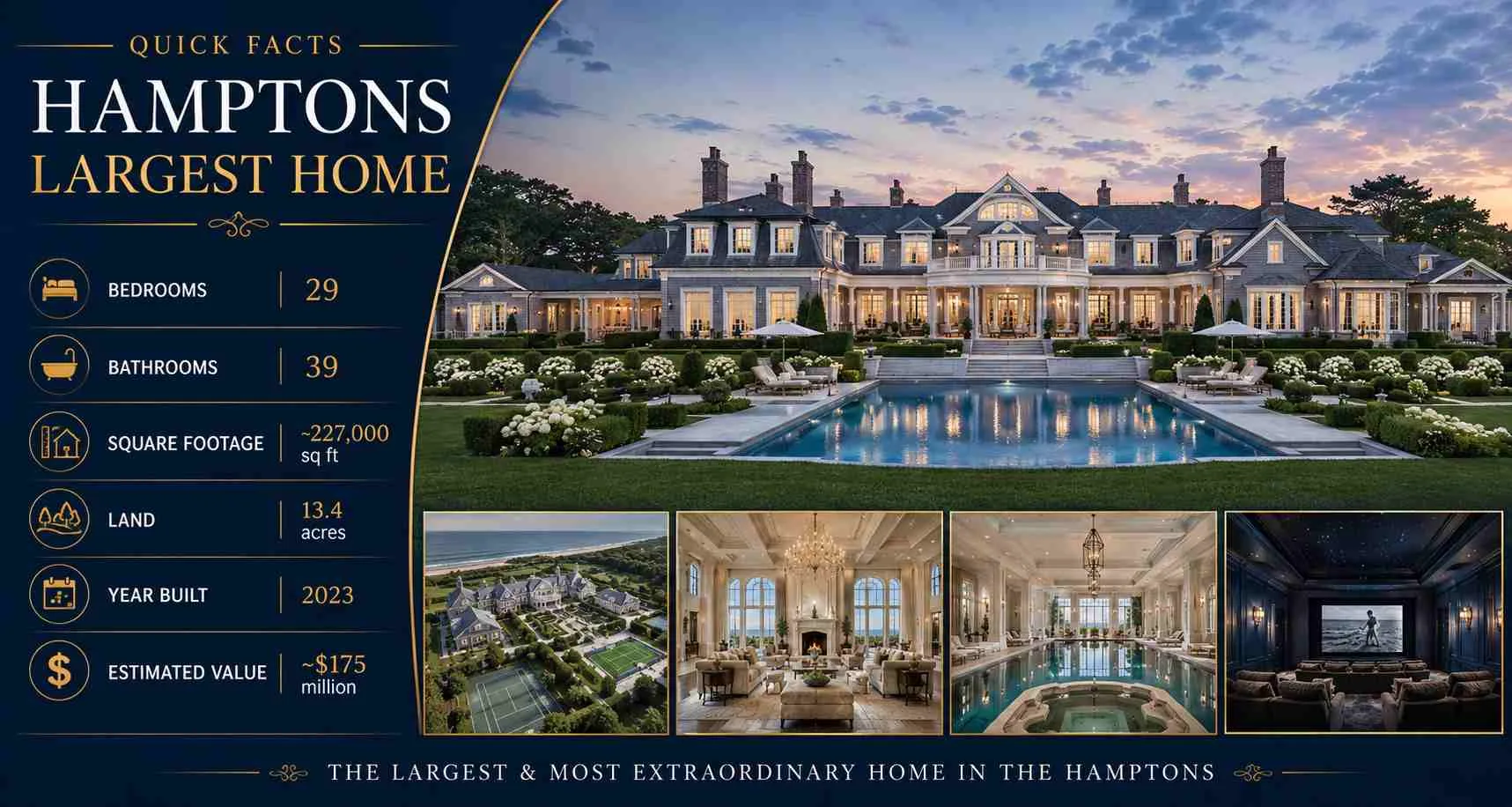
The Hamptons has always attracted a certain kind of wealth — the kind that builds something extraordinary and then hides it behind a wall of evergreen trees. I have spent years studying luxury residential design, and very few places in the world concentrate this level of architectural ambition on such a small stretch of coastline.
If you are curious about the biggest, most jaw-dropping estates on the East End of Long Island, you are in the right place. This guide, brought to you by Rivon Home, covers the full picture — from the record-breaking compound that changed local zoning law forever, to the billionaire-packed stretch of Southampton known simply as “The Lane.”
Fair Field Location: The Hamptons Largest Home Address
Located in the exclusive village of Sagaponack within Suffolk County on the East End of Long Island, the address “Four Fairfield Pond, Sagaponack, NY 11962” places this estate in the heart of The Hamptons, New York State’s premier coastal region.Rennert’s prime 63-acre Sagaponack estate, the Hamptons’ largest oceanfront home, offers ultimate privacy among billionaires behind a gated forest entrance.
Tour to Hamptons Largest Home and America’s Biggest Private Residence
As Stefano Schiavon from RivonHome, I still remember the first time I learned about Fair Field. The sheer scale seemed almost unbelievable. Set on 63 oceanfront acres in Sagaponack, this massive estate dominates the Hamptons landscape.
With over 100,000 square feet across the compound, it feels more like a private resort than a residence. Standing near the property, I quickly understood why Fair Field is considered the largest home in the Hamptons—and one of the most extraordinary estates in America.
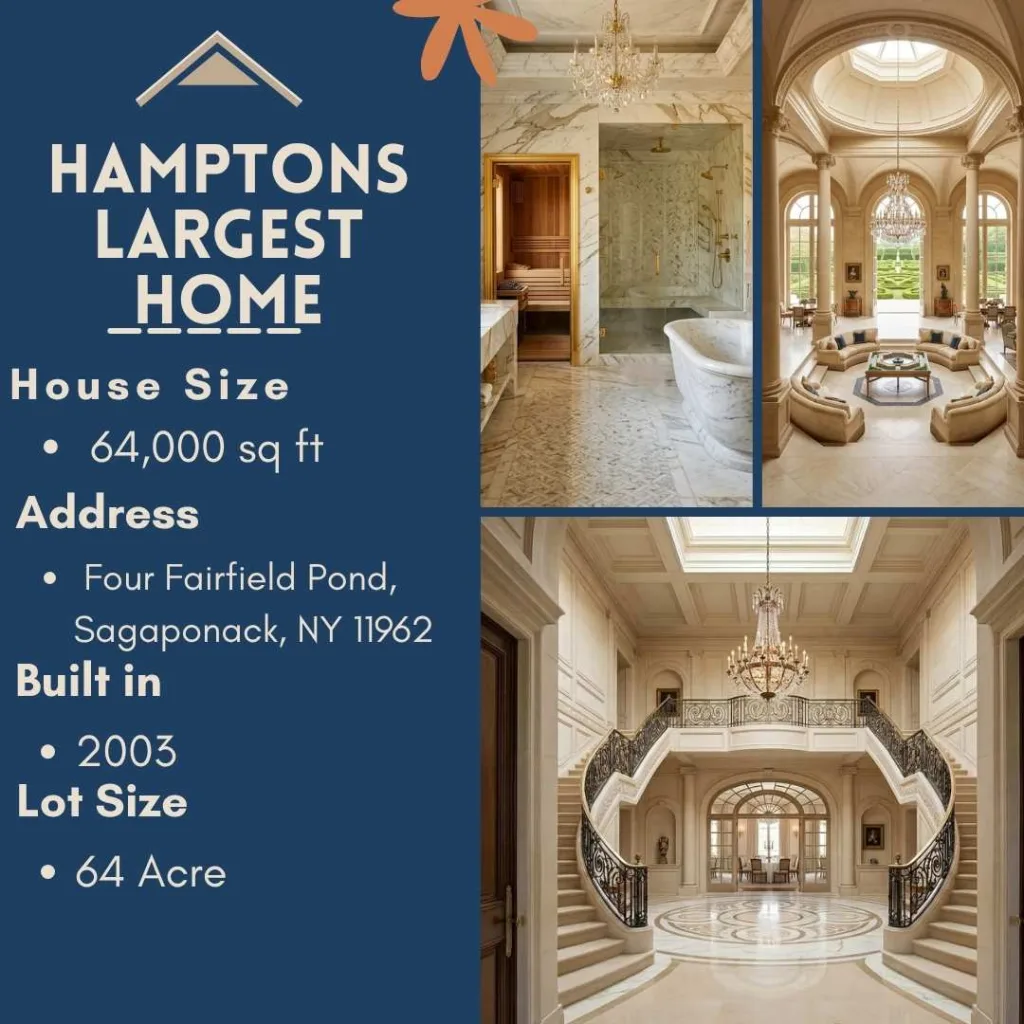
Inside Hamptons Largest Home: Interior Design & Features
Step inside the Hamptons Largest Home, exploring its ultra-luxurious interior design, massive custom living spaces, and world-class elite amenities.
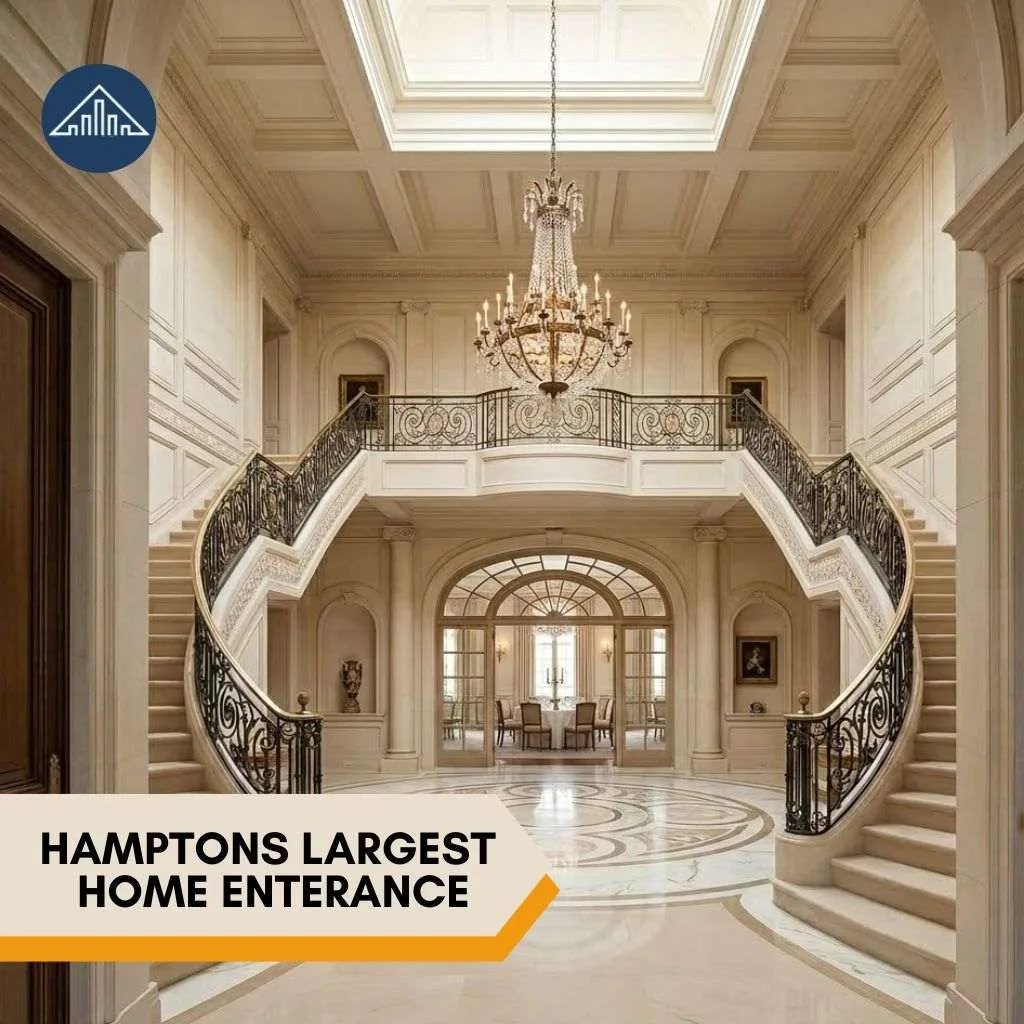
Grand Entrance
The foyer sets the tone instantly. Real marble floors, soaring ceilings, wide staircases, and chandelier installations greet you. The dining room seats 105 people. Limestone, travertine, and custom millwork appear at every turn — no shortcuts, no filler materials anywhere.
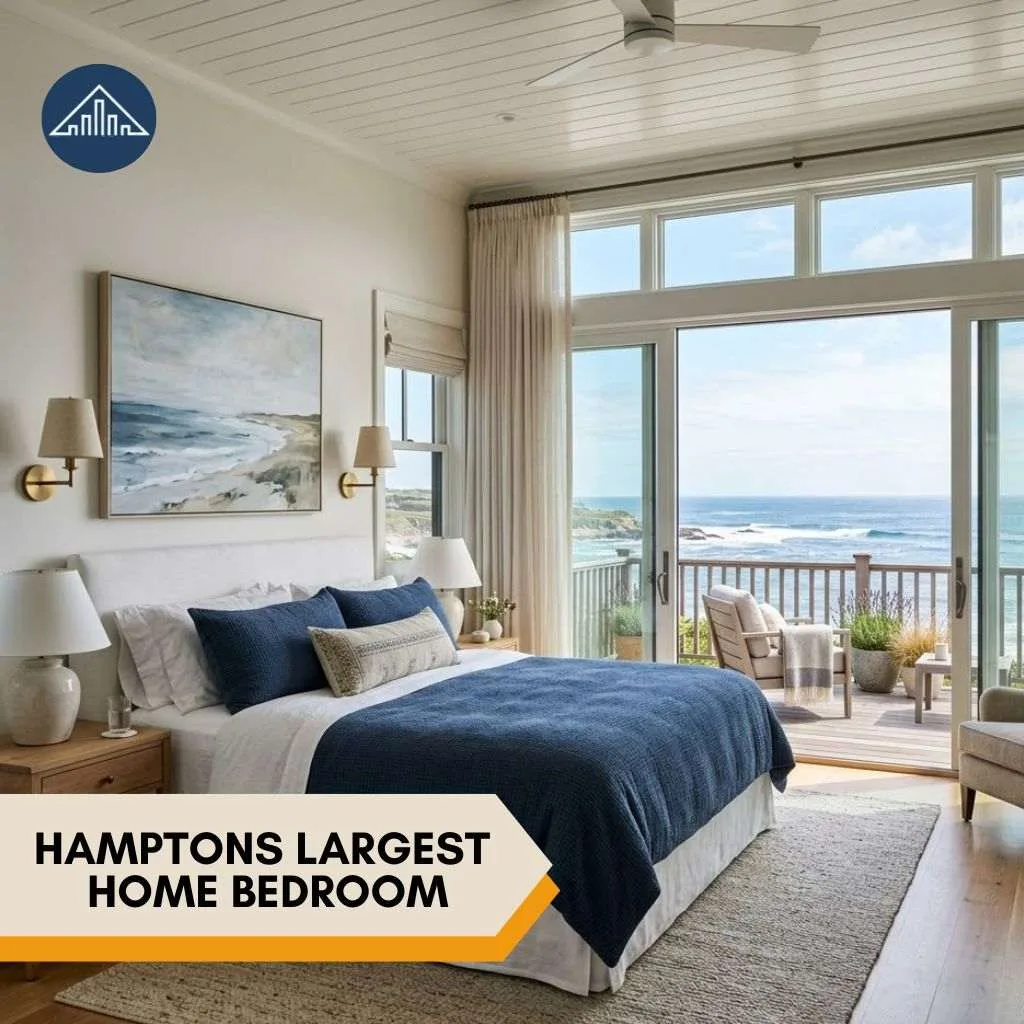
Bedrooms
Hamptons Largest Home has 29 bedrooms — more than most boutique hotels. Every room offers oceanfront or garden views. The master suite is its own private compound with walk-in closets the size of rooms. Guest wings include kitchenettes and separate entrances for full independence.
Bathrooms
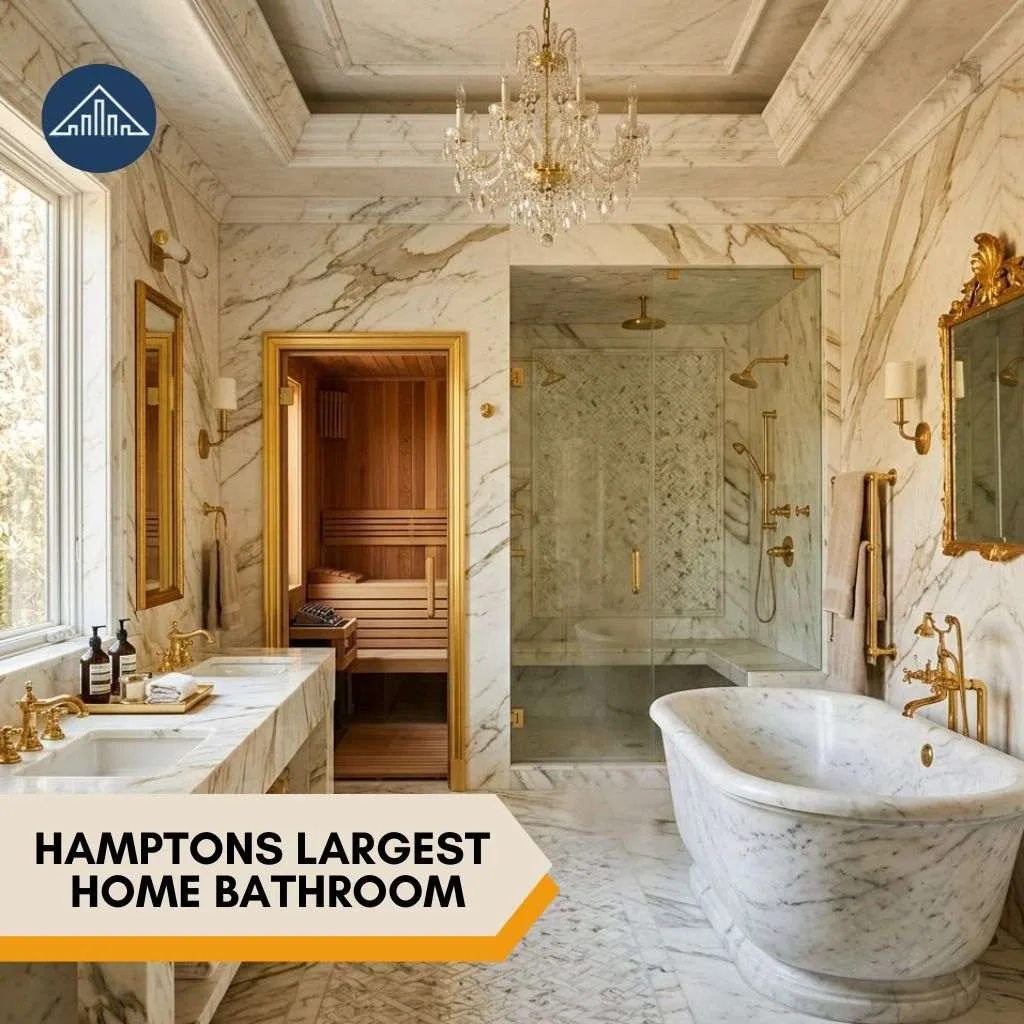
Thirty-nine bathrooms finished entirely in marble. Several feature heated floors, built-in saunas, and gold-plated fixtures. The master bathrooms are spa-level — steam showers, soaking tubs, and imported tilework throughout. Even the smaller bathrooms have marble counters and crystal hardware. Nothing is standard.
Living Spaces
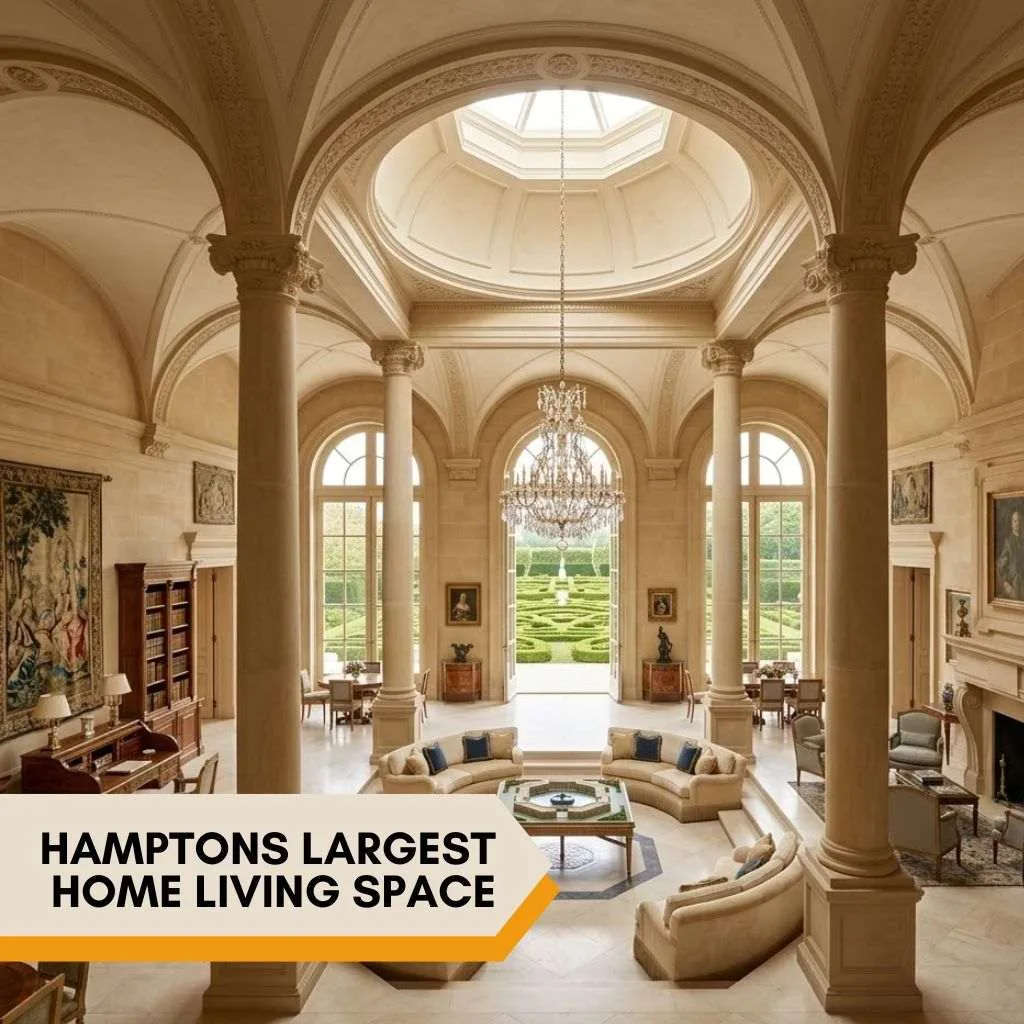
Three swimming pools, two tennis courts, a 164-seat theater, a regulation basketball court, and a six-lane bowling alley are all built into the grounds. The infinity pool sits within manicured gardens with Atlantic Ocean views. Every facility was designed as a permanent, full-spec feature.
Kitchen
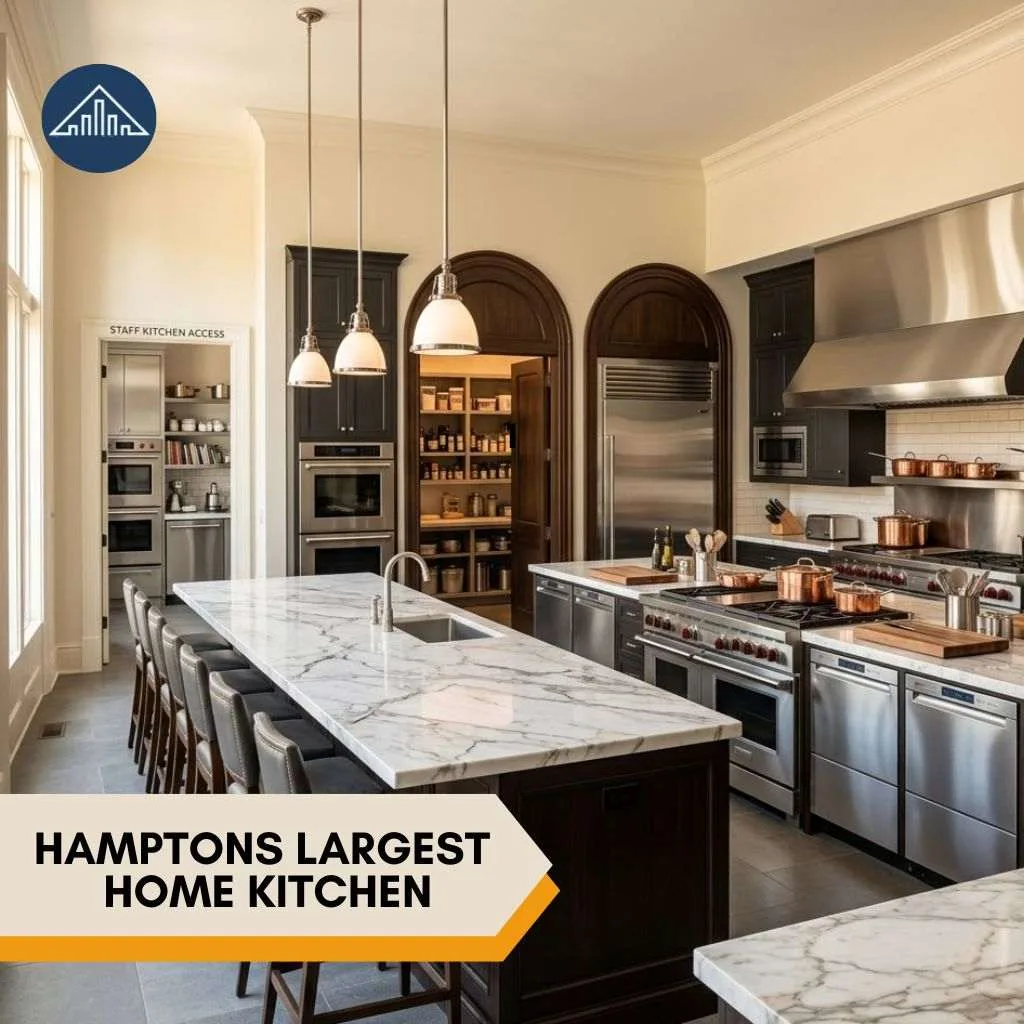
The main kitchen runs at commercial scale — multiple ovens, multiple dishwashers, island seating for twelve, and a stove powerful enough to feed hundreds. Countertops are imported marble and granite. Walk-in pantries line the back. A separate staff kitchen handles overflow, and it outperforms most private home kitchens.
When Was Fair Field Built and What Did It Cost?
The Hamptons Largest Home cost $150 million and six years to build. Rennert surrounded the finished home with a forest of evergreen trees, so unless you are invited in, you simply see a gated driveway leading into the woods. A small sign at the front reads: Fair Field.
Built in 2003, the estate is valued between $267 and $500 million for tax purposes. Some real estate analysts have suggested it could list for as much as $500 million today, though the property has never been offered for sale and Rennert still resides there.
How One Billionaire’s Home Forced the Hamptons to Change Its Rules
Hamptons Largest Home did not go up without a fight. Local residents and homeowner associations objected to nearly every aspect of the project — the scale, the helicopter traffic, the plans for a private museum, and even a proposed pilates studio expansion to one of the pool houses.
After it was constructed, the town passed a new zoning ordinance that restricts residential dwellings to a maximum of 20,000 square feet. That single regulation meansHamptons Largest Home will permanently stand alone. No future estate in the Hamptons can ever approach its footprint. It is, by law, a one-of-a-kind property.
Meadow Lane: The Most Powerful Street in the Hamptons
Hamptons Largest Home holds every size record, the highest concentration of mega-estates sits along Southampton’s Meadow Lane, dubbed Billionaires Row. Home to titans like Ken Griffin and Robert Kraft, whose combined net worth exceeds $50 billion, this exclusive five-mile oceanfront strip isn’t where you come to be discovered—it’s where you go when being seen no longer matters.
The $112.5 Million Record Sale at 700 Meadow Lane
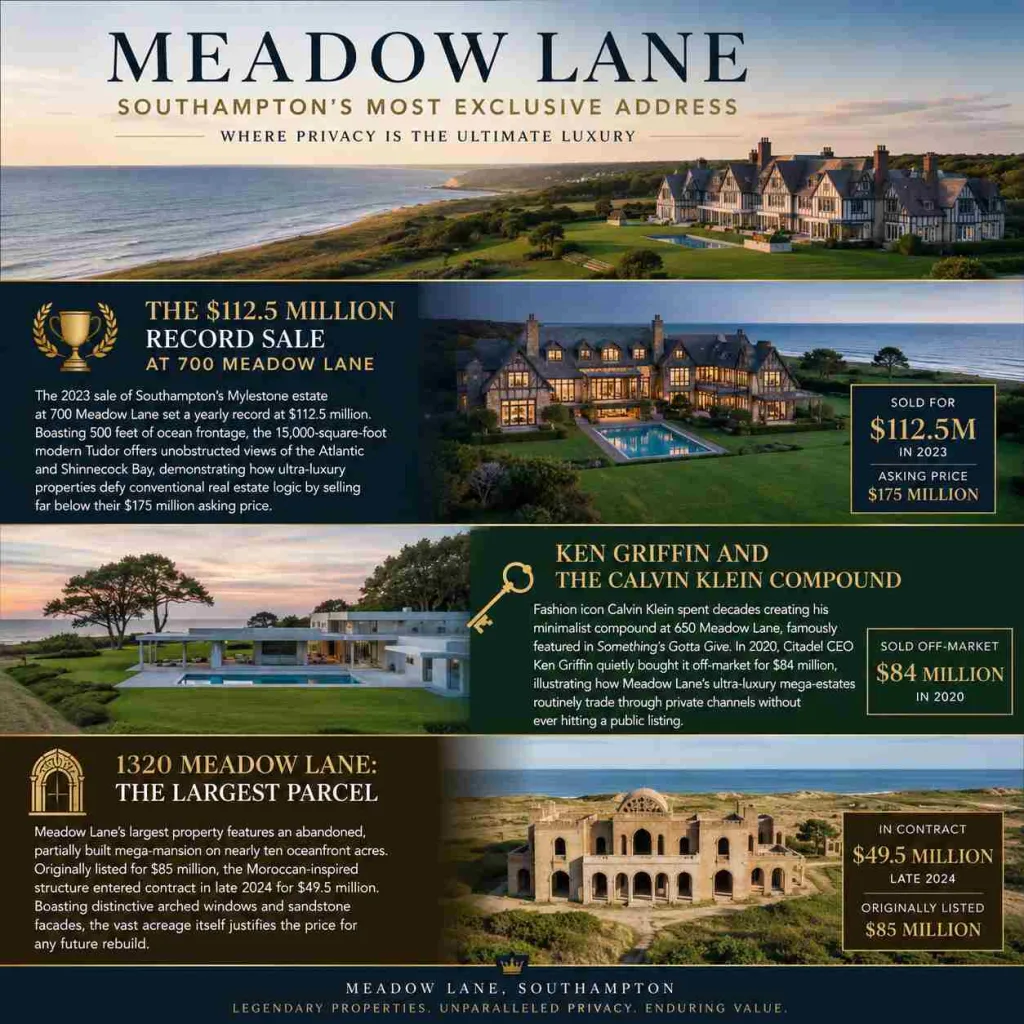
The 2023 sale of Southampton’s Mylestone estate at 700 Meadow Lane set a yearly record at $112.5 million. Boasting 500 feet of ocean frontage, the 15,000-square-foot modern Tudor offers unobstructed views of the Atlantic and Shinnecock Bay, demonstrating how ultra-luxury properties defy conventional real estate logic by selling far below their $175 million asking price.
Ken Griffin and the Calvin Klein Compound
Fashion icon Calvin Klein spent decades creating his minimalist compound at 650 Meadow Lane, famously featured in Something’s Gotta Give. In 2020, Citadel CEO Ken Griffin quietly bought it off-market for $84 million, illustrating how Meadow Lane’s ultra-luxury mega-estates routinely trade through private channels without ever hitting a public listing.
1320 Meadow Lane: The Largest Parcel
Meadow Lane’s largest property features an abandoned, partially built mega-mansion on nearly ten oceanfront acres. Originally listed for $85 million, the Moroccan-inspired structure entered contract in late 2024 for $49.5 million. Boasting distinctive arched windows and sandstone facades, the vast acreage itself justifies the price for any future rebuild.
Other Notable Large Estates in the Hamptons
A showcase of the Hamptons’ most prestigious properties and their valuations.
Premier Estates
| Property | Owner/Seller | Location | Size | Land | Est. Value / Sale Price |
|---|---|---|---|---|---|
| Fair Field | Ira Rennert | Sagaponack | 110,000 sq ft | 63 acres | $267M–$500M |
| 70 Cobb Road | Private | East Hampton | 32,000+ sq ft | 21 acres | $118M (sold 2022) |
| Mylestone, 700 Meadow Ln | Sold 2023 | Southampton | 15,000+ sq ft | Ocean frontage | $112.5M (sold 2023) |
| Fordune Estate | Sold 2021 | Southampton | 20,000 sq ft | 42 acres | $105M (sold 2021) |
| La Dune | Sold 2024 | Southampton | 23,000 sq ft | 4 acres | $88.5M (sold 2024) |
For anyone browsing the Home Decor section of RivonHome for inspiration, these estates offer a remarkable window into what is possible when budget, land, and ambition align without compromise.
What Makes These Hamptons Estates So Large and special?
From my experience in architecture and residential design, three things drive the extraordinary scale of these properties.
Land availability at the time of development
Estates like Fair Field were built before current zoning restrictions existed. Rennert purchased his 63-acre oceanfront parcel in 1997 for $11 million — a price that seems unimaginable by today’s standards. That kind of land simply does not come available anymore.
Multigenerational design thinking
The largest Hamptons homes are not built for one family — they are built for dynasties. Fair Field’s dining room seats 105 people. Its theater holds 164. These spaces are designed for gatherings that span three or four generations at once.
Privacy as the ultimate luxury
At this level, the home is also a fortress. Evergreen tree borders, private helipads, gated entrances, and multi-acre buffers from neighbors are not optional extras — they are core to the architecture.
According to the American Institute of Architects, the demand for private, multi-amenity residential compounds has grown substantially among ultra-high-net-worth clients over the past two decades, particularly in coastal markets like the Hamptons.
Final Thoughts
The Hamptons largest home is not just a real estate curiosity. Fair Field represents a specific moment in American history — when unlimited capital, minimal zoning, and a billionaire’s ambition combined to produce something that will never be repeated.
For anyone who studies residential architecture, luxury design, or simply great homes, this estate is a reference point. It defines the ceiling of what private residential construction can achieve. Everything else on the East End, from Meadow Lane’s billionaire compounds to Further Lane’s oceanfront estates, exists in comparison to it.
